Vietnamese Chili: Why It Gives Vietnamese Food Its Kick
Vietnamese Chili
More Than Just Heat
When people think of Vietnamese food, dishes like pho, banh mi, and fresh spring rolls often come to mind. While these iconic meals are famous around the world, one ingredient quietly appears on almost every Vietnamese table—fresh chili peppers.
Unlike cuisines that rely heavily on dried spices, Vietnamese cooking often uses fresh herbs, citrus, garlic, fish sauce, and fresh chili to create layers of flavor. Chili isn’t simply added to make food spicy. Instead, it balances sweetness, acidity, saltiness, and umami, giving each bite a brighter and more exciting taste.
Whether you’re enjoying a bowl of noodle soup at a street stall in Hanoi or grilled seafood along the beaches of Da Nang, you’ll almost always find sliced chilies served on the side. In Vietnam, adding chili is a personal choice, allowing everyone to customize the intensity of their meal.
How Chili Became Part of Vietnamese Cuisine
Interestingly, chili peppers are not native to Vietnam.
Like many Asian countries, Vietnam first encountered chili peppers several centuries ago after Portuguese traders introduced them from the Americas during the 16th century. Because chili plants grow extremely well in Vietnam’s tropical climate, they quickly spread across the country.
Farmers appreciated that chilies were easy to cultivate, produced fruit throughout much of the year, and could be grown even in small home gardens. Before long, they became a natural companion to traditional ingredients like fish sauce, garlic, lime, and herbs.
Today, it is difficult to imagine Vietnamese cooking without chili. It appears in marinades, dipping sauces, stir-fries, soups, salads, and even simple meals eaten at home.
The Most Common Vietnamese Chili Peppers
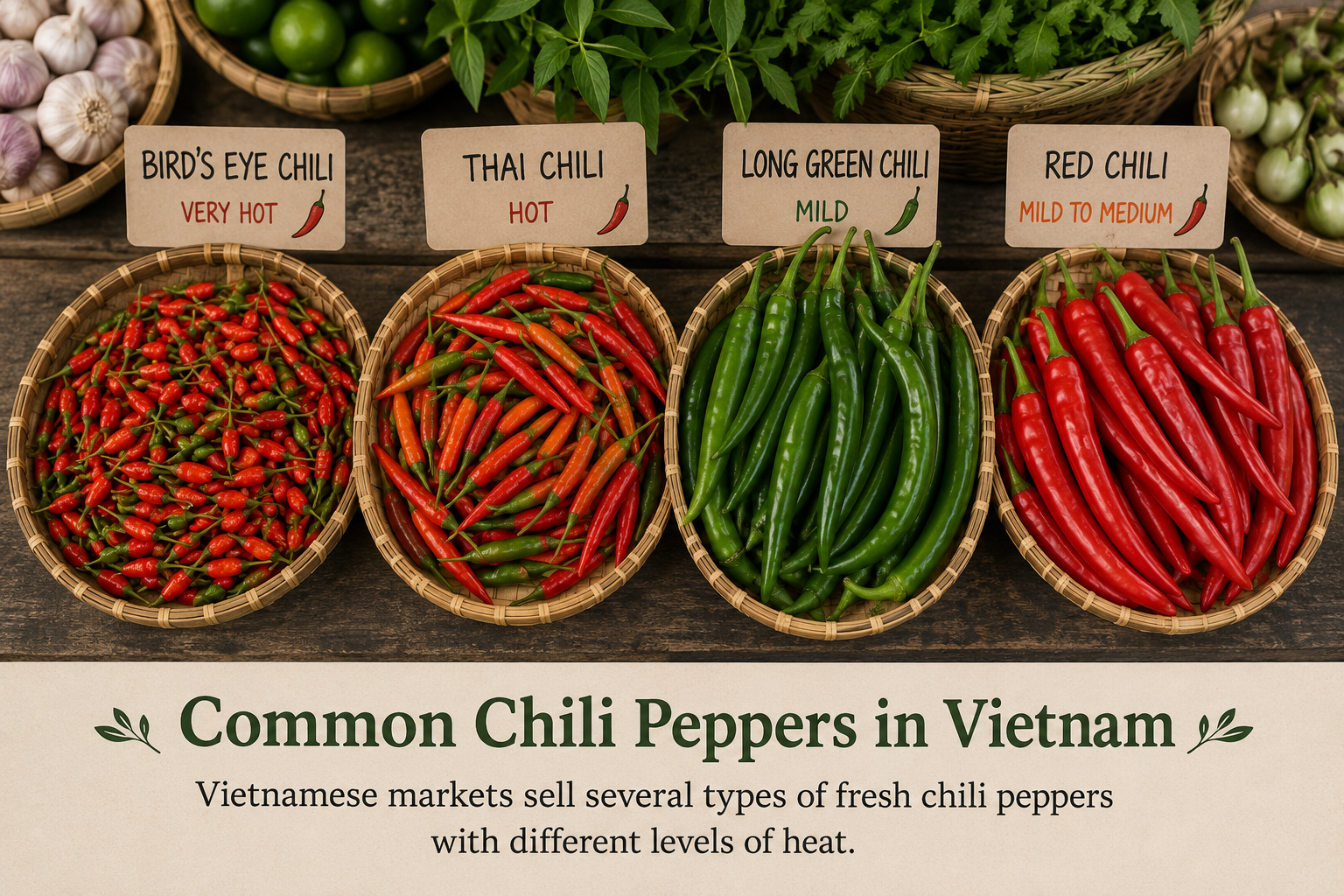
Vietnam grows many different varieties of chili peppers, each with its own flavor and level of heat.
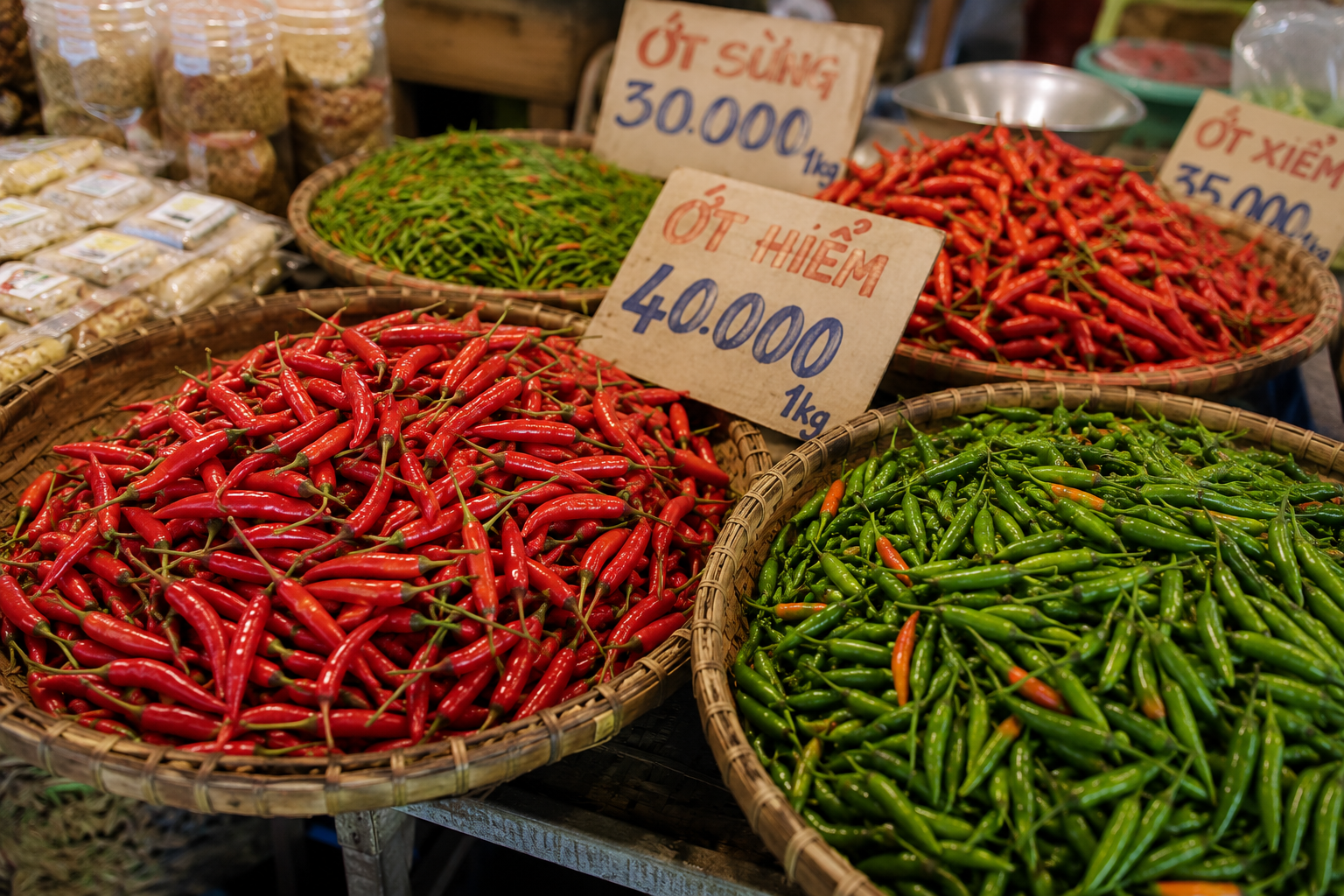
The most common type found at local markets is the small red bird’s eye chili. Despite its tiny size, it delivers an intense, clean heat that pairs perfectly with fish sauce and lime juice.
Long green chilies are another popular choice. They are generally milder and are often sliced into soups or eaten fresh alongside grilled meats.
Some regions also cultivate larger red chilies with a sweeter flavor, making them ideal for stir-fried dishes or homemade chili sauces.
Unlike many Western cuisines that depend on powdered chili, Vietnamese cooking almost always favors fresh peppers, preserving both their aroma and vibrant color.
Why Fresh Chili Matters
Fresh chili offers something that dried chili flakes simply cannot.
When sliced into fish sauce, fresh chili releases a bright aroma alongside its heat. It also adds a crisp texture that complements crunchy vegetables, grilled meats, and delicate rice noodles.
Rather than overpowering a dish, Vietnamese chili is used to enhance freshness. A squeeze of lime, a spoonful of fish sauce, and a few slices of chili can completely transform the flavor of a simple bowl of noodles.
This balance is one of the defining characteristics of Vietnamese cuisine and one reason why so many visitors fall in love with its food.
Chili Is Always Within Reach
One thing many first-time visitors notice in Vietnam is that chili is almost always served separately.
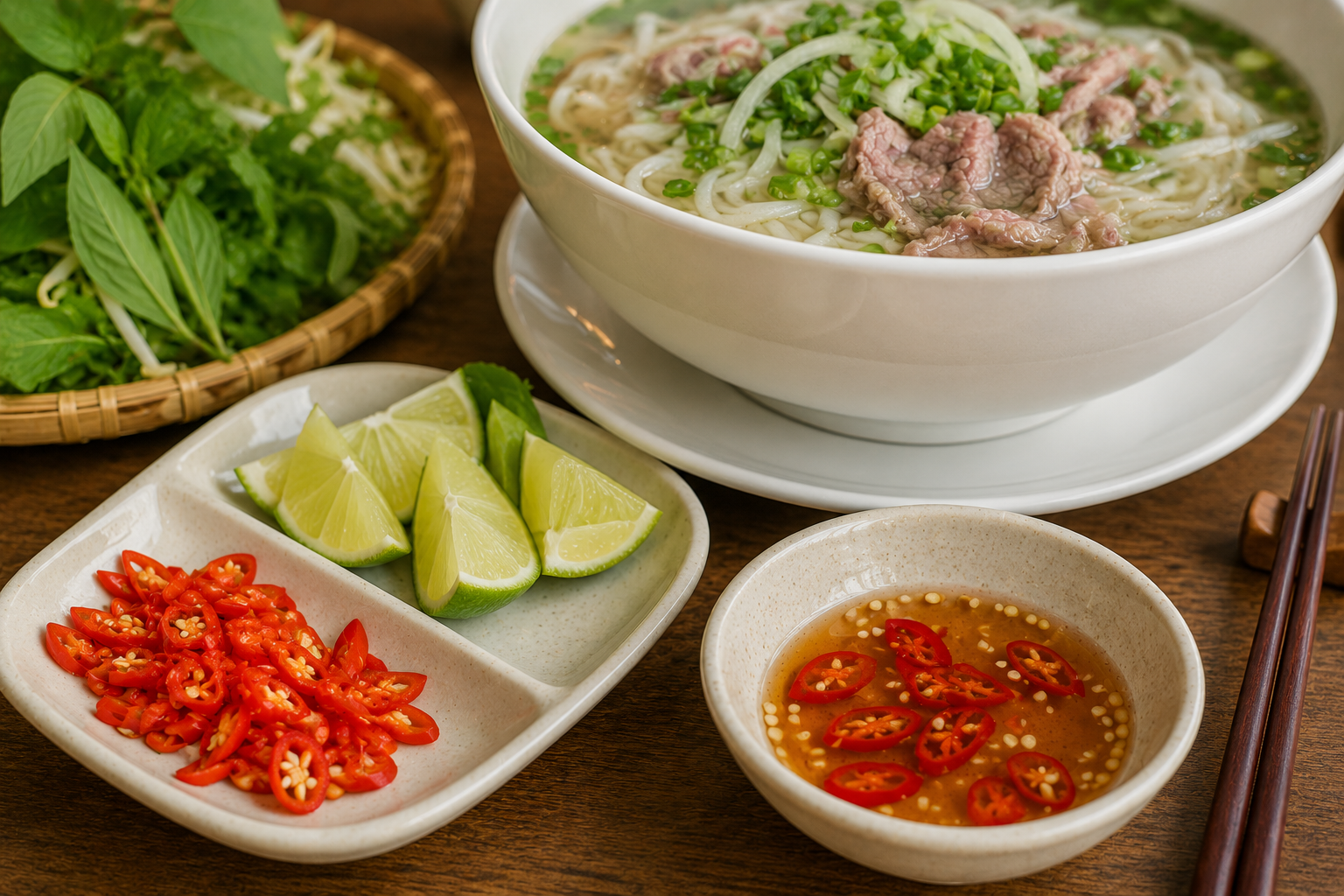
Instead of making every dish equally spicy, restaurants usually place a small dish of sliced fresh chili on the table. Diners can decide how much heat they want, making the meal enjoyable for everyone.
At local eateries, it’s common to see bowls filled with fresh red chilies sitting next to lime wedges, garlic, and fish sauce. These simple ingredients allow people to adjust the flavor of each bite to match their own taste.
For many Vietnamese families, a meal doesn’t feel complete without fresh chili nearby.
The Perfect Match: Chili and Fish Sauce
Perhaps no combination is more iconic than fresh chili mixed with fish sauce.
A simple dipping sauce made with fish sauce, lime juice, sugar, garlic, and chopped chili appears alongside countless Vietnamese dishes. This balance of salty, sweet, sour, and spicy flavors is one of the signatures of Vietnamese cuisine.
Whether you’re eating grilled pork, spring rolls, seafood, or fried tofu, the dipping sauce often plays just as important a role as the main dish itself.
Every household has its own recipe, and small differences in sweetness or spice make each version unique.
Vietnam’s Three Regions, Three Different Spice Levels
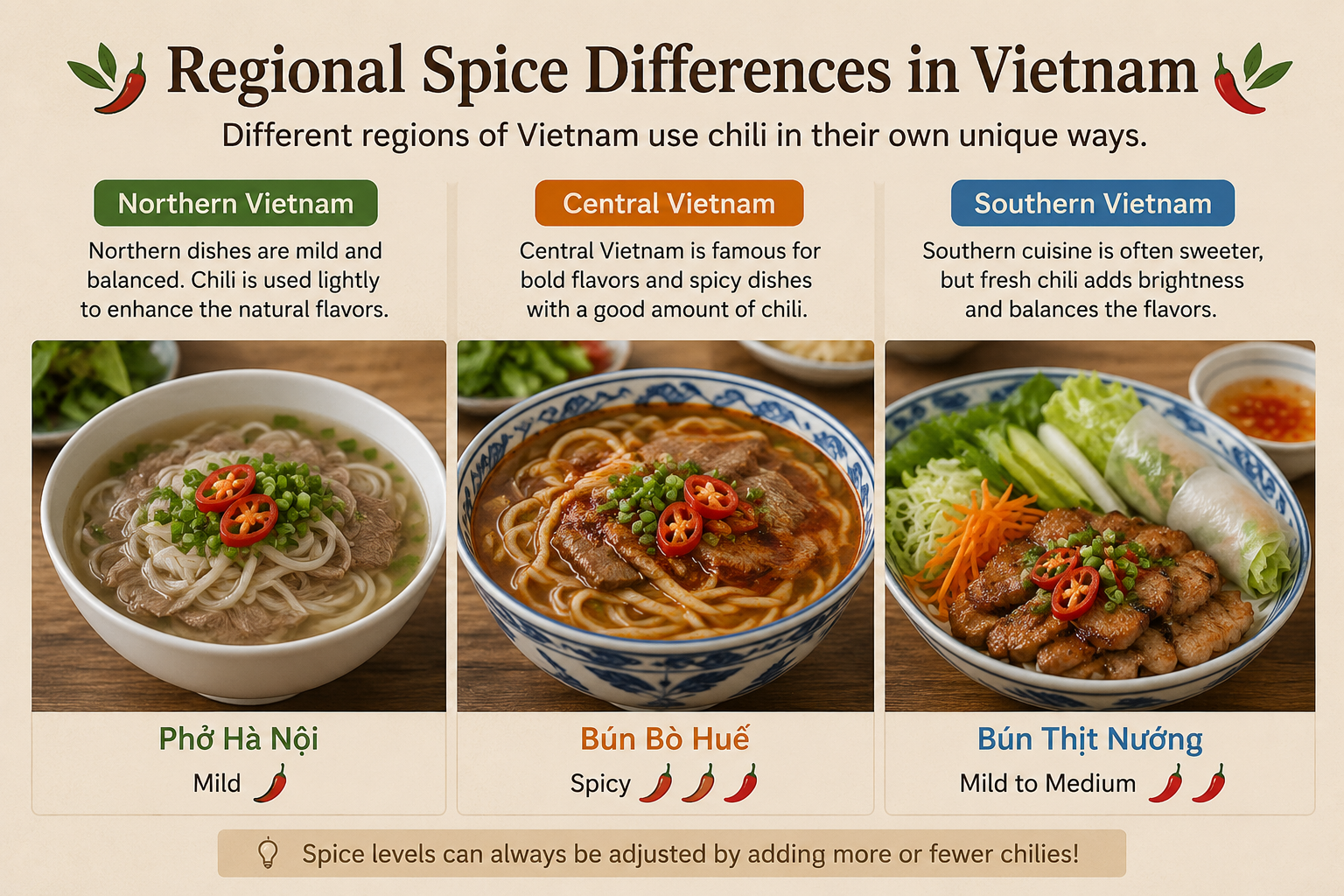
Although chili is enjoyed throughout Vietnam, the level of spiciness changes depending on where you are.
Northern Vietnam
Northern dishes generally focus on balance and subtle flavors. Chili is available, but many traditional dishes are only mildly spicy unless diners add fresh chili themselves.
Central Vietnam
Central Vietnam is famous for its love of spicy food. Cities such as Hue are well known for dishes that feature bold flavors and generous amounts of chili. Many travelers are surprised by how much hotter the food can be compared to other parts of the country.
Southern Vietnam
Southern cuisine tends to be sweeter, but fresh chili is still widely used. Rather than dominating the dish, it balances sweetness and creates a richer overall flavor.
This regional diversity is one reason Vietnamese food remains so interesting to explore.
Famous Vietnamese Dishes That Rely on Chili
Many of Vietnam’s most beloved dishes become even better with fresh chili.
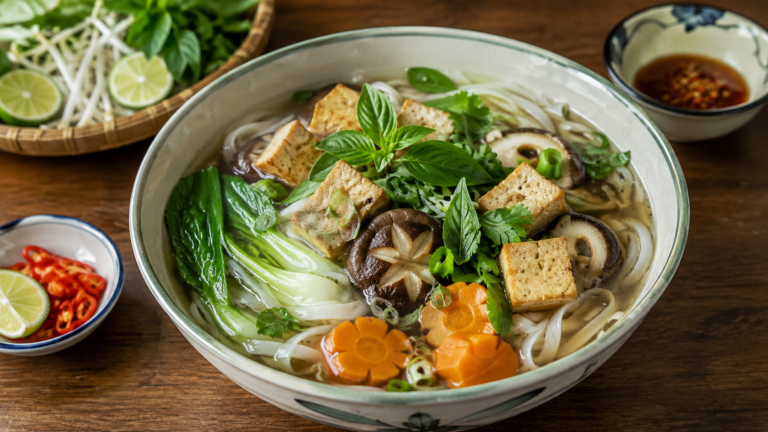
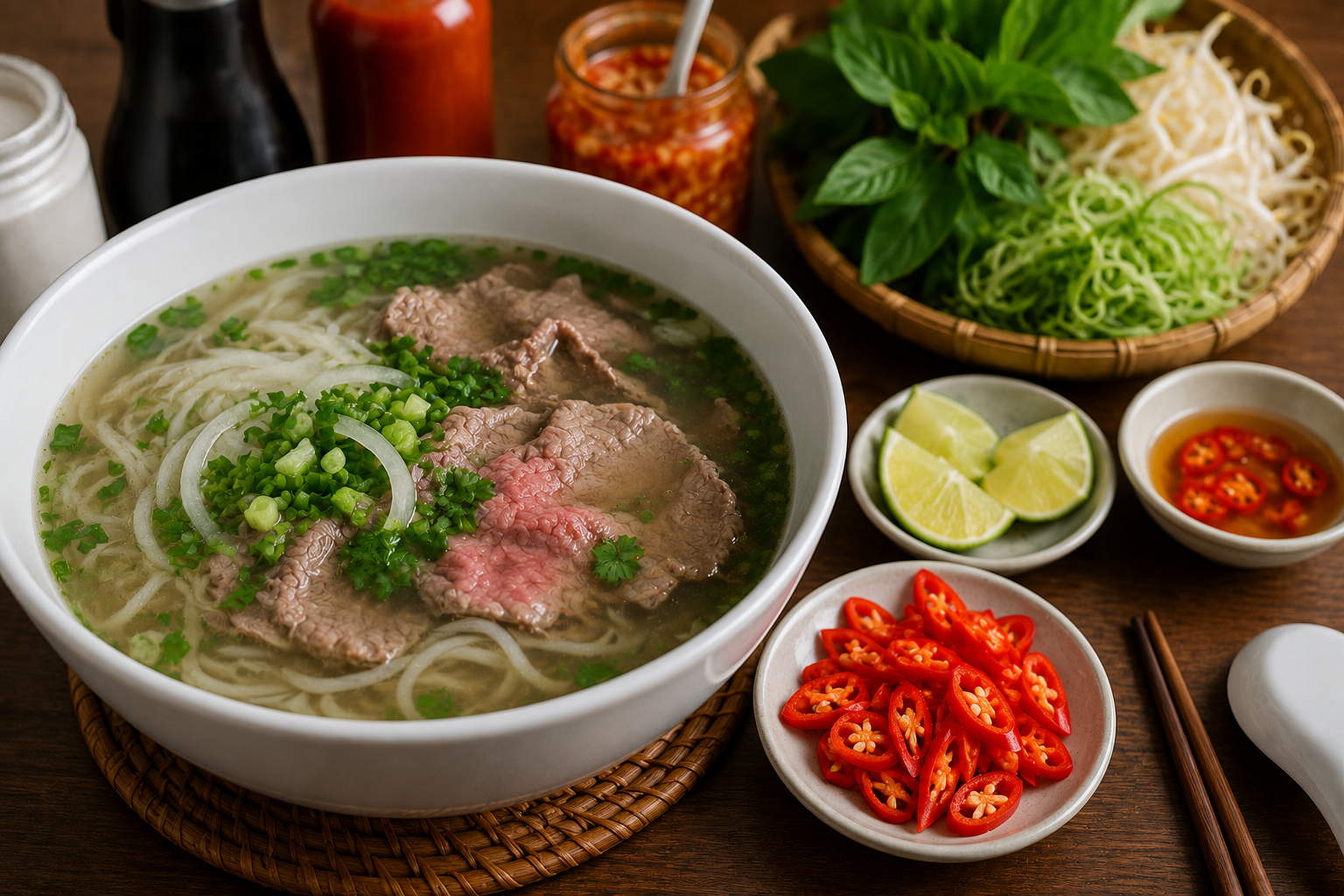
A steaming bowl of pho gains extra warmth from a few slices of red chili.
Bun Bo Hue, one of Vietnam’s spiciest noodle soups, is famous for its rich broth and bold chili flavor.
Grilled dishes such as bun cha and nem lui are often enjoyed with dipping sauces that include chopped chili.
Fresh seafood along Vietnam’s coast is also commonly served with salt, pepper, lime, and chili, creating one of the country’s simplest yet most delicious flavor combinations.
No matter where you travel in Vietnam, you’ll quickly discover that chili isn’t just an optional topping—it’s an ingredient that helps define the country’s vibrant food culture.
The Chili That Gives Vietnamese Food Its Kick
How to Enjoy Vietnamese Chili Like a Local
If you’re new to Vietnamese food, it’s best to start slowly.
Instead of adding a handful of sliced chilies at once, try adding one or two slices to your soup or dipping sauce. Taste the food first, then decide if you’d like more heat.
Many Vietnamese people also enjoy biting into a fresh chili while eating grilled meat or noodles, but this can be surprisingly spicy for first-time visitors. There’s no right or wrong way to enjoy chili—it’s all about finding the balance that suits your taste.
One thing you’ll quickly notice is that chili doesn’t just add heat. When combined with lime juice, fish sauce, garlic, and fresh herbs, it creates a brighter, fresher flavor that makes many Vietnamese dishes even more satisfying.
Are Chili Peppers Good for You?
Besides their bold flavor, chili peppers also contain nutrients that many people associate with a healthy diet.
Fresh chilies are a natural source of vitamin C, along with smaller amounts of vitamin A and antioxidants. Their heat comes from a compound called capsaicin, which has been widely studied for its effects on metabolism and pain perception.
Of course, spicy food isn’t suitable for everyone. If you have a sensitive stomach or aren’t used to spicy dishes, it’s perfectly fine to enjoy Vietnamese food with only a small amount of chili—or none at all. One of the great things about Vietnamese cuisine is that most dishes allow you to control the level of spice yourself.
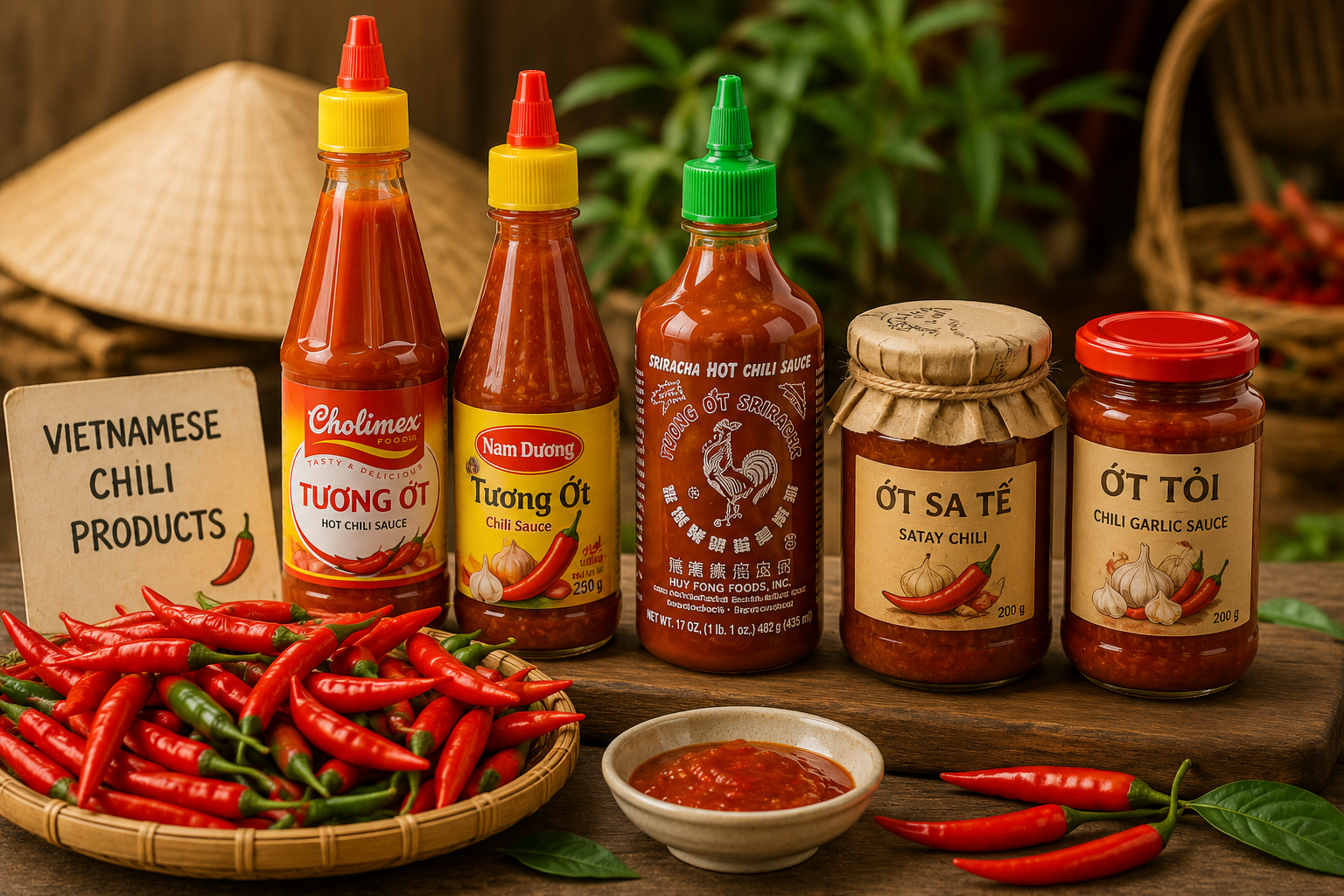
What Chili Products Should You Bring Home?
If you fall in love with Vietnamese flavors during your trip, chili products make excellent souvenirs.
Fresh chilies are widely available in local markets, while bottled chili sauces and chili paste can easily be packed into checked luggage. Many supermarkets also sell ready-made chili salt, spicy dipping sauces, and regional chili condiments that are difficult to find overseas.
Bringing home a bottle of Vietnamese chili sauce is a simple way to recreate the flavors of Vietnam long after your journey has ended.
Final Thoughts
Fresh chili may seem like a small ingredient, but it plays a remarkable role in Vietnamese cooking.
Table of Contents
Rather than overwhelming a dish with heat, it brings balance, freshness, and excitement to every bite. Whether it’s mixed into fish sauce, added to a steaming bowl of pho, or served alongside grilled seafood, chili helps create the vibrant flavors that make Vietnamese cuisine unforgettable.
So the next time you visit Vietnam, don’t be afraid to reach for the small plate of fresh chilies on the table. Start with just a slice or two—you may discover that this tiny ingredient is one of the biggest reasons Vietnamese food leaves such a lasting impression.