Bún Chả vs. Bún Thịt Nướng: What’s the Difference?
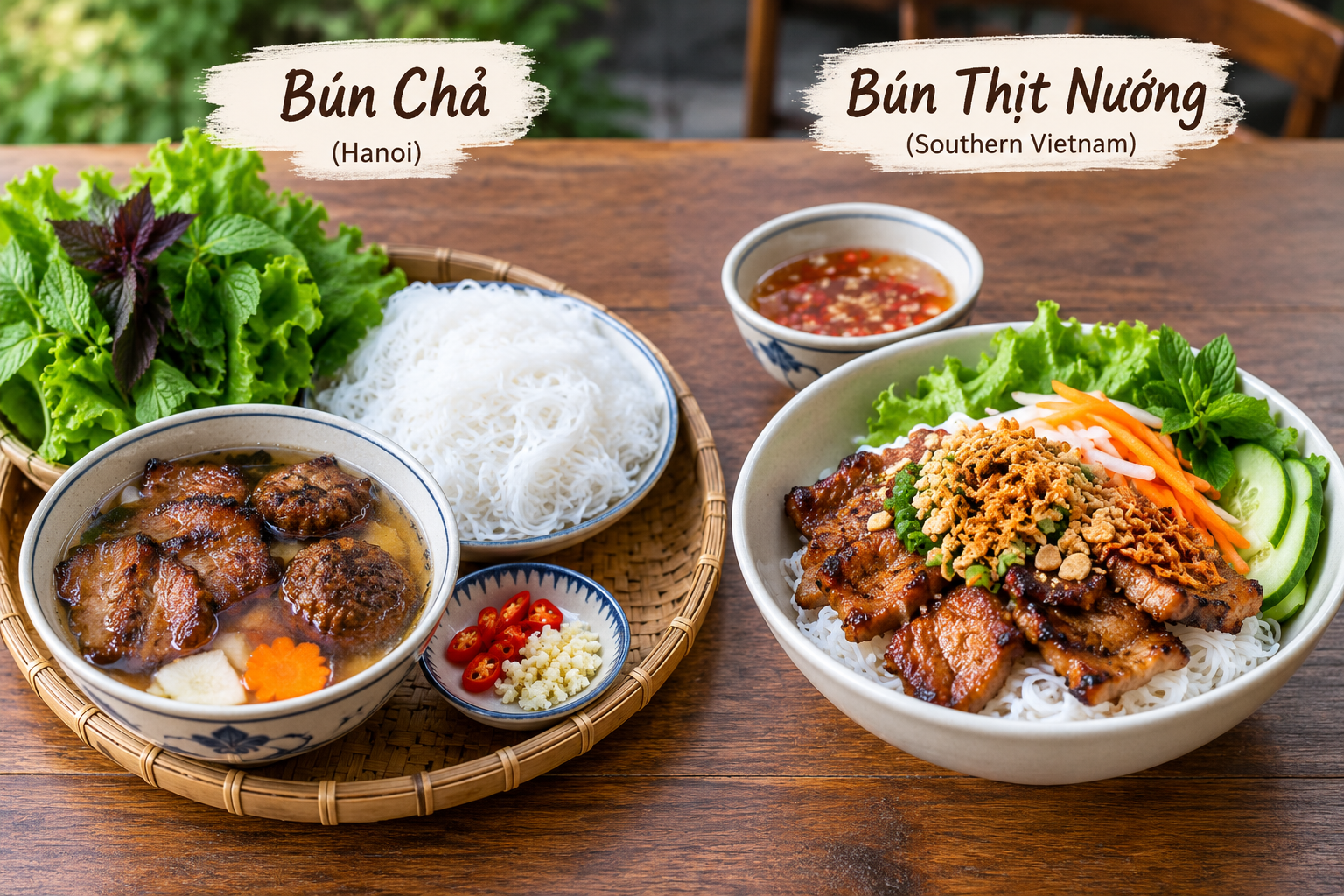
Bún chả and bún thịt nướng both combine rice vermicelli, grilled pork, herbs, and dipping sauce. The easiest way to tell them apart is the serving style: bún chả usually arrives as separate noodles and pork in a bowl of dipping liquid, while bún thịt nướng is typically a rice-noodle bowl topped with grilled meat.
Neither is simply a different spelling of the other. If you know what to expect when ordering, you can enjoy both dishes without confusing a dipping-style Hanoi meal with a mixed noodle bowl.
Bún Chả vs. Bún Thịt Nướng: Quick Comparison
| Feature | Bún chả | Bún thịt nướng |
|---|---|---|
| Best known for | Hanoi and northern Vietnam | Popular in central and southern Vietnam |
| How it arrives | Pork in a dipping sauce, noodles on the side | Grilled pork on a noodle-and-herb bowl |
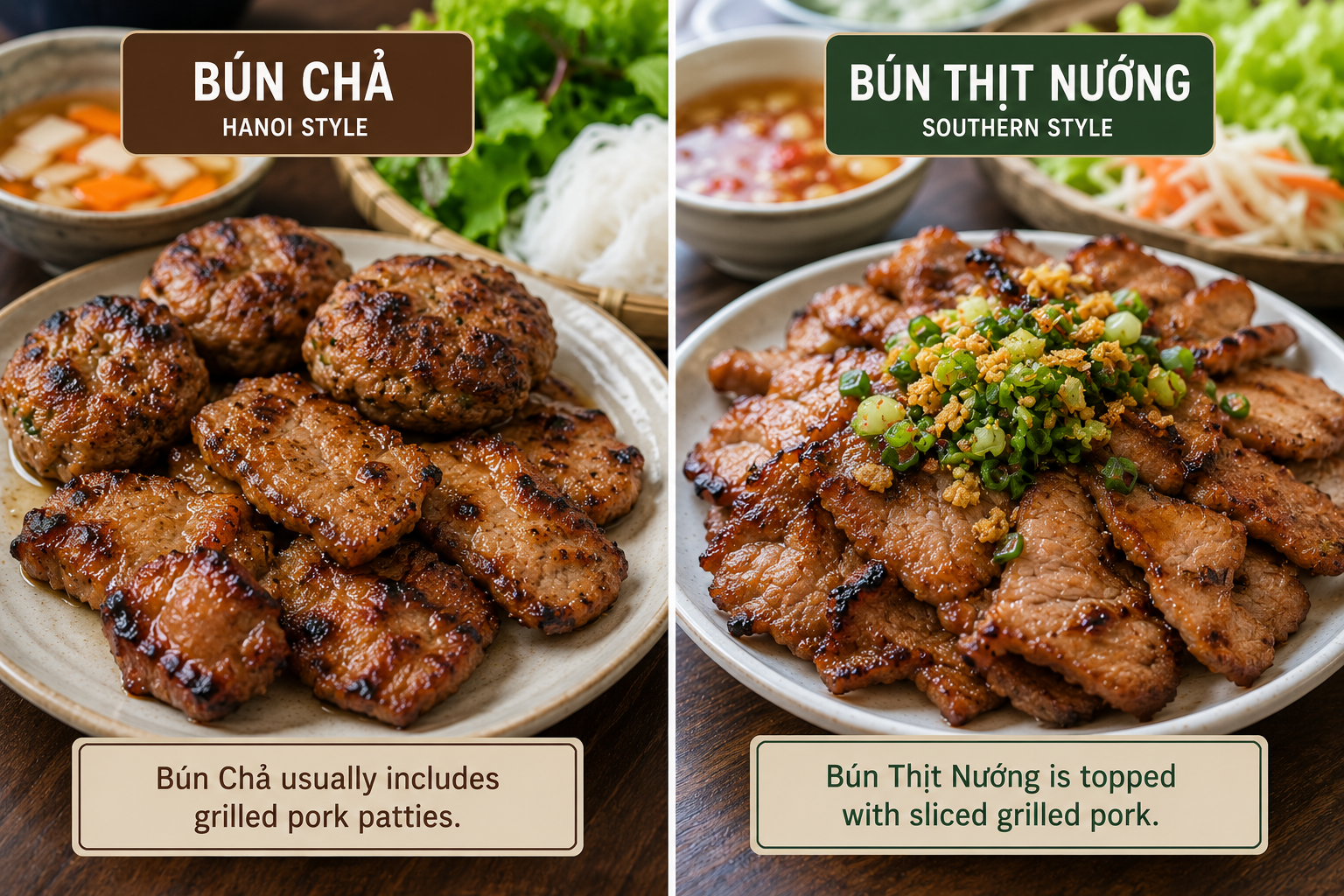
| Pork | Often pork patties and thin slices | Usually sliced or skewered grilled pork |
| Sauce | Sweet-sour fish-sauce dipping liquid | Fish-sauce dressing, with variations |
| How you eat it | Dip noodles and herbs into the sauce | Add dressing and toss the bowl |
These are common presentations, not universal rules. Cooks adapt recipes, sauces, and toppings throughout Vietnam, so the dish on your table may differ slightly from this summary.
What Is Bún Chả?
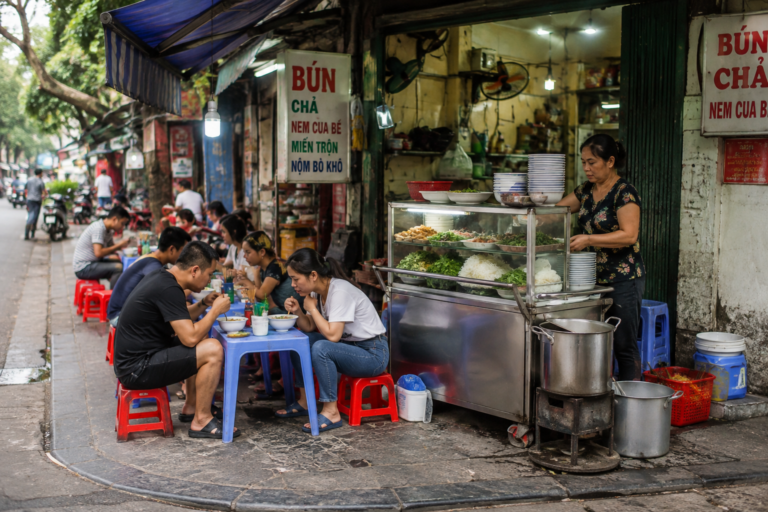
Bún chả is strongly associated with Hanoi. Its characteristic components are grilled pork, a bowl of lightly sweet-and-sour fish-sauce dipping liquid, rice vermicelli, and fresh herbs. The pork is commonly a combination of small minced-pork patties and sliced pork belly, although restaurants vary.
To eat it, take a portion of noodles and herbs, dip them into the sauce with the pork, and enjoy the contrast of smoky meat and bright dipping liquid. Pickled vegetables such as green papaya or carrot may be added to the sauce.
The dipping sauce matters as much as the meat. Vietnam’s official tourism site describes bún chả as a noodle dish defined by grilled pork and its seasoned dipping liquid.
What Is Bún Thịt Nướng?
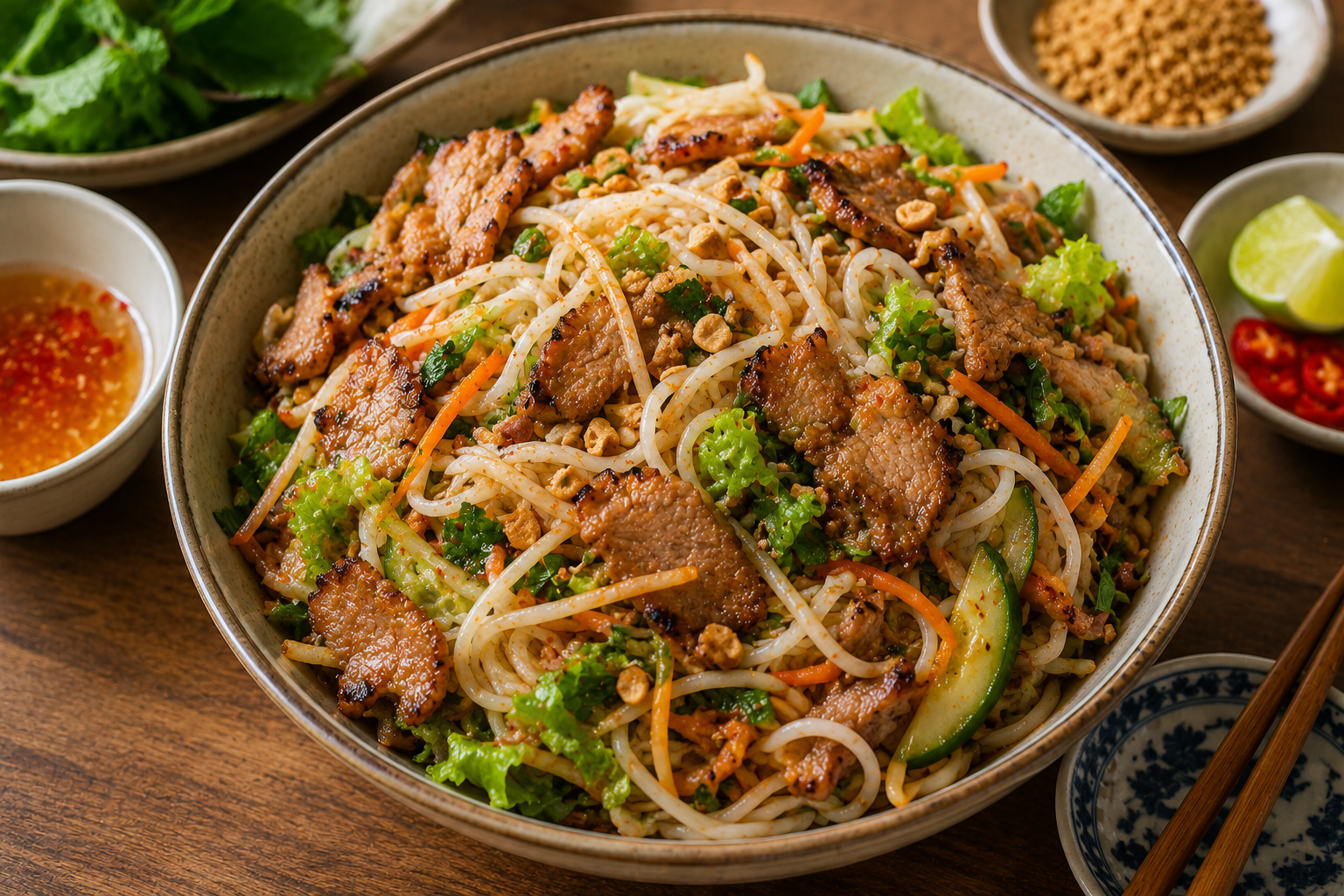
Bún thịt nướng literally refers to vermicelli with grilled meat. A typical bowl combines rice noodles, hot grilled pork, lettuce or herbs, cucumber, and a dressing. Depending on the restaurant, you might also get pickled vegetables, roasted peanuts, fried shallots, or a spring roll.
Unlike the separate-bowl format of bún chả, bún thịt nướng is generally served already assembled. You add the accompanying sauce and mix until the noodles, meat, and vegetables are coated.
You can find versions in central and southern Vietnam as well as elsewhere. The Vietnam Tourism guide to Hội An lists bún thịt nướng among local foods, so it would be misleading to say that only the south serves it.
How the Pork and Sauces Differ
Pork in bún chả
A traditional Hanoi-style serving often includes grilled pork patties plus slices of pork belly. Both are placed in or beside a shallow bowl of diluted dipping sauce, where they take on some of its sweetness and acidity. The smoky grill flavor is important, but it does not need to be the only flavor you notice.
Pork in bún thịt nướng
Bún thịt nướng more commonly uses slices or skewers of marinated pork served on top of the noodles. Lemongrass, garlic, sugar, and fish sauce may feature in marinades, but recipes vary. Because the pork sits on the noodle bowl, its grilled edges and contrast with cool vegetables are part of the experience.
Both dishes may use nước mắm (fish sauce), but the final sauces are not necessarily identical. For more detail on this ingredient, see our Vietnamese fish sauce guide.
How to Eat Each Dish
- Bún chả: Keep the noodles and herbs handy. Lift a manageable portion, dip it into the sauce with a piece of grilled pork, and eat. You can adjust the amount of sauce on each bite.
- Bún thịt nướng: Add some dressing to the bowl, then mix the grilled pork, noodles, greens, and crunchy toppings. Taste before adding the rest of the sauce.
- At either restaurant: Look for chili and fresh herbs on the side. Add them gradually; not everyone wants the same level of heat.
If you are unsure what the sauce is, ask before pouring the whole bowl over your noodles. The practical difference between dipping and dressing is often clearer than any description of which dish is “lighter” or “stronger.”
Which Dish Should You Try First?
Choose bún chả if you want to explore Hanoi-style grilled pork, enjoy dipping noodles yourself, or prefer controlling how much sauce goes on each bite.
Choose bún thịt nướng if you like a ready-to-mix noodle bowl with vegetables and a variety of toppings. It is often convenient for a quick lunch, and the combination of warm pork and cool herbs is especially appealing in hot weather.
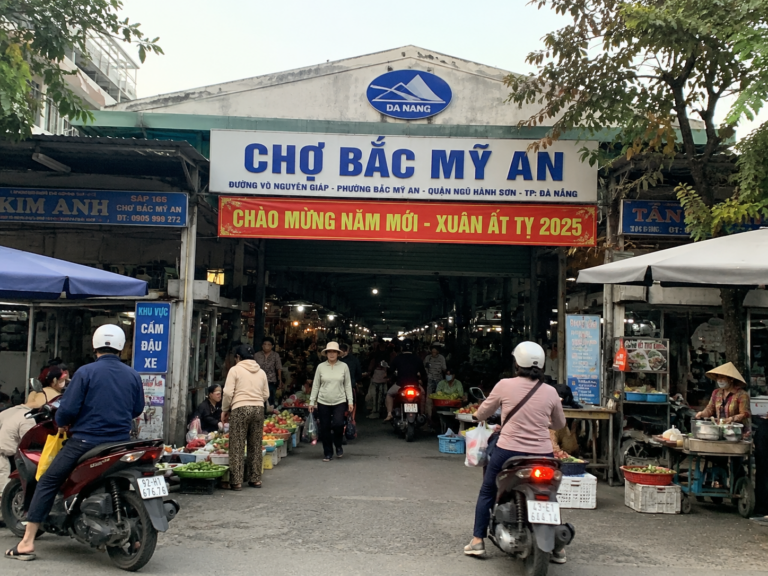
If you are traveling in Da Nang, you can look for both dishes, although menus and availability change by restaurant. Ordering by the Vietnamese names is more reliable than asking only for “grilled pork noodles.”
Ordering Tips for Travelers
- Read the dish name: bún chả typically signals the separate dipping-style meal; bún thịt nướng signals vermicelli with grilled meat.
- Ask about extras: Peanuts, spring rolls, and crispy shallots may be added to bún thịt nướng. If you have an allergy, confirm ingredients directly with the restaurant.
- Watch the sauce: Both dishes can include fish sauce. If you need a fish-free meal, ask about the sauce even if the bowl looks mostly like noodles and vegetables.
- Try regional variations: Different restaurants may use different herbs, pork cuts, and sauces. Treat the first bowl as an introduction, not a fixed national standard.
For ordering phrases and more everyday dining tips, read how to order food in Vietnam and our guide to Vietnamese noodle dishes.
Frequently Asked Questions
Is bún chả the same as bún thịt nướng?
No. Both feature rice noodles and grilled pork, but the standard serving formats differ: bún chả uses separate noodles and pork in dipping liquid, whereas bún thịt nướng is an assembled noodle bowl.
Which dish is associated with Hanoi?
Bún chả is one of Hanoi’s signature grilled-pork dishes. Bún thịt nướng is available in several parts of the country, including central and southern Vietnam.
Which one tastes sweeter?
Either can taste sweet because both may use sugar in the marinade or fish-sauce dressing. The result depends more on the restaurant’s recipe than the name alone.
Can I find both in Da Nang?
Yes, both can be found in Da Nang, although availability and preparation differ by restaurant. Check the current menu rather than assuming every noodle shop serves both.
The Bottom Line
The simplest memory trick is dip for bún chả, mix for bún thịt nướng. It is not a perfect rule for every cook, but it helps travelers recognize the two familiar serving styles. Try both if you have the chance: the comparison makes Vietnam’s regional noodle traditions easier to appreciate.