How Vietnamese Street Food Stays So Affordable
Vietnam is one of those places where eating well does not have to cost much.
Walk through the streets of Hanoi, Da Nang, or Ho Chi Minh City and you will quickly notice something surprising: a steaming bowl of noodles, a freshly made bánh mì, or a plate of rice can often cost only a few dollars.
For travelers coming from Korea, Europe, Australia, or the United States, the prices can seem almost unbelievably low.
But Vietnamese street food is not cheap simply because labor costs are lower.
There is an entire food culture and business system behind those prices.
Small menus, local ingredients, simple kitchens, fast turnover, and generations of cooking experience all help Vietnamese street food vendors serve delicious meals while keeping prices affordable.
So how does it actually work?
1. Street Food Vendors Keep Their Overhead Low
One of the biggest reasons Vietnamese street food remains affordable is simple: many vendors have very low operating costs.
A traditional street food business may operate from a small storefront, a cart, or even the front of a family home.
Instead of paying for a large dining room, expensive interior design, elaborate furniture, and a large service team, vendors focus their money on what matters most — the food.
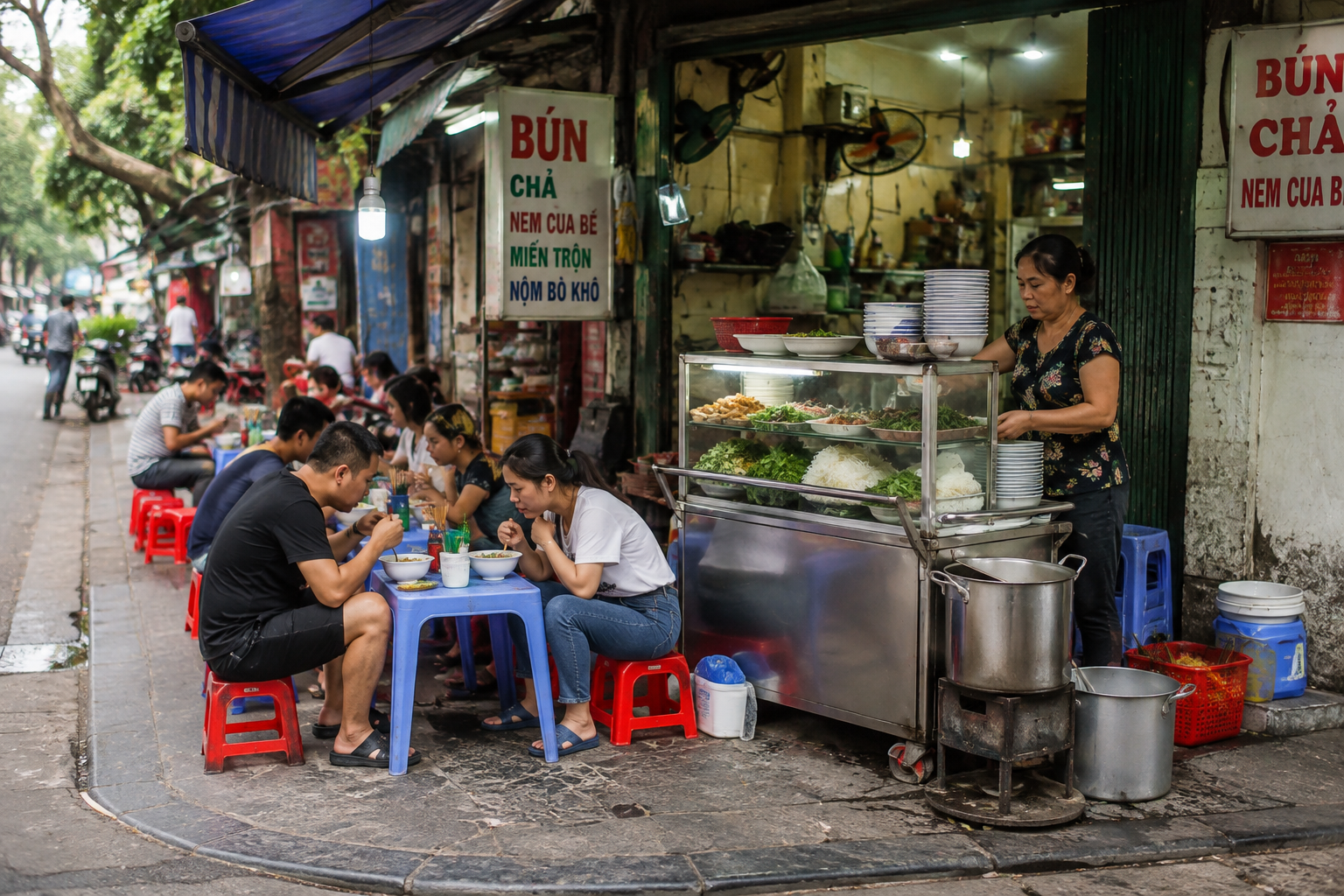
This simple setup significantly reduces rent, electricity, maintenance, and staffing costs.
For customers, that means more of the price they pay goes toward the actual ingredients rather than the surroundings.
2. Many Vendors Specialize in Just One Dish
Take a walk through a Vietnamese neighborhood in the morning and you might see something unusual.
One restaurant sells only phở.
Another specializes in bánh mì.
A few doors away, someone may be serving nothing but bún bò or cơm gà.
This specialization is one of the hidden strengths of Vietnamese street food.
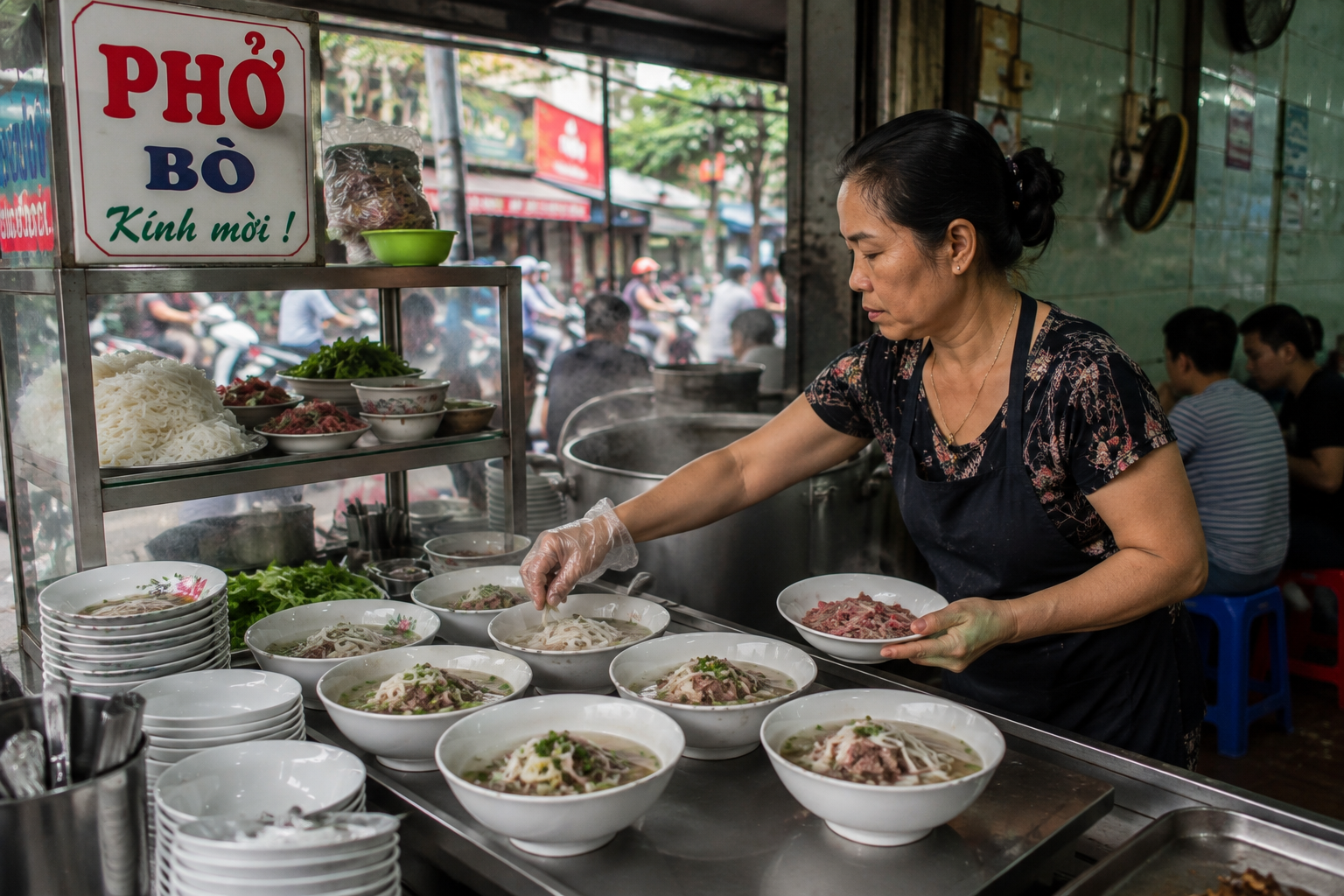
When a vendor prepares the same dish hundreds or even thousands of times, the entire process becomes extremely efficient.
Ingredients can be purchased in larger quantities. Preparation becomes faster. Waste is reduced. Recipes become consistent.
A small menu also means there is less need to store dozens of different ingredients.
That efficiency helps vendors keep prices low without necessarily sacrificing quality.
3. Ingredients Are Usually Local
Vietnam produces an enormous amount of its own food.
Rice, noodles, herbs, vegetables, tropical fruits, seafood, pork, and chicken are widely available throughout the country.
Vietnamese cuisine is also built around ingredients that grow naturally in the region.
Think about a typical bowl of phở.
You have rice noodles, broth, herbs, bean sprouts, onions, lime, chili, and meat. Many of those ingredients can be sourced locally rather than imported from another country.
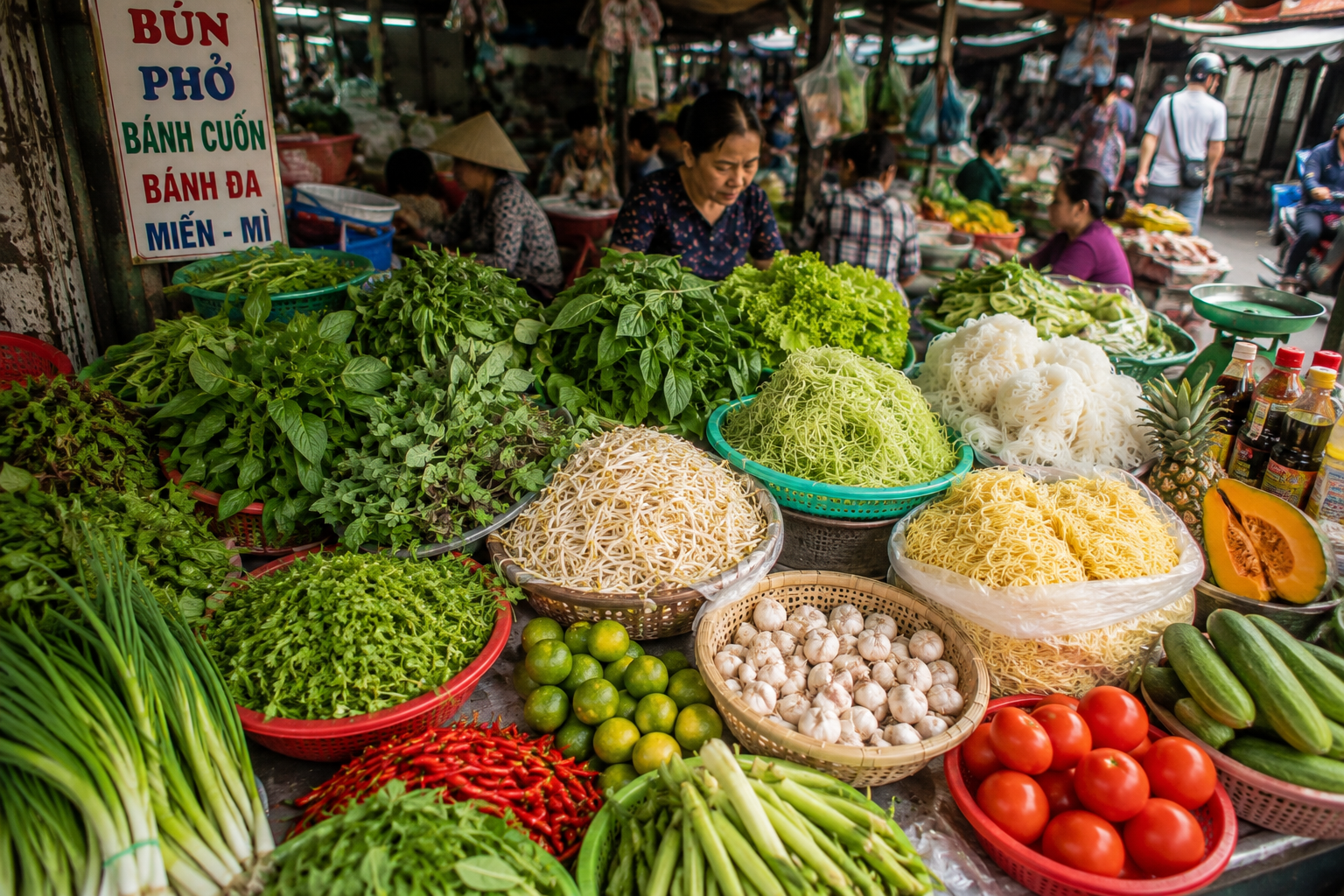
Local sourcing reduces transportation and import costs while giving vendors easy access to fresh ingredients.
It is one reason Vietnamese food can be both inexpensive and incredibly fresh at the same time.
4. Local Markets Create a Short Supply Chain
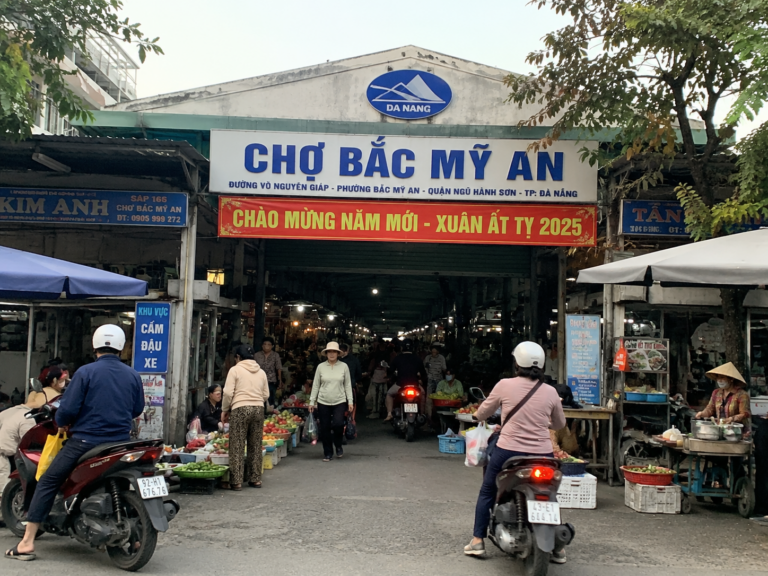
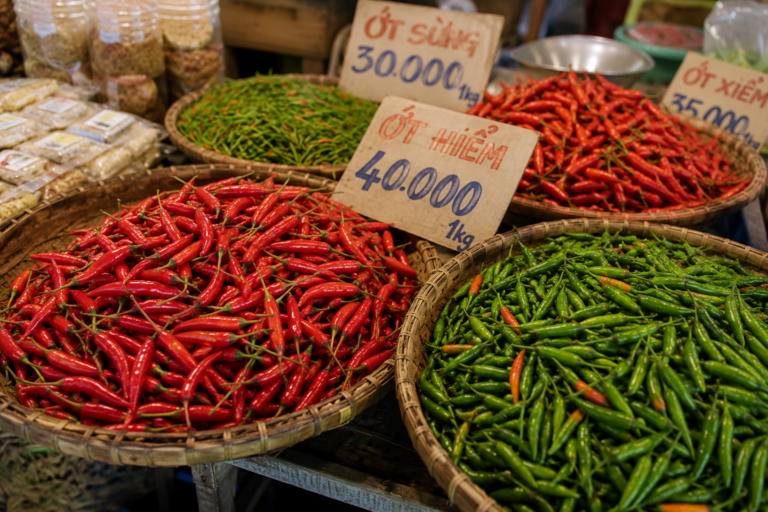
Many small restaurants and street vendors buy ingredients directly from traditional markets.
These markets are everywhere in Vietnam.
Early in the morning, restaurant owners and cooks can purchase vegetables, herbs, meat, seafood, noodles, and spices for that day’s service.
There may be far fewer steps between the farmer, wholesaler, market seller, cook, and customer than you would find in a large modern restaurant supply chain.
This short supply chain helps reduce additional packaging, storage, transportation, and distribution costs.
It also explains something travelers often notice in Vietnam: ingredients are purchased extremely fresh.
In many kitchens, today’s vegetables were bought this morning.
5. Vietnamese Cooking Uses Ingredients Efficiently
Vietnamese cuisine developed long before modern refrigeration and global supply chains.
As a result, traditional cooking methods are extremely good at making the most of available ingredients.
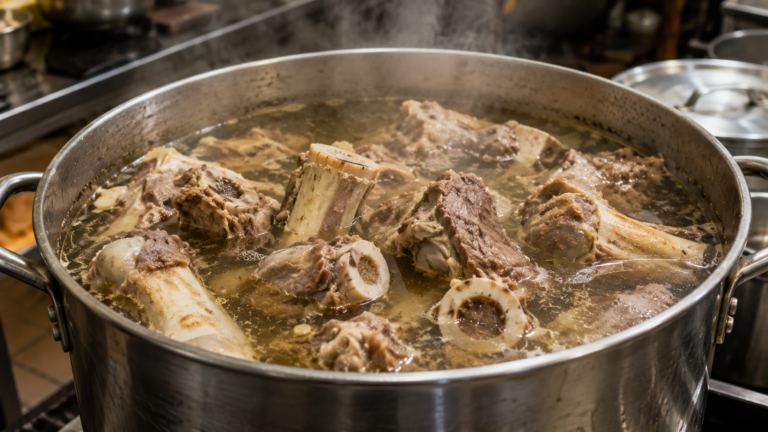
Bones can become broth.
Herbs appear in several dishes.
Vegetable trimmings may contribute flavor to stocks.
Different cuts of meat can be used for different recipes.
Nothing needs to be unnecessarily complicated.
Phở is perhaps the perfect example.
A deeply flavored broth can be produced from bones, aromatics, spices, and hours of slow cooking. Rice noodles and fresh herbs then turn that broth into a complete meal.
The result feels rich and satisfying without requiring expensive ingredients in every bite.
6. High Customer Turnover Makes Small Profits Work
Vietnamese street food businesses often operate differently from restaurants where customers sit for two or three hours.
You arrive.
You order.
The food comes quickly.
You eat.
And another customer takes your seat.
That fast turnover is extremely important.
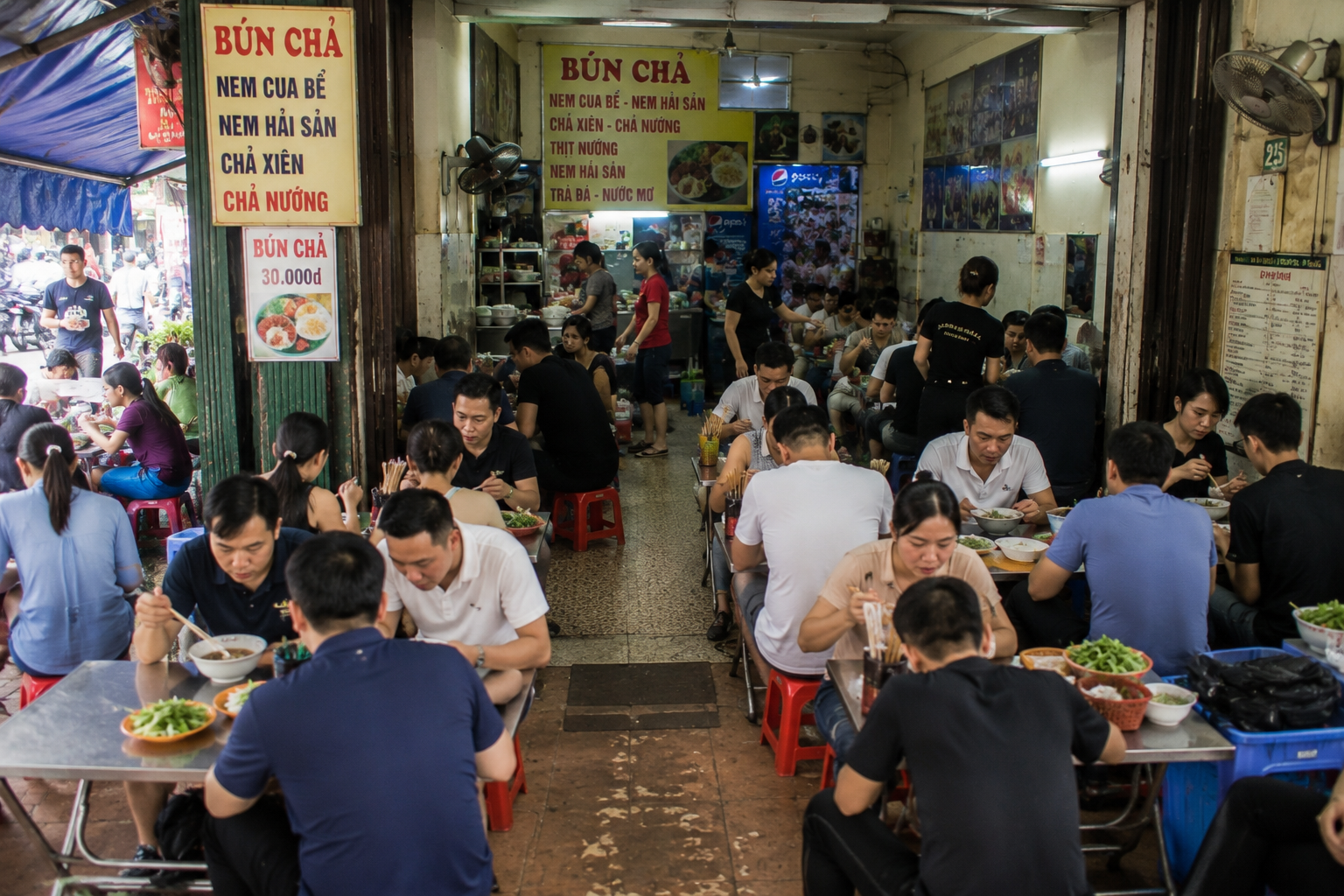
Imagine a small shop with only 20 seats.
If each seat were used once during lunch, the restaurant could serve only 20 customers.
But if those seats turn over several times, the same tiny restaurant can serve many more people without increasing its rent.
Instead of making a large profit from each customer, the vendor can make a small profit from many customers.
This volume-based model is a major reason prices can stay competitive.
7. Families Often Run the Business Together
Another important factor is the family structure behind many traditional Vietnamese food businesses.
A small restaurant may have several family members working together.
One person cooks.
Another prepares ingredients.
Someone else takes orders or handles payments.
Another family member may buy ingredients at the market early in the morning.
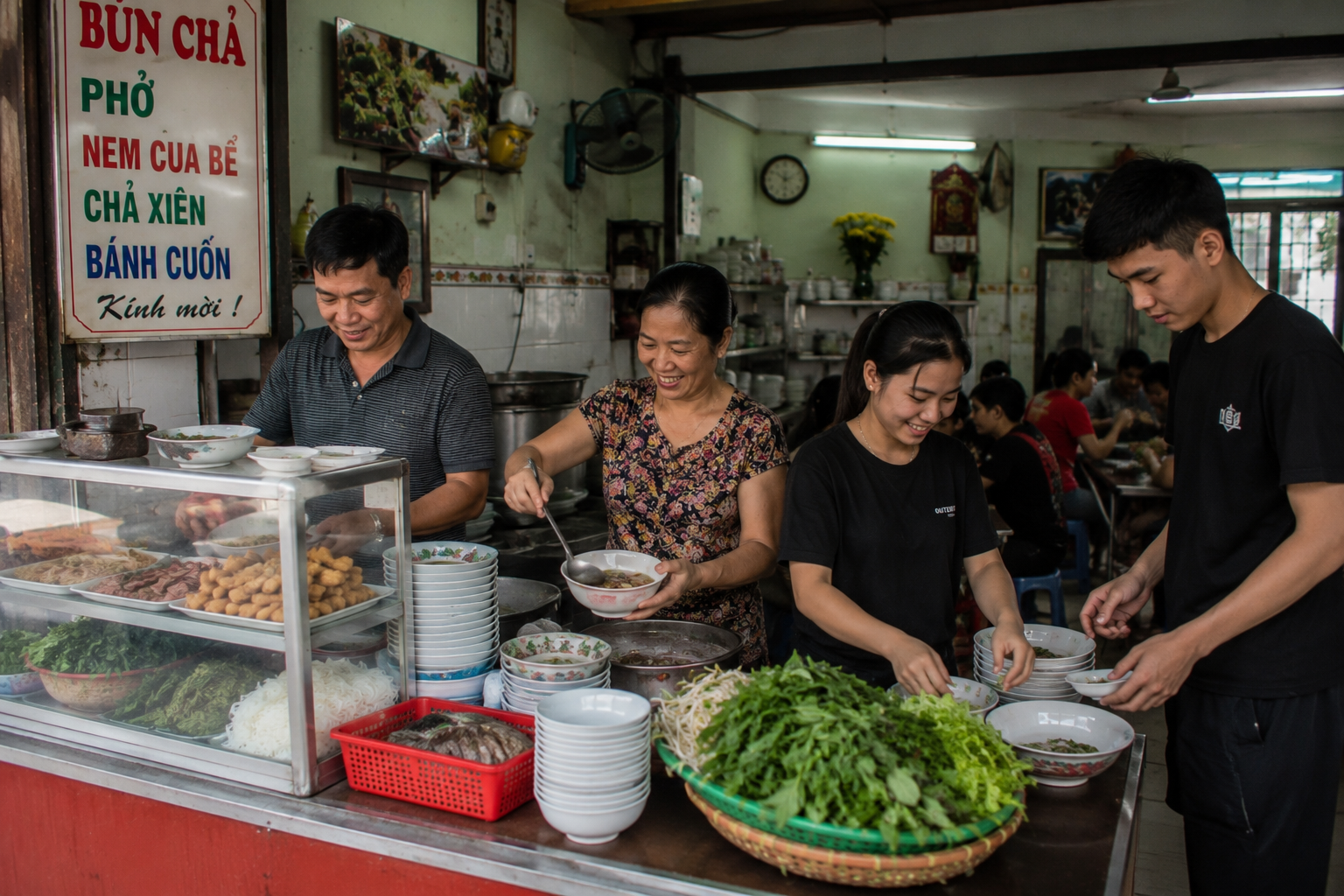
This does not mean labor has no cost, but family-run businesses can operate differently from large restaurants that require managers, servers, cooks, cashiers, cleaners, and administrative staff.
The business structure is simply much leaner.
8. Recipes Have Been Perfected Over Generations
Some street food stalls have been making the same dish for decades.
That experience matters.
A cook who has prepared the same broth every morning for 20 years does not need an elaborate kitchen system to understand how much meat, noodles, seasoning, or herbs will be needed.
They already know.
That knowledge reduces mistakes and food waste.
It also creates something that expensive restaurants cannot easily reproduce: experience accumulated over generations.
This is why some of the best meals in Vietnam come from incredibly simple kitchens.
The equipment may look basic.
The recipe is anything but.
9. Simple Dining Does Not Mean Simple Food
One mistake travelers sometimes make is judging Vietnamese street food by the restaurant itself.
Plastic stools.
Metal tables.
A small kitchen.
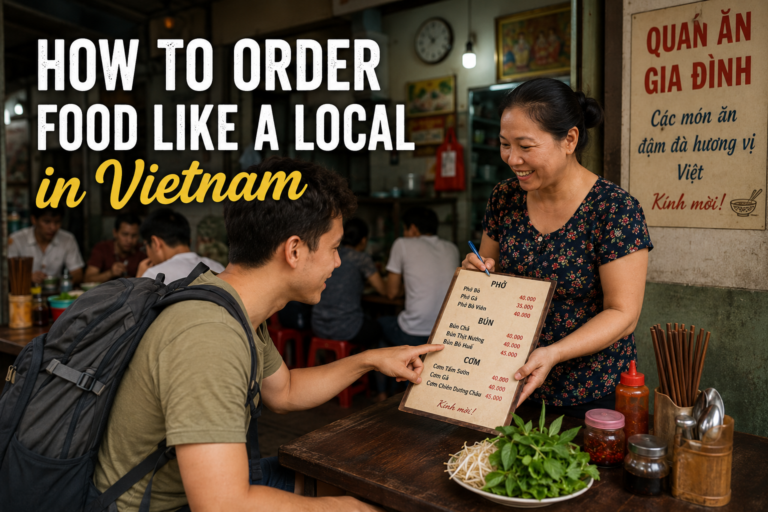
Maybe even a menu hanging on the wall.
It can look extremely simple.
But Vietnamese cuisine often puts complexity into the preparation rather than the presentation.
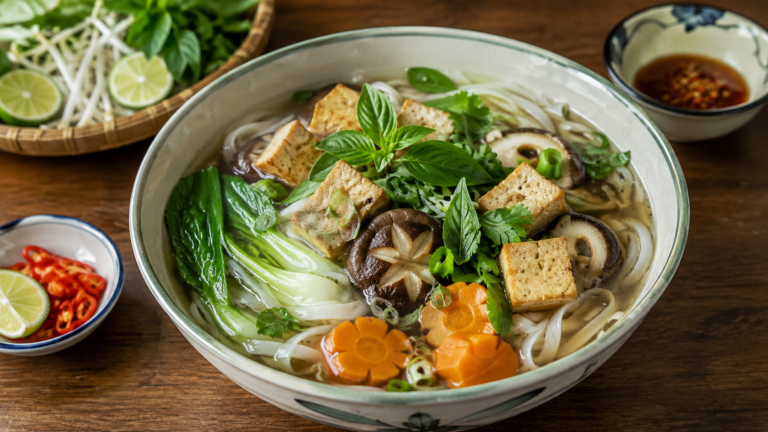
A bowl of phở may look simple when it reaches your table, but the broth could have been cooking for many hours.
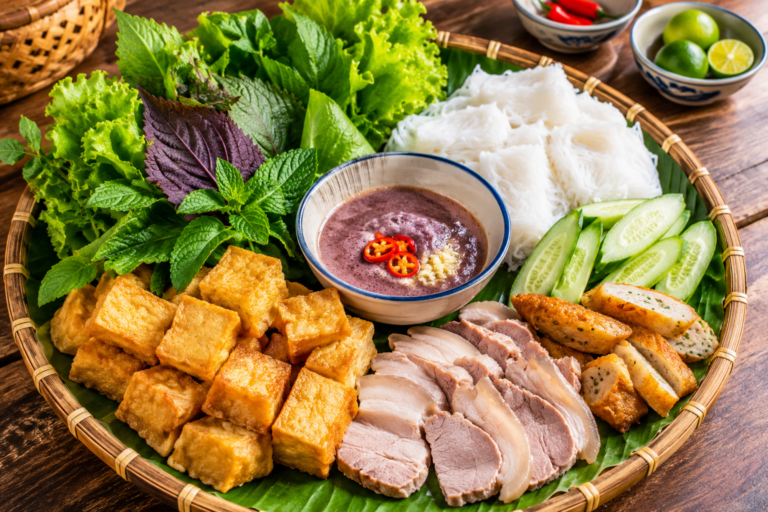
Bún chả requires grilled meat, noodles, herbs, vegetables, and a carefully balanced dipping sauce.
Bánh xèo needs the right batter, temperature, filling, herbs, and dipping sauce.
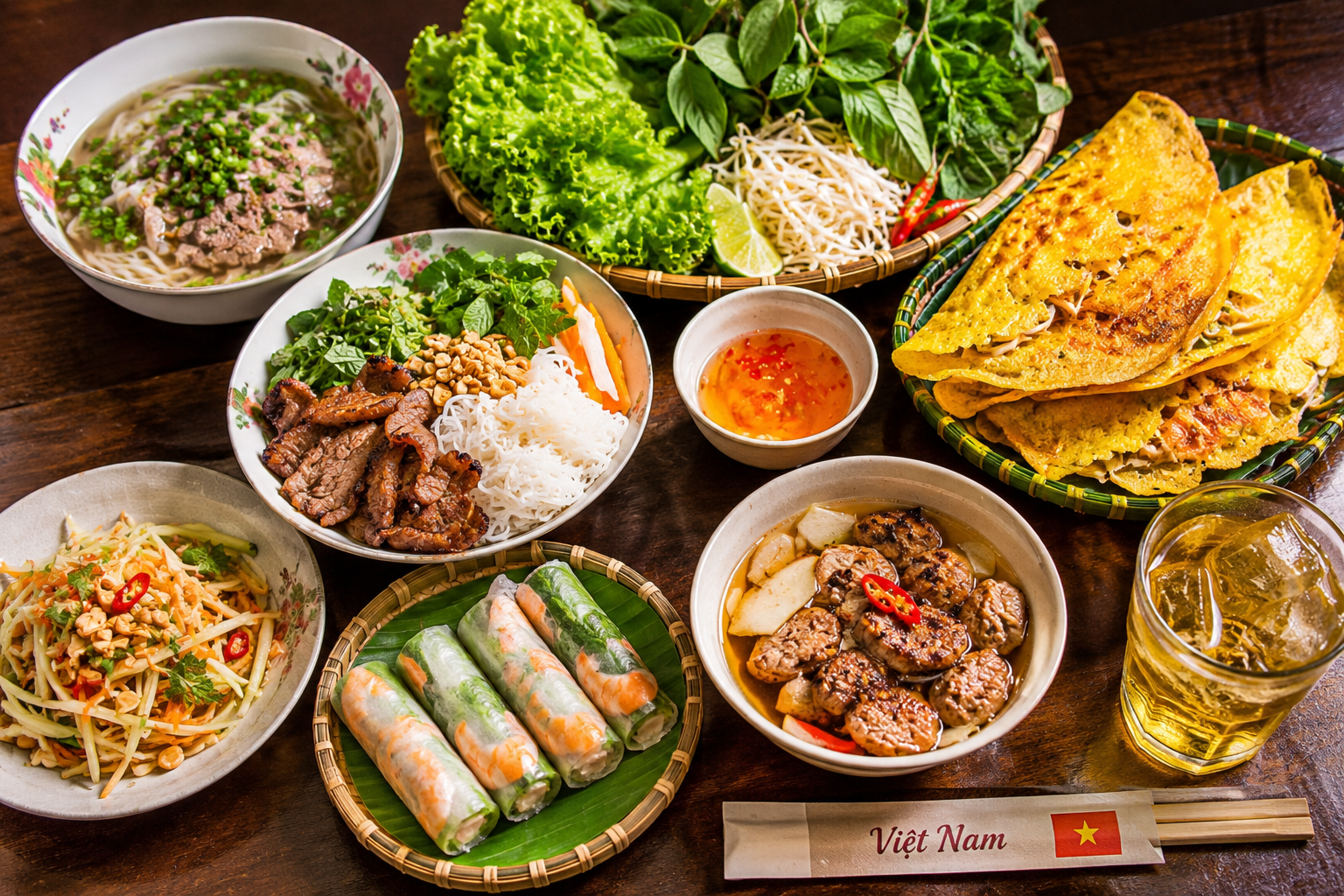
The dining environment may be inexpensive.
The cooking itself can be remarkably sophisticated.
How Much Does Vietnamese Street Food Cost?
Prices vary considerably depending on the city, neighborhood, ingredients, and whether you are eating in a tourist area.
However, traditional local meals are generally very affordable compared with restaurant prices in many other countries.
A simple local meal might cost only a few tens of thousands of Vietnamese dong, while dishes with larger portions, seafood, premium beef, or more elaborate preparation will naturally cost more.
Tourist districts in places such as Da Nang, Hanoi, and Ho Chi Minh City can also be more expensive than residential neighborhoods.
The important thing is not to assume that the cheapest restaurant is automatically the most authentic.
Quality ingredients, cleanliness, preparation, location, air conditioning, service, and food safety all cost money.
Sometimes paying slightly more provides a much better overall experience.
Street Food vs. Traditional Vietnamese Restaurants
Travelers do not have to choose between street food and restaurants.
Both are part of experiencing Vietnamese cuisine.
Street stalls are fantastic for quick meals and discovering dishes that local people eat every day.
Traditional restaurants are often better when you want to try several dishes together, eat with family or friends, escape the heat, or experience Vietnamese family-style dining.
In cities like Da Nang, you can easily do both.
Have a bowl of phở from a neighborhood shop in the morning, grab bánh mì in the afternoon, and enjoy a full Vietnamese family meal in a comfortable restaurant for dinner.
That variety is one of the best things about eating your way through Vietnam.
Why Affordable Food Is Part of Vietnamese Culture
Ultimately, Vietnamese street food stays affordable because the entire system was built around everyday eating.
These dishes were not originally created for tourists.
They are everyday meals.
Workers eat them before starting the day.
Students eat them between classes.
Families eat them together.
Office workers stop for a quick bowl of noodles at lunch.
Because local customers eat these foods regularly, vendors have strong pressure to keep prices reasonable.
At the same time, competition is everywhere.
If one bowl of noodles becomes too expensive without becoming noticeably better, customers can often find another restaurant just a few streets away.
That competition helps preserve Vietnam’s incredible culture of affordable food.
Final Thoughts
Vietnamese street food is cheap, but it should never be confused with being low quality simply because of the price.
Its affordability comes from efficiency.
Small restaurants reduce overhead. Vendors specialize in a few dishes. Local markets keep supply chains short. Ingredients are used efficiently. Families operate businesses together. High customer turnover allows smaller margins.
And behind many simple-looking dishes are recipes that have been refined for decades.
That combination is difficult to reproduce anywhere else.
So when you sit on a small plastic stool in Vietnam with a steaming bowl of noodles in front of you, remember that the low price is only part of the story.
What you are really experiencing is a food system that has spent generations learning how to make delicious everyday meals accessible to almost everyone.
And that may be one of the best things about Vietnamese food.