Vietnamese Breakfast: What Vietnamese People Really Eat Every Morning
What do people eat for breakfast in Vietnam? There is no single national breakfast. A morning meal might be a bowl of noodle soup, a baguette sandwich on the way to work, a packet of sticky rice, or rice with grilled pork. Some people eat at home; others visit neighborhood shops or buy takeaway. The choice changes with the city, family, schedule, and personal taste.
This guide introduces the dishes travelers are likely to encounter, with regional context, useful Vietnamese ordering phrases, and practical food-safety advice. It describes common options, not a claim that every Vietnamese person eats the same meal every morning.
What makes Vietnamese breakfast different?
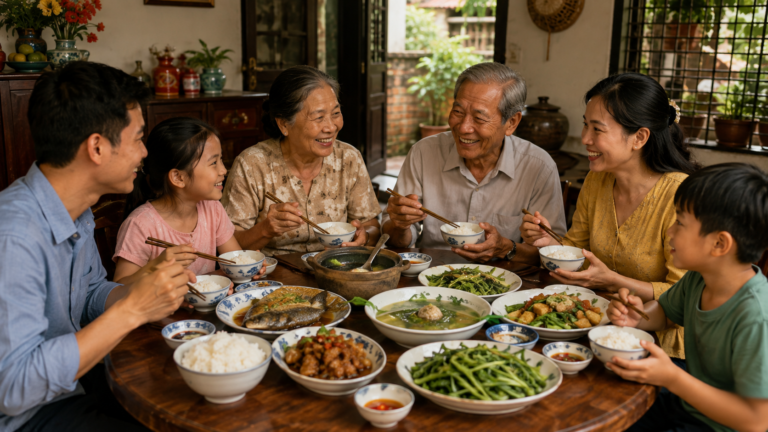
Hot savory foods are a familiar sight in the morning, but breakfast is not limited to soup. Bread, rice, sticky rice, steamed rolls, porridge, and coffee can all be part of it. A dish considered “lunch food” elsewhere may be an everyday breakfast in Vietnam. Many small shops focus on a single specialty, although opening times and menus vary widely.
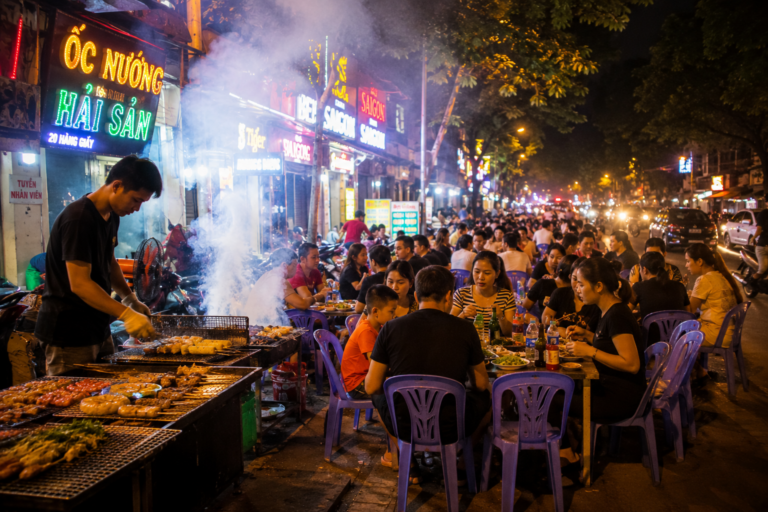
Travelers often notice stalls operating early, especially near residential streets, offices, and markets. That does not mean every vendor starts at the same hour or that busy shops are automatically safe. The most useful habit is to find out what a place serves and when it actually opens.
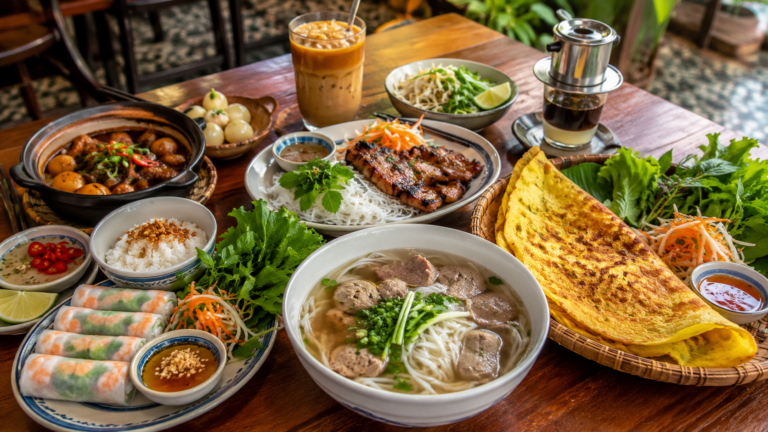
Nine Vietnamese breakfast foods to recognize
| Dish | What to expect | Common association |
|---|---|---|
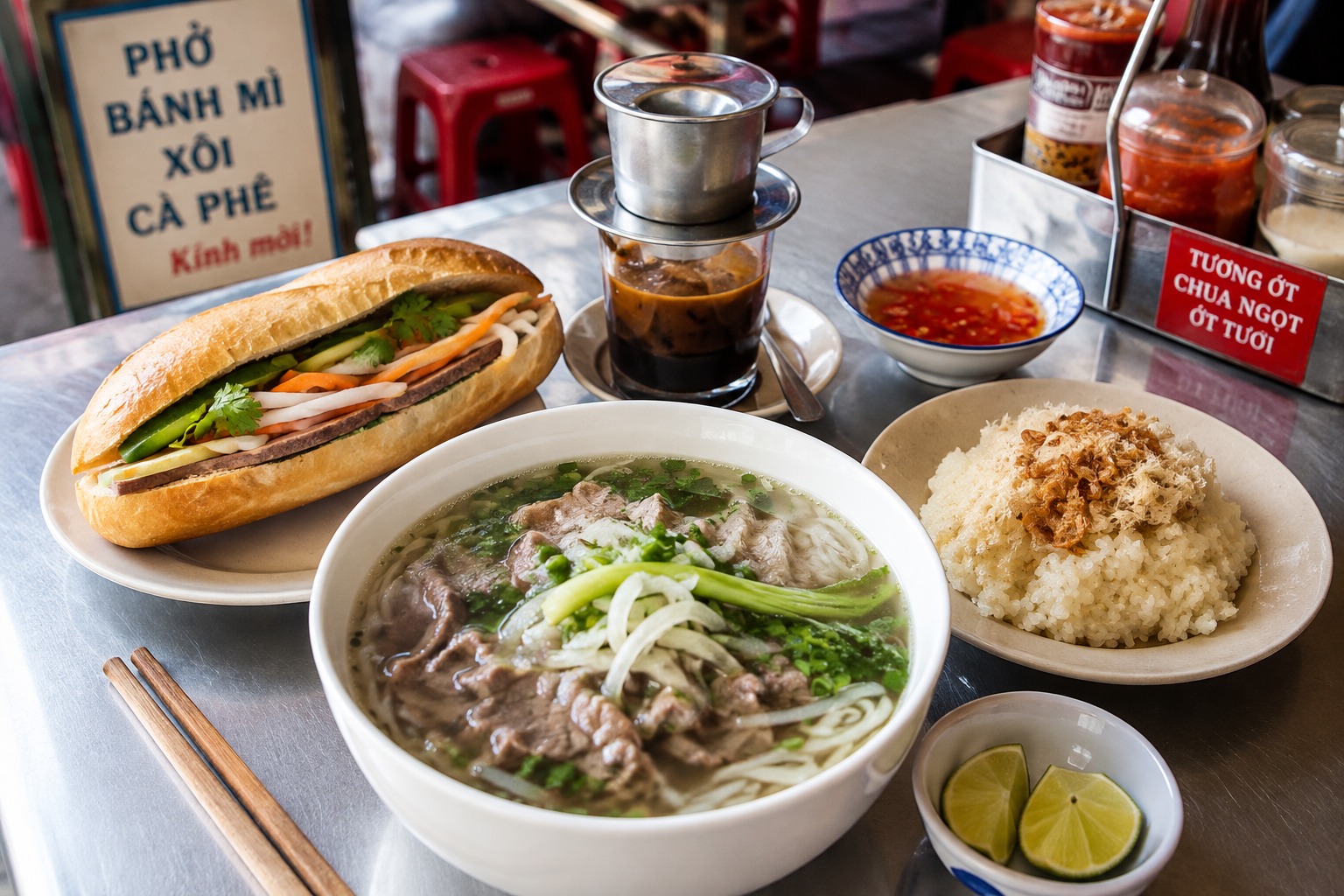
| Phở | Rice noodles in beef or chicken broth | Nationwide; northern roots |
| Bánh mì | Baguette sandwich with fillings of your choice | Nationwide |
| Xôi | Sticky rice, savory or sweet | Nationwide |
| Bún bò Huế | Lemongrass-scented noodle soup with beef and often pork | Huế / Central Vietnam |
| Mì Quảng | Wide noodles with toppings and relatively little broth | Quảng region / Da Nang |
| Bánh cuốn | Steamed rice rolls, often with pork and mushrooms | Northern Vietnam |
| Cơm tấm | Broken rice, usually with grilled pork and accompaniments | Southern Vietnam |
| Cháo | Rice porridge, with optional meat or other toppings | Across Vietnam |
| Hủ tiếu | Noodle soup or dry noodles with varied toppings | Especially the South |
These are starting points rather than an exhaustive list. Regional styles travel too: you can find southern and northern dishes in Da Nang and vice versa. Menus may vary in toppings, spice, meat, and portion size.
Northern breakfasts: phở, bánh cuốn and more
Phở: A typical bowl contains rice noodles, broth, herbs, and either beef (phở bò) or chicken (phở gà). Shops may serve condiments on the side. It can be a morning meal but is also eaten at other times, depending on the city and establishment.
Bánh cuốn: Thin steamed sheets of rice batter are wrapped or folded, often around minced pork and wood-ear mushrooms. They may be topped with fried shallots and served with dipping sauce and Vietnamese sausage. Some varieties use different fillings or no meat; always ask if you have dietary restrictions. The Vietnam Tourism guide to Vietnamese rolls explains the northern connection.
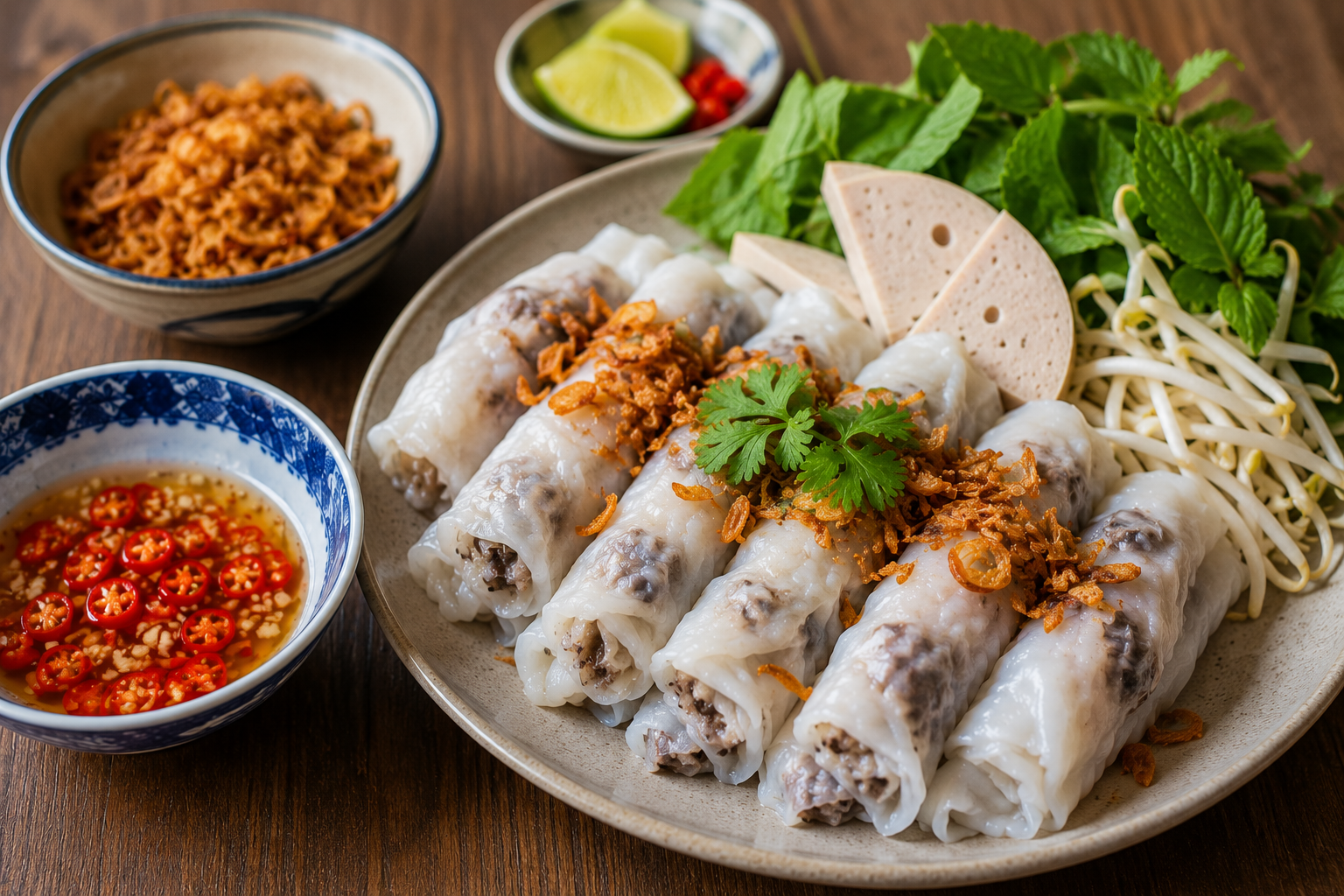
Also worth looking for: xôi (sticky rice) can be packed for takeaway and topped with mung beans, peanuts, pork floss, chicken, or coconut, depending on the version. It is not always sweet. Travelers avoiding peanuts, pork, or other ingredients should ask before ordering.
Central Vietnam: bún bò Huế and mì Quảng
Bún bò Huế: Originating in Huế, this soup is known for thick round rice noodles and a broth seasoned with lemongrass, often chili and fermented shrimp paste. Beef and pork cuts may appear together. It can be spicy, but spice levels vary and a request for less chili cannot remove flavorings already cooked into the broth. Read the official Huế food overview for background.
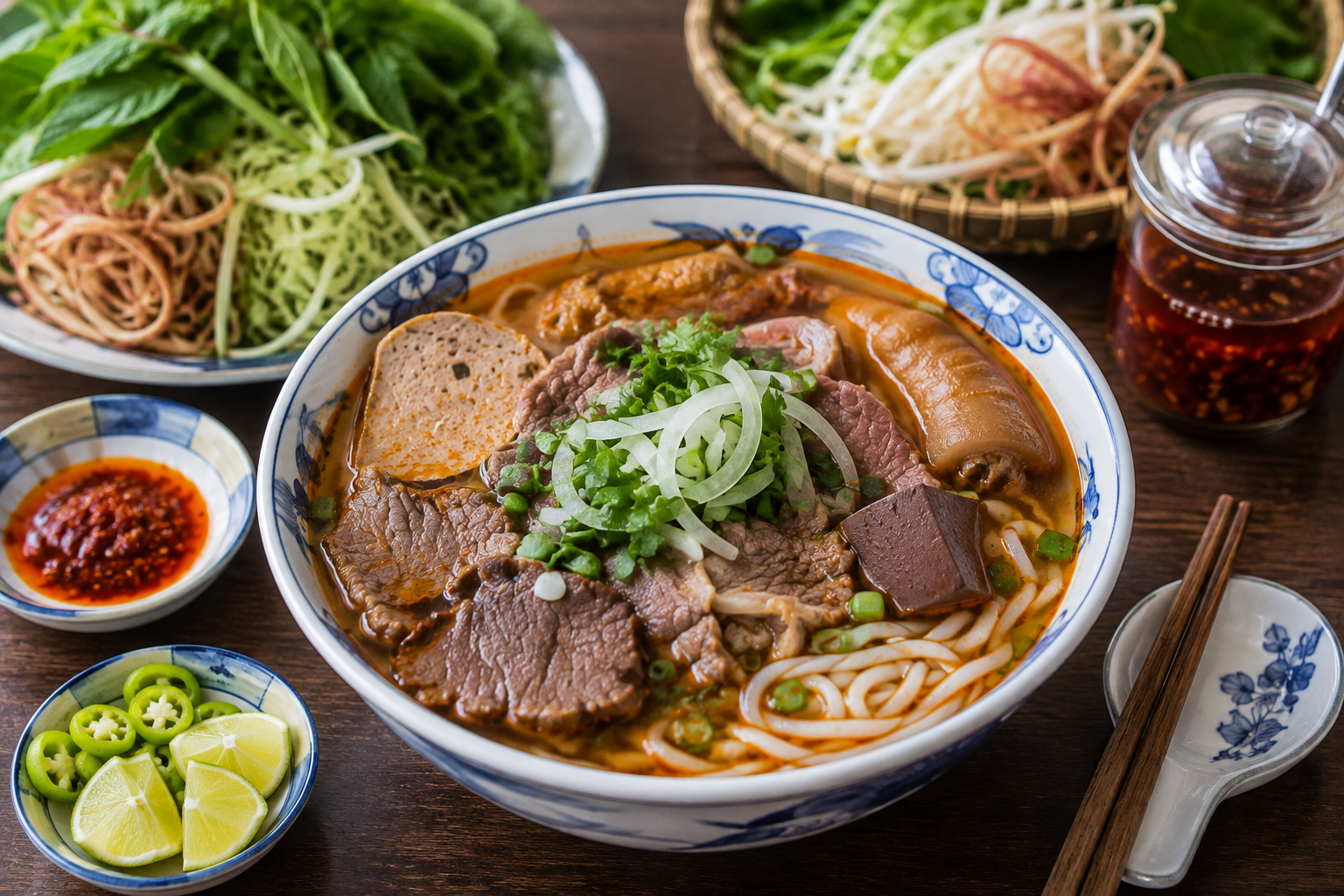
Mì Quảng: A signature food of the Quảng region, including Da Nang, made with broad noodles, aromatic toppings, herbs, and typically only a modest amount of concentrated broth. Shrimp, pork, chicken, eggs, and crunchy rice crackers are possible additions rather than mandatory ingredients. The Da Nang tourism authority’s mì Quảng guide describes the dish.
If you are spending a morning in Da Nang, either of these is a worthwhile local choice. They are also served at other times; look at the shop’s posted opening hours rather than assuming it is breakfast-only.
Southern mornings: cơm tấm and hủ tiếu
Cơm tấm: Broken rice commonly paired with grilled pork, scallion oil, pickles, an egg, and a sweet-savory fish-sauce dressing. It is closely associated with Ho Chi Minh City and can be breakfast, lunch, or dinner. See Vietnam Tourism’s Ho Chi Minh City food guide for an example of the breakfast tradition.
Hủ tiếu: A southern noodle family with many regional styles and both soup (nước) and dry (khô) versions. Depending on the shop, toppings might include pork, seafood, or other proteins. Ask which style is being served instead of assuming every bowl is alike.
Cháo, a savory rice porridge, is another breakfast-friendly dish found across Vietnam. It may be made with chicken, pork, fish, or other additions and can be a gentler-feeling option for someone who does not want a sandwich or grilled meal, though preparation and ingredients still vary.
Is coffee part of every Vietnamese breakfast?
Coffee is a popular morning drink, but it is optional. People may choose tea, water, soy milk, or another drink. A cà phê đen is black coffee; cà phê sữa usually means coffee with condensed milk, and đá indicates ice. Bạc xỉu is typically a milk-forward coffee drink. See Vietnam Tourism’s coffee guide for different styles.
If you want less sweetness or have dairy restrictions, tell the café. Condensed milk is not suitable for everyone, and an iced drink’s safety depends on the water and ice used.
When and where to eat breakfast
Many breakfast shops open in the early morning, and some popular specialties may sell out before lunchtime, but there is no universal 6:00–8:30 a.m. schedule. A hotel restaurant, office-area noodle shop, market stall, or takeaway counter may follow different hours. Check the current opening time before traveling across town.
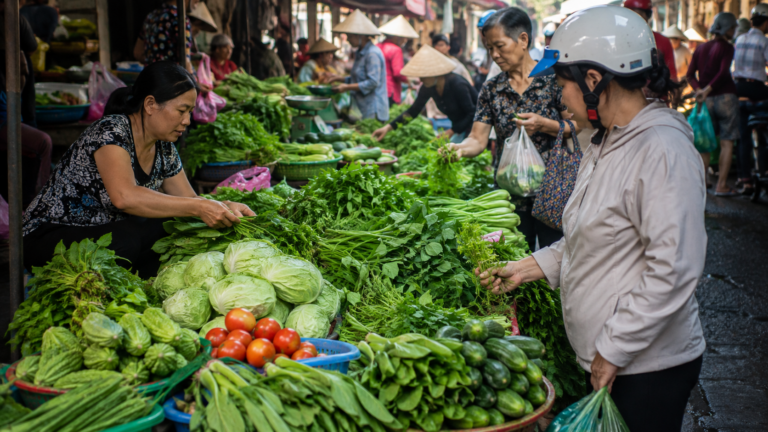
In Da Nang, look around residential neighborhoods and markets as well as tourist areas. A one-specialty shop can be interesting, but the size of its menu and length of its queue are not reliable proof of quality or food hygiene. Compare the actual preparation, ingredients, cleanliness and the dish you want.
How to order: useful short Vietnamese phrases
Pointing to an item on a menu or showing a written phrase on your phone is often more reliable than guessing a pronunciation. Vietnamese tones affect meaning; short, clear written requests help when it is noisy.
| Vietnamese | Meaning |
|---|---|
| Cho tôi một tô phở bò. | One bowl of beef phở, please. |
| Cho tôi một phần này. | One serving of this, please. |
| Cho tôi một ổ bánh mì mang đi. | One bánh mì to take away, please. |
| Không cay, làm ơn. | Not spicy, please. |
| Có thịt heo không? | Does it contain pork? |
| Bao nhiêu tiền? | How much is it? |
| Tính tiền giúp tôi. | The bill, please. |
For more explanations about portions, spice level, and restaurant etiquette, read our Vietnamese food ordering guide. If you want to explore rice dishes beyond breakfast, see our guide to Vietnamese rice dishes.
Food safety matters more than a long queue
A busy stall does not guarantee safe food, and “freshly cooked” is not a promise that every ingredient or garnish is safe. The U.S. CDC advises travelers to be careful with food from street vendors, raw produce, undercooked foods, and potentially unsafe water or ice. People seeking the lowest practical foodborne-illness risk should follow the CDC’s Vietnam guidance and food and water precautions.
- Hot food: Prefer thoroughly cooked food that is served hot rather than meat, fish, or eggs that are raw or undercooked.
- Raw herbs and vegetables: Treat items washed in uncertain water with care, even if they are customary accompaniments.
- Drinks: Where drinking-water or ice quality is uncertain, choose sealed drinks or other safer options according to travel-health guidance.
- Allergens: Fish sauce, shrimp paste, peanuts, wheat, eggs, and pork can appear in sauces or toppings. A food name alone does not establish that a dish is allergy-safe.
- Payment: Cash is useful, but payment methods and whether you pay before or after eating vary by venue. Ask the price and payment method before ordering when unsure.
Common questions
What is the most popular Vietnamese breakfast?
Phở and bánh mì are internationally recognizable, but regional favorites such as xôi, bánh cuốn, mì Quảng, bún bò Huế, cơm tấm, and hủ tiếu are also common. There is no single dish every Vietnamese person eats.
How much does breakfast cost in Vietnam?
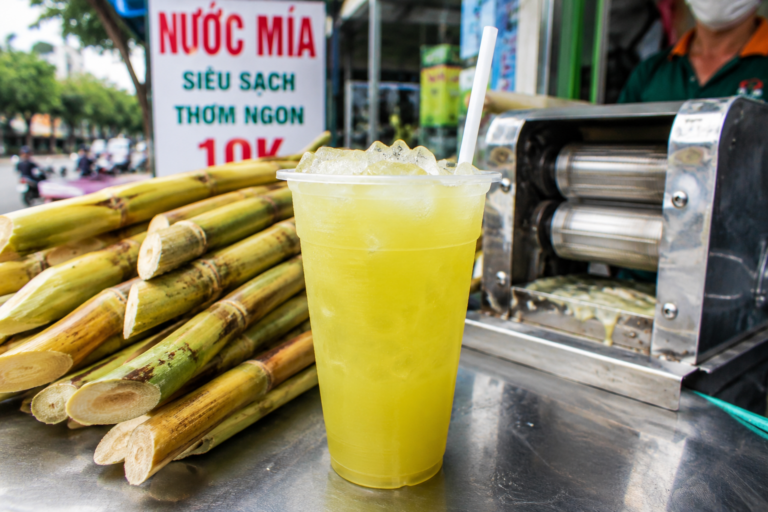
Prices depend heavily on the city, neighborhood, ingredients, serving size, and restaurant. There is no reliable fixed national breakfast price, and a price printed in an old photo may not be current. Check a recent menu or ask Bao nhiêu tiền? before ordering.
Is Vietnamese breakfast automatically healthy?
No cuisine is automatically nutritious or safe just because it is traditional. A breakfast’s nutritional profile depends on portions, ingredients, cooking methods, sodium, sugar, and individual dietary needs. Some dishes offer vegetables and protein; others may contain considerable salt, fat, or added sugar.
Do I have to eat street food to experience breakfast?
Not at all. Neighborhood restaurants, hotel dining rooms, cafés, takeaway shops, and home meals are also part of Vietnamese breakfast life. Choose places that fit your comfort level and any food-safety requirements.
Further reading
- Vietnam Tourism: 21 must-try dishes — official background on phở, bánh mì, xôi, and bánh cuốn.
- Da Nang tourism authority: mì Quảng — Central Vietnamese noodle traditions.
- Vietnam Tourism: a food guide by region — how northern, central, and southern traditions differ.
- CDC Yellow Book: Vietnam — travel-health precautions.
- OurViet: Vietnam street snacks — more food ideas for later in the day.
Updated October 2026. Photos in this guide are illustrations of food styles, not evidence of a particular restaurant’s current menu, prices, or hygiene standards.