Vietnamese Markets Explained: What You’ll See at a Local Food Market
Vietnamese Local Food Market: What You’ll See & Expect
If you want to understand how people in Vietnam really shop, cook, and eat, visiting a local food market is one of the best places to start.
Long before supermarkets became common, traditional markets were at the center of everyday life in Vietnamese towns and cities. Even today, many families, home cooks, and restaurant owners visit local markets to buy fresh vegetables, herbs, meat, seafood, noodles, spices, and other ingredients.
For travelers, a Vietnamese market can feel overwhelming at first. There are vendors calling out prices, motorbikes squeezing through narrow lanes, baskets overflowing with herbs, fish still moving in tubs of water, and ingredients you may have never seen before.
But behind the apparent chaos is a surprisingly organized food system.
Here is what you can expect to see when visiting a local food market in Vietnam.
1. Fresh Vegetables Everywhere
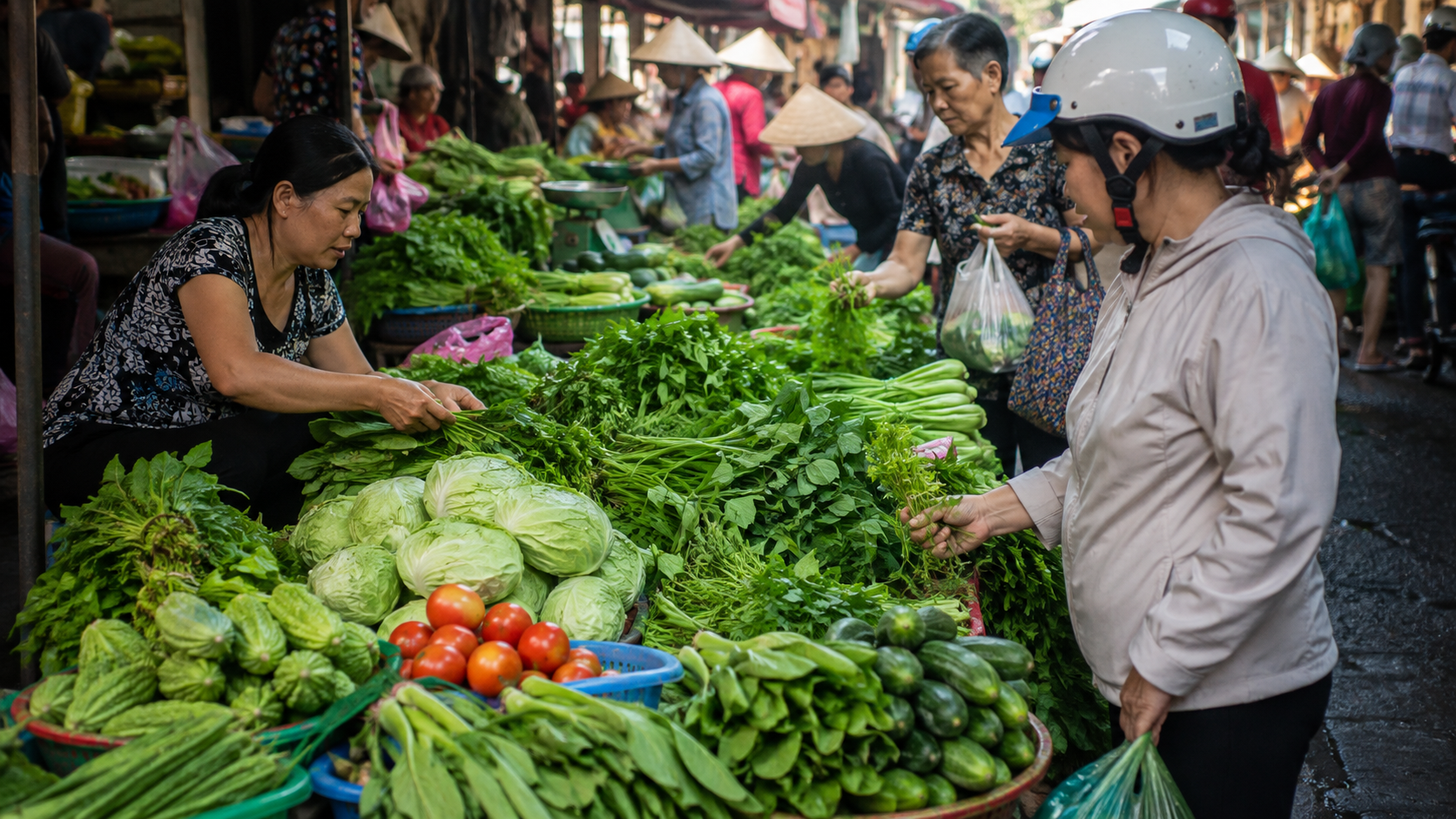
Vegetables are one of the first things you will notice.
Vietnamese markets often have entire sections filled with leafy greens, roots, gourds, mushrooms, chilies, and vegetables stacked in colorful piles.
Common ingredients include:
- Morning glory (rau muống)
- Mustard greens
- Cabbage
- Watercress
- Bitter melon
- Cucumbers
- Tomatoes
- Eggplant
- Bean sprouts
- Bamboo shoots
Many vendors specialize in only a few types of produce.
Unlike large supermarkets, where vegetables may travel through several stages of distribution, traditional markets often receive produce very early in the morning.
That is one reason many Vietnamese shoppers prefer going to the market before breakfast.
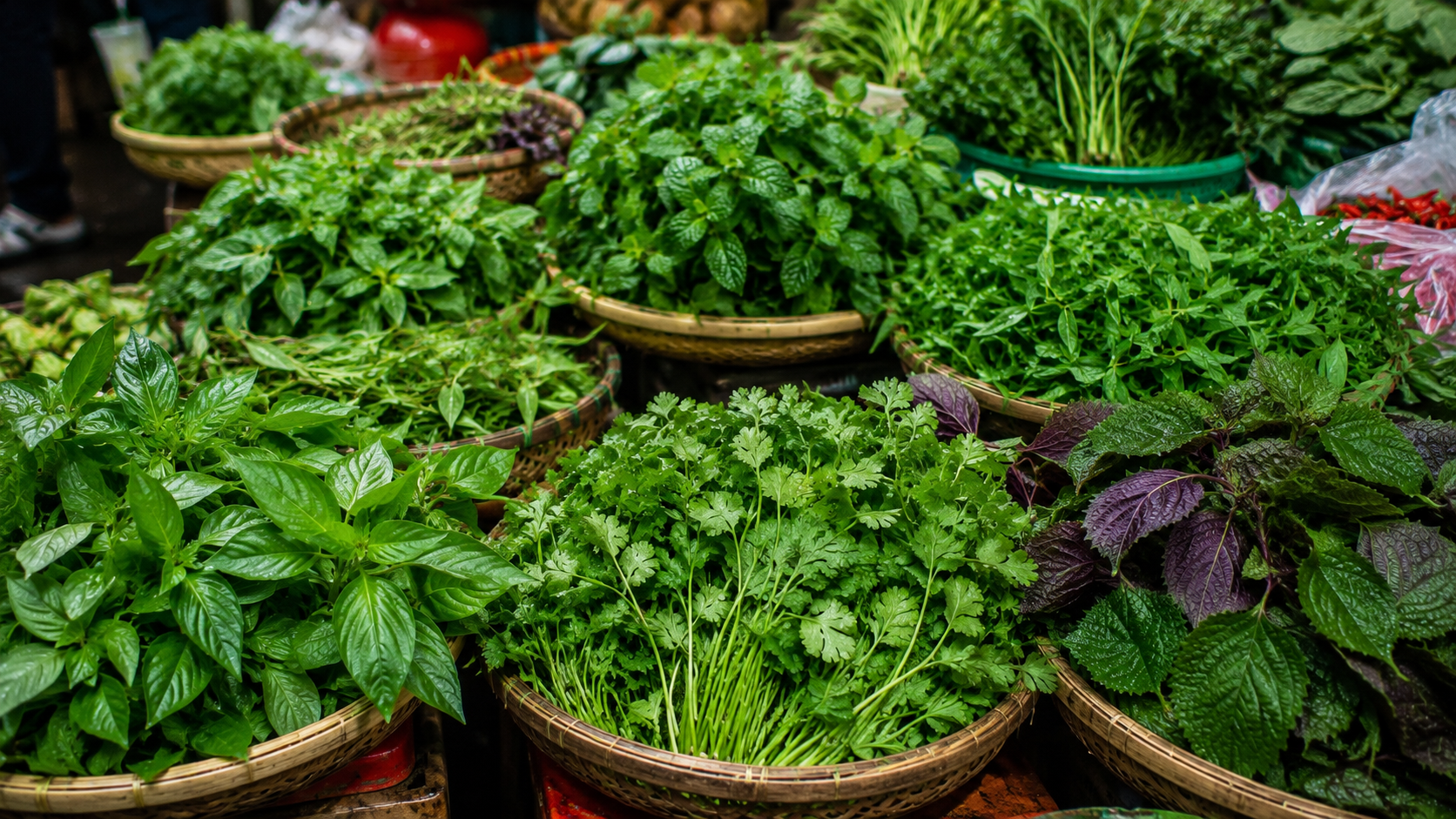
2. Mountains of Fresh Herbs
Vietnamese cuisine would be very different without fresh herbs.
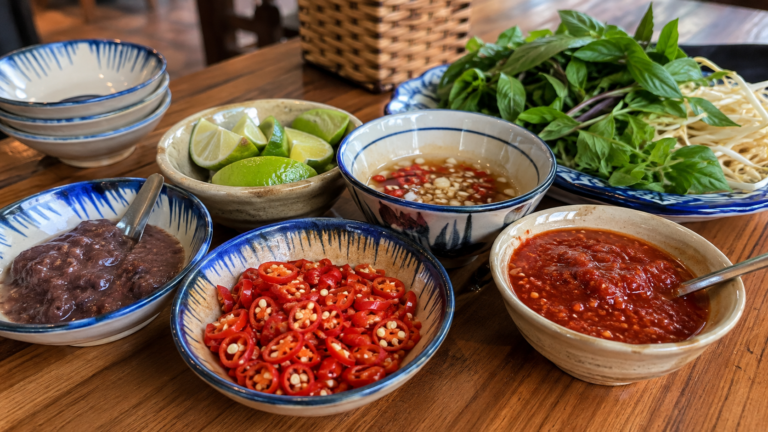
At a local market, you may see large baskets filled with basil, cilantro, mint, perilla, Vietnamese coriander, and many other aromatic leaves.
Some varieties may look almost identical to visitors but have completely different flavors.
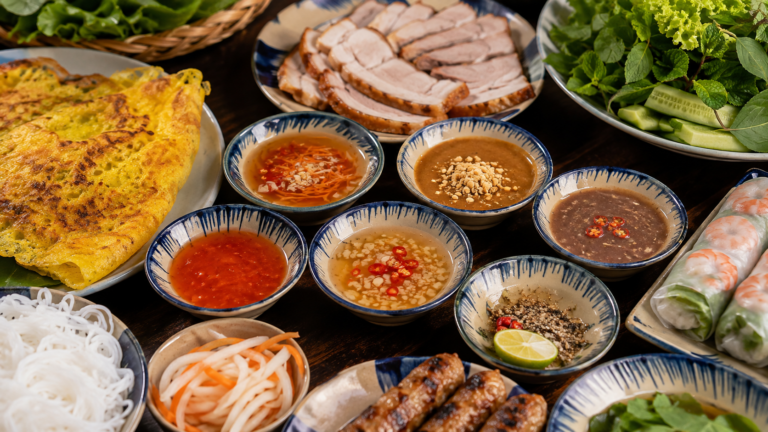
Fresh herbs are used with dishes such as phở, bánh xèo, bún chả, grilled meats, noodle soups, and fresh spring rolls.
They are not simply decoration.
In Vietnamese cooking, herbs are often treated as an important part of the dish itself.
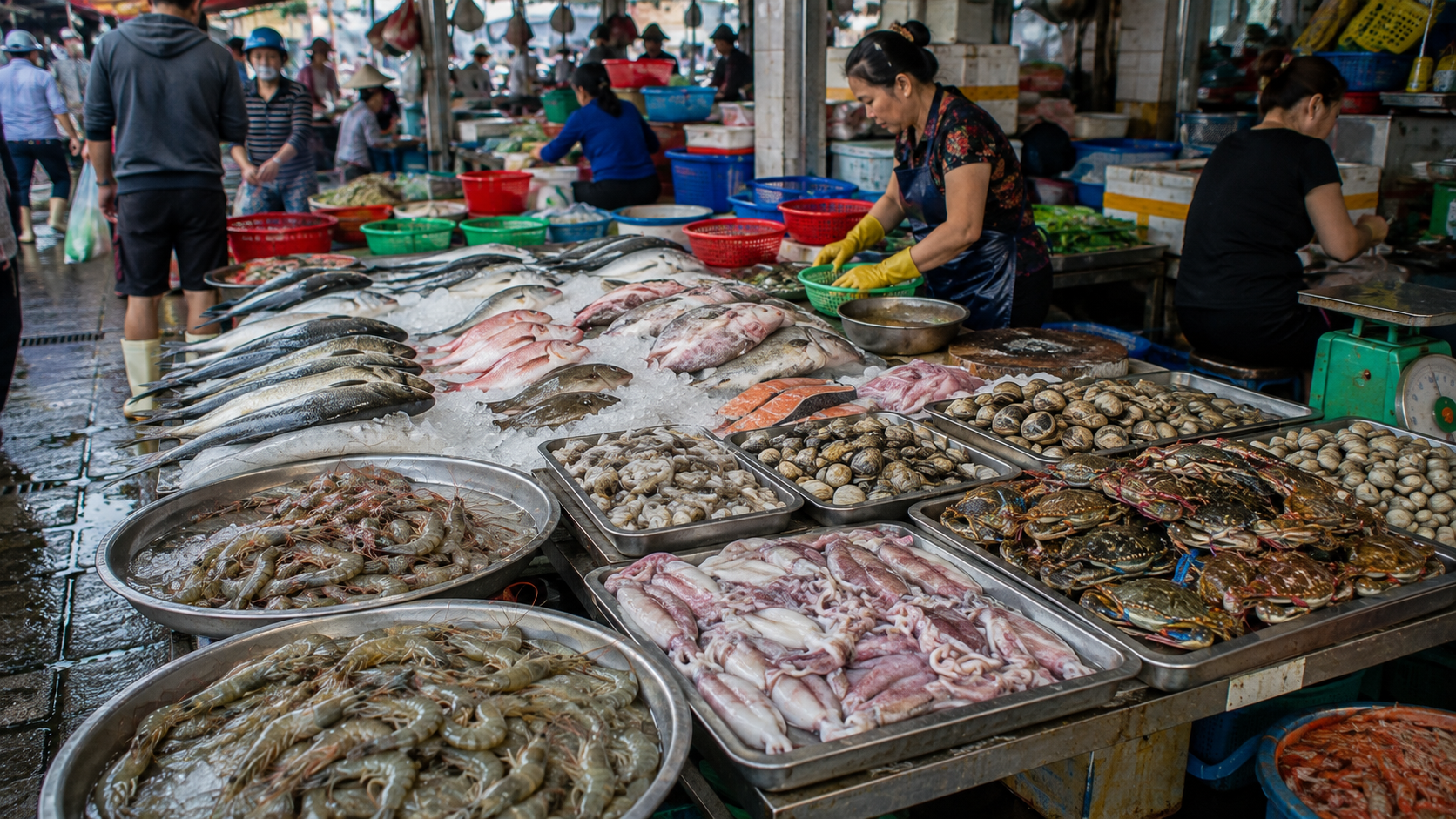
3. The Seafood Section Can Be Very Lively
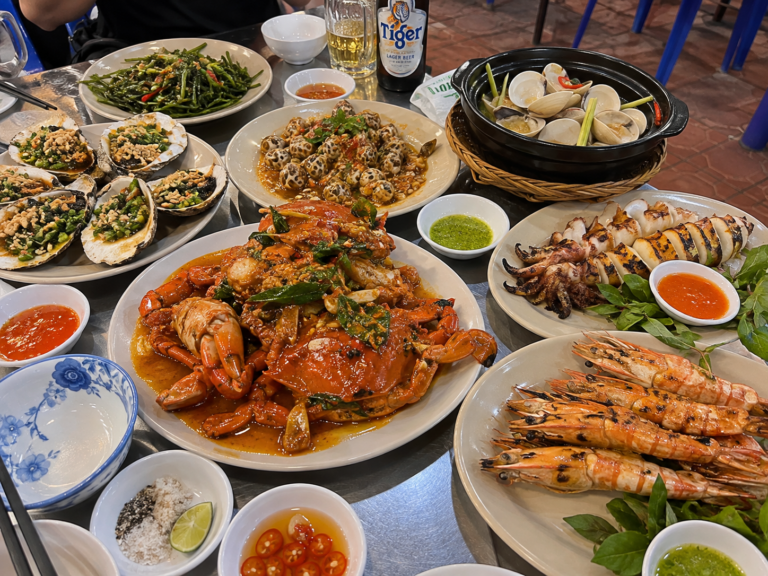
If you visit a coastal city such as Da Nang, the seafood section can be one of the most interesting parts of the market.
You may find:
- Shrimp
- Squid
- Crabs
- Clams
- Oysters
- Mussels
- Snails
- Whole fish
- Small local shellfish
Some seafood is displayed on ice, while other products may be kept alive in buckets, tubs, or shallow tanks.
Vietnam’s long coastline means seafood plays an important role in regional cooking, particularly in coastal cities and fishing communities.
Early morning is usually when seafood sections feel most active, as vendors receive fresh deliveries and restaurants begin buying ingredients for the day.
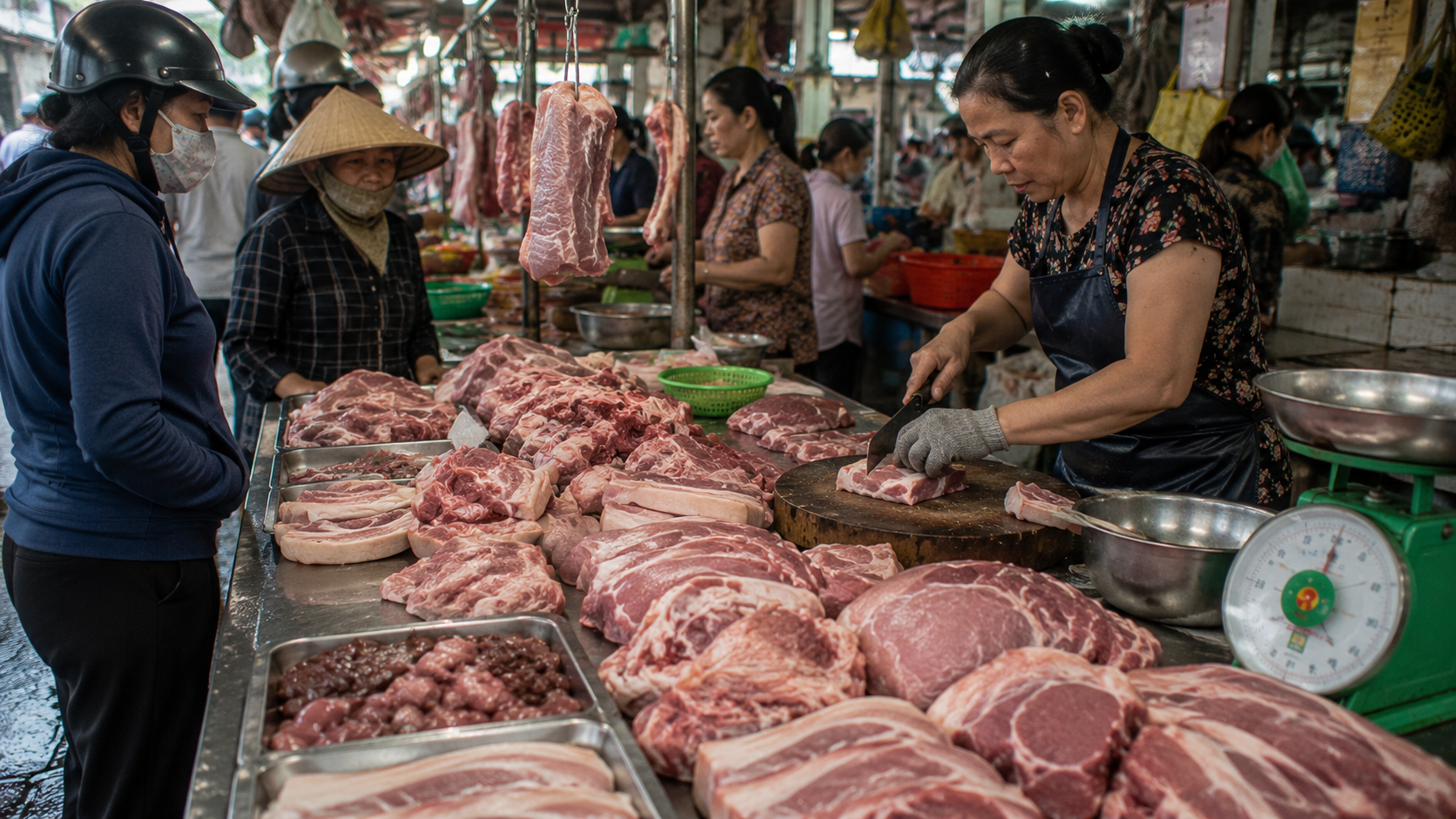
4. The Meat Section Looks Different From a Supermarket
The meat section is often one of the biggest cultural differences for first-time visitors.
Instead of individually packaged cuts inside refrigerators, traditional vendors may display larger cuts of pork, beef, or chicken on open counters.
Pork is especially important in Vietnamese cuisine.
Different cuts are used for grilled pork, soups, braised dishes, bánh mì fillings, spring rolls, and many other everyday foods.
Shoppers can usually tell the vendor exactly how much they need, and the meat can be cut accordingly.
For visitors accustomed only to modern supermarkets, the presentation can initially feel unfamiliar. However, this style of shopping remains a normal part of daily life in many parts of Vietnam.
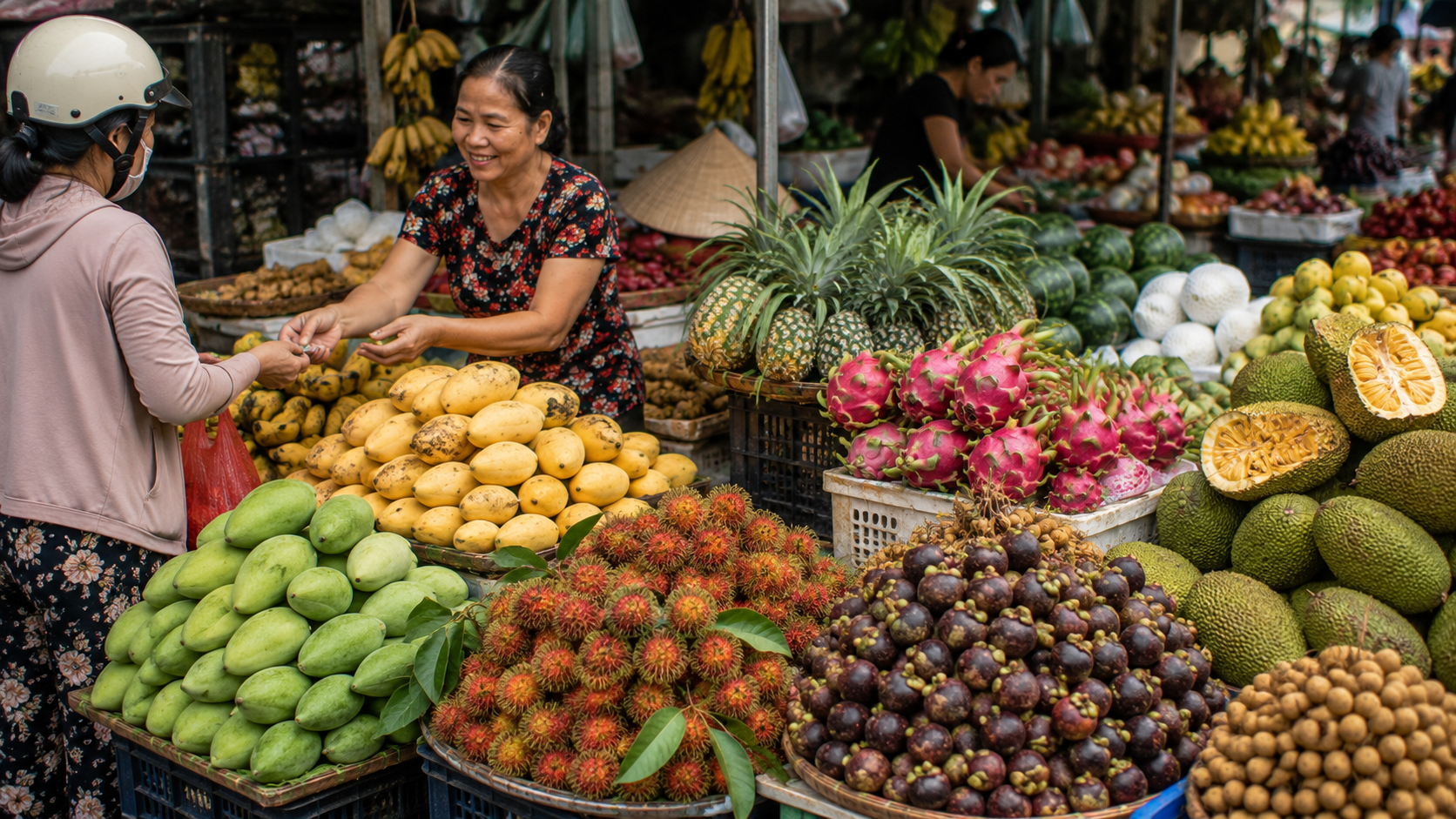
5. Tropical Fruit Is Hard to Miss
Vietnam’s tropical climate produces an enormous variety of fruit.
Depending on the season, you might find:
- Mango
- Dragon fruit
- Rambutan
- Mangosteen
- Longan
- Lychee
- Papaya
- Watermelon
- Pineapple
- Jackfruit
- Durian
Fruit stalls are often among the most colorful places in the market.
Prices and availability change throughout the year because many fruits are strongly seasonal.
Trying fruit at a local market can also be a great way to discover varieties that are difficult to find outside Southeast Asia.
6. Noodles, Rice Products, and Tofu
Not everything at the market is completely raw.
Many vendors specialize in freshly prepared ingredients that other people will cook at home.
You may see fresh rice noodles stacked in large baskets, sheets of rice paper, tofu, fermented products, and different types of noodles.
Vietnam has an extraordinary variety of rice noodles.
Phở noodles are only one example.
Different noodle shapes and textures are used for dishes such as bún bò Huế, hủ tiếu, bún thịt nướng, mì Quảng, and countless regional soups.
Buying freshly made noodles from a market remains common for both households and small food businesses.
7. Fish Sauce, Dried Foods, and Spices
Walk deeper into the market and you may encounter a completely different collection of aromas.
Dry-goods stalls often sell:
- Fish sauce
- Shrimp paste
- Dried shrimp
- Dried squid
- Dried fish
- Chili
- Pepper
- Garlic
- Shallots
- Rice
- Beans
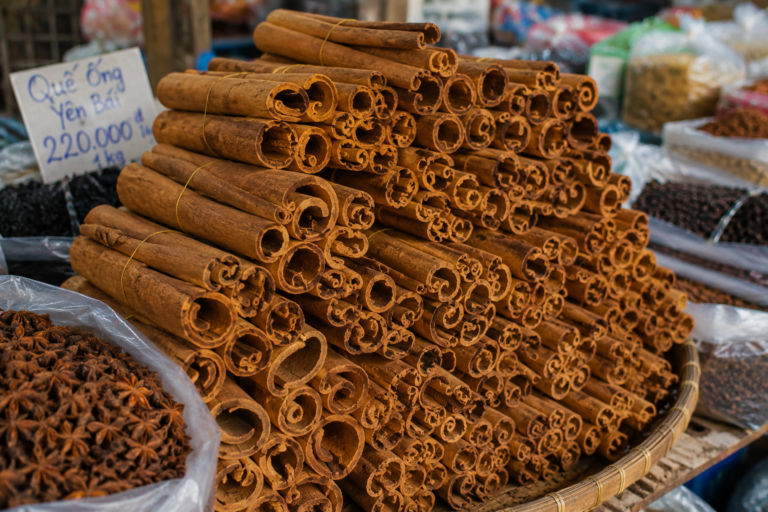
- Spices
These ingredients form the pantry behind many Vietnamese dishes.
Fish sauce in particular is fundamental to Vietnamese cooking and appears in marinades, dipping sauces, soups, stir-fries, and braised dishes.
Different regions and families may prefer different styles, strengths, and brands.
8. You Can Often Eat Inside the Market
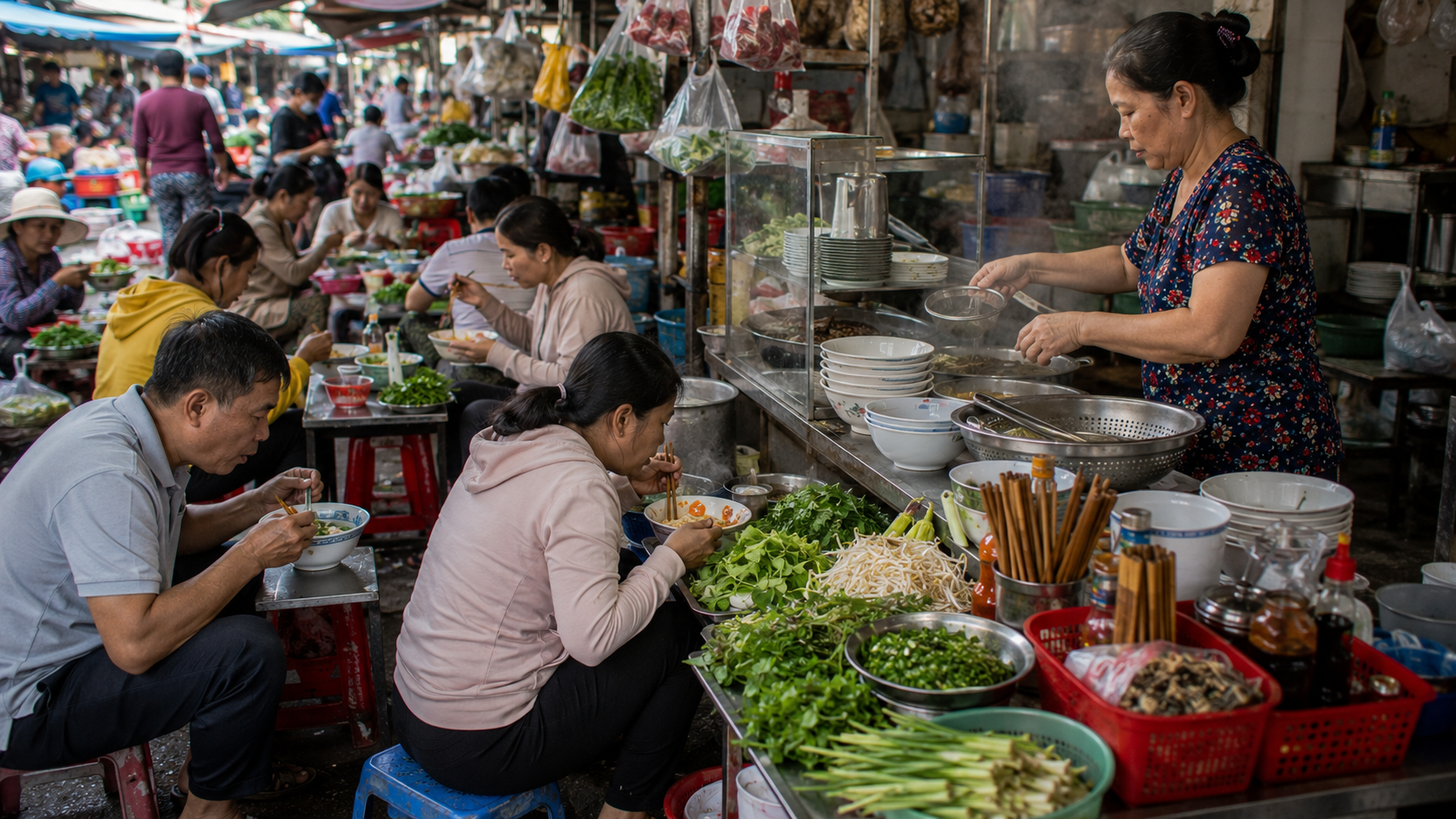
One of the best surprises for travelers is discovering that many Vietnamese markets are also places to eat.
Small food stalls may be hidden between produce vendors or gathered in a dedicated food section.
Depending on the region, you might find dishes such as:
- Phở
- Bún chả
- Bún bò
- Bánh mì
- Bánh xèo
- Mì Quảng
- Rice dishes
- Chè
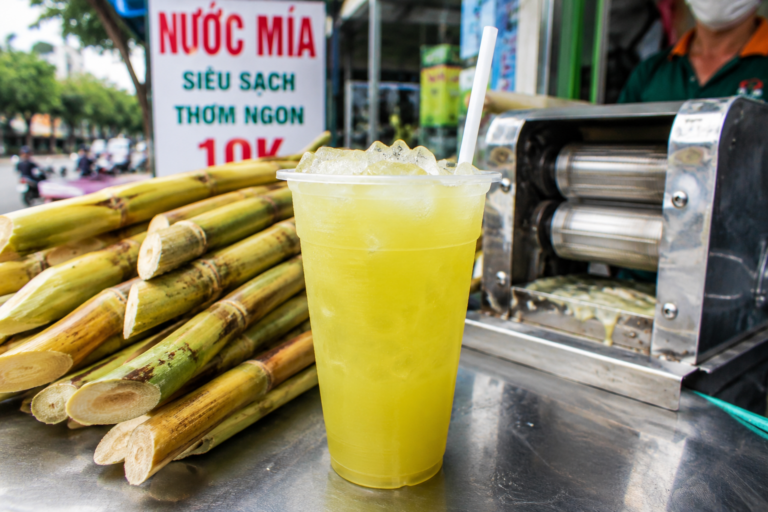
- Fresh fruit drinks
These stalls often serve local workers and shoppers, so the food tends to be practical, quick, and closely connected to everyday Vietnamese eating habits.
9. Motorbikes Are Part of the Experience
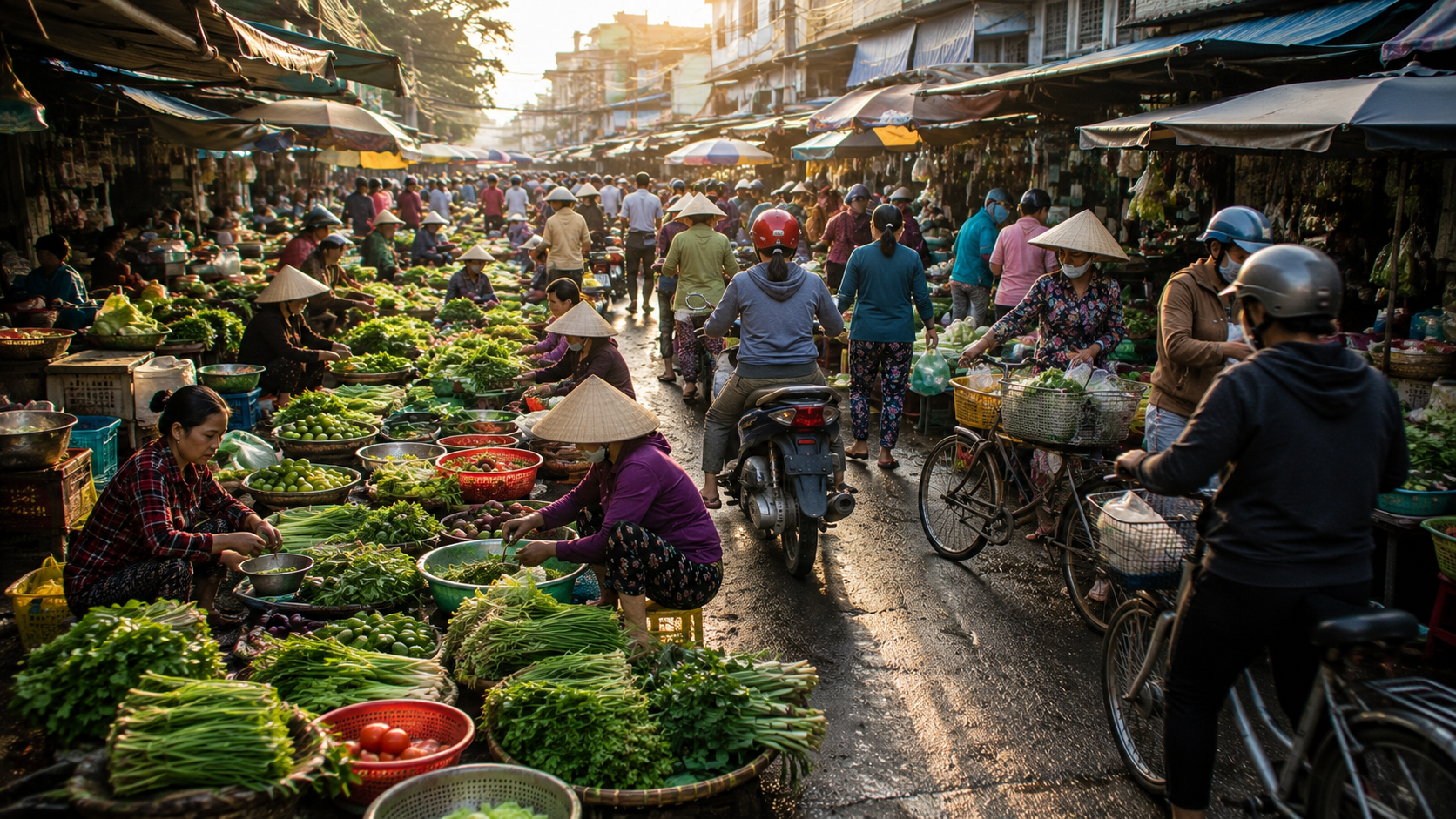
Do not be surprised if you see motorbikes moving through areas that look far too narrow for vehicles.
In many Vietnamese markets, shoppers may ride directly up to vendors, purchase ingredients, and continue to another stall without parking far away.
To someone visiting Vietnam for the first time, this can look chaotic.
For locals, however, it is simply an efficient way to shop.
Markets are designed around speed and familiarity. Regular customers often know exactly which vendors they want to visit and what they need to buy.
10. Bargaining Is Common — But Not Always Necessary
Visitors often wonder whether they should negotiate prices.
The answer depends on what you are buying.
Small negotiations can be common for clothing, souvenirs, or larger purchases. For inexpensive food ingredients, aggressive bargaining is usually unnecessary.
Watching local customers can help you understand how a particular market works.
Learning a few Vietnamese numbers can also make the experience easier.
Even if you cannot speak Vietnamese, friendly communication, pointing, and using a calculator or phone usually works perfectly well.
11. The Best Time to Visit Is Usually Early
Traditional food markets often start surprisingly early.
Between roughly 6:00 and 9:00 in the morning, you are more likely to see markets at their busiest.
This is when many households and restaurant workers buy ingredients for the day.
Vegetables look fresh, seafood deliveries are arriving, breakfast stalls are active, and vendors are fully stocked.
Later in the afternoon, some sections may become quieter or have fewer products available.
Tips for Visiting a Vietnamese Local Market
A traditional market is generally easy to visit, but a few simple habits can make the experience more enjoyable.
Bring small Vietnamese đồng notes because some vendors may not have change for large bills.
Wear comfortable shoes and expect the floor around seafood or fresh-food areas to occasionally be wet.
Keep your phone and valuables secure, particularly in crowded areas.
Most importantly, remember that the market is not primarily a tourist attraction. It is a working place where people are shopping, selling food, and running businesses.
Ask before taking close-up photographs of individual vendors whenever possible.
A smile and a simple “Cảm ơn” — thank you — can go a long way.
FAQ
Are Vietnamese local markets safe for tourists?
Generally, yes. Traditional markets are everyday public spaces used by local residents. As in any crowded place, keep an eye on your belongings and pay attention to motorbikes and wet floors.
Do I need to speak Vietnamese?
No. Knowing a few numbers and basic phrases helps, but pointing, calculators, and translation apps make simple purchases relatively easy.
Should I bargain at Vietnamese food markets?
You can sometimes negotiate, but bargaining aggressively over inexpensive produce or small food purchases is usually unnecessary.
What should I buy at a Vietnamese market?
Fresh tropical fruit is one of the easiest things for travelers to try. Markets are also great places to explore Vietnamese herbs, snacks, desserts, dried foods, and regional ingredients.
What time should I visit?
For a traditional food market, early morning is usually best. Around 6:00–9:00 AM offers a good chance of seeing fresh ingredients and active local shopping.
Final Thoughts
A Vietnamese local food market is more than a place to buy ingredients.
It is where you can see the building blocks of Vietnamese cuisine before they become the dishes served at restaurants and street-food stalls.
Fresh herbs explain the aromas. Mountains of rice noodles reveal how diverse Vietnamese noodle culture really is. Seafood reflects the country’s long coastline, while tropical fruit changes with the seasons.
And behind every stall is a part of everyday Vietnamese life that travelers rarely experience inside supermarkets or shopping malls.
If you are curious about Vietnamese food, spend one morning walking through a local market.
You may understand your next bowl of phở a little differently.