7 Vietnamese Noodle Dishes Every Beginner Should Try
Vietnamese noodles are much more diverse than phở. A visitor can order a fragrant beef noodle soup in Hanoi, grilled pork with separate rice vermicelli and dipping sauce, a small-broth noodle bowl in Da Nang, or chewy pork noodles in Hoi An—and each will feel like a different meal.
This beginner-friendly guide compares seven Vietnamese noodle dishes by the type of noodles, how much broth to expect, their regional associations and how to order them. Recipes change from one kitchen to another, so these descriptions are common patterns, not rules every restaurant must follow.
Seven Vietnamese Noodle Dishes at a Glance
| Dish | Noodles & serving style | Especially associated with |
|---|---|---|
| Phở | Flat rice noodles in aromatic broth | Hanoi and wider Vietnam |
| Bún chả | Rice vermicelli, grilled pork, dipping broth on the side | Hanoi |
| Bún bò Huế | Thicker round rice noodles in lemongrass-forward broth | Huế |
| Mì Quảng | Wide rice noodles, a small ladle of concentrated broth, herbs and crackers | Historic Quảng Nam region; Da Nang and Hoi An |
| Cao lầu | Firm, chewy rice noodles, pork, greens and little sauce | Hoi An |
| Hủ tiếu | Noodle dish served in soup or dry, with broth separately | Southern Vietnam |
| Bún thịt nướng | Rice vermicelli with grilled pork, vegetables and sauce; no soup bowl required | Found in multiple regions |
Need a starting point? Choose phở for a gentle soup, bún bò Huế for lemongrass and bolder flavor, mì Quảng for a Central Vietnamese specialty, or bún thịt nướng if you want noodles without a bowl of broth. Vietnam Tourism’s national noodle guide illustrates how many noodle types coexist across the country.
On This Page
- 1. Phở
- 2. Bún chả
- 3. Bún bò Huế
- 4. Mì Quảng
- 5. Cao lầu
- 6. Hủ tiếu
- 7. Bún thịt nướng
- Understanding noodle names
- Useful ordering phrases
- FAQ and travel tips
- Sources
1. Phở — Aromatic Rice-Noodle Soup
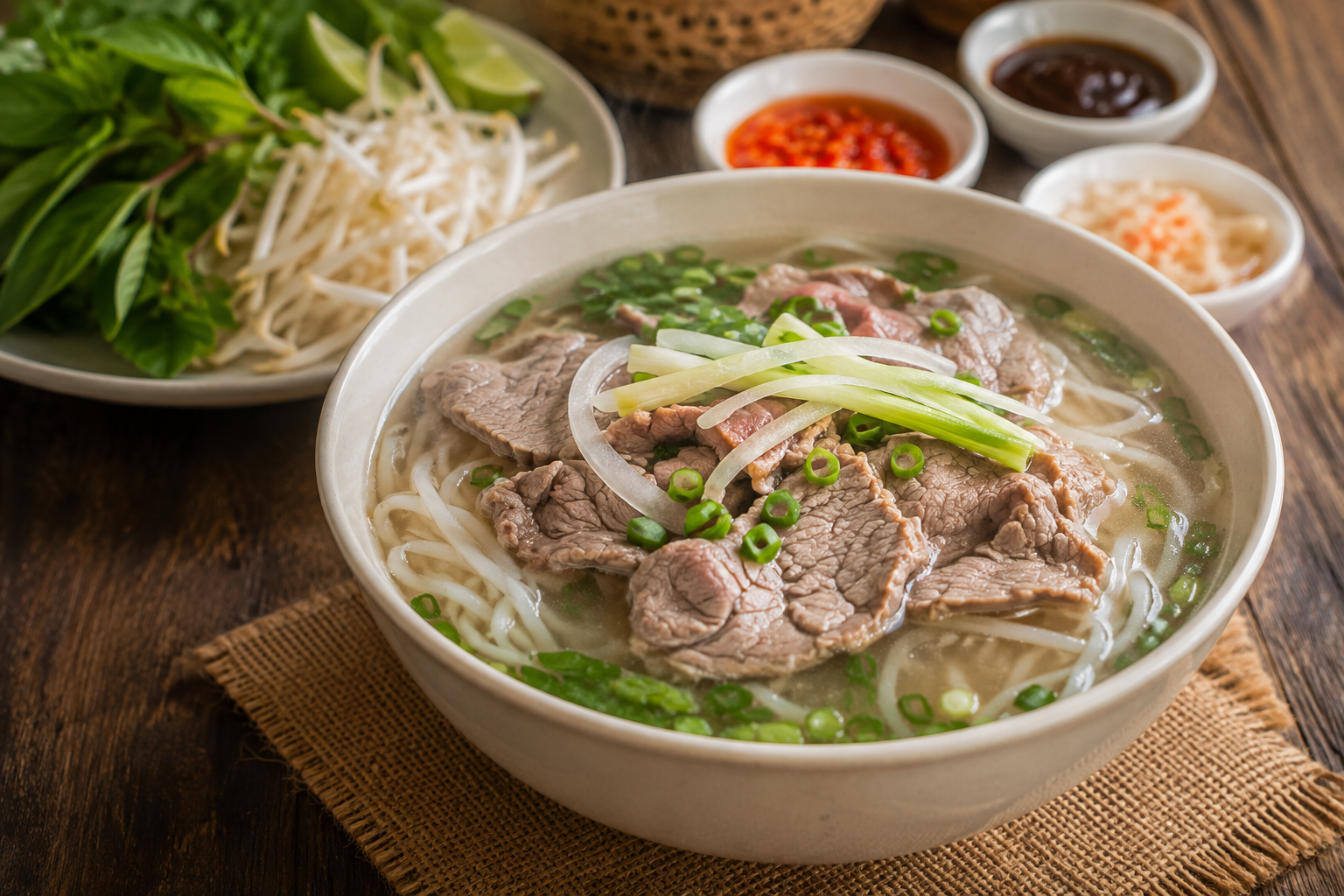
Phở is the noodle soup many first-time visitors recognize. It is usually built around flat rice noodles and a carefully seasoned broth, with phở bò (beef) and phở gà (chicken) among the most familiar versions.
The broth may contain ginger and warm spices such as star anise and cinnamon. Herbs, lime, bean sprouts, chili and sauces vary between northern and southern styles. A Hanoi-style bowl and a Ho Chi Minh City-style bowl may arrive with noticeably different accompaniments; neither is the one universal way to eat phở.
How to order: say “Cho tôi một tô phở bò” for a bowl of beef phở or “phở gà” for chicken. You can ask for extra noodles or meat, but check whether additions cost more.
The photo at the top of this article illustrates phở; the other dishes below have their own images to avoid repeating the featured picture. For more morning meal ideas, see our Vietnamese breakfast guide.
2. Bún Chả — Hanoi Grilled Pork With Rice Vermicelli
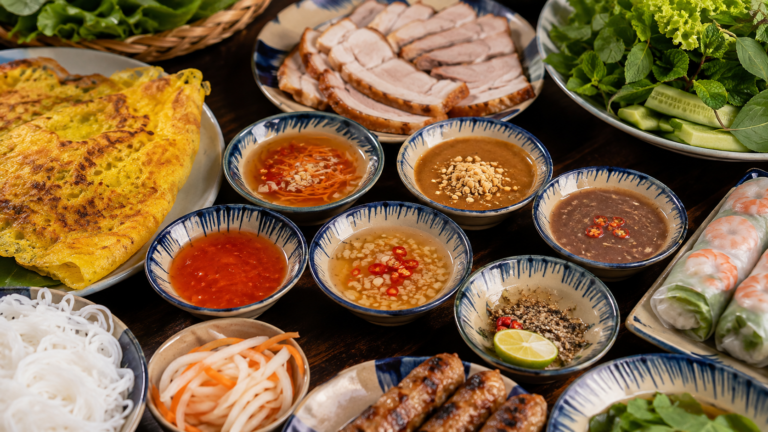
Bún chả brings together grilled pork, delicate rice vermicelli, herbs and a bowl of lightly sweet-and-sour fish-sauce-based dipping liquid. Unlike a noodle soup, the components are commonly served separately, so you decide how to combine each bite.
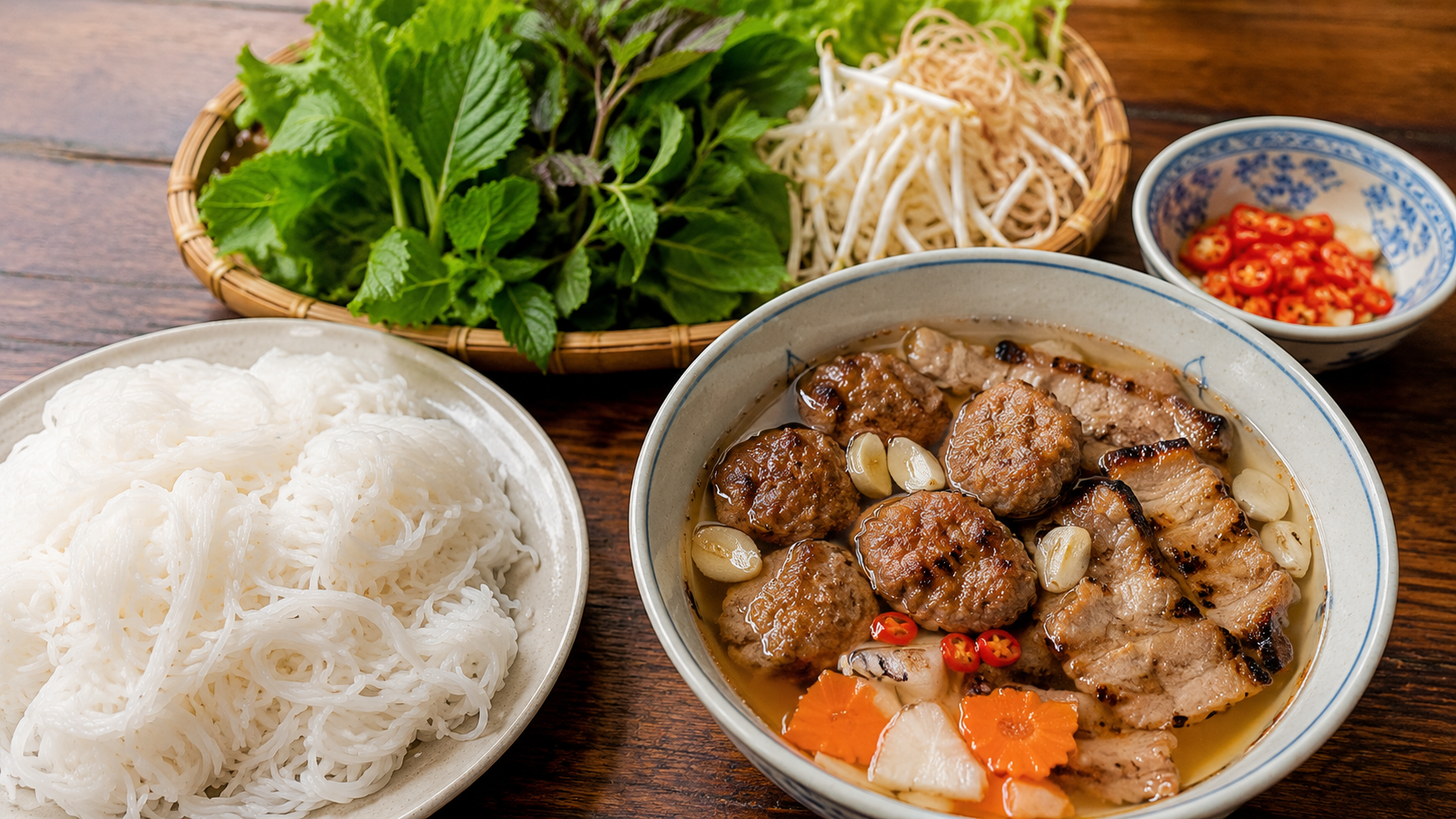
How to eat it: take a little bún and some herbs, dip or combine them with the grilled pork and sauce, and repeat. Add chili only if you want it. The fish-sauce-based dip is an important part of the dish; travelers avoiding fish products should ask the kitchen about alternatives.
Bún chả is strongly associated with Hanoi, especially as a lunch dish, though it is available in other cities too. Official Vietnam Tourism guidance describes this familiar combination of pork, vermicelli, greens and dipping sauce.
3. Bún Bò Huế — Lemongrass-Rich Noodle Soup
Bún bò Huế is associated with Huế in Central Vietnam. It uses round rice noodles that are typically thicker than the fine bún used for bún chả, served in a richly aromatic broth featuring lemongrass. Bowls often include beef and may include pork, Vietnamese sausage or other toppings depending on the cook.
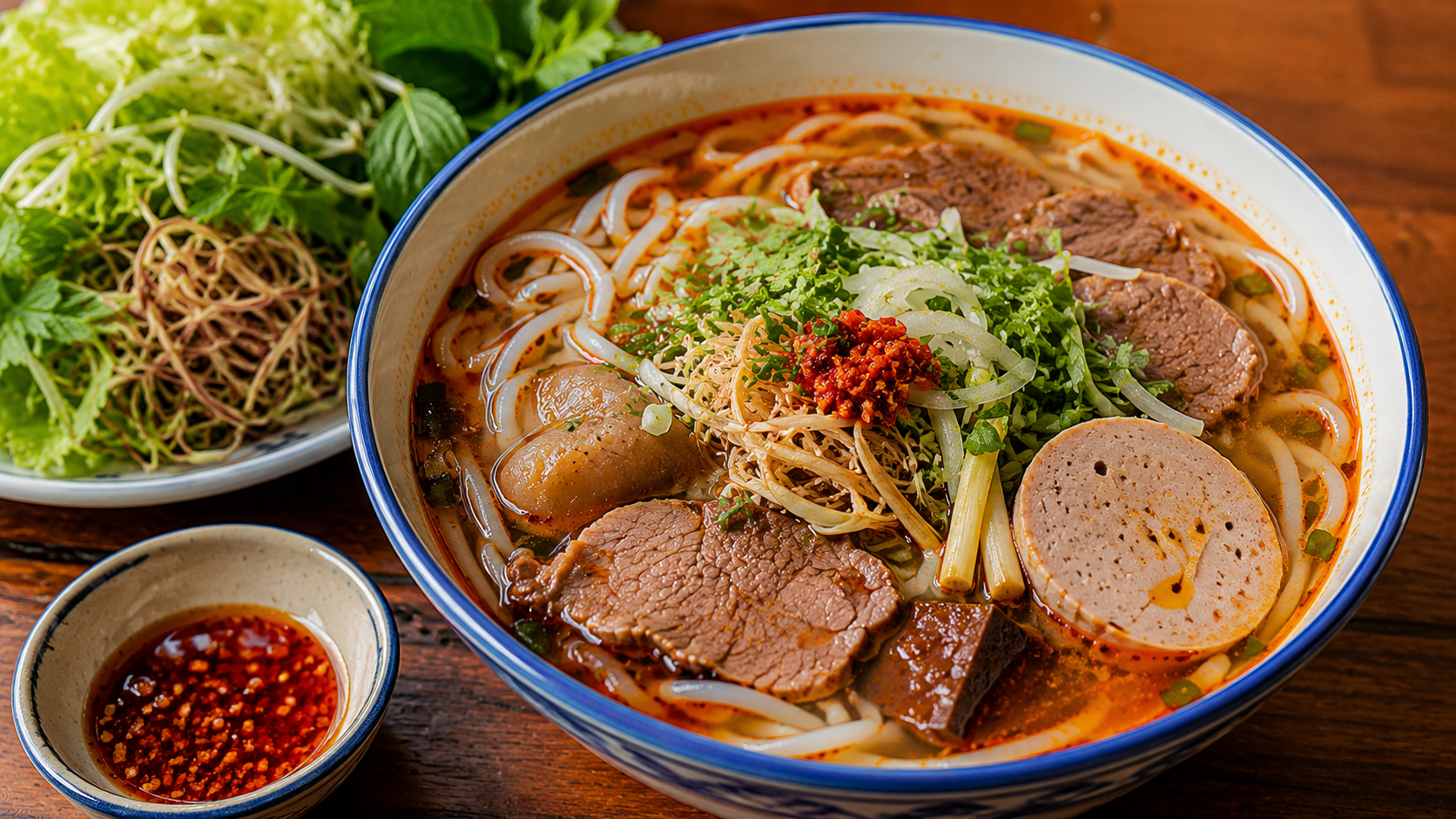
The red color of some versions comes from seasoned chili oil, but the actual heat varies. It is reasonable to ask whether the bowl is spicy before ordering instead of assuming every version is fiery. Best for: visitors who enjoy more intense savory and herbal flavors than a typical bowl of phở.
4. Mì Quảng — Central Vietnamese Noodles With Little Broth
Mì Quảng is a signature dish of the historic Quảng Nam area and is easy to find in Da Nang and Hoi An. Its wide, flat rice noodles are served with a relatively small amount of concentrated broth, fresh herbs, vegetables and often roasted peanuts or crisp rice crackers. Possible toppings include shrimp, pork, chicken, eggs or fish.
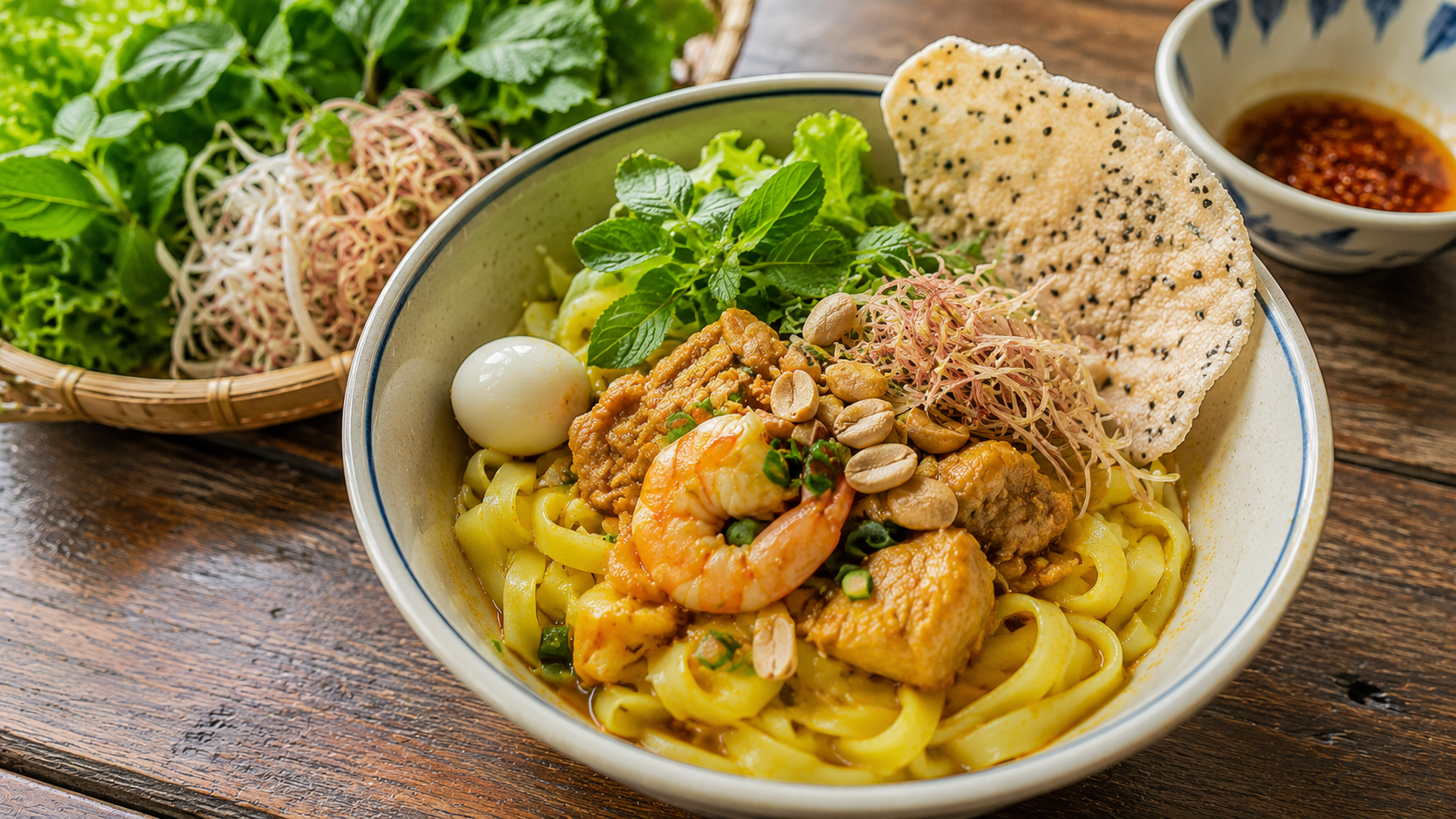
A first-time visitor may think the cook forgot to add soup. That small quantity of broth is part of the dish’s character: it seasons the noodles rather than submerging them. Important terminology: although mì often suggests wheat noodles in other menu contexts, mì Quảng is typically made with rice noodles. Never rely on the word mì alone to identify a food allergen.
Vietnam Tourism’s noodle guide and Hoi An food guide both describe the wide rice noodles and limited broth. The regional name refers to a long-standing culinary tradition; it should not be interpreted as a statement about present-day provincial borders.
5. Cao Lầu — Hoi An’s Firm, Chewy Pork Noodles
Cao lầu is closely associated with Hoi An. Thick, springy noodles are typically served with slices of seasoned pork, fresh greens, herbs, bean sprouts and crisp toppings. The bowl is lightly dressed rather than filled with broth.
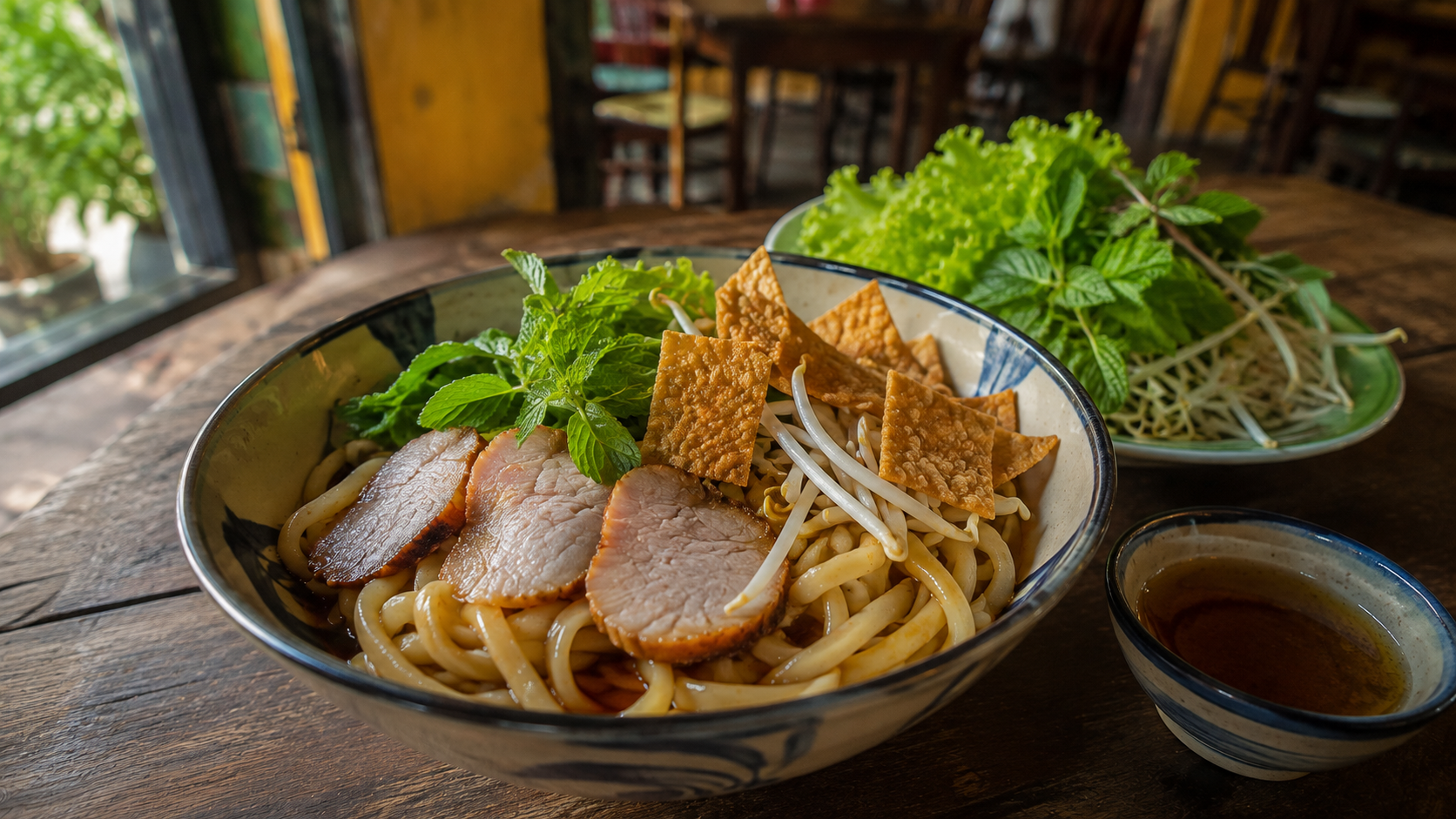
Traditional preparation methods are part of cao lầu’s local history, and stories about particular water sources and wood ash are widely told. But you should not assume that every modern restaurant follows exactly the same method. Its texture and combination of pork, herbs and sauce make it distinct from phở and mì Quảng.
Try it in: Hoi An, where the dish is a particular local specialty. The official tourism site’s guide to four Hoi An dishes discusses its noodles and traditional preparation.
6. Hủ Tiếu — Southern Noodles Served Wet or Dry
Hủ tiếu refers to a family of noodle dishes popular in southern Vietnam, including Ho Chi Minh City and the Mekong Delta. A bowl may feature pork, shrimp, herbs, quail eggs or other toppings; the broth and noodles vary by style and restaurant.
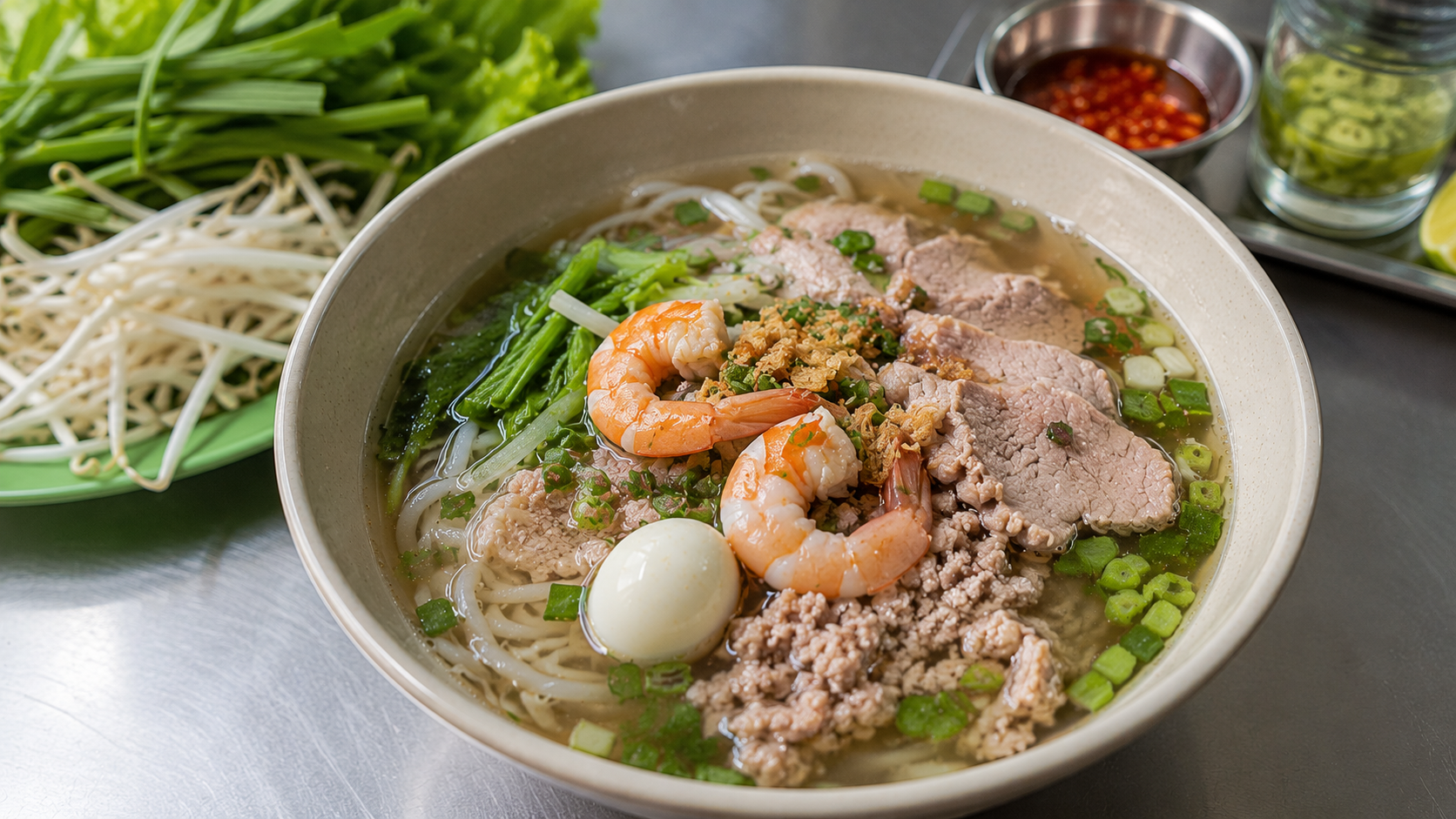
Two phrases are particularly helpful: hủ tiếu nước is a soup version, while hủ tiếu khô is a drier preparation with sauce on the noodles and broth often served separately. If you want to be certain, ask the server before ordering. Hủ tiếu Nam Vang is one well-known variation, linked historically to Phnom Penh-style noodles.
Because different vendors use different noodle products, do not assume every hủ tiếu recipe has an identical ingredient list or is suitable for a specific allergy or dietary need. Vietnam Tourism features hủ tiếu Nam Vang among its recommended dishes.
7. Bún Thịt Nướng — Grilled Pork Noodles Without the Soup
Bún thịt nướng combines rice vermicelli with grilled pork, herbs and vegetables, often pickles and a savory dressing. Many versions include roasted peanuts; the sauce may be a sweet-sour fish-sauce mixture, while certain regional preparations feature a thicker peanut-based sauce.
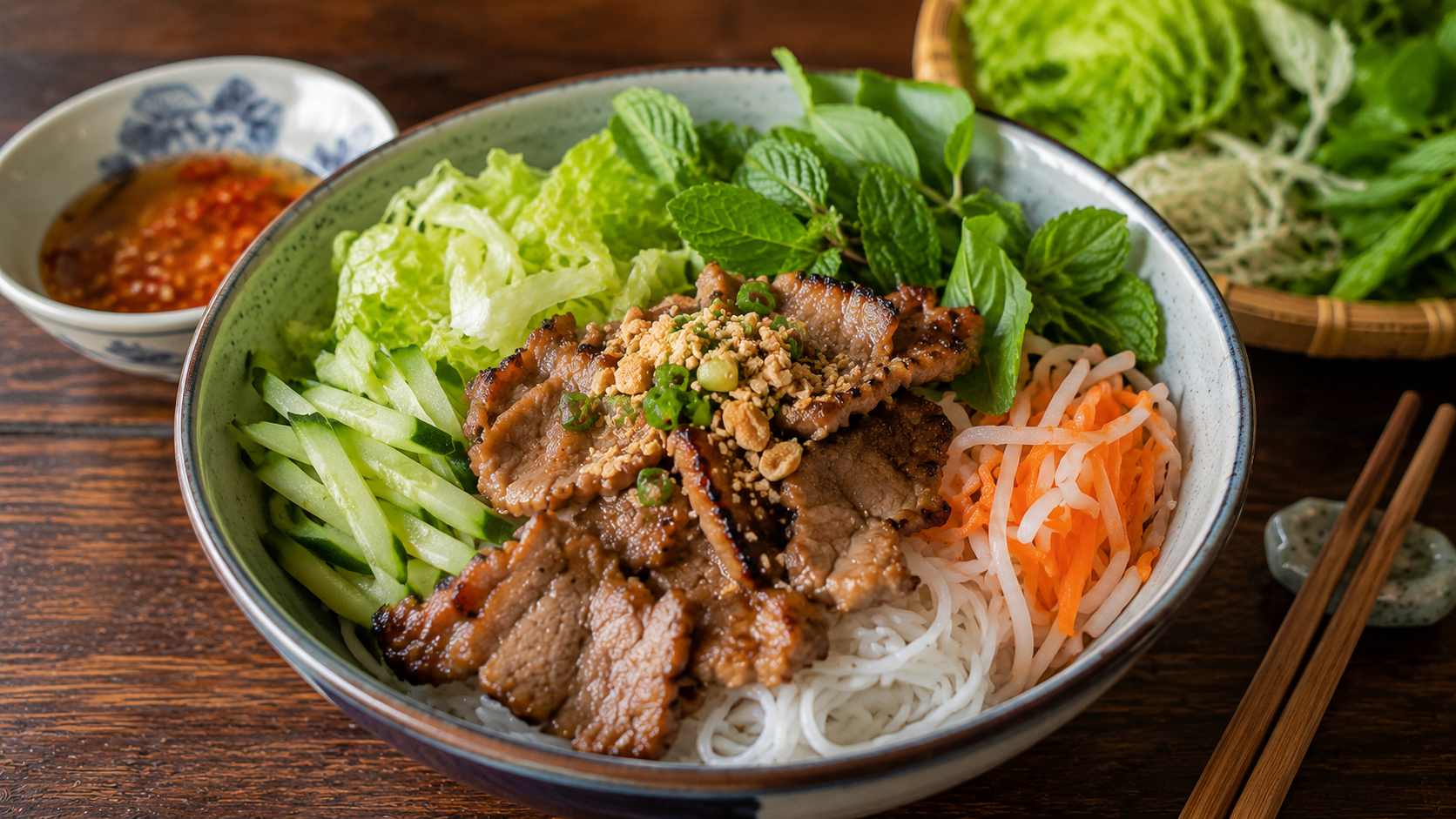
How to eat it: add the supplied dressing in small amounts, mix the noodles and toppings, then taste. This is a good choice for anyone who enjoys grilled meat and prefers a cooler or less soupy dish. Vietnam Tourism’s Huế food guide documents a local version served with a peanut sauce.
What Do Phở, Bún, Mì and Hủ Tiếu Mean?
The dish name often gives a clue about the noodle, but it is not a reliable ingredient label. Names can refer to noodle shape, preparation style or a whole dish rather than one standardized flour.
| Term | Beginner’s clue | Important exception or variation |
|---|---|---|
| Phở | Usually flat rice noodles; also names the noodle-soup dish | Thickness and toppings differ by region |
| Bún | Usually round rice vermicelli | Can be very thin or quite thick, as in bún bò Huế |
| Mì | Often used for wheat or egg noodles | Mì Quảng is commonly made from flat rice noodles |
| Hủ tiếu | Southern noodle category, often a thin or chewy noodle | Different styles and noodle ingredients exist; ask if dietary needs matter |
| Cao lầu | Name of a Hoi An specialty and its distinctive noodles | It is not interchangeable with ordinary phở noodles |
How to Order Vietnamese Noodles
These simple sentences are useful when a menu is unfamiliar. Pronunciation varies by region and written language may be easier to show a server on your phone.
| Vietnamese | Meaning |
|---|---|
| Cho tôi một tô phở bò. | One bowl of beef phở, please. |
| Cho tôi một phần bún chả. | One serving of bún chả, please. |
| Món này có cay không? | Is this dish spicy? |
| Cho tôi ít ớt thôi. | Please use only a little chili. |
| Hủ tiếu nước hay khô? | Is the hủ tiếu soup or dry style? |
| Cho nước chấm riêng nhé. | Please put the dipping sauce on the side. |
| Món này có đậu phộng không? | Does this dish contain peanuts? |
| Món này có hải sản không? | Does this dish contain seafood? |
| Món này giá bao nhiêu? | How much does this dish cost? |
For more language help, see How to Order Food Like a Local in Vietnam. To understand the dips served with these noodles, read our guide to seven Vietnamese dipping sauces.
Food Allergies, Spice and Street-Food Safety
Noodle dishes may contain fish sauce, fermented seafood paste, peanuts, soy, pork or shellfish even when these ingredients are not obvious from the name. A rice noodle does not make a complete bowl automatically gluten-free; sauces and other ingredients also matter. If you have an allergy, ask about the complete recipe and possible cross-contact before ordering.
The CDC Yellow Book’s Vietnam guidance advises particular caution with unmarked peanuts, fish and shellfish, as well as raw or undercooked food. Its food-and-water guidance emphasizes fully cooked food served hot and safe drinking water. Fresh raw herbs and vegetables are common accompaniments, but their safety depends on how they were washed and handled.
- If you’re sensitive to heat, ask for chili separately rather than assuming all red broth is extremely spicy.
- If you avoid seafood or fish, explicitly ask about broth, fish sauce and fermented seasonings—not just the visible toppings.
- For severe allergies, use a clearly translated ingredient card and follow your medical emergency plan.
- Confirm portion size and prices before ordering extra meat, eggs or toppings. See our 2026 Vietnam food-price planning guide.
Frequently Asked Questions
Are Vietnamese noodles always made from rice?
No. Rice noodles are very common, but wheat, egg and other noodle types are also used. Even the word mì is not a guarantee of wheat noodles: mì Quảng generally uses wide rice noodles.
What is the difference between mì Quảng and cao lầu?
Both are Central Vietnamese specialties with little broth. Mì Quảng usually features wide rice noodles with a small amount of seasoned liquid, herbs and rice crackers. Cao lầu is associated particularly with Hoi An and known for firm, chewy noodles with pork and greens.
What should I order if I don’t want soup?
Bún chả, bún thịt nướng, mì Quảng and cao lầu are useful starting points; hủ tiếu khô is another possibility. Some still include sauce or a small bowl of broth.
Which noodle dish is the spiciest?
Bún bò Huế is often associated with chili and a more robust broth, but heat levels differ. Ask the restaurant if you want a mild version.
Can I find these dishes all over Vietnam?
Some are widely sold; others are more closely tied to a region. Phở is easy to find in many cities, while cao lầu is especially associated with Hoi An and mì Quảng with Da Nang and the former Quảng Nam region. Individual menus and opening hours vary.
Final Thoughts
Vietnam’s noodle dishes reward curiosity. Taste the difference between flat and round rice noodles, broth-based meals and dry noodle bowls, and the fresh herbs and sauces that complete them. If you are traveling through Central Vietnam, make time for both mì Quảng and cao lầu; elsewhere, explore local variations instead of looking only for phở.
Sources and Editorial Note
- Vietnam Tourism — A Foodie Guide to Vietnam’s Noodles: regional noodle varieties and mì Quảng.
- Vietnam Tourism — 21 Must-Try Vietnamese Dishes: phở, bún chả, bún bò Huế, cao lầu, mì Quảng and hủ tiếu Nam Vang.
- Vietnam Tourism — 4 Must-Try Dishes in Hoi An: traditional cao lầu and its texture.
- Vietnam Tourism — Explore the Food of Hoi An: mì Quảng’s wide rice noodles and small serving of broth.
- Vietnam Tourism — Huế’s Best to Eat: regional bún thịt nướng preparations.
- CDC Yellow Book — Vietnam: food safety and common allergen concerns.
Editorial note (October 2026): The seven dishes are culinary examples rather than a definitive national ranking. Ingredients, spices, nomenclature and meal times differ by family, vendor and region. Illustrations do not verify any named restaurant. Existing images remain in the WordPress media library; this article uses six selected dish images in the body while the phở image remains its featured image.