The Best Vietnamese Rice Dishes
Vietnamese rice dishes go far beyond a plain bowl of steamed rice. In different parts of the country you will find broken rice topped with grilled pork, chicken rice seasoned with broth, fried rice cooked to order, and home-style braised dishes served with white rice.
The five dishes below are useful starting points for travelers, not an objective ranking of the five best foods in Vietnam. Recipes and restaurant menus vary. This guide explains what arrives on the plate, what to ask when ordering, and how a family-style rice meal differs from a single serving.
Five Vietnamese Rice Dishes at a Glance
| Dish | What arrives | Where you may encounter it |
|---|---|---|
| Cơm tấm | Broken rice with grilled pork and optional egg, pork skin or meatloaf | Especially associated with southern Vietnam |
| Cơm gà | Rice with cooked chicken, herbs and sauces | Hoi An has a well-known regional version |
| Cơm chiên | Fried rice with egg, vegetables, meat or seafood | Found in many everyday restaurants |
| Cơm with thịt kho | White rice served with pork braised in a savory-sweet sauce | Home-style restaurants and family meals |
| Cơm with cá kho | White rice served with braised fish, often caramelized | Home-style rice meals across regions |
1. Cơm Tấm — Broken Rice with Grilled Pork
Cơm tấm uses rice grains broken during processing, but there is nothing second-rate about the finished dish. A common southern serving features a grilled pork chop (sườn nướng) with pickles, cucumber and a sweet-savory fish-sauce dressing. Depending on the menu, you can add bì (shredded pork skin), chả trứng (steamed egg-and-meat patty) or a fried egg.
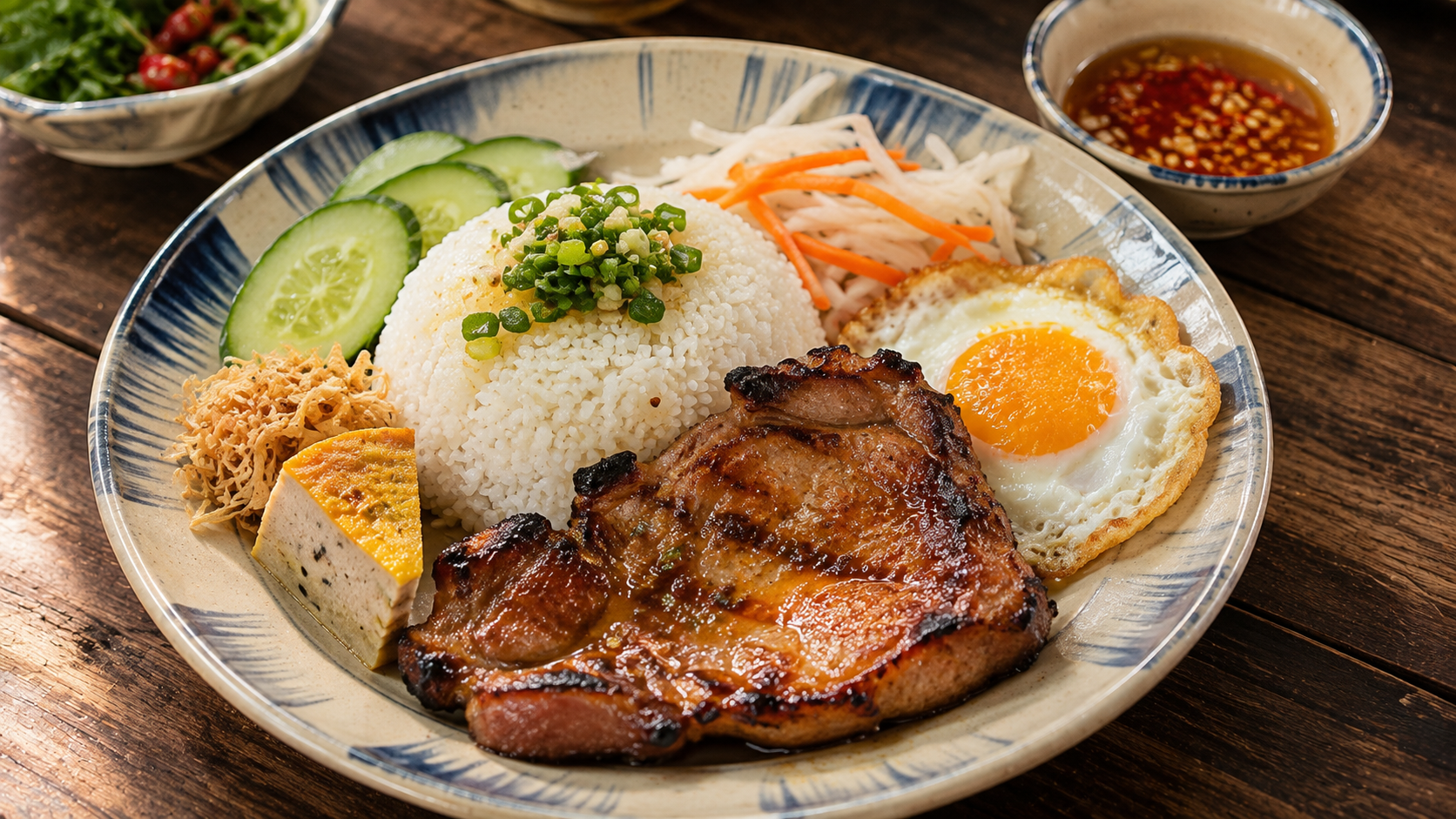
If you want the classic pork-chop plate, look for cơm tấm sườn. Ask about the sauce separately if you avoid fish or need less sweetness. Vietnam’s official tourism site describes broken rice as a signature everyday dish in Ho Chi Minh City.
2. Cơm Gà — Vietnamese Chicken Rice
Cơm gà means chicken rice, a family of dishes rather than one nationwide recipe. In Hoi An, yellow-tinted rice cooked with chicken stock may be paired with shredded chicken, onion, herbs and a tangy dressing. Other cities serve chicken rice differently, and some plates include broth or chili sauce on the side.
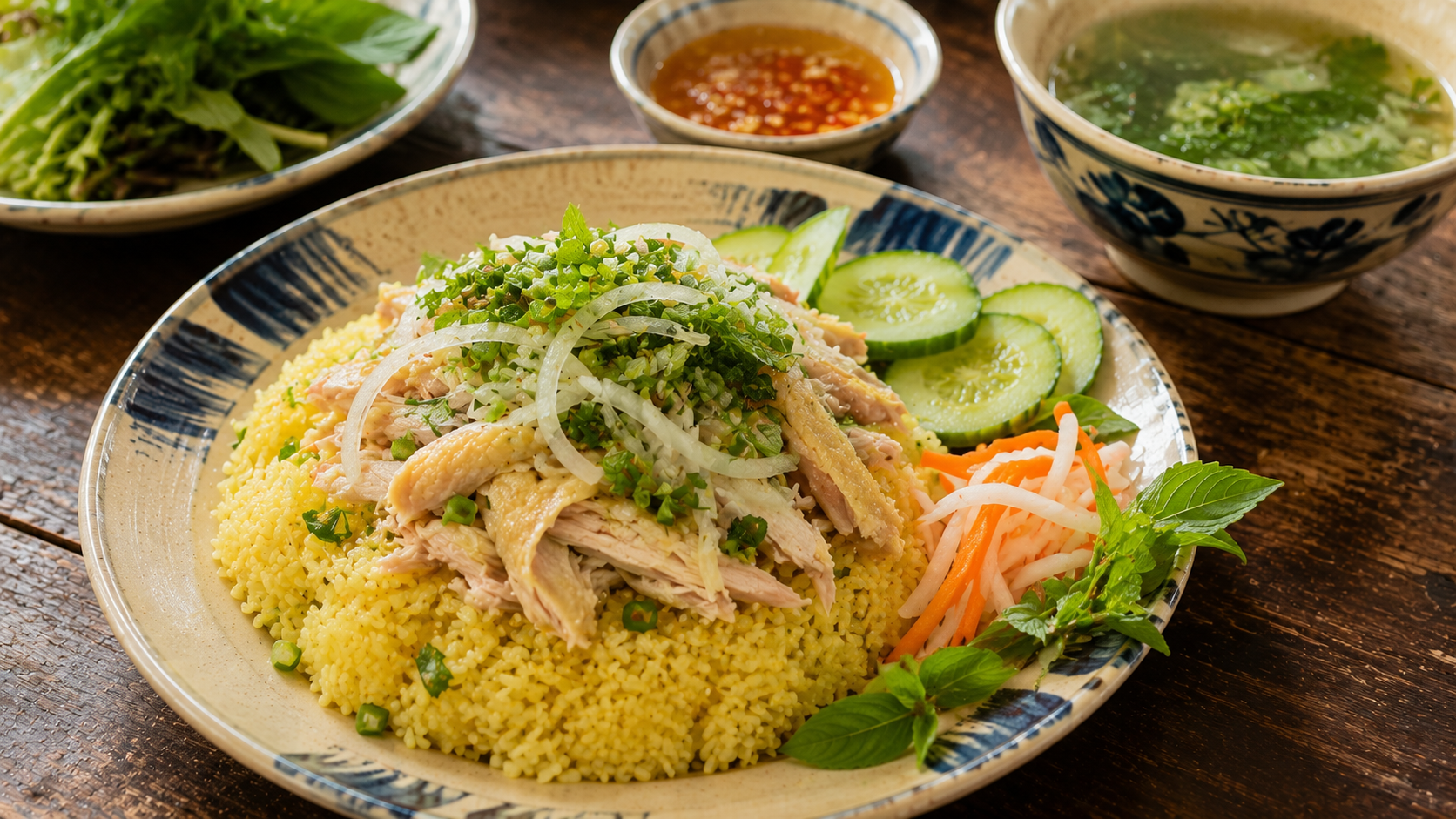
If you are visiting Da Nang and Hoi An, this is an easy regional style to seek out. The Vietnam Tourism guide to Hoi An also highlights its chicken rice. The rice may be cooked in chicken fat or stock, so do not assume it is vegetarian just because the toppings are served separately.
3. Cơm Chiên — Vietnamese Fried Rice
Cơm chiên is the broad name for fried rice. Restaurants prepare it with different combinations of egg, scallions, vegetables, chicken, beef, shrimp or squid. It is not uniquely Vietnamese — fried rice appears across Asia — but local seasonings and accompaniments give each kitchen its own version.
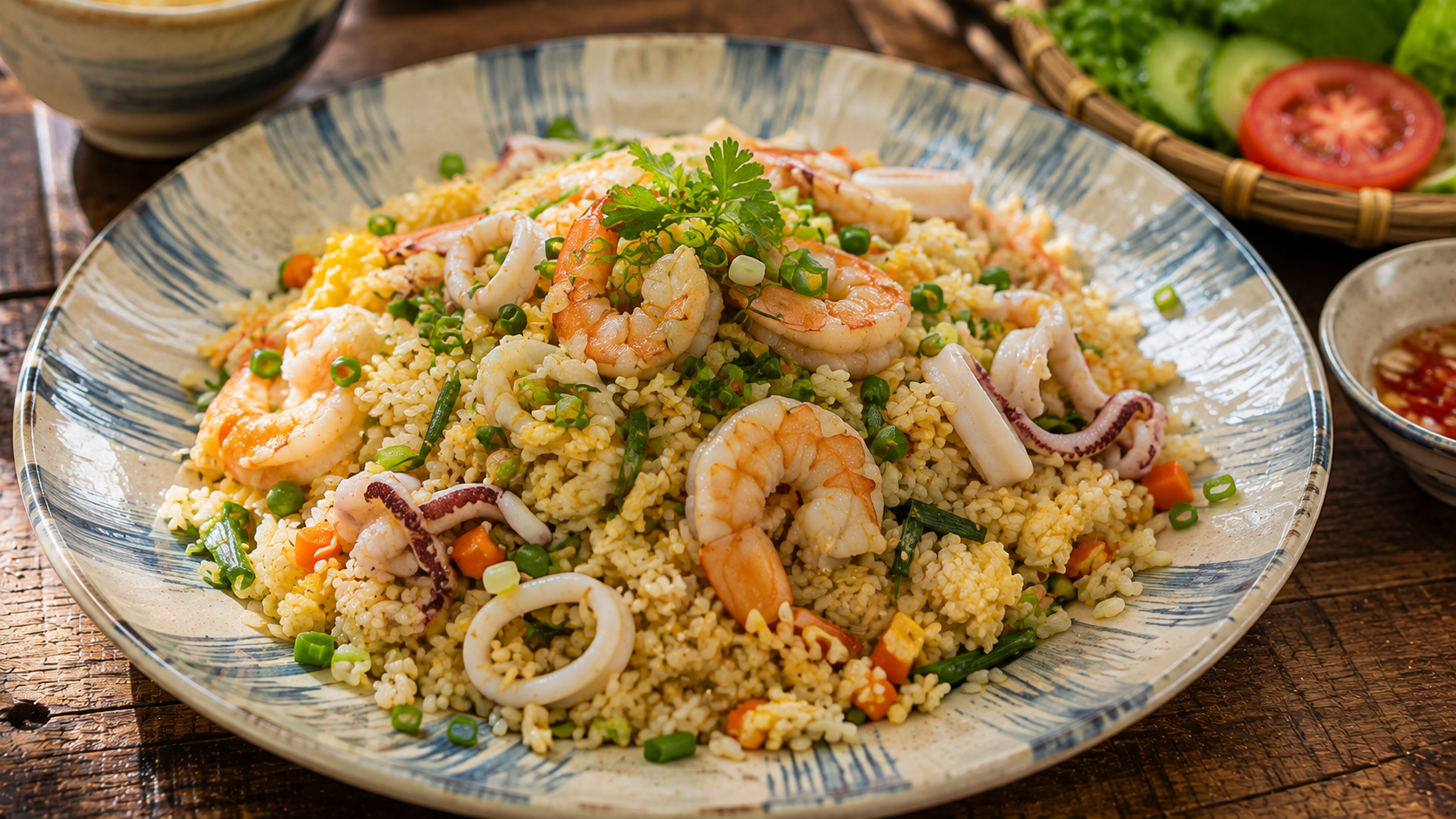
Check the protein before ordering: cơm chiên hải sản means seafood fried rice, while cơm chiên trứng usually refers to egg fried rice. Confirm whether the dish contains fish sauce, oyster sauce or meat stock when ordering for dietary restrictions. For food safety, choose rice cooked and served hot rather than food left at room temperature for a long time.
4. Thịt Kho with Rice — Braised Pork
Thịt kho is pork braised until tender in a savory sauce that may include fish sauce, sugar, black pepper, coconut water or eggs. A well-known variation, thịt kho trứng, includes eggs. The dish is commonly eaten with steamed rice, vegetables and sometimes a bowl of soup.
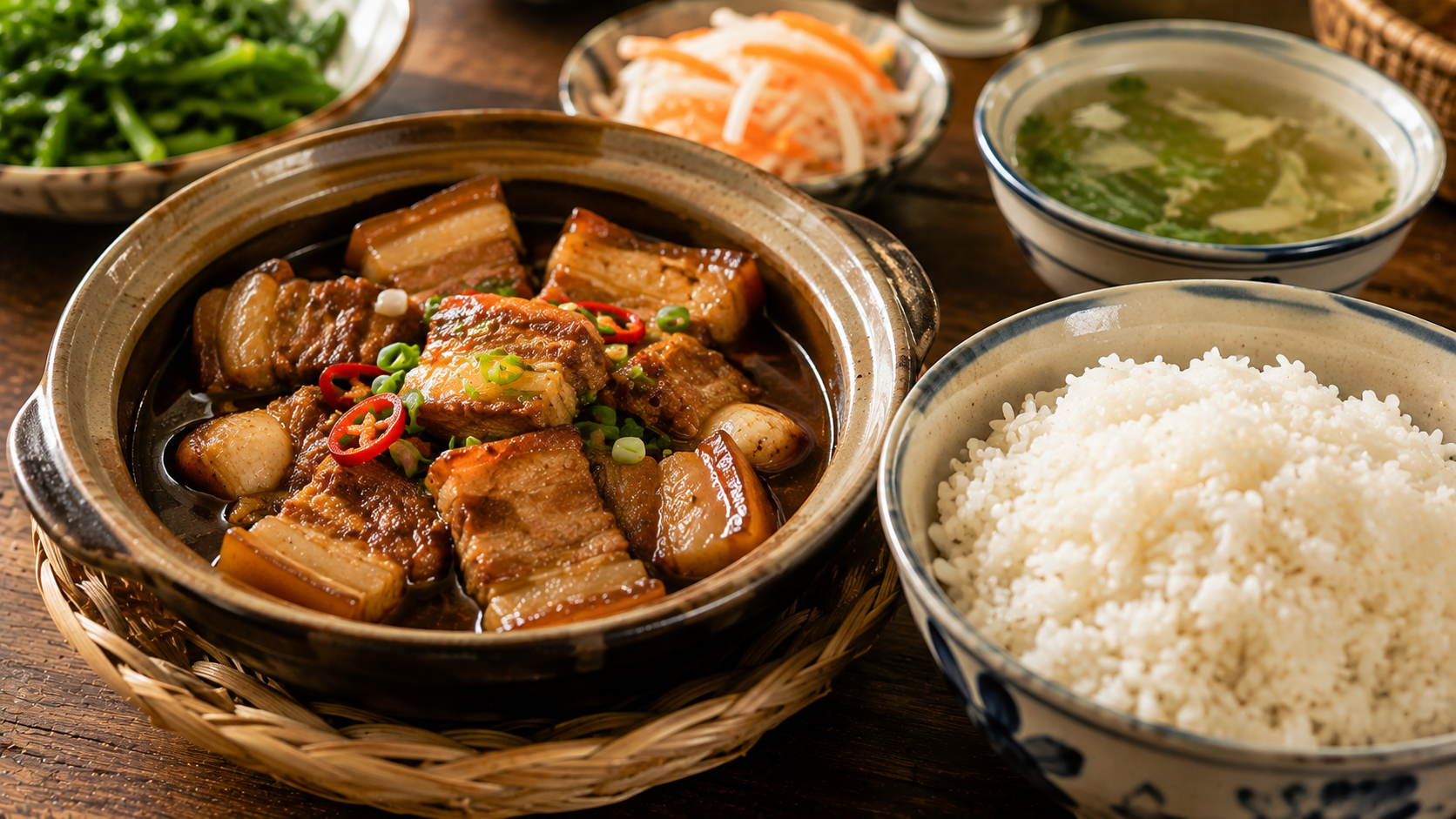
Some versions are sweeter or darker than others, so it is worth asking what accompanies the pork. As a main dish, thịt kho is often ordered for a shared table, not necessarily as a complete single-person set.
5. Cá Kho with Rice — Braised Fish
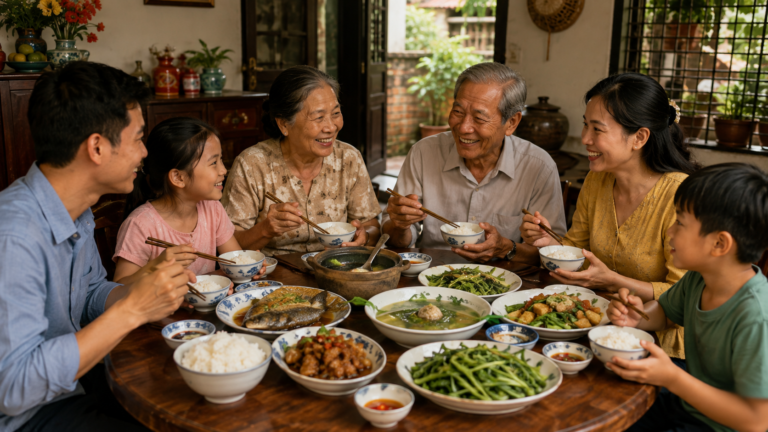
Cá kho means braised fish; cá kho tộ is a familiar clay-pot variation. Fish is simmered in a concentrated, often caramelized sauce. Recipes can involve fish sauce, sugar, pepper, chili and aromatics, but the fish species and seasonings vary by region and family.
This is usually served with steamed rice because the rich sauce balances well with plain grains. Check for bones, especially when sharing with children. The Vietnam Tourism home-cooking guide includes a clay-pot fish recipe and serving suggestions.
How a Vietnamese Family Rice Meal Works
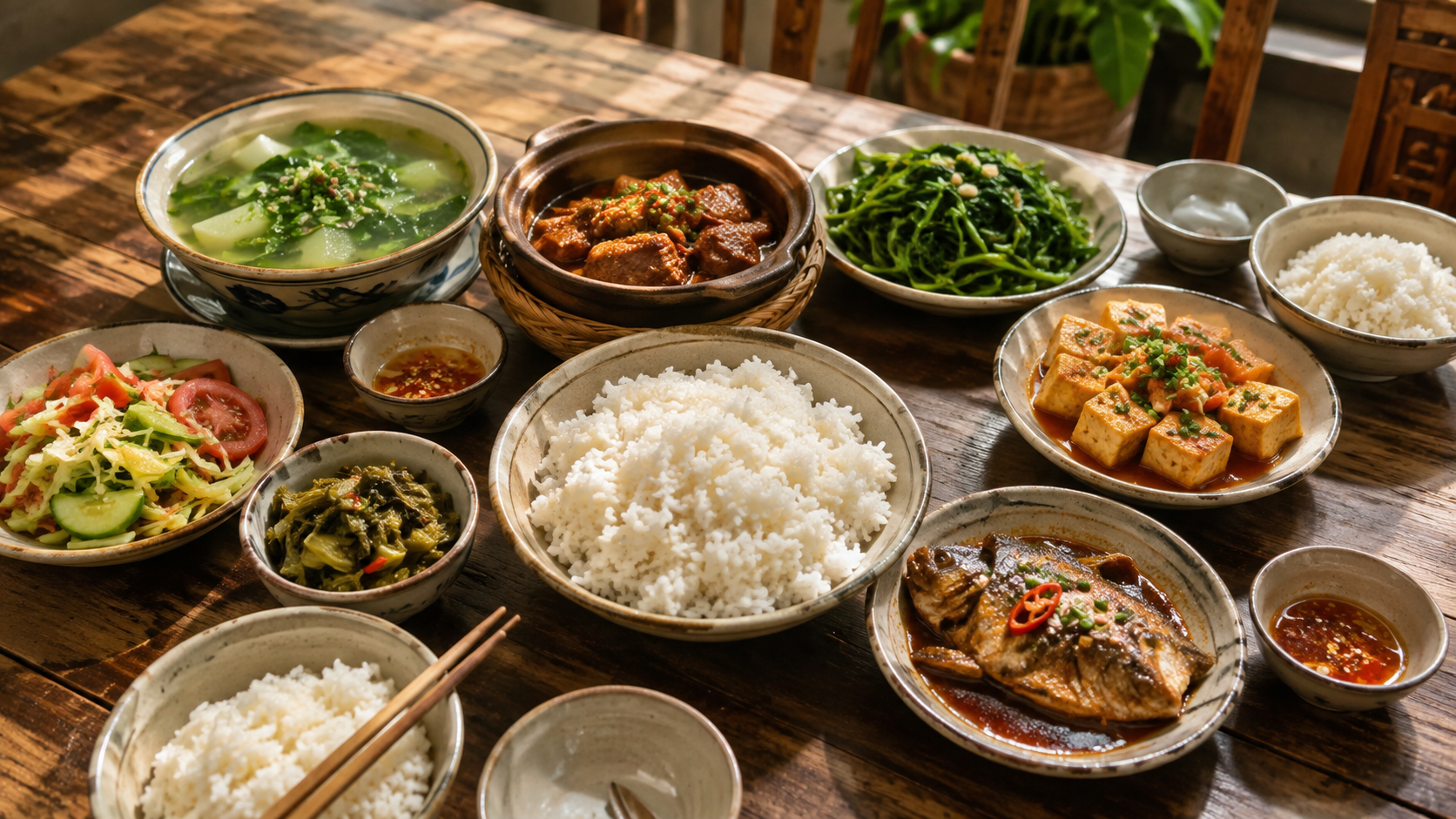
A typical shared cơm gia đình meal is different from a restaurant plate of cơm tấm. The group orders several dishes for the table: perhaps braised fish, pork, tofu, stir-fried vegetables and soup, while each person eats from a separate bowl of rice.
- Ask how many people each shared dish serves and whether rice is included.
- Start with one protein dish, one vegetable dish and a soup for a small group; add more if needed.
- Take shared food with serving utensils where available, then eat from your own bowl.
- Do not assume a vegetable dish is vegetarian: fish sauce, shrimp paste or meat stock may be used.
- Ask whether extra rice and soup are free refills or separately charged.
For a one-person lunch, you may see cơm phần or cơm bình dân signs. These usually indicate everyday rice meals with a choice of prepared side dishes, but the exact format and price depend on the shop.
Ordering Vietnamese Rice Dishes: Useful Phrases
| Vietnamese phrase | English |
|---|---|
| Cho tôi một phần cơm tấm sườn. | One serving of broken rice with pork chop, please. |
| Cho tôi một phần cơm gà. | One serving of chicken rice, please. |
| Cơm chiên hải sản có những gì? | What is in the seafood fried rice? |
| Cho thêm cơm, làm ơn. | More rice, please. |
| Món này có nước mắm không? | Does this dish contain fish sauce? |
| Món này có xương không? | Does this dish have bones? |
| Bao nhiêu tiền một phần? | How much is one serving? |
These phrases help with simple orders, but ingredients and allergies should be discussed directly with staff. The OurViet food-ordering guide has more examples for first-time visitors.
Where to Try a Rice Meal in Da Nang
In Da Nang, look for rice eateries and restaurants serving individual rice plates or family-style menus. Ask whether dishes are made to order, how large the portions are and what each set includes. A small group may find a fixed rice set more convenient than ordering five separate shared dishes.
Restaurant disclosure: The earlier version of this article described Làng Ta Restaurant from the restaurant’s own point of view and mentioned its family-style rice sets. That mention is promotional context, not an independent review or ranking. If you consider dining there, check its current menu, location, prices and availability directly; no particular offer or dish is guaranteed here.
You can also compare other meal styles through our Vietnamese hot-pot guide or look at what Vietnamese people eat for breakfast.
Practical Food-Safety and Dietary Notes
Freshly cooked food served hot is generally a more cautious choice for travelers than dishes left sitting at room temperature. The CDC’s travel food-and-water precautions advise care with raw vegetables, undercooked ingredients and unsafe water.
Rice dishes can contain allergens that are easy to miss: egg in cơm tấm toppings, shellfish in fried rice, fish sauce in dressings and soy or wheat in seasonings. With severe allergies, do not rely on a simple phrase alone; shared cookware and sauces may create cross-contact risks.
Final Thoughts and Sources
To understand the range of Vietnamese rice meals, try one single-serving plate such as cơm tấm or Hoi An cơm gà, then compare it with a shared home-style table of rice, braised dishes, vegetables and soup. One is not more authentic than the other; they answer different dining needs.
Sources: Vietnam’s official tourism site covers cơm tấm in Ho Chi Minh City, Hoi An chicken rice and cá kho tộ at home. Food-safety guidance comes from the CDC. The images illustrate common dishes; they are not proof of a restaurant’s current menu or food-handling practices.