Vietnamese Hot Pot: Everything You Need to Know
Vietnamese hot pot is one of the best meals to try if you want to experience how people actually enjoy food together in Vietnam.
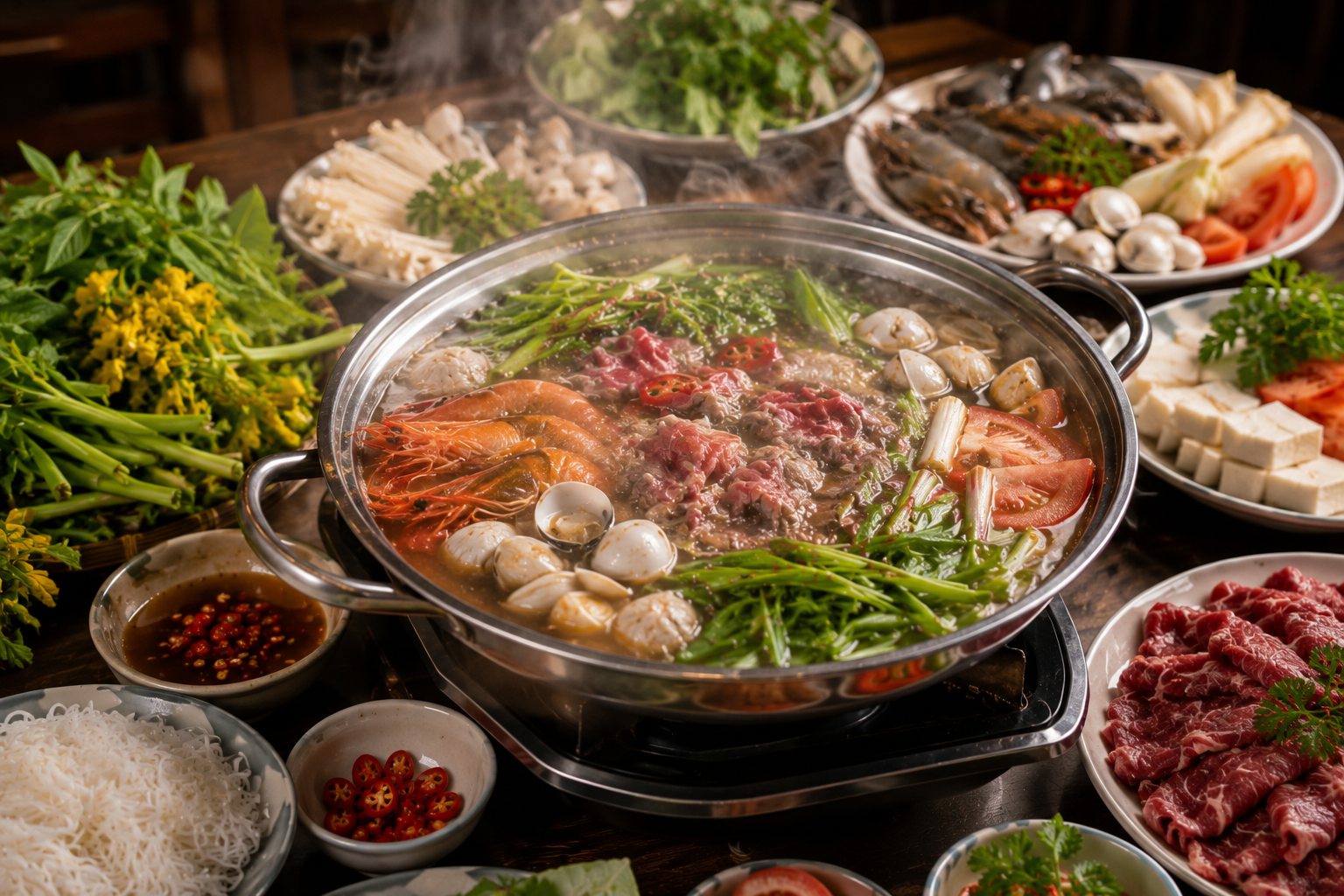
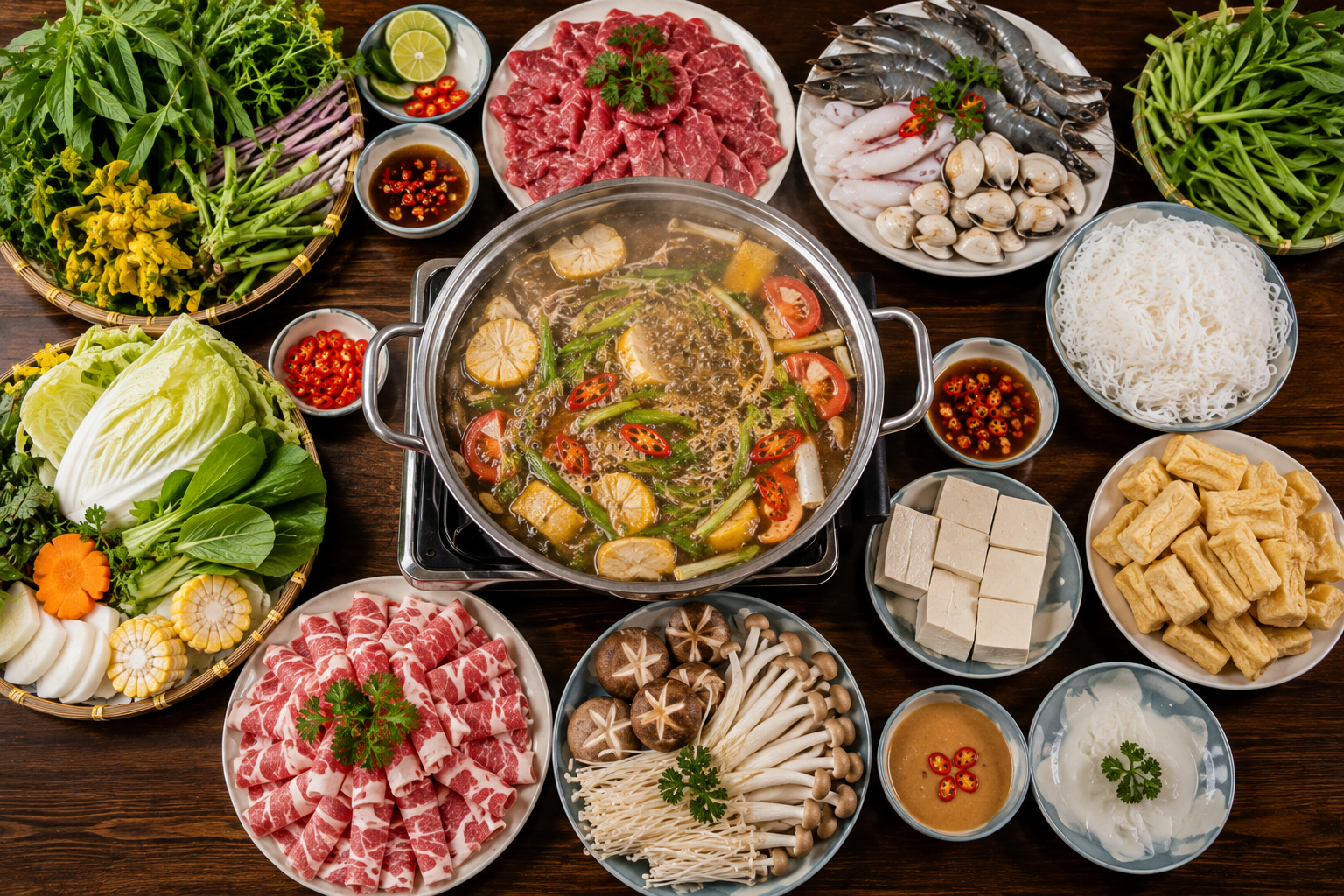
Known locally as lẩu, Vietnamese hot pot isn’t simply a bowl of soup. A steaming pot of broth is placed in the middle of the table, surrounded by fresh vegetables, herbs, noodles, meat, seafood, tofu, and dipping sauces.
Everyone shares the same pot, adding ingredients little by little and eating while the broth continues to simmer.
From spicy seafood hot pot in coastal cities like Da Nang to fermented fish hot pot in the Mekong Delta, there are dozens of variations across the country.
So, what exactly is Vietnamese hot pot, which types should you try, and how do you order it?
Here’s everything you need to know.
Part 1. What Is Vietnamese Hot Pot?
Vietnamese hot pot is called lẩu in Vietnamese.
The basic idea is simple.
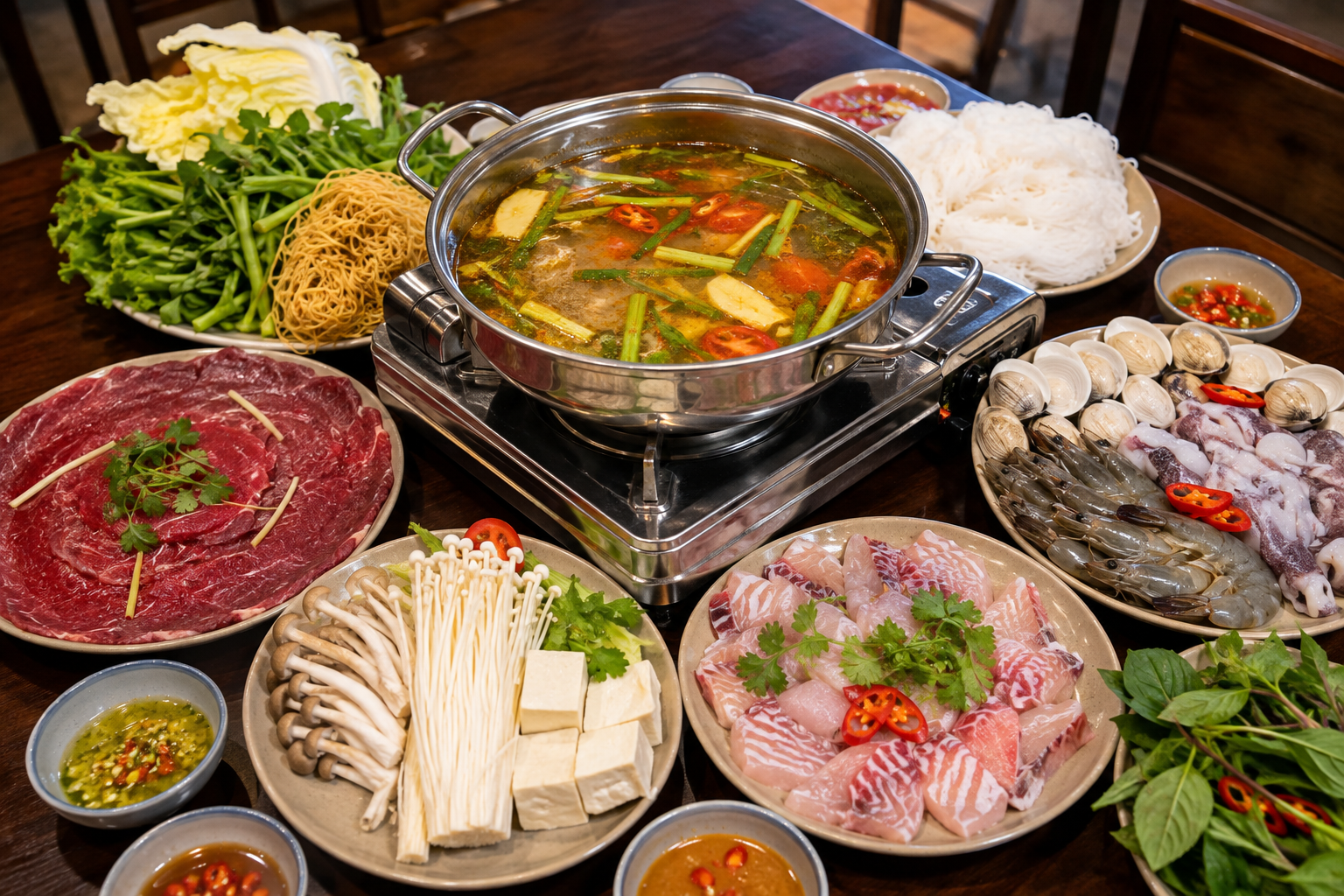
A pot filled with broth is placed on a portable burner in the center of the table. Instead of receiving a completely cooked dish, diners are served plates of ingredients that they cook directly in the broth.
Typical ingredients include:
- Thinly sliced beef
- Chicken
- Fish
- Shrimp and squid
- Clams and other shellfish
- Tofu
- Mushrooms
- Morning glory
- Leafy vegetables
- Vietnamese herbs
- Rice noodles or egg noodles
The ingredients aren’t normally thrown into the pot all at once.
Meat, seafood, mushrooms, and vegetables are gradually added throughout the meal, allowing everyone to cook ingredients to their preferred level.
The broth also changes as you eat.
Seafood adds sweetness, meat adds richness, and vegetables and herbs introduce additional aromas. By the end of the meal, the broth can taste noticeably richer than when you started.
Part 2. Why Hot Pot Is So Popular in Vietnam
To understand Vietnamese hot pot, it helps to understand that lẩu is as much about the experience as the food itself.
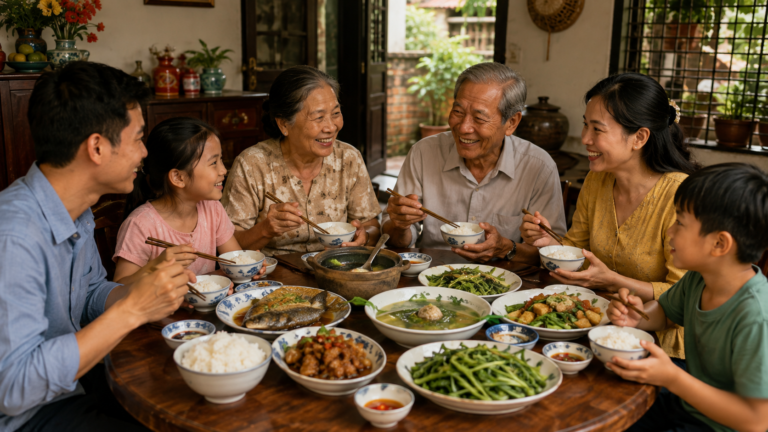
Vietnamese meals are traditionally social.
Instead of everyone ordering an individual main course, multiple dishes are often placed in the center of the table and shared.
Hot pot fits perfectly into this dining culture.
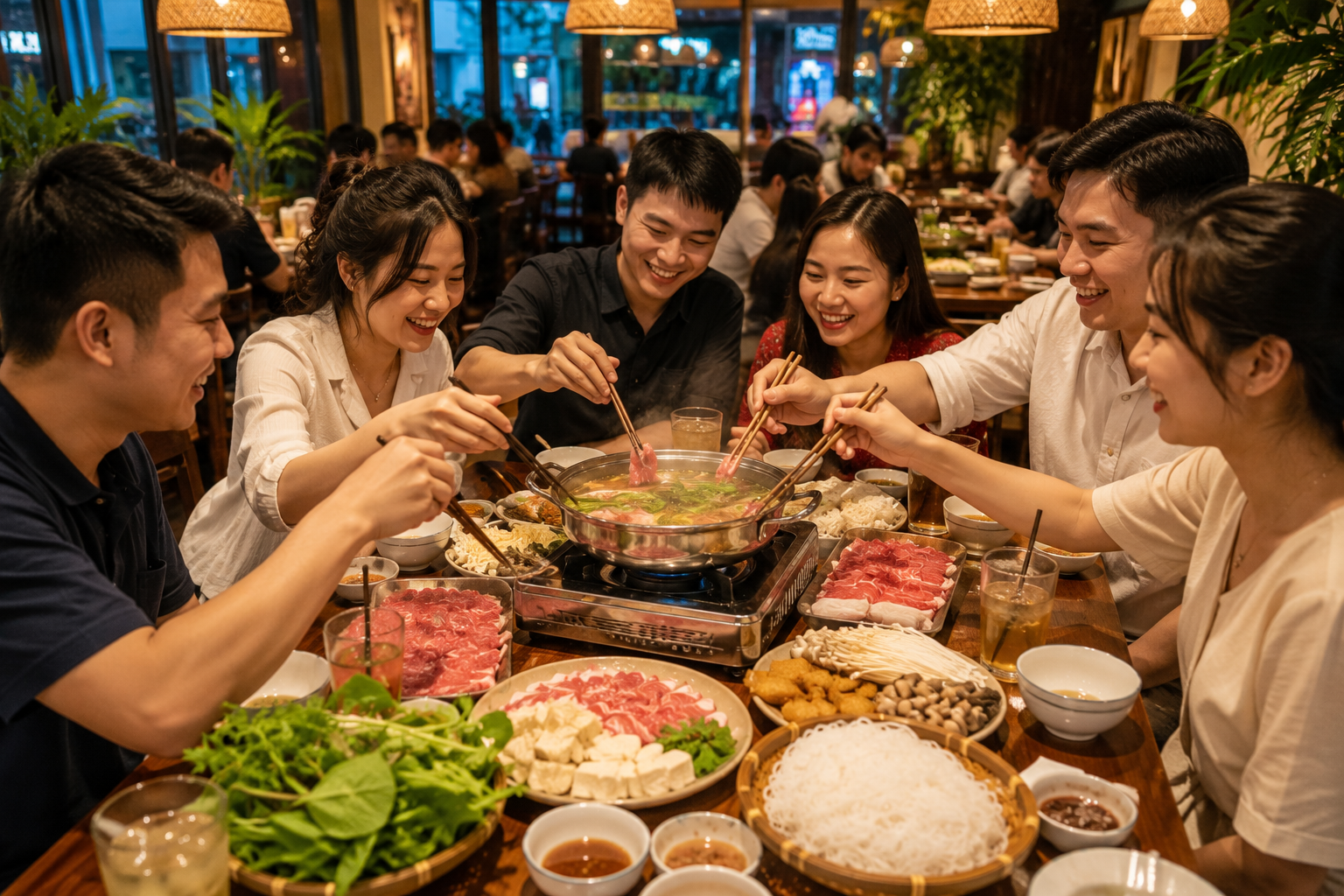
A group can sit around one bubbling pot, order additional ingredients whenever necessary, have a few drinks, and continue eating without rushing.
That’s why Vietnamese hot pot restaurants are particularly popular for:
- Family dinners
- Groups of friends
- Company gatherings
- Birthday celebrations
- Late-night meals
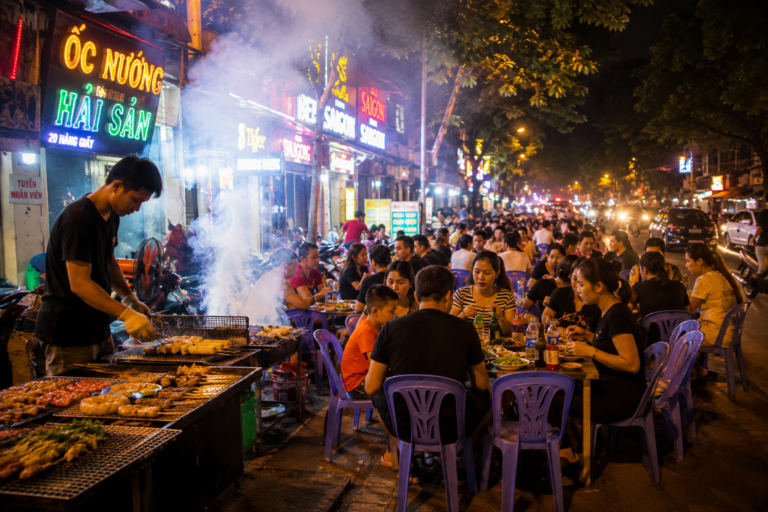
Walk around Vietnamese cities in the evening and you’ll often see groups sitting around steaming hot pots while talking, drinking beer, and sharing food.
Part 3. Popular Types of Vietnamese Hot Pot
There isn’t just one type of Vietnamese hot pot.
Broths and ingredients vary significantly depending on the region and restaurant.
Here are some of the most common varieties travelers will encounter.
1. Lẩu Thái — Spicy & Sour Hot Pot
Lẩu Thái is one of the most common hot pots you’ll find in Vietnam.
The broth is typically spicy, sour, and aromatic, with ingredients such as lemongrass, chili, tomato, and tamarind.
Seafood is particularly popular with this style of broth.
Shrimp, squid, fish, clams, mushrooms, and vegetables are added to the bubbling broth before being eaten with noodles.
If you enjoy strong flavors and spicy food, lẩu Thái is an excellent first hot pot to try in Vietnam.
2. Lẩu Hải Sản — Seafood Hot Pot
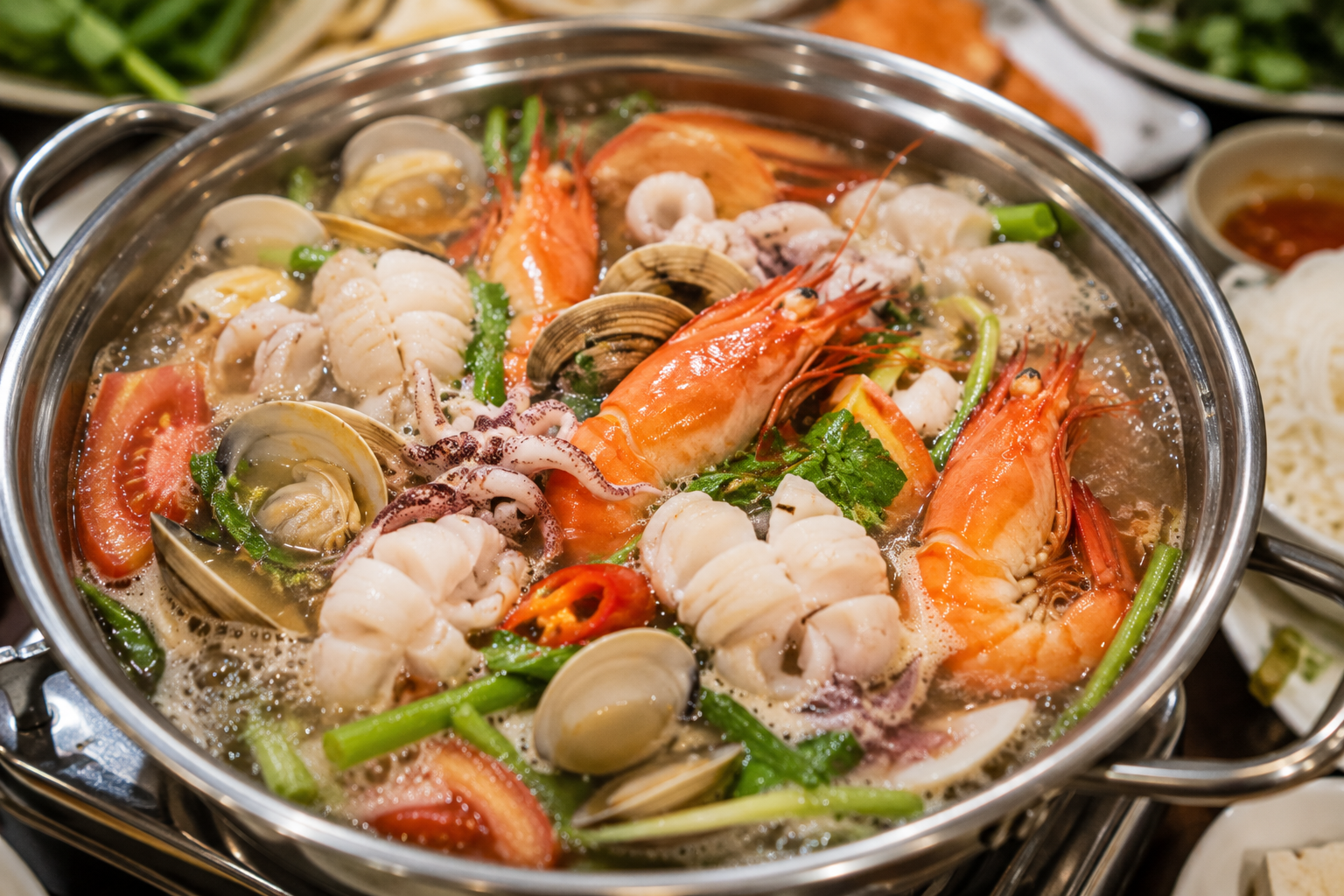
Vietnam has a long coastline, so it’s no surprise that seafood hot pot (lẩu hải sản) is extremely popular.
A typical seafood hot pot may contain:
- Shrimp
- Squid
- Fish
- Clams
- Mussels
- Mushrooms
- Tofu
- Fresh vegetables
Seafood hot pot is particularly worth trying in coastal destinations such as Da Nang, Nha Trang, and Phu Quoc, where fresh seafood is widely available.
Part 4. Beef, Chicken and Fish Hot Pot
Seafood isn’t your only option.
Vietnam also has several excellent meat-based hot pots.
Lẩu Bò — Beef Hot Pot
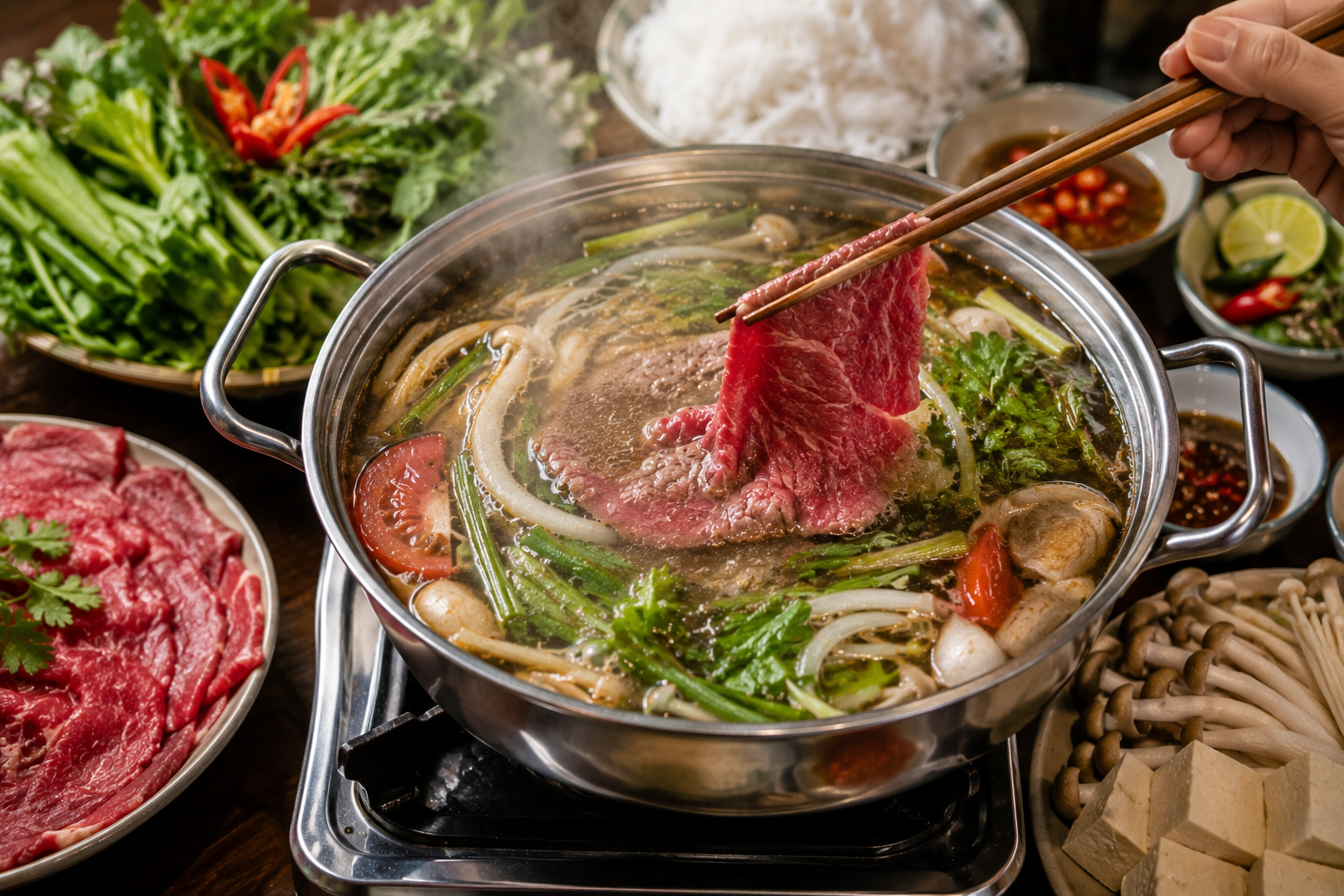
Lẩu bò means beef hot pot.
Depending on the restaurant, the meal may include sliced beef, beef tendon, meatballs, tripe, mushrooms, tofu, and vegetables.
The broth tends to be richer than many seafood-based hot pots.
Another dish worth looking for is lẩu bò nhúng dấm, where thin slices of beef are quickly cooked in a fragrant vinegar-based broth.
The beef can then be eaten with herbs, vegetables, rice paper, and dipping sauce.
Lẩu Gà — Chicken Hot Pot
Chicken hot pot usually has a lighter and more aromatic broth.
One particularly famous version is lẩu gà lá é.
Originally associated with central Vietnam, this hot pot combines chicken with lá é, an aromatic herb with a slightly peppery flavor.
It is an excellent choice if you want something fragrant without the heavier flavors of beef hot pot.
Lẩu Cá — Fish Hot Pot
Fish hot pot is another popular choice throughout Vietnam.
The exact flavor depends heavily on the fish and region, but tomatoes, pineapple, herbs, chili, and vegetables are commonly used.
The result is often a refreshing combination of savory, sweet, and sour flavors.
Part 5. Lẩu Mắm — Vietnam’s Most Adventurous Hot Pot?
Travelers looking for something more unusual should remember one name:
Lẩu mắm.
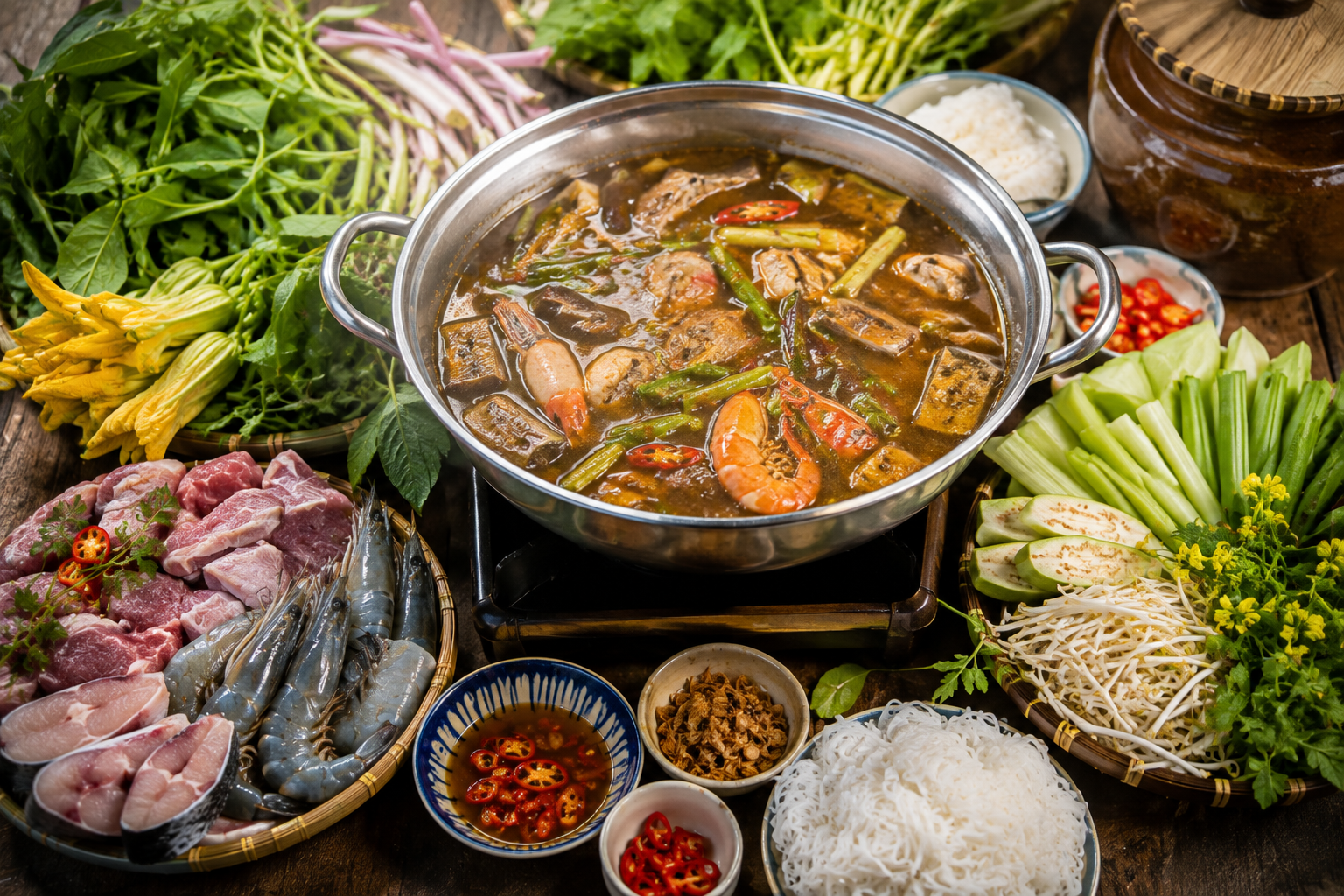
This distinctive hot pot is strongly associated with southern Vietnam and the Mekong Delta.
Its broth is made using fermented fish, giving it a deep savory flavor and noticeably stronger aroma than most other Vietnamese hot pots.
Typical ingredients can include seafood, pork, fish, eggplant, vegetables, and large amounts of fresh herbs.
For first-time visitors, the aroma may take some getting used to.
But for adventurous food lovers, lẩu mắm offers one of the most distinctly Vietnamese hot pot experiences you can find.
Part 6. How to Eat Vietnamese Hot Pot
Trying Vietnamese hot pot for the first time is easier than it looks.
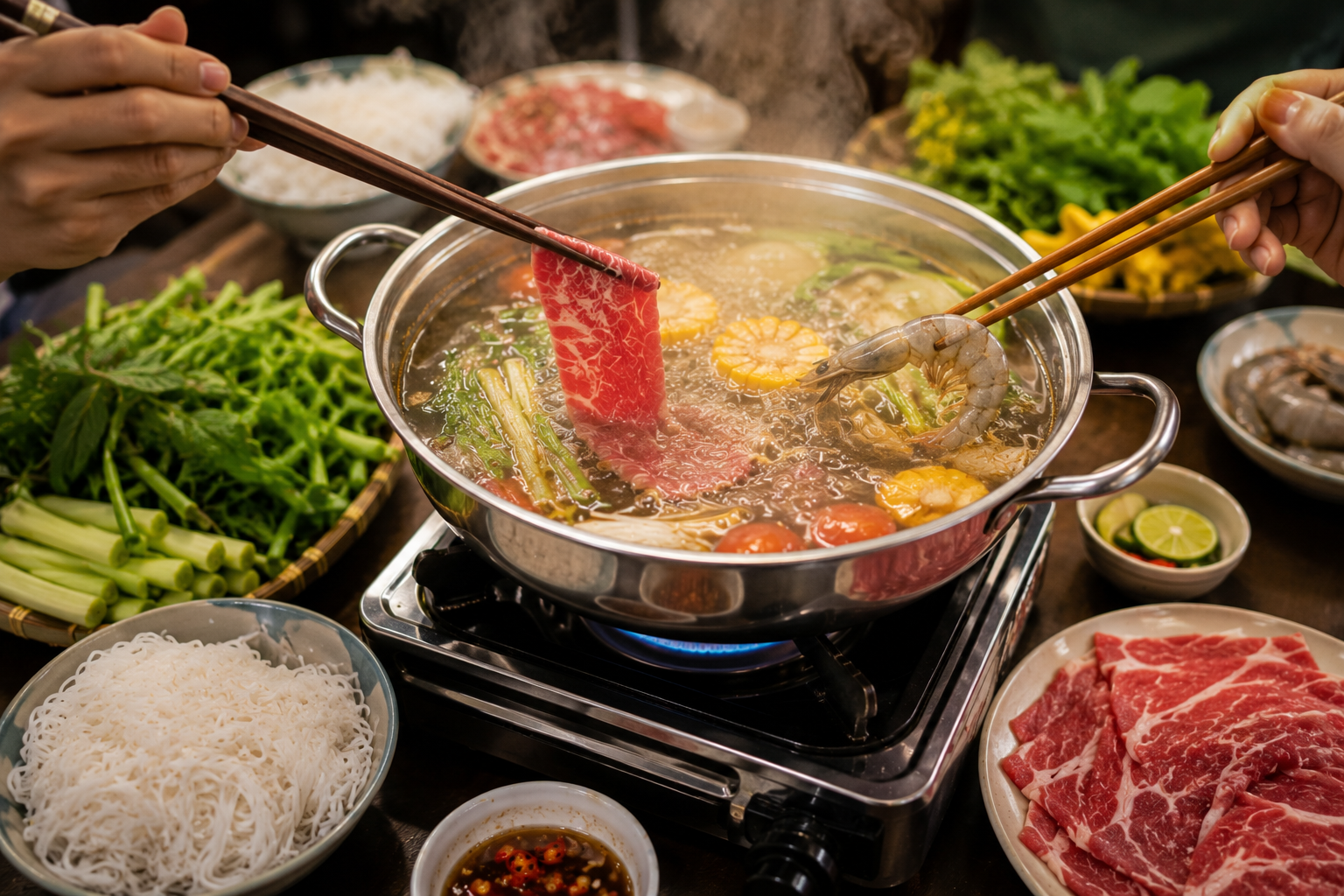
First, wait until the broth reaches a proper simmer.
Ingredients that require longer cooking can go in first. Meat and seafood can then be added gradually.
Leafy vegetables and fresh herbs generally cook very quickly, so they’re better added toward the end.
Once everything is ready, take the cooked ingredients from the pot and enjoy them with noodles and dipping sauce.
One important tip:
Don’t put every ingredient into the pot immediately.
Adding ingredients gradually keeps vegetables fresher and prevents seafood or meat from becoming overcooked.
Also make sure raw meat and seafood are thoroughly cooked before eating.
Part 7. Vietnamese Hot Pot Dipping Sauces
Dipping sauce is an important part of the Vietnamese hot pot experience.
Depending on the ingredients, you might receive:
Nước mắm — Vietnamese fish sauce
Muối tiêu chanh — Salt, pepper and lime
Soy sauce — Often served with tofu and vegetables
Chili fish sauce — Fish sauce mixed with fresh chili
Fermented sauces — Common with certain regional beef or seafood dishes
For seafood, a simple mixture of salt, pepper, chili, and lime is particularly popular.
If several sauces arrive at your table and you don’t know which one to use, just ask the staff.
There is usually a reason each sauce has been provided.
Part 8. What Vietnamese Hot Pot Should First-Time Visitors Order?
If it’s your first time eating hot pot in Vietnam, you don’t need to start with the most unusual option.
Try:
Lẩu hải sản if you love seafood.
Lẩu Thái if you enjoy spicy and sour flavors.
Lẩu bò if you prefer beef and a richer broth.
Lẩu gà if you want something lighter and aromatic.
Once you’re comfortable with Vietnamese flavors, you can explore more regional specialties such as lẩu gà lá é, lẩu bò nhúng dấm, or lẩu mắm.
Part 9. Useful Vietnamese Words for Ordering Hot Pot
You don’t need to speak Vietnamese to enjoy hot pot, but knowing a few words definitely helps.
| Vietnamese | English |
|---|---|
| Lẩu | Hot pot |
| Lẩu bò | Beef hot pot |
| Lẩu gà | Chicken hot pot |
| Lẩu cá | Fish hot pot |
| Lẩu hải sản | Seafood hot pot |
| Rau | Vegetables |
| Nấm | Mushrooms |
| Mì | Noodles |
| Bún | Rice vermicelli |
| Đậu hũ | Tofu |
| Không cay | Not spicy |
| Ít cay | Less spicy |
| Thêm rau | More vegetables |
One particularly useful sentence is:
“Cho tôi một lẩu hải sản, ít cay.”
It means:
“Please give me one seafood hot pot, less spicy.”
Part 10. How Much Does Hot Pot Cost in Vietnam?
Vietnamese hot pot prices vary considerably.
Local restaurants can offer inexpensive hot pots designed for two or three people, while larger seafood restaurants can become considerably more expensive depending on the ingredients.
The biggest thing travelers should watch for is seafood pricing.
Some seafood restaurants display prices by weight rather than by plate.
Before ordering premium seafood such as lobster, crab, or large fish, check whether the displayed price is:
- Per portion
- Per 100 grams
- Per 500 grams
- Per kilogram
Confirming the price beforehand can prevent surprises when the bill arrives.
Part 11. Hot Pot in Da Nang
If you’re visiting Da Nang, hot pot is particularly easy to find.
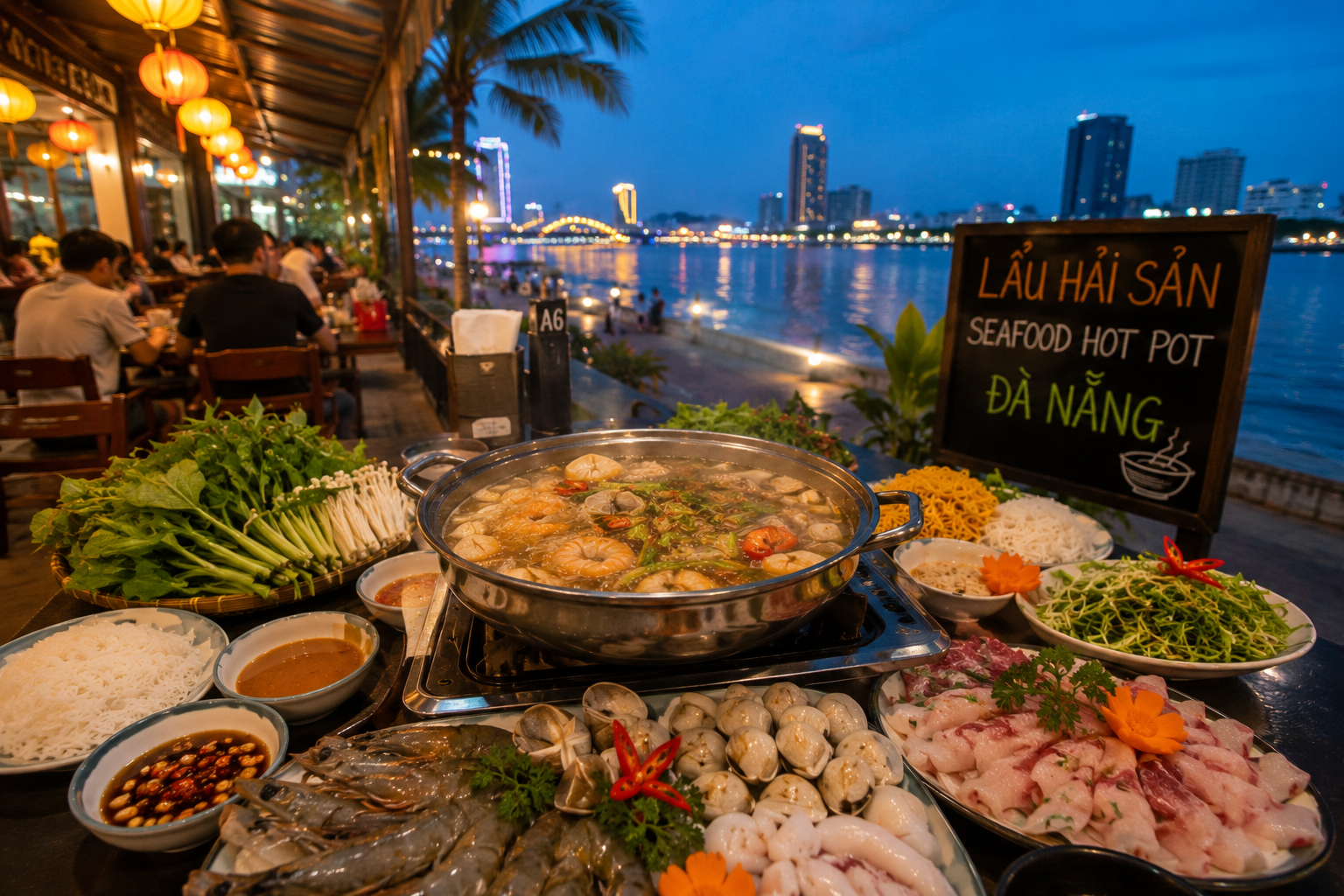
The city’s coastal location means seafood plays a major role in local dining, making lẩu hải sản one of the most natural choices.
Restaurants around the city serve everything from inexpensive local hot pots to large seafood spreads designed for groups.
Hot pot is particularly enjoyable in Da Nang during the evening, especially when you’re traveling with friends or family and want a meal that doesn’t need to be rushed.
Part 12. Is Vietnamese Hot Pot Worth Trying?
Definitely.
Vietnamese hot pot combines many of the things that make Vietnamese cuisine so enjoyable: fresh ingredients, fragrant herbs, flavorful broths, seafood, vegetables, dipping sauces, and communal dining.
But perhaps the best part is that there isn’t one single version of Vietnamese hot pot.
A seafood hot pot in Da Nang can be completely different from a chicken hot pot in central Vietnam or a bowl of intensely flavored lẩu mắm in the Mekong Delta.
And that’s exactly why lẩu is worth exploring more than once.
Gather a few friends, order a steaming pot, add plenty of vegetables and noodles, and take your time.
That’s the best way to enjoy Vietnamese hot pot.