How to Order Food Like a Local in Vietnam: A Beginner’s Guide
You can order a good meal in Vietnam without speaking fluent Vietnamese. The most useful skills are reading a few menu words, confirming the portion and price, and knowing how to ask about ingredients. Pointing to a dish or showing a short phrase on your phone is often enough to begin.
Restaurant styles differ: a noodle shop may specialize in one dish, a rice restaurant may display prepared foods, and a seafood venue may charge by weight. This step-by-step guide covers each situation, with Vietnamese phrases you can copy and use.
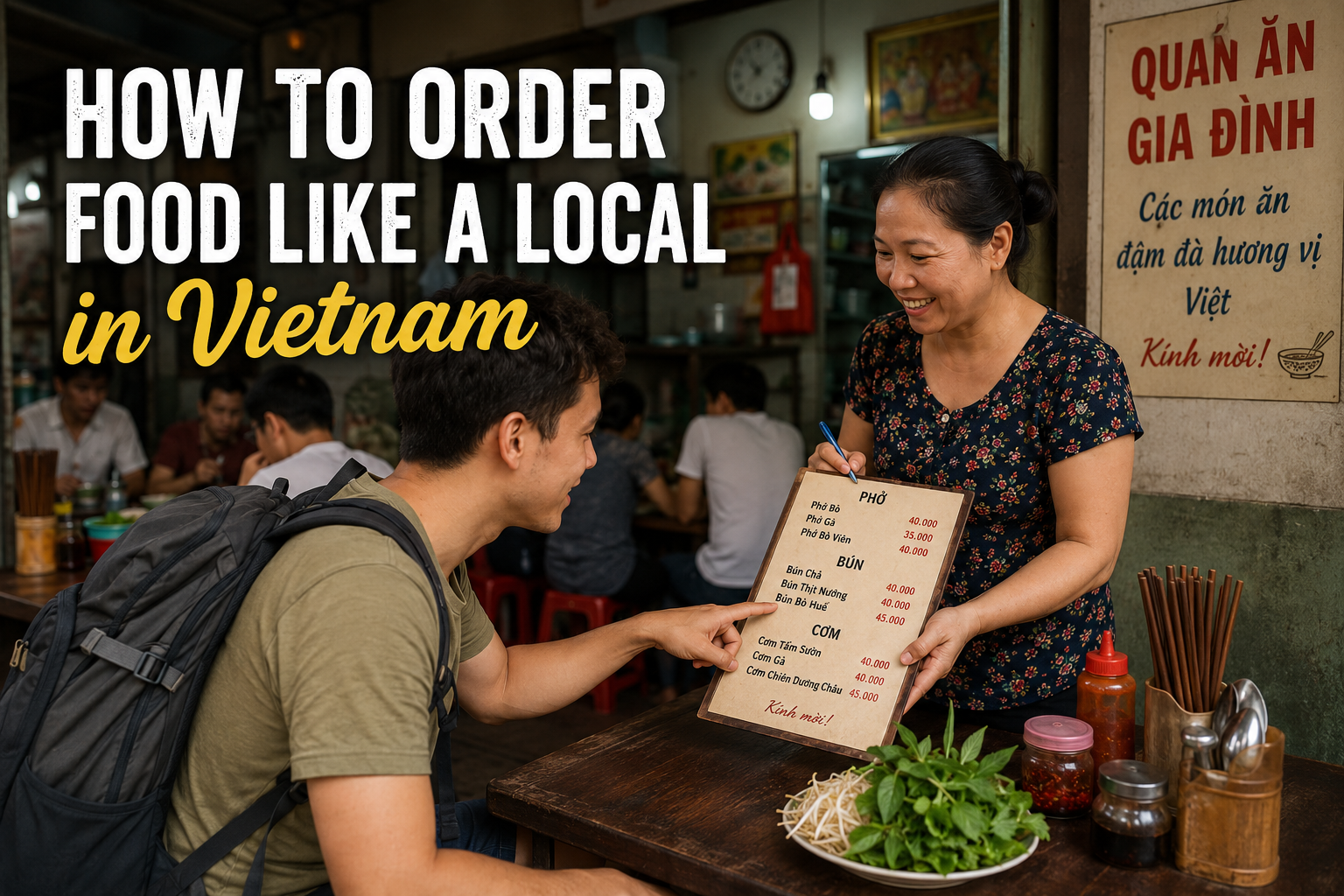
Step 1: Read the basic words on the menu
Start by finding the type of food you want. These words are helpful clues, but they do not tell you everything about a recipe or its allergens.
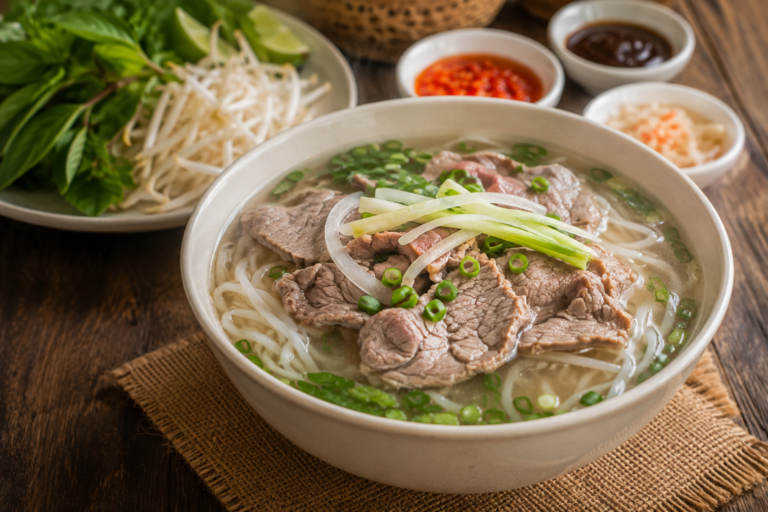
- Phở: usually a rice-noodle soup, commonly with beef (phở bò) or chicken (phở gà).
- Bún: rice vermicelli; it may appear in noodle soups, dry noodle dishes, or grilled-meat combinations.
- Mì: noodles, often wheat or egg-based; confirm ingredients if you avoid gluten or egg.
- Cơm: cooked rice, such as cơm gà (chicken rice), cơm tấm (broken rice), or cơm chiên (fried rice).
- Bánh: a broad term for bread, cakes, pancakes, and other flour-based foods; bánh mì is a bread or sandwich.
- Bò / gà / heo / tôm / cá: beef / chicken / pork / shrimp / fish.
- Hải sản / chay: seafood / vegetarian-style. A ‘chay’ label is useful, but sauces, broth, and cooking methods still deserve checking.
For more examples, see our Vietnamese noodle dishes guide and Vietnamese breakfast guide. A restaurant sign naming one specialty can be useful, but a short menu does not prove the food is better or safer.
Step 2: Use these Vietnamese ordering phrases
You do not need a long scripted conversation. Show a phrase to the server and point to the item when possible. Vietnamese tones can change meaning, so written text is especially helpful when there is noise or a misunderstanding.
| Vietnamese phrase | English meaning |
|---|---|
| Cho tôi một phần này. | One portion of this, please. |
| Cho tôi hai phần này. | Two portions of this, please. |
| Bao nhiêu tiền? | How much does it cost? |
| Giá này tính theo đĩa hay theo ký? | Is this price per plate or per kilogram? |
| Có món chay không? | Do you have vegetarian dishes? |
| Món này có thịt không? | Does this dish contain meat? |
| Không cay, cảm ơn. | Not spicy, thank you. |
| Không đá. | No ice. |
| Mang đi. | Takeaway / to go. |
| Ăn tại chỗ. | Eat here / dine in. |
| Tính tiền giúp tôi. | The bill, please. |
| Cảm ơn. | Thank you. |
Use quantities clearly. If you are pointing at a photo, one finger usually indicates one order, but confirm whether the item is sold per piece, plate, or full set. A word alone is less reliable than pointing to the exact menu item and price.
Step 3: Confirm the price and portion
Menus may show prices as 50.000, 50,000, or 50k: all can mean 50,000 Vietnamese đồng (VND). This is a notation example, not a claim that a particular restaurant charges that amount. Ask if the menu or serving size is unclear.
- Portion: is the price for one bowl, plate, skewer, or a shared set?
- Seafood: some places price fish or shellfish by piece or weight; ask for the weight and total before cooking.
- Extras: added meat, spring rolls, rice, drinks, and sauces may cost extra.
- Final bill: check quantities and item names before paying, especially at a larger group table.
If you are comparing restaurants or planning a travel budget, see how much food costs in Vietnam. Prices change over time and differ between venues; a social-media example is not a substitute for the current menu.
Step 4: Order a meal in three simple moves
- Look: identify the dish and its price unit. Check a menu, picture, or displayed specialty.
- Ask: say ‘Cho tôi một phần này’ while pointing, then confirm spice level, ingredients, and any requested changes.
- Check: make sure the server understood the quantity. Before paying, say ‘Tính tiền giúp tôi’ and review the total.
At a restaurant with table service, you may order at the table. At a small stall you may pay at the counter. Neither arrangement is universal. Watching how the staff serve other customers can help, but you can always ask politely.
Step 5: Handle dietary needs, spice, and drinks
Vegetarian orders and food allergies
A dish without visible meat can still contain bone broth, fish sauce, fermented shrimp paste, or seafood-based seasoning. For vegetarian options, look for quán chay or cơm chay, and ask what goes into the soup and sauce. Vietnam Tourism’s vegetarian guide describes these common menu labels.
For a serious allergy, carry a clear written translation or allergy card naming the exact ingredient and explaining cross-contact risk. Do not depend on a short memorized phrase or a server’s guess. If an establishment cannot confirm ingredients and handling, choose a different option.
Spice levels and sauces
Không cay asks for no chili heat, but it cannot remove spice already mixed into a broth or marinade. Ask before ordering if the dish itself is prepared spicy. Dipping sauces can contain fish sauce, shrimp paste, peanuts, or other allergens; for more detail, read our Vietnamese dipping sauces guide.
Drinks and ice
Common names include trà đá (iced tea), cà phê sữa đá (iced coffee with condensed milk), nước mía (sugarcane juice), and nước dừa (coconut water). Iced tea is complimentary in some places but not all—do not assume it is free. If the water or ice source is uncertain, choose a factory-sealed drink and ask for không đá (no ice).
Step 6: Pay and follow the house style
When you are ready to pay, say Tính tiền giúp tôi or ask at the counter. Cash is widely used, but card and QR payment availability varies by venue and visitor’s payment service. Check payment options before a large order, and carry an appropriate amount of cash as a backup.
Vietnam Tourism notes that there is no standard obligation to tip in Vietnam, especially at casual local eateries. If you choose to leave a gratuity, it is optional. Always check whether a service charge is already included.
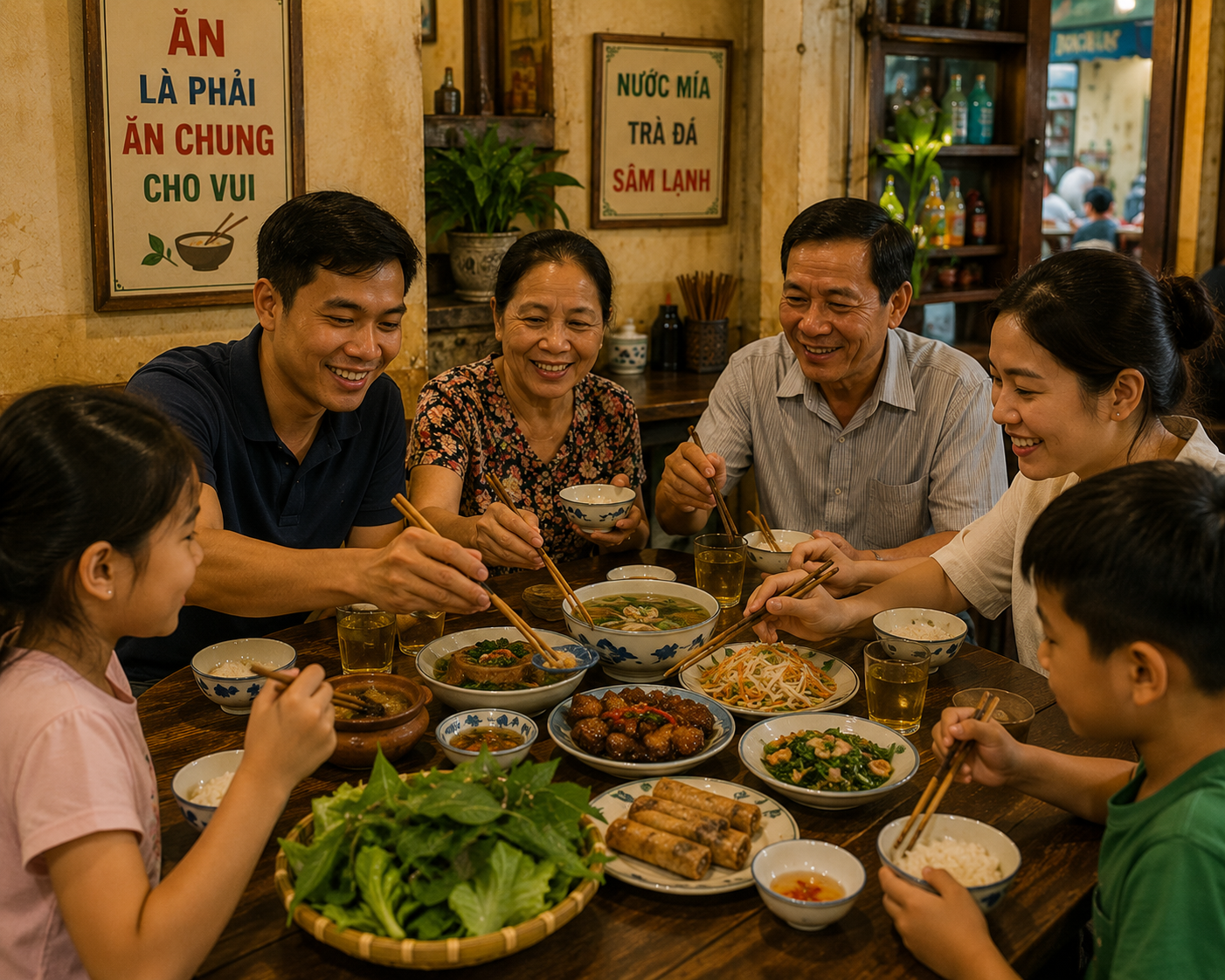
Dining etiquette depends on the setting. A bowl of phở is often ordered individually; a family-style meal may involve shared dishes. If serving utensils are provided, use them for shared food. Make room for other diners, and follow any posted restaurant rules rather than assuming the same custom applies everywhere.
Food safety: a busy stall is not a guarantee
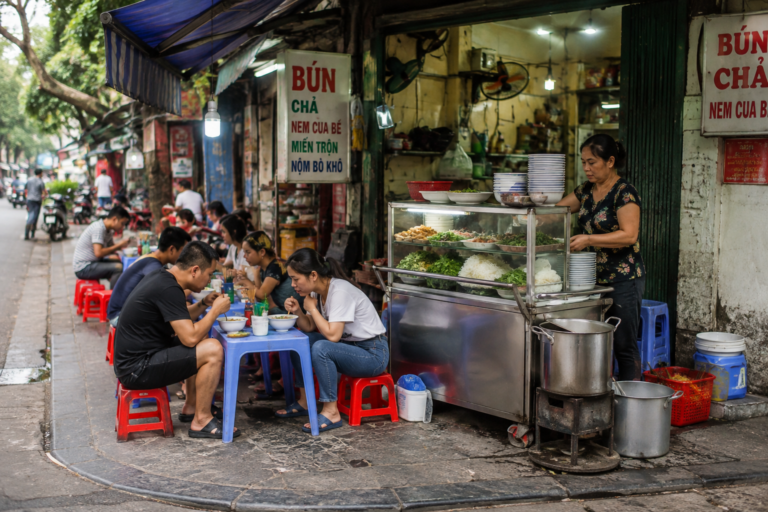
A busy stall may be popular, but a crowd cannot confirm that its food is fresh or prepared safely. The U.S. CDC warns that food and drinks from street vendors can increase the risk of illness and recommends extra precautions for travelers. People who want to minimize that risk should follow CDC guidance to avoid street-vendor food.
- Prefer thoroughly cooked food served hot rather than undercooked meat, fish, or eggs.
- Consider raw herbs, cut vegetables, and sauces carefully when washing water or preparation hygiene is unknown.
- Use safe water and ice according to travel-health guidance.
- Do not infer hygiene from popularity: a queue, a small menu, or a modern dining room is not evidence of safe storage or handling.
Reference: CDC Yellow Book: Food and Water Precautions for Travelers. These are general travel-health precautions, not a rating of any specific restaurant.
A quick checklist before you order
- Can you identify the dish, main ingredients, and any allergens?
- Does the price refer to one portion, a sharing set, or an item sold by weight?
- Have you communicated how many portions and whether you want chili or ice?
- Do you understand where to pay and which payment methods are accepted?
- Would you be comfortable with the restaurant’s food handling and water source?
Frequently asked questions
Do I need to speak Vietnamese to order food?
No. A picture menu, written Vietnamese phrase, translation card, or pointing can help. If you have a serious allergy, however, use a detailed written explanation and avoid any food the staff cannot identify safely.
Is tipping expected at Vietnamese restaurants?
A tip is generally optional, especially in small eateries. Service charges and customs vary by venue, so check the bill rather than assuming a fixed percentage.
Can I ask for a less spicy dish?
Yes. Say Không cay and show the phrase in writing. Ask whether chili is added during cooking or comes separately; some sauces or broths cannot be adjusted after preparation.
Does a busy restaurant mean the street food is safe?
No. A busy shop is not proof of cleanliness, proper cooking temperature, or safe water. Follow appropriate food-safety precautions, especially with raw ingredients.
What should I order first?
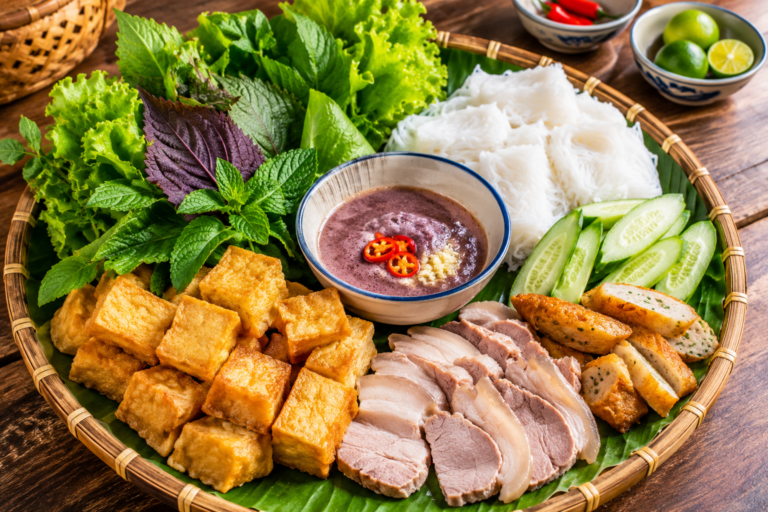
Choose something whose ingredients you understand, such as a fully cooked rice or noodle dish. If the menu includes bún đậu, note that its traditional dip contains fermented shrimp; our bún đậu mắm tôm guide explains your options.
Keep exploring Vietnamese food
Ordering becomes easier once you recognize the common words and know which questions to ask. If you want ideas for what to try after your first restaurant meal, explore our Vietnamese street barbecue guide or the Vietnam street snacks guide.