Street Barbecue Is a Big Part of Vietnamese Nights
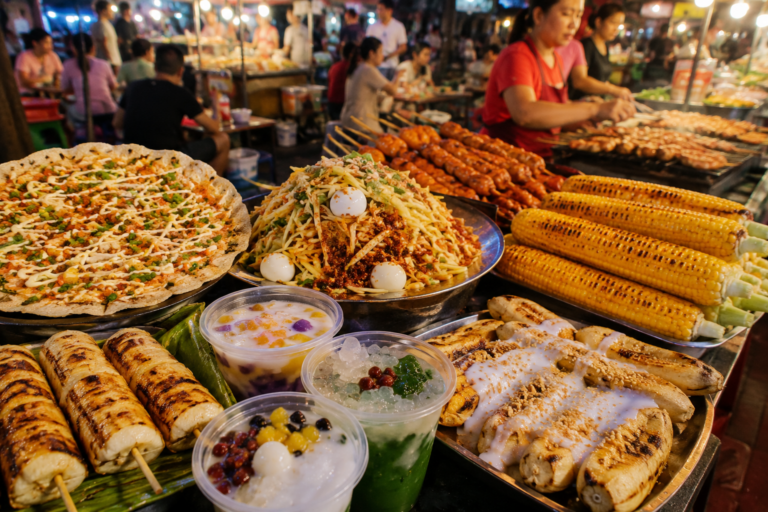
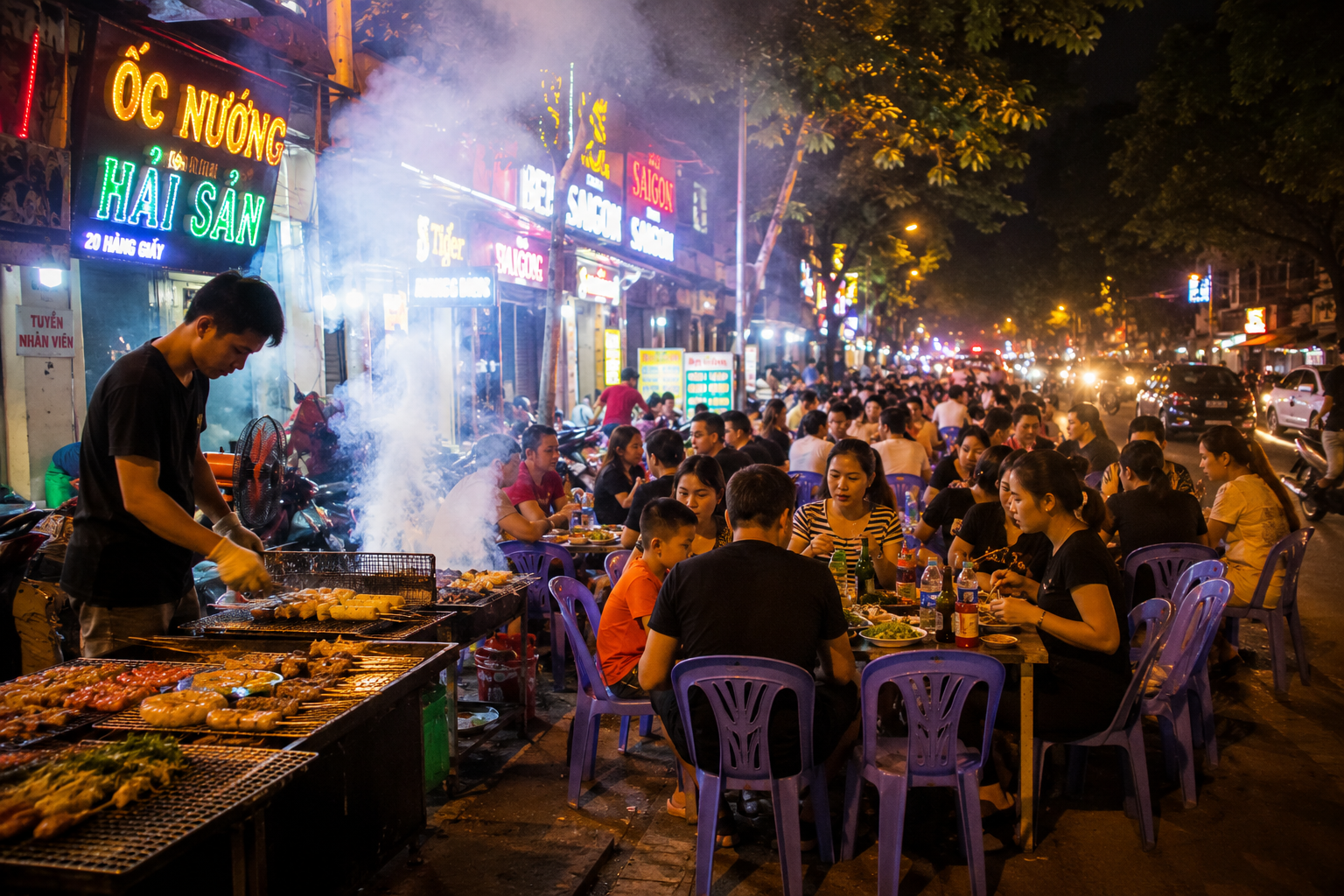
As evening arrives in Vietnam, the smell of food on a hot grill can drift through a busy side street, a small neighborhood restaurant, or a seafood dining area. Vietnamese street barbecue is not one single dish. It is a way to eat: choose something to grill, add a dipping sauce, and take your time over a shared meal.
You might buy a skewer cooked by a vendor in a few minutes, or sit with friends at a low table while meat, seafood, and vegetables are grilled nearby. This guide explains what to look for, what to order, how prices work, and which food-safety precautions matter.
What does street barbecue mean in Vietnam?
The Vietnamese word nướng means grilled or roasted. Look for menu terms such as thịt nướng (grilled meat), hải sản nướng (grilled seafood), and đồ nướng (grilled foods). You will encounter several different experiences, and they should not all be treated as the same type of restaurant.
- Ready-to-eat skewers: a vendor cooks individual portions over a grill; you choose a few pieces and eat them while hot.
- Street-side grill restaurants: order dishes from a menu and the kitchen prepares them, often with tables along a busy street or in an open-front space.
- Tabletop barbecue: the staff may bring a small grill to your table, leaving you to cook or finish some dishes yourself. Clarify how it works before starting.
Charcoal grills are familiar, but not every establishment uses charcoal: some use gas or electric equipment. Likewise, outdoor seating varies by city, weather, neighborhood regulations, and restaurant type. Vietnam’s official tourism site describes grilled skewers and evening barbecue as part of the country’s broader street-food scene, without implying that every street has the same setup.
What to order at a Vietnamese street barbecue
A first order is easier if you select one grilled protein, one vegetable dish, and a sauce or side. Menus differ significantly between a skewer stall, a seafood restaurant, and a barbecue shop.
- Grilled pork: marinated slices, ribs, or skewers may feature garlic, lemongrass, sugar, and fish sauce. Ingredients and sweetness vary by seller.
- Chicken: wings, thighs, or skewers are common in some venues, often served with chili or salt-and-pepper mixtures.
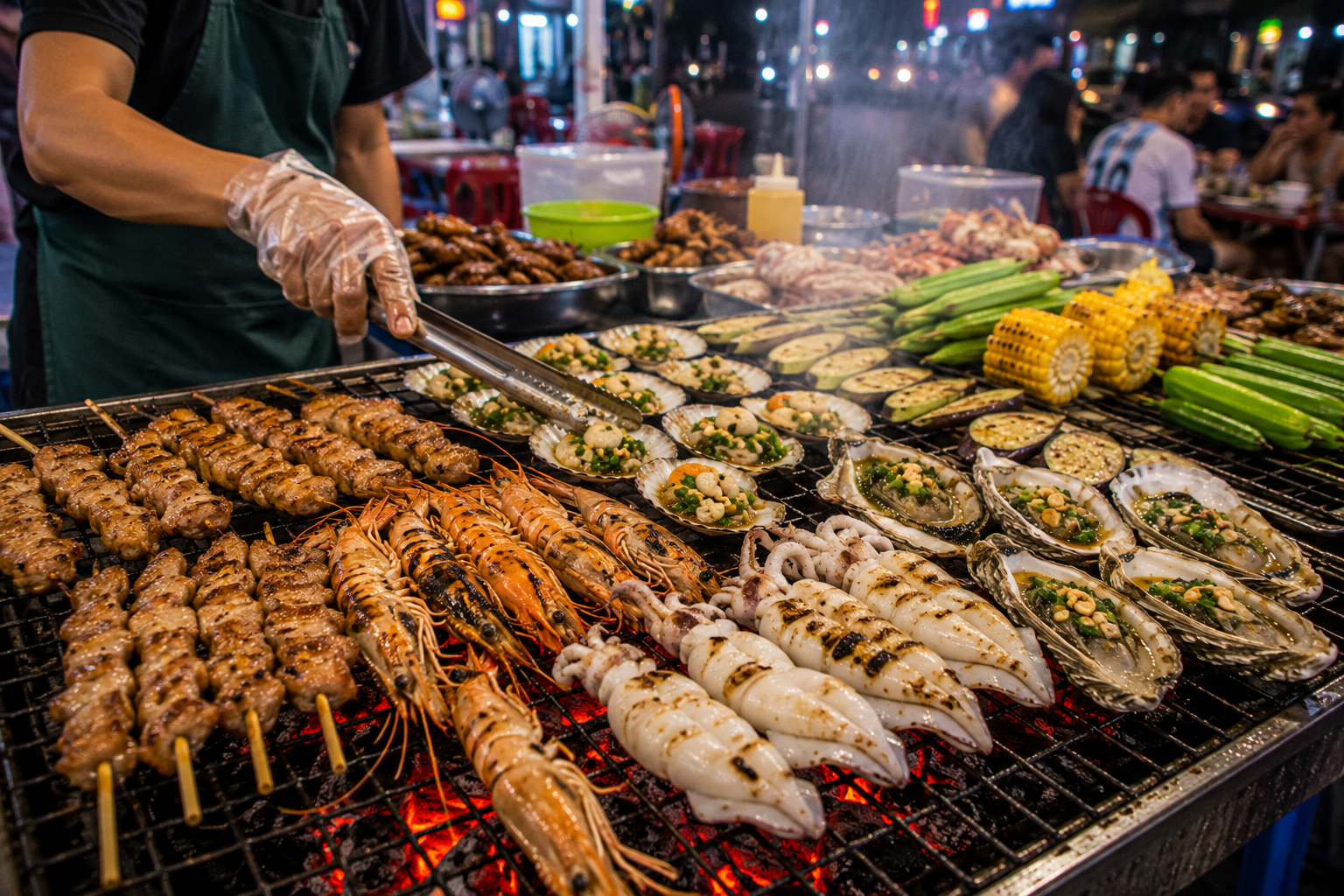
- Seafood: shrimp, squid, shellfish, and fish are popular where seafood is on the menu. Check whether each item is priced per piece, portion, or weight.
- Vegetables and mushrooms: corn, okra, eggplant, and mushrooms may be grilled plain or with scallion oil; confirm cooking oil and sauces if you avoid animal products.
- Side dishes: bread, rice, fresh herbs, pickles, or simple salads can make a grilled meal more balanced, depending on the shop.
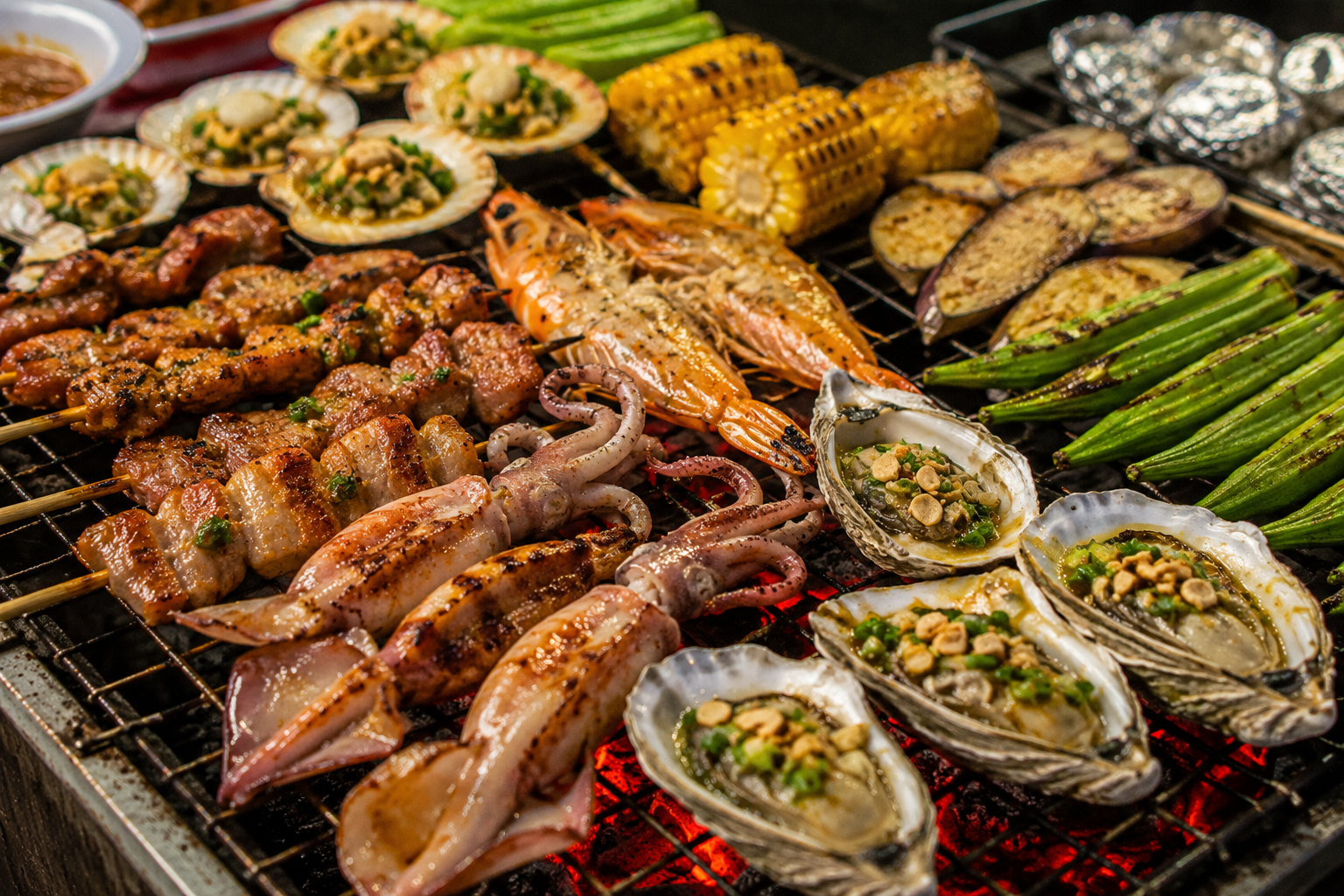
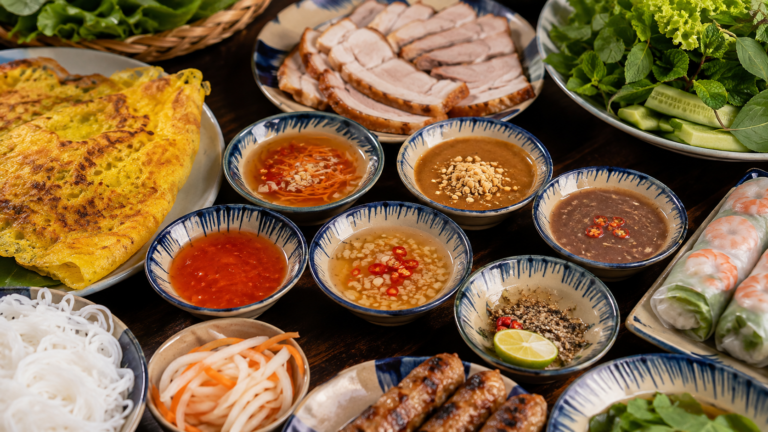
Dipping sauces can change the whole meal. A citrusy salt-and-pepper dip, a chili sauce, or a fish-sauce-based mixture may accompany the grill. For a closer look at the flavors, read our guide to Vietnamese dipping sauces. Some sauces contain peanuts, fish sauce, or shrimp paste, so ask if you have allergies.
Seafood needs a little extra attention
Grilled seafood is especially appealing in coastal destinations, but it is also where pricing and freshness questions matter most. Ask for the weight and the total price before the seafood goes to the kitchen. A displayed price may refer to 100 grams, one kilogram, one piece, or one plate; the unit is not universal. Explore common choices in our Vietnamese seafood dishes guide.
How to order without confusion
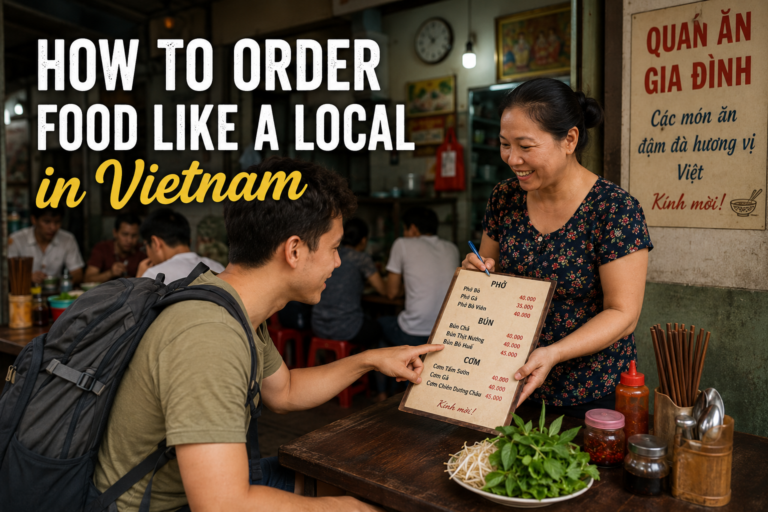
Start by checking whether the grill serves set plates, individual skewers, or seafood selected by weight. A photo menu helps, but a photo alone may not show serving size. If prices are not clear, ask before ordering rather than relying on a guess.
- Look at the price unit. Is the figure for one skewer, one plate, 100 grams, or a kilogram?
- Confirm the quantity. Ordering two skewers is different from ordering two large plates; point to the item and show the number.
- Ask about cooking. At a tabletop grill, check whether staff will cook the food or whether you should do it yourself.
- Check the sauce and spice level. Chili, peanuts, fish sauce, and other allergens are sometimes added even when they are not obvious in a picture.
- Review the bill. Verify quantities, seafood weights, extras, and drinks before paying.
Useful Vietnamese phrases
- Cho tôi một phần này. — One portion of this, please.
- Giá này tính theo đĩa hay theo ký? — Is this price per plate or per kilogram?
- Tổng cộng bao nhiêu tiền? — How much is it in total?
- Cho chín kỹ. — Please cook it thoroughly.
- Không cay, cảm ơn. — Not spicy, thank you.
If you are unfamiliar with Vietnamese menus, this step-by-step local ordering guide has more phrases and practical examples.
How much does street barbecue cost?
There is no reliable nationwide fixed price for Vietnamese barbecue. A quick skewer snack and a multi-dish seafood dinner are different purchases. Costs depend on city, neighborhood, venue, ingredients, portion size, season, and whether the item is sold by weight.
To keep your bill predictable, agree on both the unit price and final quantity before ordering seafood. Ask whether sauces, sides, or the tabletop grill carry extra charges. If prices are displayed, photograph the menu for reference. For wider food-budget context, see our Vietnam food-cost guide.
Food safety: how to reduce risk
Street food is part of the travel experience, but it is not automatically safe because a stall is busy or popular. The U.S. CDC advises travelers that food and drinks from street vendors can carry a higher risk of illness. Travelers who need to minimize that risk should follow its conservative advice to avoid street-vendor food; if you choose to try it anyway, the precautions below can help reduce, not eliminate, the risk.
- Choose food served thoroughly cooked and piping hot. Avoid undercooked meat, fish, shellfish, and food left sitting at room temperature.
- Watch the preparation area. Raw meat and seafood should be kept apart from cooked food; utensils and hands should not transfer raw juices to ready-to-eat dishes.
- Be careful with uncooked sides. Washed herbs, salads, garnishes, and dipping sauces may still pose a risk if preparation water is unsafe.
- Use safe drinking water. Prefer sealed bottled drinks when the water source is uncertain, and consider the source of ice.
- Consider your circumstances. Young children, pregnant travelers, older adults, and immunocompromised people may need stricter precautions.
Sources: CDC Yellow Book: Vietnam and CDC: Food and Water Precautions for Travelers. These are travel-health guidelines, not an inspection of any particular vendor.
The social side of a Vietnamese barbecue evening
A grilled meal can last longer than a takeaway snack because people are sharing plates, choosing another small dish, or talking over drinks. You may see plastic stools beside a modest grill, while other restaurants offer full-size tables and larger menus. Neither setup by itself tells you about food quality or hygiene.
If you are dining in a group, share food only if everyone is comfortable with the ingredients and spice levels. Be considerate of narrow sidewalks and traffic, and avoid blocking walkways while browsing menus. You do not have to order alcohol: soft drinks or water are perfectly reasonable.
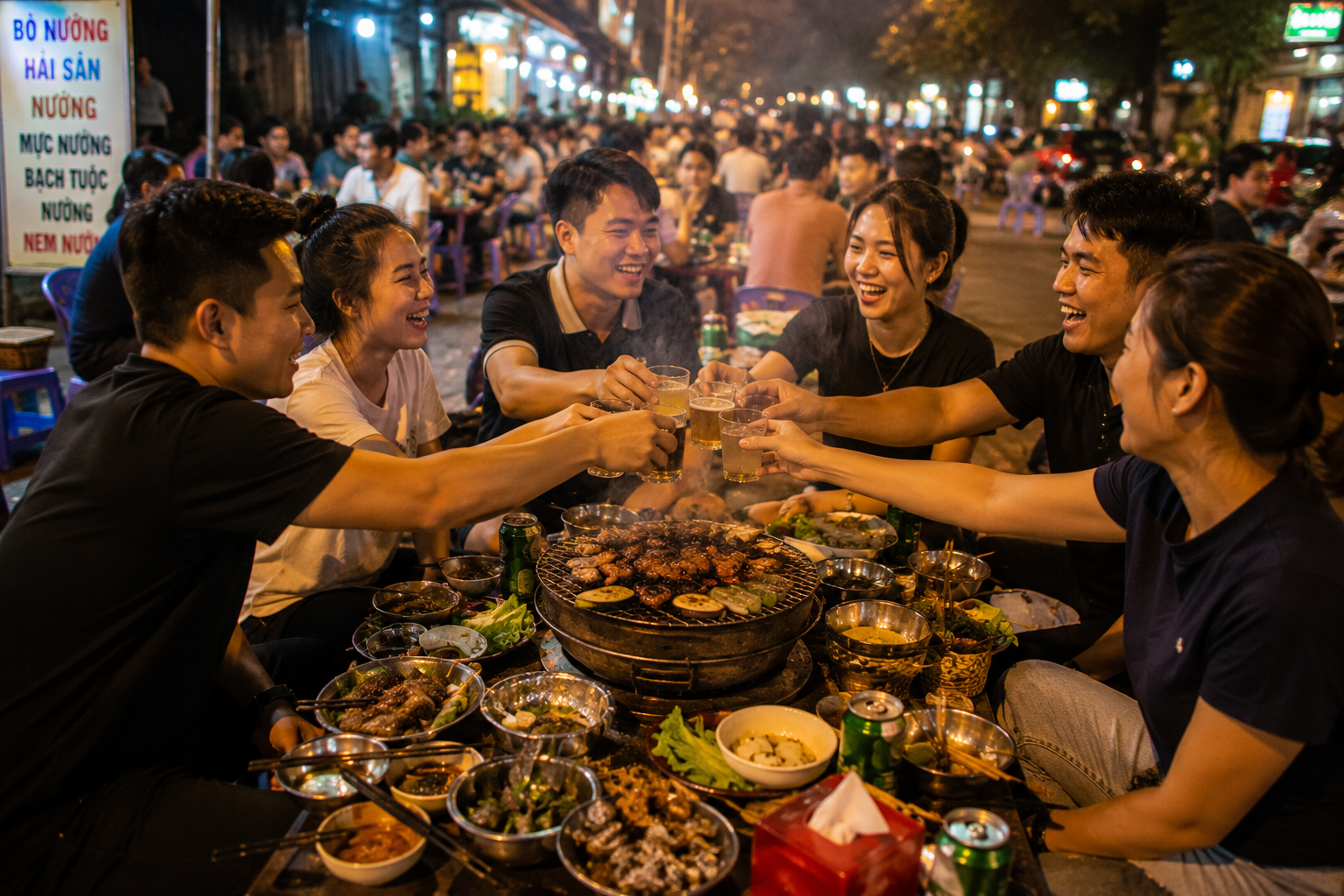
Rather than searching for one definitive ‘best city’ for street barbecue, look at the specialties of the place you are visiting. Hanoi, Da Nang, and Ho Chi Minh City all offer grilled foods, but what is available will change from one street and restaurant to another. A market food stall may suit a quick tasting, while a seafood restaurant is better for a relaxed sit-down meal.
Frequently asked questions
Is Vietnamese street barbecue safe to eat?
It carries foodborne-illness risk, particularly at street vendors. The CDC recommends avoiding street-vendor food for lower-risk travel. If you decide to eat it, select thoroughly cooked, hot dishes and take precautions with water, raw ingredients, and cross-contamination. A busy stall is not proof of safety.
What should I order first?
A small plate of cooked grilled meat or vegetables is an approachable starting point. Add a dipping sauce once you have checked the ingredients. If ordering shellfish or other seafood, clarify portion weight and total price first.
Do I cook the food myself?
Sometimes. At some barbecue restaurants the staff cook everything; at tabletop-grill restaurants customers may cook part or all of the meal. Ask before using the grill, and make sure meat and seafood are fully cooked before eating.
Is street barbecue cheap?
Not necessarily. A skewer stall may be inexpensive, while seafood sold by weight or a full group meal can cost significantly more. Compare the listed price units and quantity instead of assuming every street barbecue offers a bargain.
Explore more Vietnamese street-food favorites
Barbecue is one part of a much wider food culture. Next, try our Vietnam street snacks guide to discover what else appears at evening stalls. If you enjoy grilled pork with noodles, Bún Chả vs. Bún Thịt Nướng explains two dishes that are easy to confuse.