Vietnamese Sugarcane Juice: Why Locals Drink It Every Day
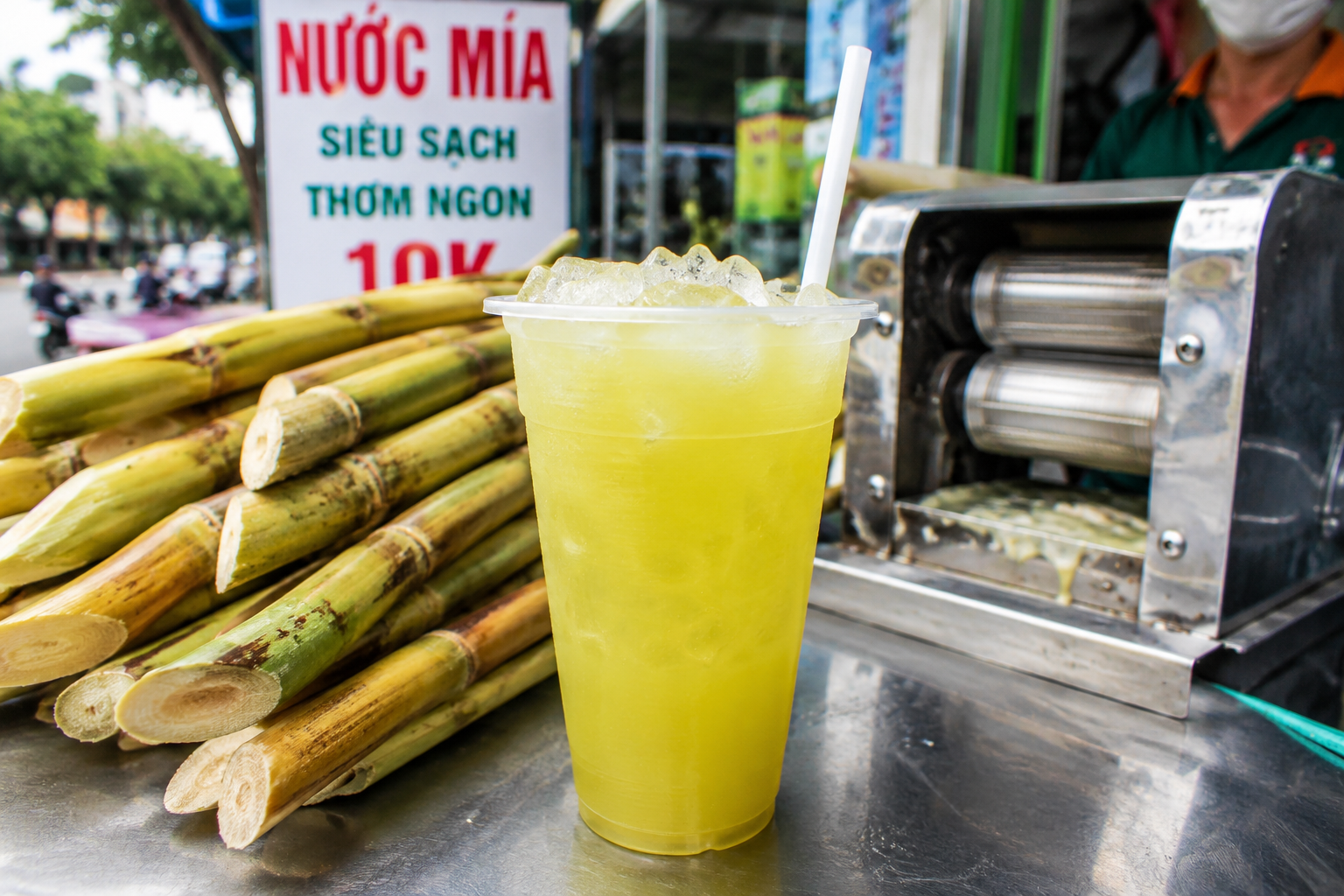
A metal sugarcane press, a bundle of long cane stalks, and a cup filled with pale green-gold juice are familiar sights in parts of Vietnam. The drink is called nước mía, and it is enjoyed as a sweet, refreshing break from the heat.
Sugarcane juice is worth knowing about even if you decide not to try it from a street stall. This guide covers how it is made, what it tastes like, common variations, how to order it, and the food-safety considerations travelers should understand before drinking freshly pressed juice.
What Is Nước Mía?
Nước mía means sugarcane juice. A vendor feeds peeled or prepared sugarcane stalks through a mechanical roller press, which squeezes out the liquid. The fresh juice is often served with ice, sometimes with a citrus addition such as kumquat (tắc, also called quất in northern Vietnam).
The color can range from pale yellow to greenish gold. It depends on the cane, the pressing process, and any added ingredients. Freshly squeezed sugarcane juice is not the same thing as a commercially bottled, pasteurized drink, and the two can have different storage and safety characteristics.
If you see the press working at a stall, the process is easy to understand: stalks go into the rollers, juice comes out, and the leftover fiber is separated. Fresh pressing, however, does not automatically mean the drink is free of germs.
Why Is Sugarcane Juice Popular in Vietnam?
Vietnam has a warm climate in many regions, and cold beverages are part of everyday street-food culture. Nước mía appeals to people who want something naturally sweet and quick to serve. It is commonly associated with roadside drink stands, local markets, and casual rest stops.
The phrase “everyday drink” describes how ordinary and recognizable it is—not that every Vietnamese person drinks it daily. Habits vary by city, season, age, and preference. Some people choose coffee, tea, or bottled drinks instead.
What makes nước mía distinctive is its simple preparation and the way the flavor changes with citrus and ice. It can be a useful starting point for learning about Vietnamese drinks beyond coffee.
What Does Vietnamese Sugarcane Juice Taste Like?
Plain sugarcane juice is sweet because sugar is naturally present in the cane. The taste may have grassy, fresh, or lightly earthy notes alongside the sweetness. Adding a little kumquat introduces tartness that can make the drink taste brighter, while ice dilutes it as it melts.
It can taste lighter than some fizzy soft drinks, but that is a matter of flavor and texture. Natural sweetness still means the juice contains sugar. Do not assume that freshly pressed juice is sugar-free or a health treatment.
Common ways to order it
- Nước mía: Plain sugarcane juice, although the stall may have its own standard preparation.
- Nước mía tắc: Sugarcane juice with kumquat, where offered.
- Ít đá: Less ice.
- Không đá: No ice.
Ask what the vendor adds if ingredients matter to you. Requesting no ice may avoid one possible source of contamination, but it does not eliminate risks from the raw juice, equipment, or handling.
How Much Does a Glass Cost?
Nước mía is generally positioned as an inexpensive local drink, but prices vary by area, stall, cup size, extras, and time. A posted price from one neighborhood should not be presented as a universal Vietnam-wide rate. Prices can also change after a guide is published.
Before ordering, check the displayed menu or ask “Một ly nước mía bao nhiêu tiền?” (How much is one glass of sugarcane juice?). If a stall offers several sizes, ask which size the quoted price covers. This is especially useful near tourist attractions or busy beach areas.
For a broader picture of everyday food spending, see our Vietnam food price guide. Use its ranges as planning context, not as a guarantee for a particular stall.
Is Fresh Street-Sold Sugarcane Juice Safe to Drink?
There is no way to guarantee the safety of a freshly pressed drink by looking at it. Sugarcane juice is commonly served without a heating or pasteurization step, so hygiene of the cane, roller press, hands, containers, and any ice or added water matters.
The CDC Yellow Book advises international travelers that food and drinks from street vendors carry added risk, and recommends avoiding ice unless you are reasonably certain it was made with safe water. Its Vietnam travel guidance specifically cautions against unsafe water, ice, and street-vended drinks.
A busy stall and a visually clean machine are not proof that a drink is safe. If you want to reduce foodborne-illness risk, choose a factory-sealed commercial beverage or another option prepared using safe water and appropriate food-safety controls. Travelers who are pregnant, immunocompromised, or otherwise at higher risk should be particularly cautious with unpasteurized drinks.
If you choose to try freshly pressed nước mía despite the risk, looking for clean equipment, fresh preparation, and careful handling is reasonable—but those observations cannot rule out invisible contamination. If you are uncertain about the ice or water, do not assume that saying “không đá” makes the juice risk-free.
Where Do You Usually See Nước Mía?
Sugarcane-juice stands can be found in many Vietnamese cities, often near markets, small eateries, and roadside seating areas. Availability varies, and there is no need to seek out a particular stall just because a travel blog lists it. You can recognize the business by its stacked cane stalks, roller press, or a sign reading nước mía.
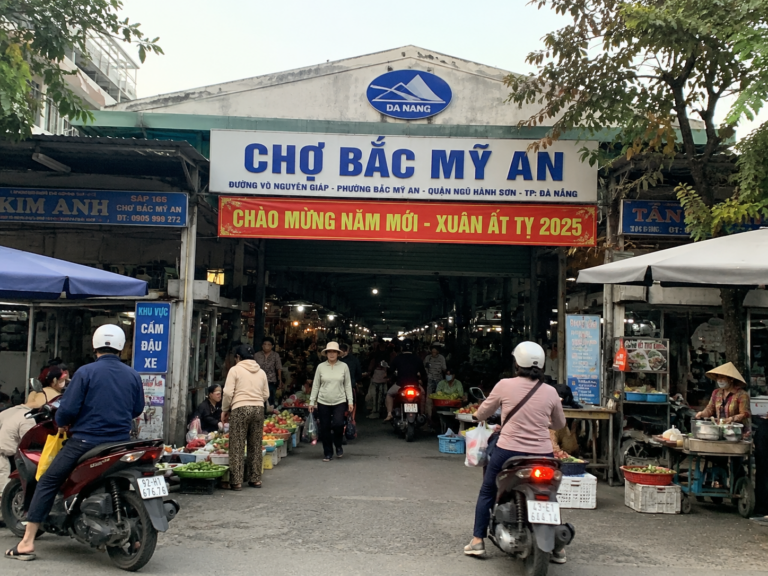
For travelers in Da Nang, the word is useful when looking at menus or discussing local drinks with friends and staff. The most important decision is not simply where the nearest stall is, but whether the preparation and food-safety risk fit your own comfort level.
If you enjoy exploring everyday foods, our Vietnam street-snack guide and local market guide explain more of the settings where street drinks and snacks appear.
Useful Vietnamese Phrases
- Một ly nước mía — One glass of sugarcane juice.
- Nước mía tắc — Sugarcane juice with kumquat.
- Ít đá — Less ice.
- Không đá — No ice.
- Bao nhiêu tiền? — How much does it cost?
These phrases help you communicate your preference, but they do not substitute for food-safety precautions. For other useful restaurant phrases, see how to order food in Vietnam.
Frequently Asked Questions
Is sugarcane juice the same as sugar water?
No. The juice is extracted from sugarcane stalks and may retain a grassy or earthy flavor. It contains naturally occurring sugars; some stalls also add citrus or ice.
Does nước mía always contain kumquat?
No. Some versions are served plain, while others include kumquat or other additions. Ask about the ingredients if you have a preference.
Is freshly pressed sugarcane juice pasteurized?
Typically not at street presses. Fresh preparation alone does not ensure the same safety controls as a properly processed commercial drink.
Will ordering without ice make it safe?
Not necessarily. Skipping ice may remove one potential risk, but the sugarcane, machine, cups, and handling can still affect safety.
Can I find sugarcane juice in Da Nang?
Yes, sugarcane-juice businesses operate in Da Nang, although availability varies by location and time. Look for signs saying nước mía and make your own decision about food safety.
The Bottom Line
Nước mía is a recognizable part of Vietnam’s casual drink culture, with a straightforward preparation and a distinctive sweet taste. Learning how to identify and order it adds useful context to a trip, even if you prefer a commercially sealed drink. If you do try fresh sugarcane juice, balance curiosity with informed food-and-water precautions rather than assuming that “fresh” automatically means “safe.”