Why Is Vietnamese Broth So Flavorful? 7 Secrets Explained
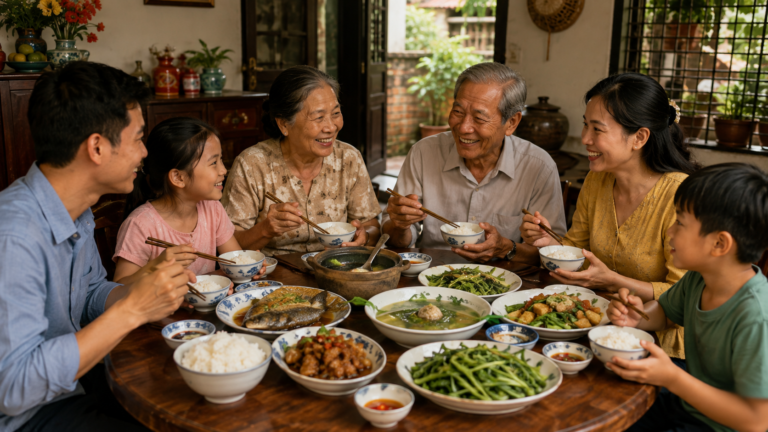
Why does Vietnamese broth taste so flavorful even when it looks clear and light? A bowl of phở can carry deep meat flavor, sweet roasted onion, warm spices and fresh herbs in the same spoonful. Yet the broth for bún bò Huế or hủ tiếu is quite different. There is no universal Vietnamese stock recipe: flavor comes from the ingredients chosen for a particular dish and the way they are prepared and seasoned.
This guide explores seven techniques behind Vietnamese noodle-soup broths—from bones and aromatics to spice control, simmering and finishing at the table. They are common methods, not seven compulsory ingredients. Vegetarian and seafood broths can follow other approaches. For broader background, see Vietnam Tourism’s history of phở and guide to regional noodle soups.
Seven Broth-Building Techniques at a Glance
| Technique | What it contributes | Important limitation |
|---|---|---|
| 1. Choose the stock base | Meaty savoriness and body from beef, chicken or pork; other options for vegetable stock | Not every Vietnamese broth uses bones |
| 2. Roast aromatics | Deeper onion and ginger fragrance, especially in phở | Not the right flavor profile for every soup |
| 3. Use selected spices | Distinctive aroma, from star anise to coriander | More is not always better |
| 4. Control heat and skim | Clearer appearance and measured extraction | Time and intensity depend on the dish |
| 5. Season gradually | Salt, fermented savoriness and balanced taste | Fish sauce and shrimp paste are optional, dish-specific choices |
| 6. Match a regional soup style | Beef, lemongrass or seafood-forward characteristics | No single broth represents all Vietnam |
| 7. Finish with herbs and acidity | Fresh fragrance and brightness at serving | Garnishes depend on region and diner |
On This Page
- 1. Building the stock base
- 2. Charred onion and ginger
- 3. Whole spices and aroma
- 4. Heat, skimming and clarity
- 5. Seasoning and umami
- 6. Different regional styles
- 7. Fresh finishing ingredients
- Tips for making broth at home
- Broth storage and food safety
- Questions about Vietnamese broth
- Sources
1. The Base: Bones, Meat—or Other Ingredients
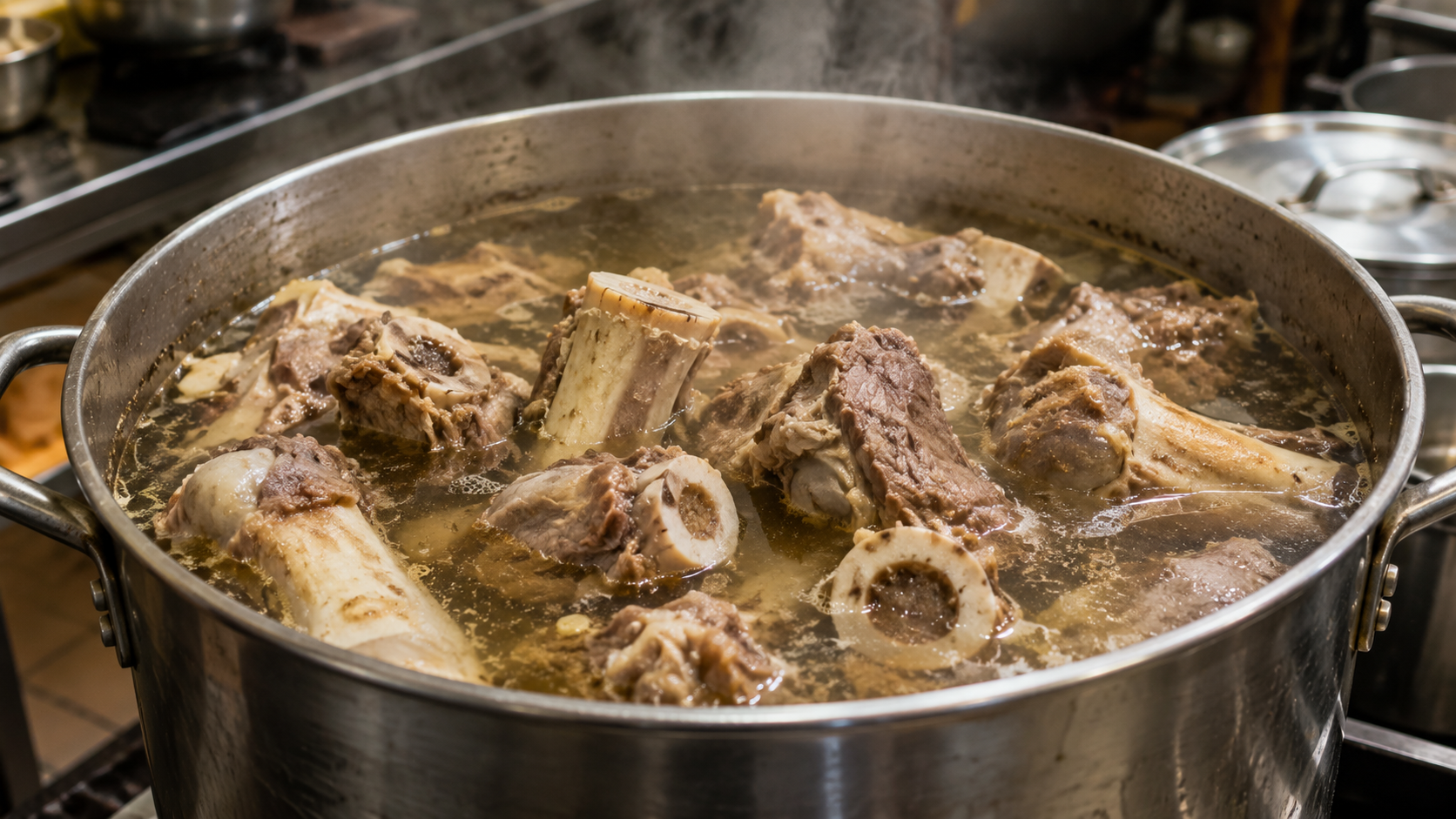
Many traditional meat-based noodle soups start with beef, pork or chicken bones alongside meat and aromatics. Bones and connective tissue contribute gelatin and body as they cook; meat, vegetables and aromatics contribute much of the savory flavor. A broth can have a light appearance and still carry a substantial taste.
For phở bò, beef bones and cuts such as oxtail or brisket may be used. Chicken phở takes a different route, while many southern hủ tiếu preparations begin with pork bones and may include dried seafood. Vietnam Tourism describes these differences in its phở feature and Ho Chi Minh City cuisine guide.
Bones are not the only way to build flavor. Vegetarian stock can use mushrooms, onion, radish and other vegetables, sometimes with toasted aromatics. It will taste different rather than being a perfect meat-stock copy; see our guide to vegetarian food in Vietnam for meat-free menu options.
2. Charred Onion and Ginger: A Characteristic Phở Technique
For many phở recipes, the cook chars or roasts onion and ginger before they go into the pot. This adds roasted aroma and rounds out the raw sharpness of the vegetables. The goal is fragrance rather than an overwhelmingly smoky broth.
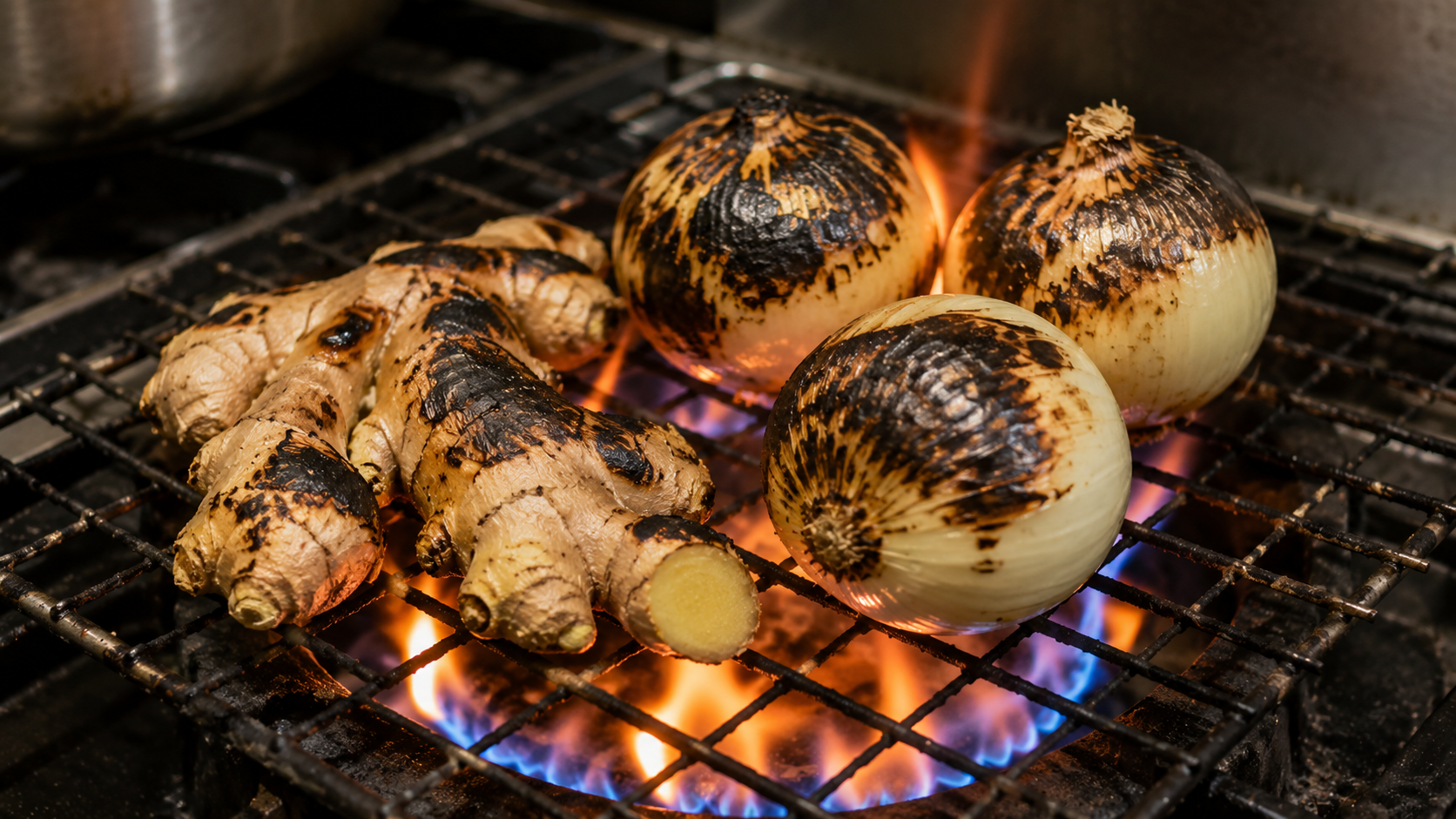
The official Vietnam Tourism history of phở specifically identifies charred onions and ginger among the ingredients in slow-cooked beef broth. Some home cooks char the cut sides and remove loose burnt material before simmering. Do not treat charring as a rule for every soup: bún bò Huế and hủ tiếu develop their own distinct aromas.
3. Whole Spices: Choose the Blend for the Dish
Phở is known for a warm spice aroma. Depending on the cook, the blend may include star anise, cinnamon, cloves, coriander seeds and black cardamom; other ingredients such as fennel may also appear. The quantities and proportions are not universal. Some cooks briefly toast the dry spices to bring out their fragrance before simmering them in stock.
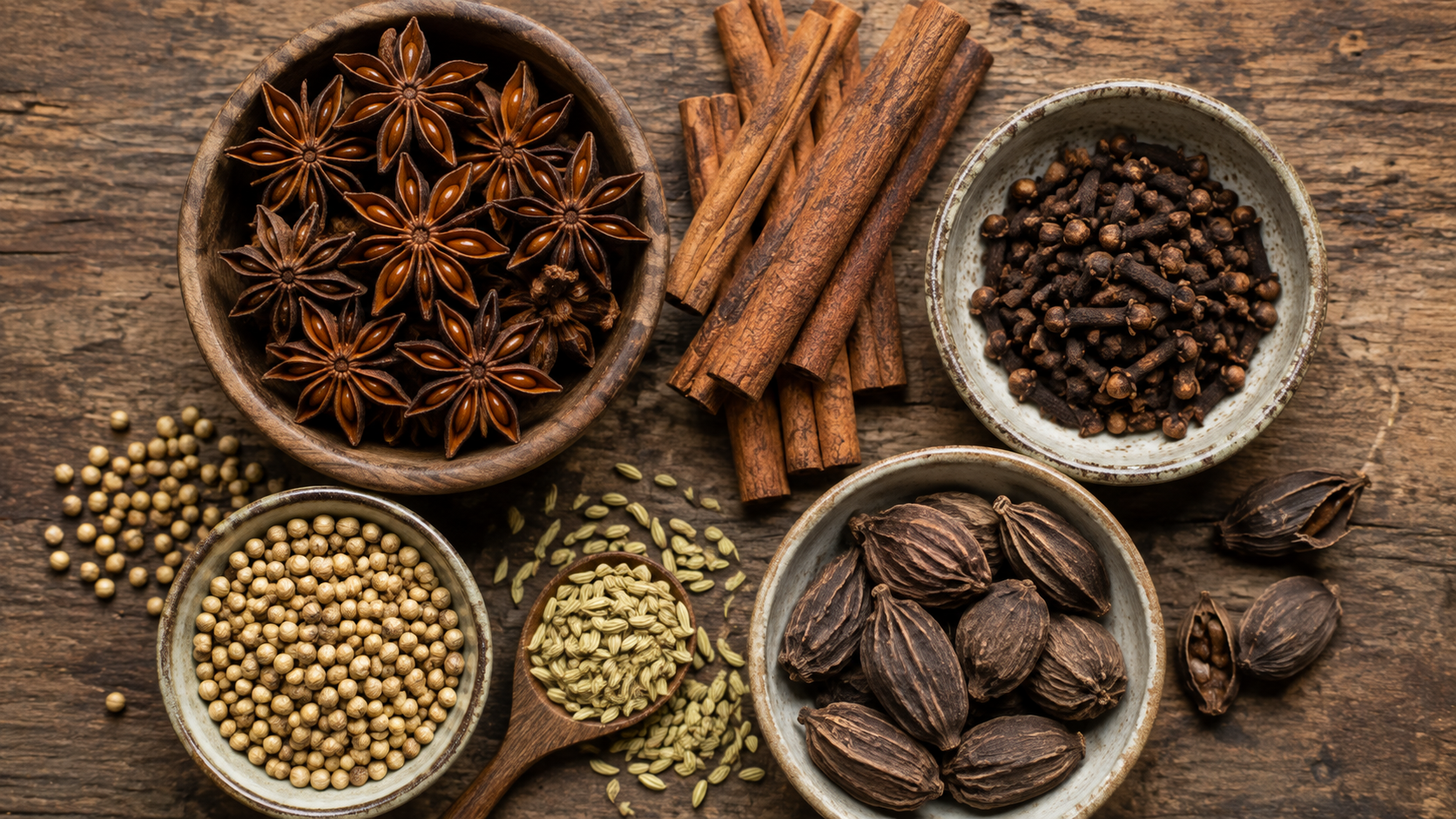
Too much star anise or cinnamon can make a soup taste mainly of those spices instead of its base. Start modestly, taste the developing broth and remove a spice sachet when the aroma is strong enough for your preference. The official history of phở lists key spices and explains the dish’s evolution.
4. Gentle Simmering and Skimming Create a Cleaner Stock
For clear noodle soups, cooks commonly keep a controlled simmer and skim foam or excess fat from the surface. These techniques can improve visual clarity and help avoid a greasy or muddy mouthfeel. A rolling boil may emulsify fat and suspend particles, but not every Vietnamese soup needs to be perfectly clear.
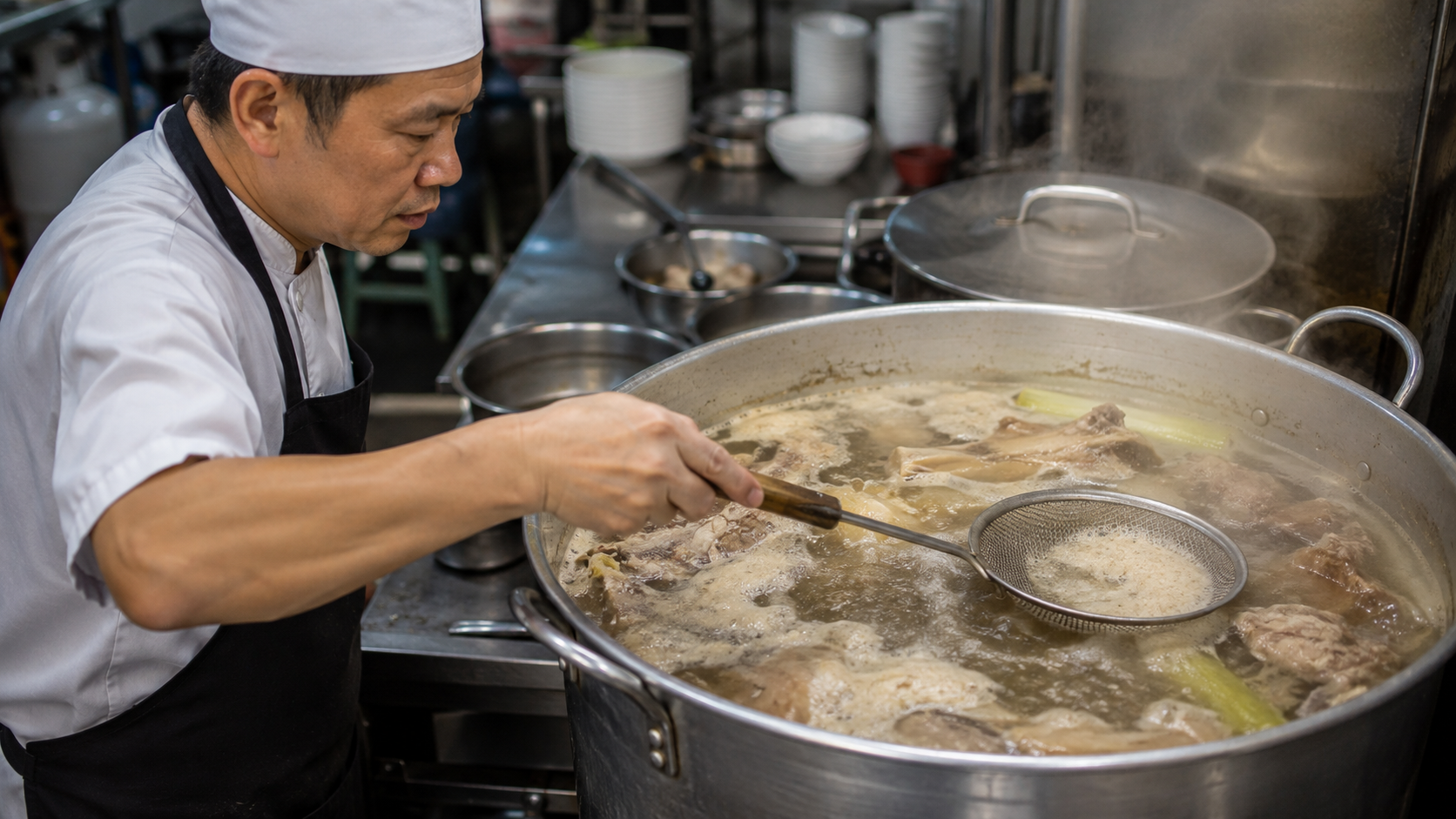
Cooking time depends on the size and type of bones or meat, the amount of water and the desired taste. It is not scientifically sound to promise that a precise number of hours will always produce the “best” broth. Vietnam Tourism’s official recipe collection describes blanching, skimming and simmering for a bún bò Huế preparation, but that recipe is one example rather than a universal method.
5. Balanced Seasoning: Fish Sauce Is Not Mandatory in Every Pot
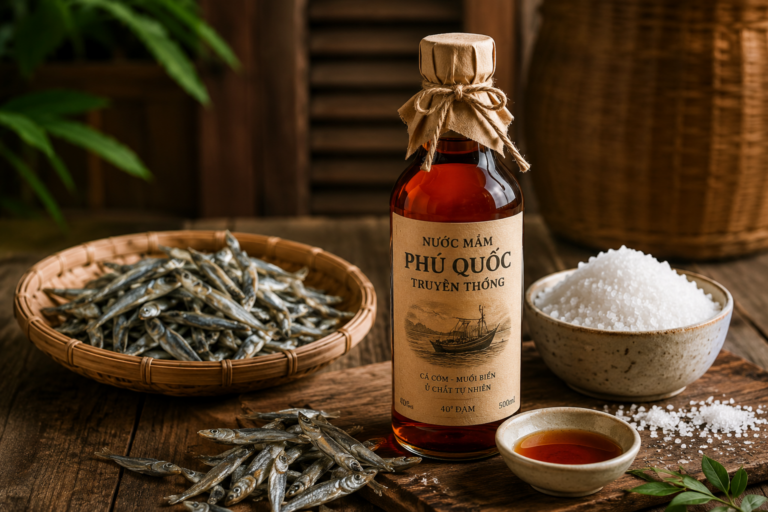
Nước mắm (fermented fish sauce) contributes salt and savory character to many Vietnamese dishes. Some soup recipes use it in the stock, others offer it at the table, and some rely more on salt and the base ingredients. Similarly, mắm ruốc or other fermented shrimp seasonings may be important in particular Huế-style broths but are not ingredients in every bowl of phở.
Seasoning is more than adding salt. Onion and vegetable sweetness, fat, protein-rich stock, spices and acidity affect the final taste. For bún bò Huế, Vietnam Tourism specifically describes the use of both shrimp paste and fish sauce alongside lemongrass and chili. See our fish-sauce guide to distinguish the fermented seasoning from prepared dipping sauces.
Allergy and dietary note: fish sauce contains fish, and shrimp paste contains crustaceans. Even a broth without visible seafood may contain one of these seasonings. Ask about stock and sauces before ordering if you have food allergies or follow a vegetarian diet.
6. Vietnamese Broths Are Not All the Same
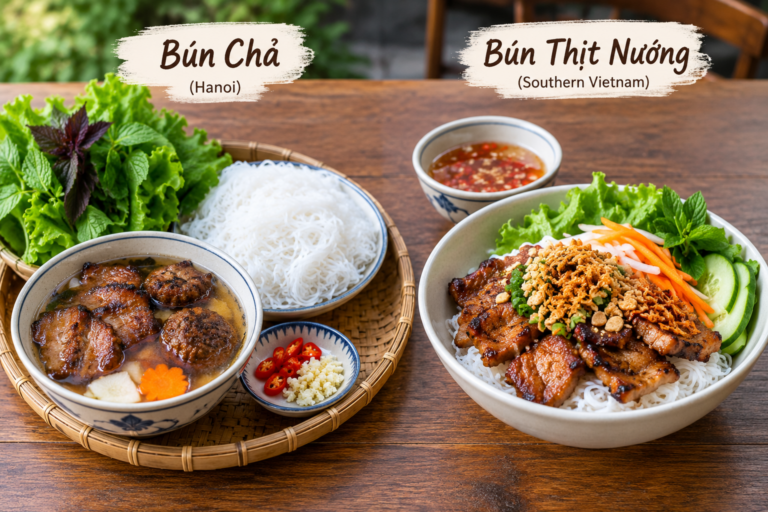
The clearest way to understand Vietnamese broth is to compare particular noodle dishes rather than searching for a single national recipe.
| Noodle soup | Typical broth character | Distinctive ingredients |
|---|---|---|
| Phở bò | Beef-forward, aromatic, sometimes gently sweet | Beef bones, charred onion and ginger, warm spices |
| Phở gà | Chicken-forward, often lighter in aroma | Chicken and carefully chosen aromatics |
| Bún bò Huế | Bold, lemongrass-forward, often spicy | Beef and pork, lemongrass, chili, fermented shrimp seasoning |
| Hủ tiếu | Varies widely; some clear southern versions are delicately sweet | Pork stock, root vegetables and sometimes dried squid or shrimp |
| Vegetarian noodle soup | Mushroom- or vegetable-forward, recipe-specific | Vegetable or mushroom stock, aromatics, spices |
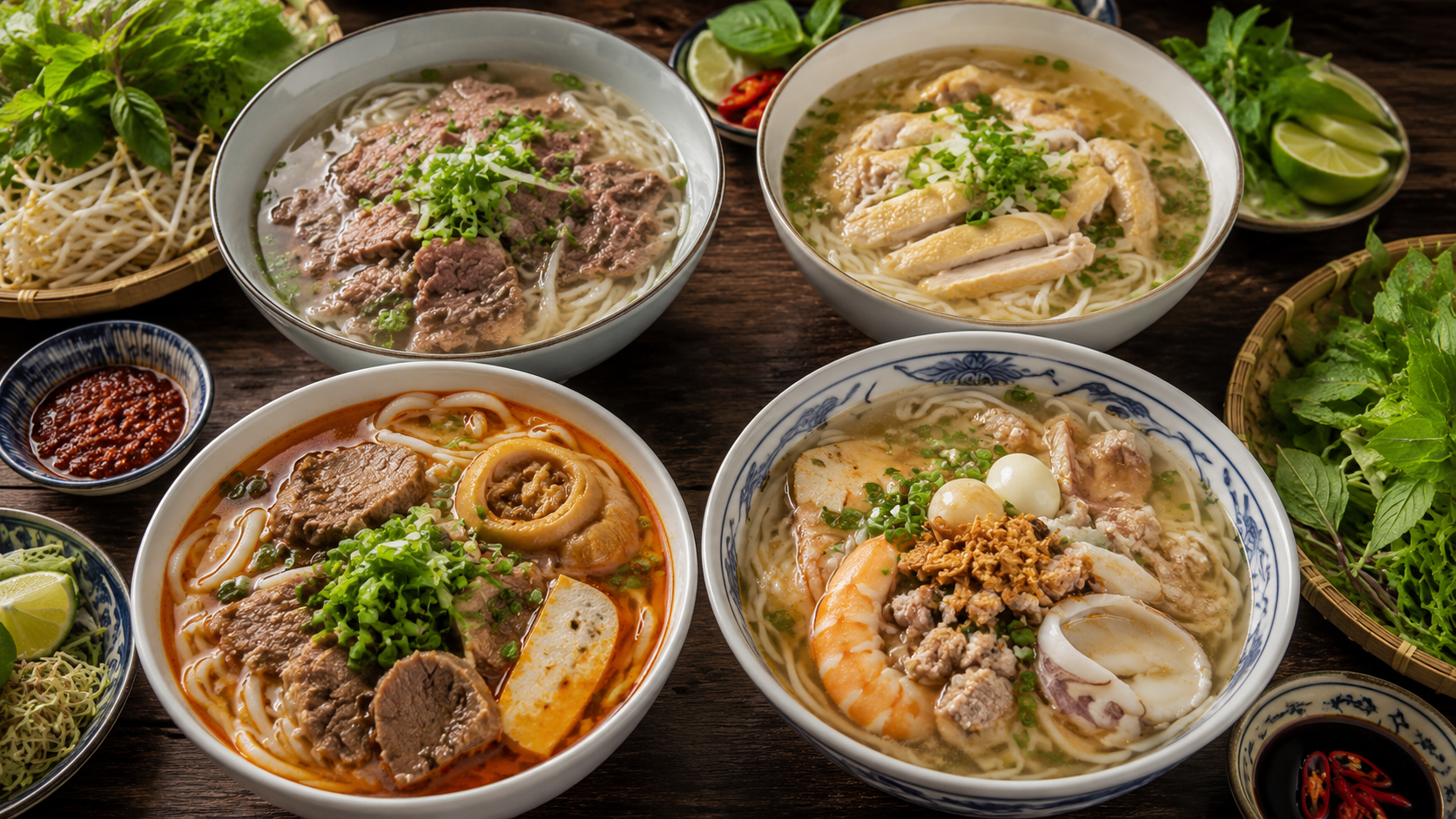
The Vietnam Tourism guides to bún bò Huế and southern hủ tiếu describe these differing ingredient combinations. Actual restaurant versions vary by region and chef. To explore noodle styles in more detail, see our seven Vietnamese noodle dishes guide.
7. Herbs, Lime and Chili Complete the Bowl
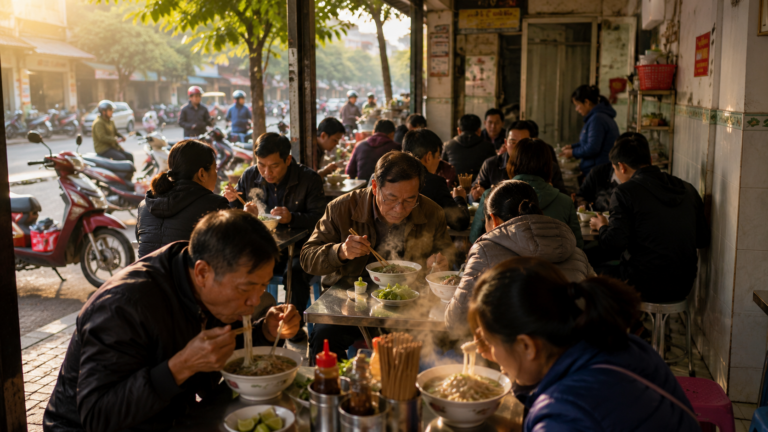
Some of a noodle soup’s most vivid flavors arrive just before it is eaten. Scallions, herbs, sliced chili, bean sprouts, lime or lemon and other toppings can make a hot broth feel brighter, fresher or spicier. They add contrast rather than replacing the stock’s deeper flavors.
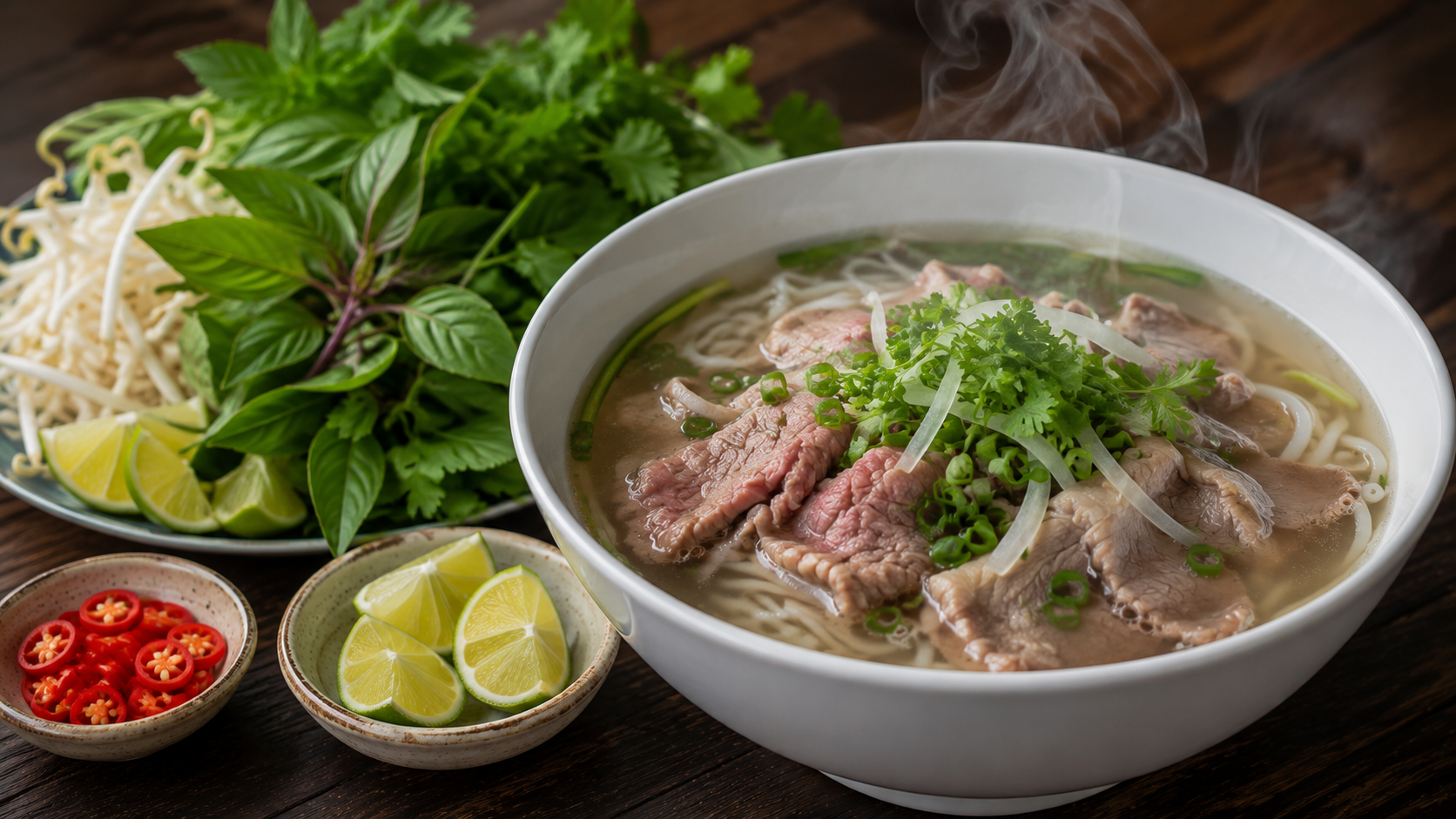
Northern and southern phở styles can differ in the garnishes presented and in how diners customize their soup. Vietnam Tourism notes regional differences in its history of phở. When trying a new noodle shop, tasting the broth before adding sauces can help you appreciate its original seasoning; after that, season it however you enjoy.
Practical Tips for a Better Broth at Home
- Identify the noodle dish first. Decide whether you want phở, bún bò Huế, hủ tiếu or a vegetarian soup before choosing ingredients.
- Choose a suitable stock base. Beef, chicken, pork, mushrooms and vegetables create different results; they are not fully interchangeable.
- Use aromatics deliberately. Char onion and ginger for many phở styles, but use lemongrass and fermented seasonings when a Huế-style recipe calls for them.
- Control spice strength. Add whole spices in restrained amounts and taste before leaving them in longer.
- Manage the simmer. Skim surface foam for clear stock and remove excess fat according to the desired style.
- Season in stages. Taste after reduction so the soup does not become too salty; remember that some table sauces contain extra salt.
- Serve the finishing ingredients separately when appropriate. Herbs, citrus and chili allow diners to adjust the balance without changing the whole pot.
These are principles for understanding recipes, not a complete step-by-step cooking formula. Follow a tested recipe appropriate to your chosen soup, including safe cooking temperatures and handling of raw ingredients.
Food Safety: Cooling and Storing Homemade Stock
A large stockpot can remain warm for a long time after cooking. The USDA recommends transferring soup or broth into smaller, shallow containers so it cools quickly, then refrigerating promptly. Perishable foods generally should not remain at room temperature for more than two hours, or more than one hour when the ambient temperature is above 90°F (about 32°C). Refrigerated leftovers are generally recommended for use within three to four days, or frozen for longer storage. USDA leftover-safety guidance.
Avoid leaving a cooked stockpot on the stove overnight. When reheating, follow food-safety guidance rather than judging safety from smell or appearance alone. The USDA also advises cooling large quantities in shallow containers or with a cold-water or ice bath. USDA guidance on refrigerating hot foods.
Frequently Asked Questions
Why does phở broth taste rich even when it is clear?
Its flavor can come from beef or chicken, charred onion and ginger, selected spices and controlled cooking. Appearance and flavor are different characteristics: a clear liquid can still contain substantial dissolved flavor compounds.
Do all Vietnamese noodle soups use beef bones?
No. Some use chicken, pork, fish, seafood or vegetable-based stock. Choose the soup and recipe before choosing the base.
Does every Vietnamese broth contain fish sauce?
No. Fish sauce is common in Vietnamese cooking but its use depends on the dish and cook. Some broths also use fermented shrimp products, while others omit both.
Is bún bò Huế just spicy phở?
No. It typically uses round rice noodles and a different broth profile featuring lemongrass, beef and pork and often shrimp seasoning, rather than the warm-spice profile associated with phở.
Should I boil or simmer broth?
It depends on the stock and stage of preparation. A clear-broth recipe may begin with boiling or blanching, followed by controlled simmering and skimming. Follow the specific recipe; “never boil” is too absolute.
Can Vietnamese broth be vegetarian?
Yes. Mushrooms, vegetables and other plant ingredients can make a flavorful broth. Ask about the full stock and sauce ingredients if you are eating out, since an otherwise meat-free-looking noodle soup may use fish sauce or animal stock.
The Main Takeaway
Vietnamese broth can be flavorful because several decisions reinforce one another: the right base, the right aromatics, restrained spice, appropriate cooking and a final balance of seasonings and fresh garnishes. Next time you order noodle soup, taste the stock first and consider how each layer contributes. The distinction between a phở broth, a Huế-style bowl and southern hủ tiếu is part of what makes Vietnamese cuisine so varied.
Sources and Editorial Note
- Vietnam Tourism — The Story of Vietnamese Phở: bones, charred onion and ginger, traditional phở spices, regional garnishes.
- Vietnam Tourism — Beyond Phở: Five Vietnamese Noodles: bún bò Huế and its lemongrass/chili/shrimp-paste profile.
- Vietnam Tourism — Ho Chi Minh City Cuisine: pork-bone and dried-seafood hủ tiếu stock.
- Vietnam Tourism Board — Recipes from Vietnam: a bún bò Huế recipe with blanching, skimming and seasoned broth.
- USDA — How to Handle Leftovers Safely: cooling, refrigerating and storing stock.
- USDA — Refrigerating Hot Food: cooling large pots of soup safely.
Editorial note (October 2026): The seven points describe techniques commonly used in selected Vietnamese noodle soups; they are not universal culinary rules or a tested recipe. Ingredients and service customs vary by region and kitchen. Images illustrate broth preparation and dishes, not documented scenes at a named restaurant. Specific temperatures and storage guidance are attributed to USDA Food Safety and Inspection Service materials.