How to Buy Fresh Ingredients in Vietnam: A Local Shopping Guide
Wondering where to buy fresh ingredients in Vietnam? After living in Da Nang for several years, I’ve learned that the best place to shop depends on what you’re buying.
But after living in Da Nang for several years, I realized that buying good ingredients in Vietnam is not really about finding one “best” place.
It depends on what you are buying.
For fresh herbs and vegetables, I often prefer a local market. For seafood, going to the market at the right time can make a big difference. For imported products, packaged meat, sauces or ingredients that are difficult to find locally, large supermarkets are usually much more convenient.
And sometimes, I simply don’t want to walk around a crowded market carrying several bags in the heat. On those days, I go to a supermarket.
This is how I personally shop for ingredients in Da Nang, and most of these tips are useful in other Vietnamese cities as well.
1. Local Markets Are Still One of the Best Places for Fresh Food

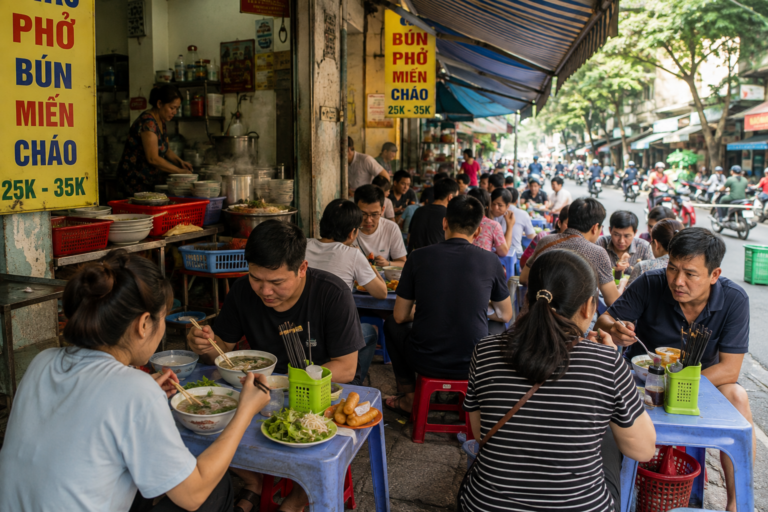
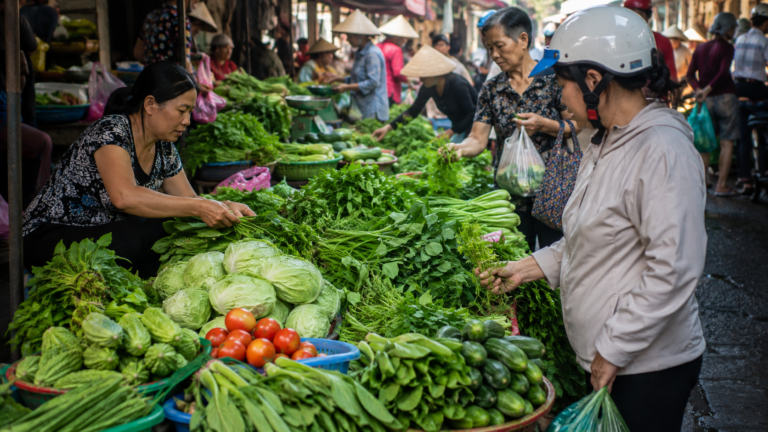
One of the first things you notice after living in Vietnam is how important local markets still are in everyday life.
These aren’t just tourist attractions.
People actually come here every morning to buy vegetables, herbs, meat, fish, fruit, tofu, noodles and ingredients for that day’s meals.
For me, one of the biggest advantages is the variety of fresh vegetables and Vietnamese herbs.
You may see huge piles of rau muống (water spinach), different types of lettuce, green onions, Vietnamese coriander, basil and herbs that can be surprisingly difficult to identify if you have just arrived in Vietnam.
Unlike a supermarket, many ingredients aren’t packaged into fixed portions.
You can simply tell the seller how much you want.
That makes local markets particularly useful when you cook Vietnamese food regularly.
2. Go Early If Freshness Is Your Priority

Timing matters.
If I want the best selection, I prefer going to a local market in the morning rather than late in the day.
This is especially noticeable with vegetables, herbs, fish and seafood.
Earlier in the day, stalls generally have a wider selection, and popular ingredients haven’t been picked over yet.
Late afternoon shopping isn’t necessarily bad. In fact, it can be convenient if you’re buying ingredients for dinner.
But if my main goal is choosing from the freshest-looking produce available that day, I prefer the morning.
There’s another advantage.
Da Nang gets hot.
Walking through a crowded outdoor market at 7 or 8 in the morning is simply much more comfortable than doing the same thing around noon.
3. Where I Shop in Da Nang
Since I live in Da Nang, these are some of the places I would consider depending on what I need.
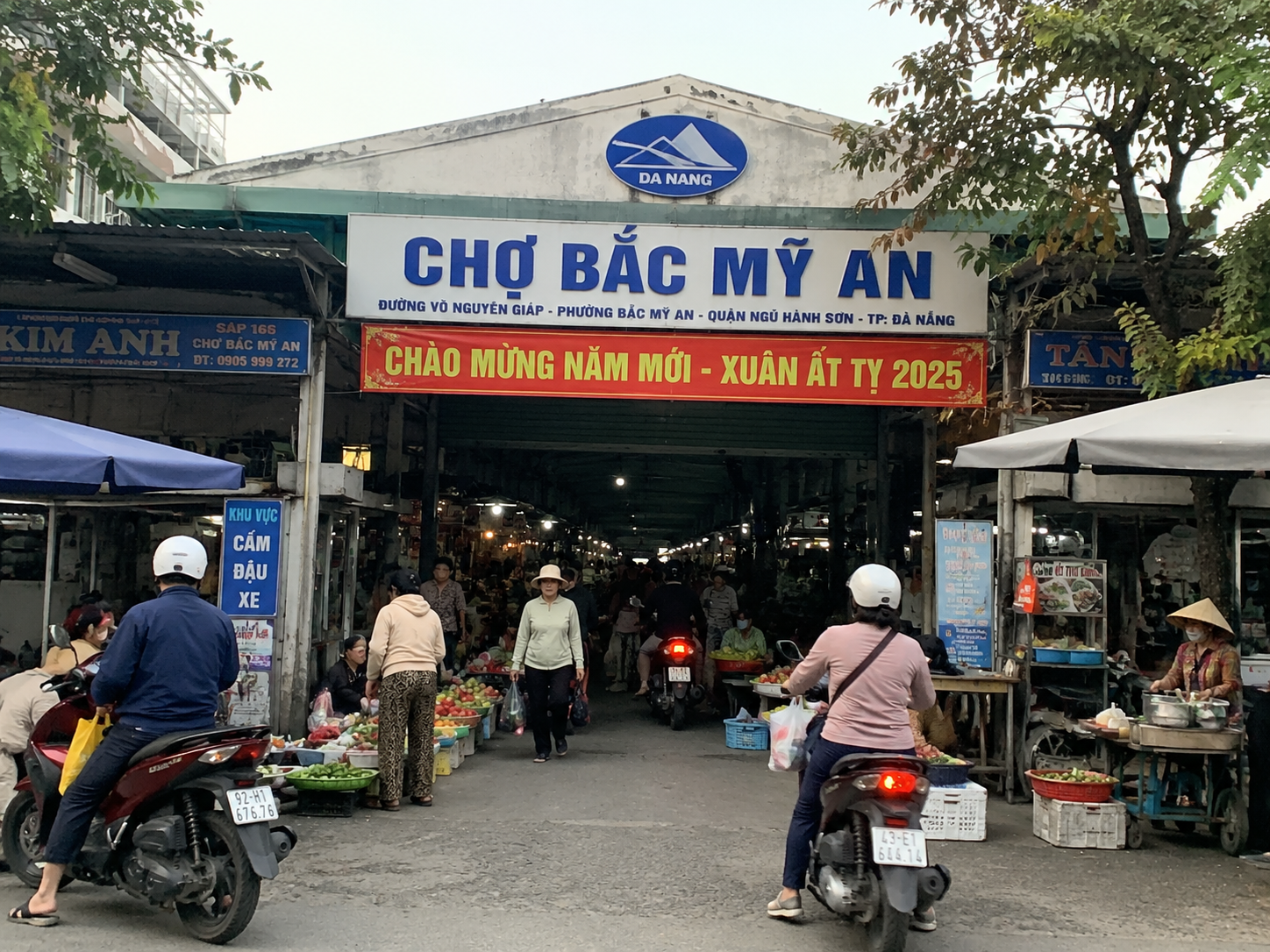
Bac My An Market

Bac My An Market (Chợ Bắc Mỹ An) is particularly convenient if you’re staying around My An or the An Thuong area.
It has plenty of everyday ingredients, including vegetables, fruit, meat, seafood, tofu and Vietnamese herbs.
It’s also famous among visitors for inexpensive local food, but for people living nearby, it’s simply a practical neighborhood market.
If you’re staying in an apartment in the My Khe or An Thuong area and want to cook, this is a useful market to know.
Con Market

Con Market (Chợ Cồn) is much larger and has an enormous variety of products.
Many travelers know it for street food and snacks, but you’ll also find plenty of ingredients and household products.
It can feel chaotic on your first visit.
That’s also part of the experience.
If you want to see what an active Vietnamese market actually feels like rather than visiting a supermarket designed around fixed aisles and packaged products, it’s worth exploring.
Small Neighborhood Markets
This is something travel guides sometimes overlook.
You don’t always need to visit a famous market.
There are small markets all over Da Nang, and for everyday grocery shopping, the closest neighborhood market can actually be the most useful one.
Once you find a few sellers you like, shopping also becomes much easier.
After visiting the same stall several times, you start recognizing the seller, understanding typical prices and knowing which products they usually have.
That is a very different experience from supermarket shopping.
4. How I Choose Vegetables and Vietnamese Herbs

When buying vegetables, I don’t overcomplicate things.
I look at the leaves first.
I usually avoid vegetables with badly wilted leaves, excessive discoloration or obviously damaged sections.
Vietnamese herbs deserve special attention because they’re used so heavily in local cooking.
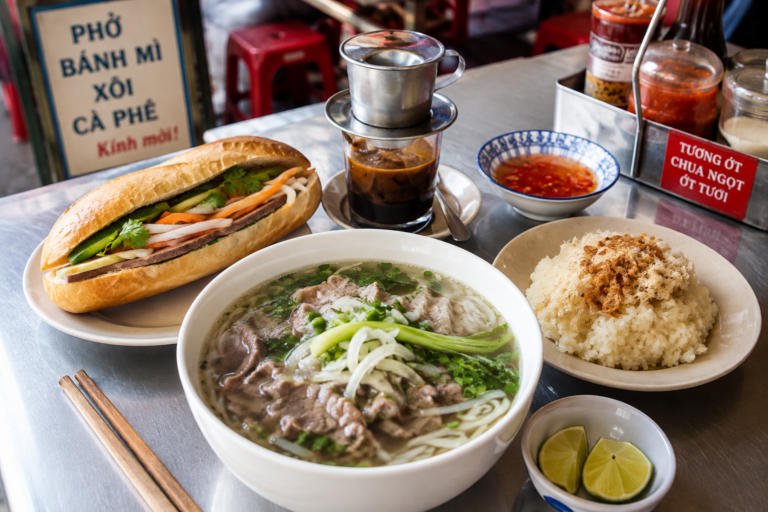
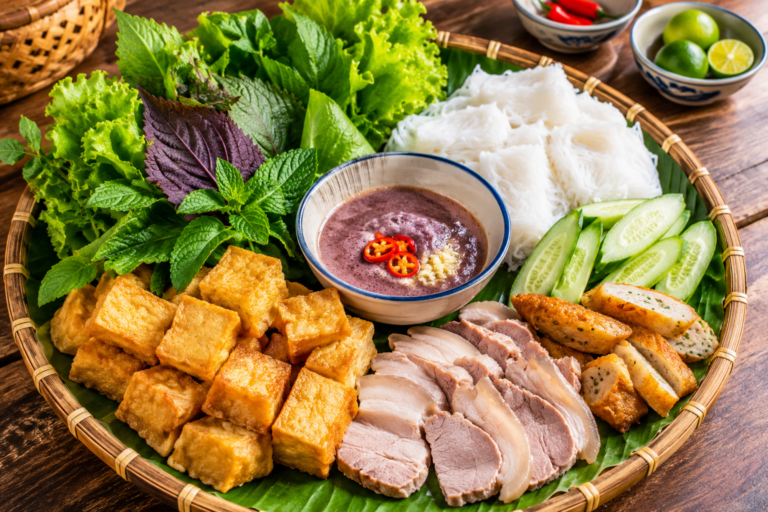
A bowl of phở, bún chả, bánh xèo or many other Vietnamese dishes can involve several different fresh herbs.
If you’re new to Vietnam, don’t worry if you can’t identify everything.
I still think one of the best ways to learn is simply to ask.
You can even show the seller a photo of the dish you’re planning to cook.
5. Buying Seafood at a Vietnamese Market

Seafood is one of my favorite parts of shopping in Da Nang.
The city is on the coast, so seafood is naturally an important part of local food culture.
At a traditional market, you’ll commonly see fish, shrimp, squid, clams and other seafood displayed right in front of you.
The experience is very different from buying a sealed tray of seafood from a supermarket.
You choose what you want, ask the price, specify the amount and have it weighed.
Depending on the stall and the type of seafood, you may also be able to ask the seller to clean or prepare it for you.
A useful Vietnamese phrase is:
“Làm sạch giúp tôi nhé.”
It basically means:
“Please clean it for me.”
This can save you quite a bit of work when you get home.
6. What About Meat?

This is one category where I don’t automatically choose the local market.
Traditional markets can offer very fresh meat and are part of normal daily shopping for Vietnamese families.
However, there are situations where I prefer supermarkets.
If I want clearly labeled packaging, a particular cut, frozen imported meat or something that I want to keep in the refrigerator for several days, supermarkets are often more convenient for me.
This is an important point about grocery shopping in Vietnam:
You don’t have to choose between markets and supermarkets.
I use both.
They solve different problems.
7. Lotte Mart and GO!: Easier, but Sometimes More Expensive

If you have just moved to Vietnam, a large supermarket will probably feel much more familiar than a traditional market.
Two options I use or commonly see in Da Nang are Lotte Mart Vietnam and GO! Vietnam.
롯데마트 in Da Nang is located at 6 Nai Nam, while 고마트 is at the Vinh Trung commercial complex on 255–257 Hung Vuong. Both currently operate into the evening; official listings show GO! Da Nang from 8:00 a.m. to 10:00 p.m., while Lotte Mart’s official pages list its Da Nang store at 6 Nai Nam and evening closing at 10:00 p.m.
For foreigners, supermarkets have several obvious advantages.
Prices are clearly displayed. Products are organized into sections. Packaged foods have labels. You can find frozen products and imported ingredients more easily, and buying a week’s worth of groceries in one trip is much simpler.
The trade-off is price.
For some fresh ingredients, I find local markets more economical. But I don’t think supermarket shopping should be judged only by the cheapest possible price.
You’re also paying for convenience.
If I need vegetables, meat, milk, cheese, pasta, Korean sauces, cleaning products and drinks at the same time, spending a little more at a supermarket can be worth it.
8. Local Market vs Supermarket: Which Is Better?
After living here, this is roughly how I think about it:
| Category | Local Market | Large Supermarket |
|---|---|---|
| Fresh vegetables | Excellent | Very good |
| Vietnamese herbs | Excellent | Good |
| Seafood | Excellent selection at the right time | Convenient |
| Imported food | Limited | Excellent |
| Packaged meat | Limited | Very convenient |
| Fixed prices | Not always | Yes |
| Shopping comfort | Basic | Excellent |
| Local experience | Excellent | Limited |
| One-stop shopping | Difficult | Excellent |
| English-friendly | Varies | Generally easier |
There isn’t a winner.
If you’re staying in Vietnam for a week, a supermarket may be all you need.
If you’re living here for several months, however, I recommend learning how to use local markets as well.
It changes the way you understand Vietnamese food.
9. Useful Vietnamese Phrases for Grocery Shopping

You don’t need to speak fluent Vietnamese to shop at a local market.
A few phrases make things much easier.
Bao nhiêu một ký?
How much is one kilogram?
Cho tôi một ký.
Give me one kilogram, please.
Cho tôi nửa ký.
Give me half a kilogram, please.
Cái này có tươi không?
Is this fresh?
Làm sạch giúp tôi nhé.
Please clean this for me.
And don’t underestimate your phone calculator.
If communication becomes difficult, sellers can simply type the price into a calculator. It works surprisingly well.
10. Cash Is Still Useful
Payment habits in Vietnam are changing quickly.
QR payments are extremely common in everyday life, including at many small businesses.
But when I go to a traditional market, I still like carrying some Vietnamese đồng in smaller denominations.
Not every seller will offer the payment method you normally use, and cash makes small purchases simple.
At large supermarkets, payment is much more straightforward if you’re accustomed to card-based shopping.
For a newcomer, that’s another reason supermarkets can initially feel easier.
11. Don’t Be Afraid to Compare Prices

At a traditional market, several sellers may offer almost identical products.
You don’t have to buy from the first stall you see.
Walk around.
Look at the quality.
Check the price.
After you’ve lived in the same neighborhood for a while, you’ll naturally start developing favorite stalls.
Personally, I think that is a better approach than aggressively bargaining over every small purchase.
Finding sellers whose products you trust is more useful in the long run than trying to save a tiny amount on every transaction.
12. My Personal Shopping Routine in Da Nang
After living in Da Nang, I’ve stopped thinking of grocery shopping as “market versus supermarket.”
My routine is more like this:
Fresh Vietnamese herbs and vegetables: local market.
Fresh seafood: local market, preferably earlier in the day.
Fruit: local market or a fruit shop depending on what I’m looking for.
Meat: either market or supermarket depending on the cut and how I plan to use it.
Imported meat, cheese, sauces and foreign ingredients: usually a supermarket.
A large weekly grocery run: Lotte Mart, GO! or another large supermarket.
Something I need for dinner right now: whichever good shop or market is closest.
This combination works much better for me than insisting that one type of store is always better.
Final Thoughts
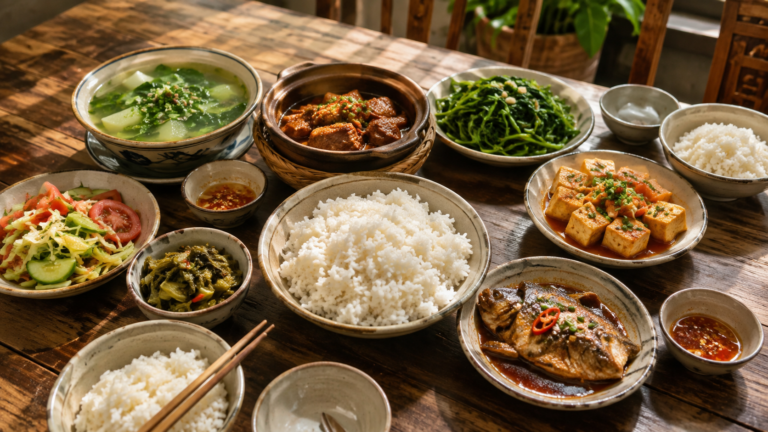
Buying fresh ingredients in Vietnam becomes much easier once you stop expecting grocery shopping to work exactly like it does back home.
Traditional markets can look confusing at first.
There may be no English signs, prices aren’t always displayed, the aisles can be narrow and you might have absolutely no idea what half the herbs in front of you are called.
But that’s also where you start understanding Vietnamese food differently.
You see just how many fresh herbs are used. You discover vegetables you’ve never cooked before. You learn what people actually buy for dinner instead of only seeing the finished dishes in restaurants.
At the same time, I wouldn’t give up supermarkets.
Lotte Mart, GO! and other large supermarkets make life much easier when I need imported products, packaged food or simply want to finish all my shopping in one trip.
My recommendation is simple: use both.
Start with a supermarket if you’re new to Vietnam. Then visit your nearest local market one morning and buy a few simple ingredients.
After a while, you’ll probably find yourself doing exactly what many people living here do — choosing where to shop based on what you’re cooking that day.
Written by Junseo
Based on my everyday experience living and shopping in Da Nang, Vietnam.