Bún Đậu Mắm Tôm Isn’t as Scary as It Looks
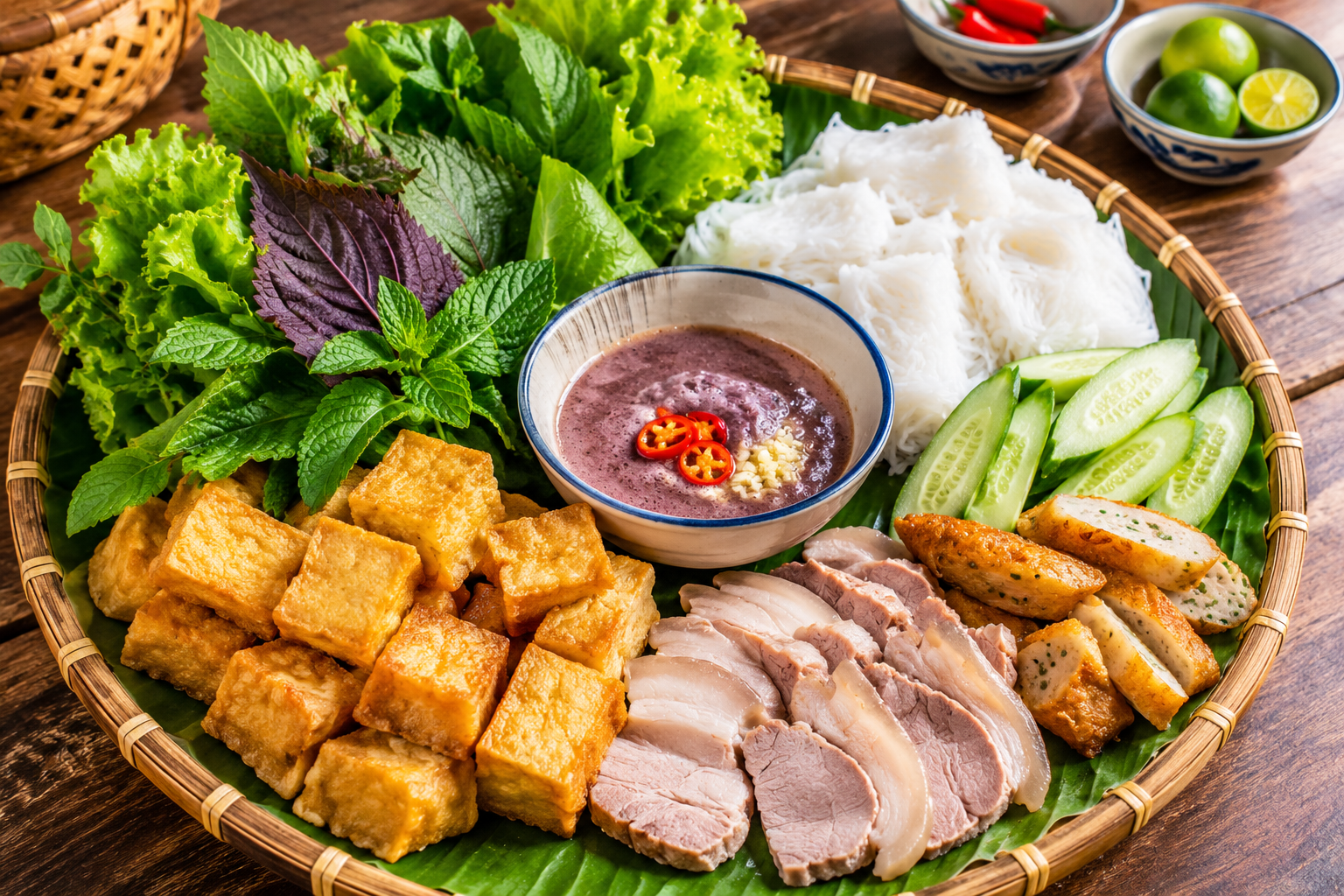
A tray of crisp tofu, white rice noodles, fresh herbs, and a small bowl of deep-colored sauce is one of Hanoi’s memorable casual meals. It is called bún đậu mắm tôm, and the sauce—fermented shrimp paste—is often the part that surprises first-time visitors.
There is no need to pretend the aroma is mild. Some diners love its intensity; others prefer a different dipping sauce. This guide explains what comes on the platter, how people eat it, and what to ask before you order.
What is bún đậu mắm tôm?
Bún means rice vermicelli, đậu refers here to tofu, and mắm tôm is fermented shrimp paste. The combination is associated especially with Hanoi and northern Vietnamese street food. The defining contrast is between golden, freshly fried tofu, cool noodles, herbs, and a salty, pungent dip.
A platter may be served in a bamboo tray or on a standard plate. The basics and optional additions differ from shop to shop:
- Fresh rice vermicelli: small portions of soft rice noodles, often pressed into compact sections for easy picking up.
- Fried tofu: crisp on the outside and softer inside when freshly prepared.
- Herbs and vegetables: mint, perilla, lettuce, cucumber, or other greens may accompany the dish.
- Optional pork: some sets include boiled pork slices, pork belly, or other cooked meats; these are not mandatory in every order.
- Optional extras: fried spring rolls (nem rán), young-rice patties (chả cốm), or other additions depend on the menu.
- Dipping sauce: traditionally prepared with mắm tôm, though some places will provide fish sauce instead.
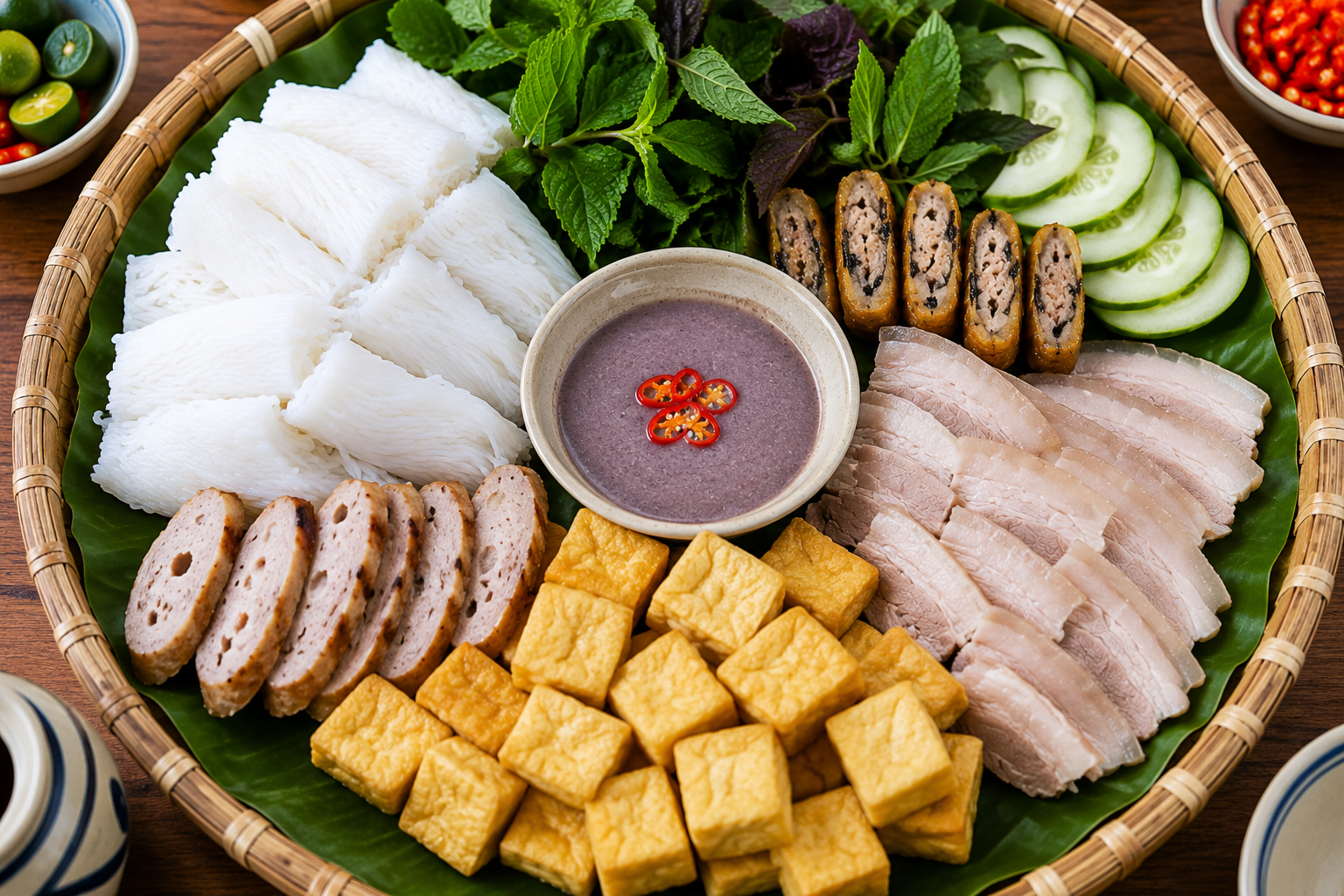
Vietnam Tourism includes bún đậu among its 10 must-try Hanoian dishes, describing fried tofu, rice noodles, shrimp paste, herbs, and optional fried accompaniments. This is a useful reference for the dish’s northern-Vietnam connection.
What is mắm tôm, and what does it taste like?
Mắm tôm is a concentrated paste made by fermenting small shrimp with salt. Its color can range from gray to purplish, and the smell is assertive. It is not the same thing as clear liquid fish sauce (nước mắm), even though both are fermented seafood seasonings.
At the table, the paste may be seasoned with lime or calamansi juice, sugar, and chili. Some shops also use warm oil or other ingredients, so there is no single universal recipe. The result can taste intensely savory and salty with tangy and sweet notes. Whether that balance appeals to you is a matter of preference.
- Flavor: concentrated seafood umami and saltiness, softened by acid and sugar when added.
- Aroma: distinctly fermented and stronger than many visitors expect.
- Texture: usually a thick or loosened paste rather than the thin consistency of plain fish sauce.
- Allergens: mắm tôm contains shrimp. Do not use it if shrimp or crustacean allergens are a concern; confirm preparation details with staff.
Curious how shrimp paste differs from other Vietnamese condiments? Compare it with our guides to Vietnamese fish sauce and Vietnamese dipping sauces.
How to eat bún đậu mắm tôm for the first time
This is not a noodle soup. The ingredients arrive separately, and you combine them as you eat. A simple first-timer routine is:
- Begin with the tofu and noodles. Pick up a small piece of tofu and a little vermicelli with chopsticks.
- Try the sauce gradually. Dip a corner rather than coating the entire bite if you are unsure about the flavor.
- Add herbs if you enjoy them. Their freshness contrasts with the fried tofu and salty dip.
- Adjust where possible. Ask for lime or chili separately, and check whether a milder dipping sauce is available.
- Share thoughtfully. In a group, ordering one tray to share can be convenient, but confirm the portion and extras before ordering.
Some people enjoy a strong shrimp-paste dip on the first try; others never acquire the taste. Choosing fish sauce, when available, is a perfectly reasonable way to enjoy the tofu and noodles without forcing yourself to like the original condiment.
How to order: portions, sauce, and useful Vietnamese
Menus may list a basic tofu-and-noodle portion or a fuller thập cẩm (mixed) platter with extras. The exact contents of a ‘special’ or ‘mixed’ set vary by restaurant. It is worth checking before ordering a larger tray, especially if you do not eat pork or want to avoid shrimp.
- Cho tôi một suất bún đậu. — One serving of bún đậu, please.
- Có nước mắm thay mắm tôm không? — Do you have fish sauce instead of shrimp paste?
- Không mắm tôm, cảm ơn. — No shrimp paste, thank you.
- Không cay. — Not spicy.
- Suất này có thịt không? — Does this portion contain meat?
- Tổng cộng bao nhiêu tiền? — How much is the total?
Staff can usually help if you point to the menu, even when you cannot pronounce the tones perfectly. For more general tips, see how to order food like a local in Vietnam.
What does a serving cost?
A basic portion is generally a different purchase from a larger platter containing meat, spring rolls, and other extras. The original article quoted fixed national prices, but those figures can become outdated and may not match a particular restaurant’s portion size. Check a current menu for the specific branch and date.
- Check the set: does the price include only tofu and noodles, or pork, spring rolls, and other additions?
- Check the number of people: a shared platter is not necessarily a single-person serving.
- Check extras: drinks, additional tofu, noodles, and meat can change the final bill.
- Ask before adding: the word ‘special’ does not tell you exactly what is included.
For a broader view of local meal budgets, visit our Vietnam food prices guide.
Where to try it and what to consider
Bún đậu mắm tôm is closely associated with Hanoi, where it is a familiar lunch choice. You can also find restaurants serving it elsewhere in Vietnam, including larger cities. Search for bún đậu mắm tôm on a menu or storefront rather than assuming every Vietnamese restaurant serves it.
A well-presented tray or a busy restaurant cannot guarantee food safety. Crispy tofu and cooked meat should be served fresh and hot. Raw greens and uncooked condiments deserve particular attention when the water and handling conditions are uncertain. The U.S. CDC advises travelers to be cautious about raw produce and food from street vendors; people trying to minimize illness risk should follow its conservative guidance.
Travel-health reference: CDC Yellow Book: Food and Water Precautions for Travelers. This general guidance is not an evaluation of an individual restaurant.
Frequently asked questions
Is bún đậu mắm tôm spicy?
Not necessarily. Chili may be mixed into the dipping sauce or offered separately. If you do not want heat, ask for không cay and check whether the sauce has already been seasoned.
Can I eat bún đậu without fermented shrimp paste?
Often, yes: some restaurants can serve fish sauce or another dip instead. Ask before ordering. Fish sauce is also made from seafood, so it is not a safe substitute for a seafood allergy or a vegetarian diet.
Is bún đậu vegetarian?
The tofu and noodles themselves can be plant-based, but the traditional shrimp-paste dip is not vegetarian, and many platters include pork or meat-filled spring rolls. If you are vegetarian, ask for a completely plant-based sauce, no meat, and confirmation about shared oil and utensils. Not all vendors can accommodate this.
Is it a healthy meal?
The ingredients offer a mix of noodles, protein, fried foods, and vegetables, but nutrition varies by portion, frying oil, extras, and salty dipping sauce. It would be misleading to call every serving ‘balanced’ or to assign it one fixed nutritional value.
Can I try just the tofu and noodles?
Yes, when a restaurant offers a basic bún đậu set. Confirm what is included: some menus automatically add pork or other extras, while others list them separately.
If you enjoyed this dish, explore more
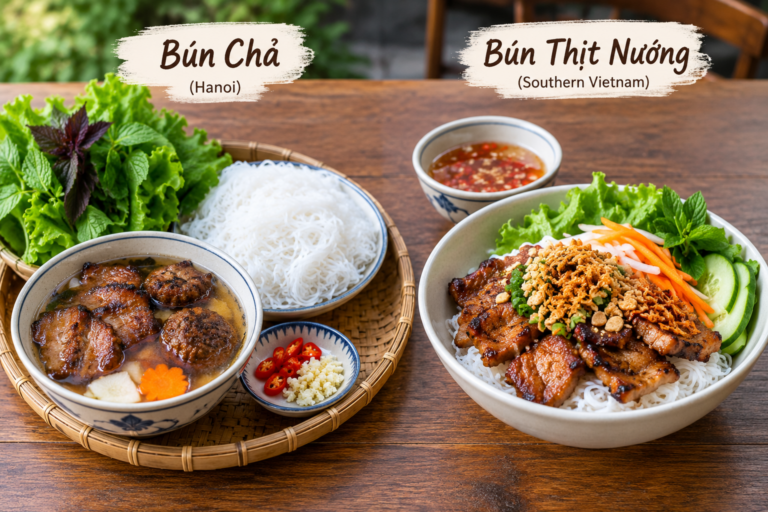
For other Vietnamese foods with contrasting textures and dipping sauces, try our Bún Chả vs. Bún Thịt Nướng comparison or browse the Vietnam street snacks guide. The best introduction to bún đậu is a clearly priced portion with ingredients you understand—and a sauce you actually want to eat.