Vietnamese Ancestor Worship: Dates, Offerings, Market Items & Traditions
When I first started living in Da Nang, I noticed small altars almost everywhere.
Not only inside family homes, but also in restaurants, shops and other local businesses.
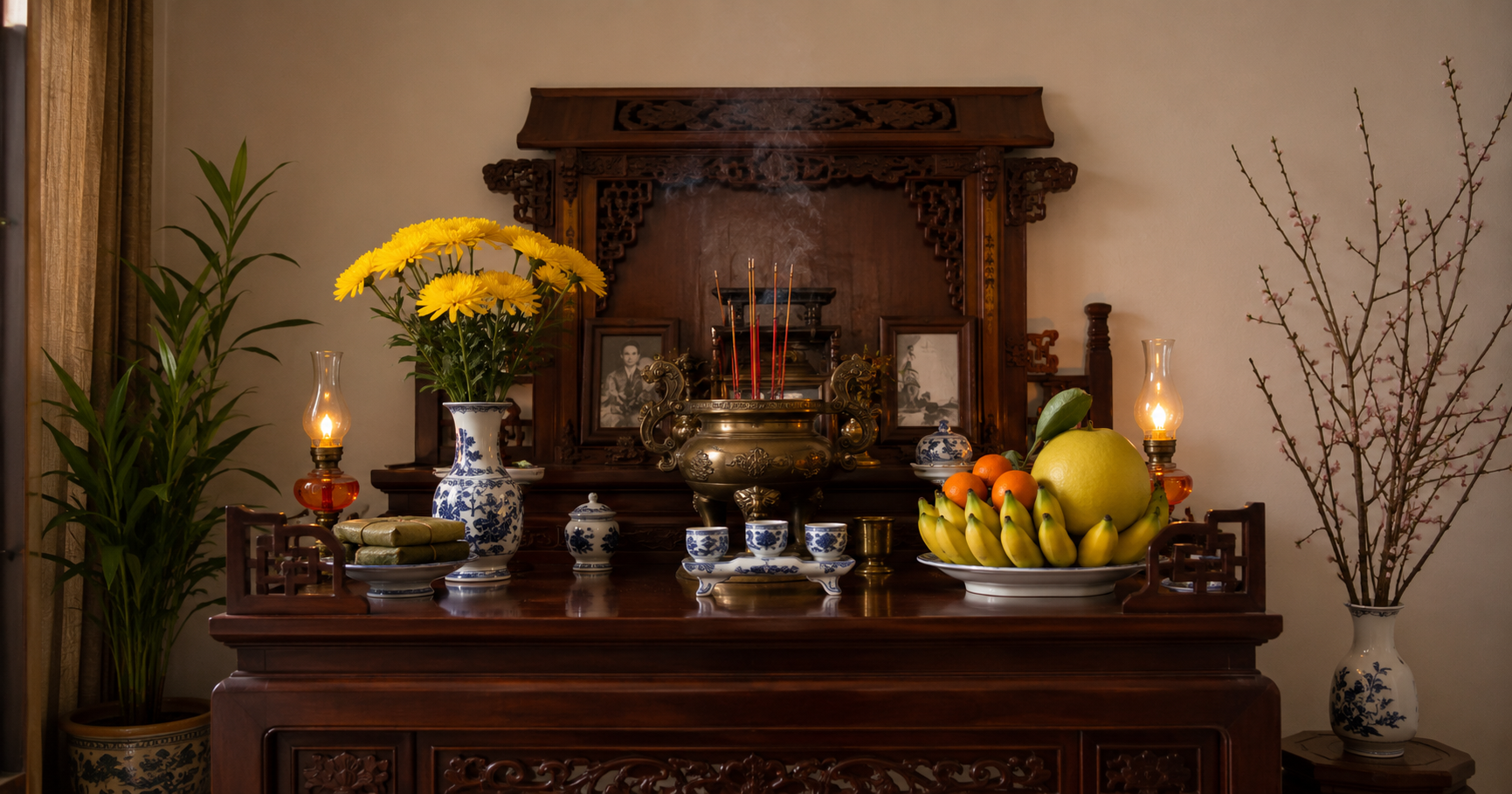
There would be incense burning, fresh flowers, a plate of fruit and small cups of water or tea. On certain days, the simple arrangement would suddenly become much more elaborate, with cooked food and other offerings placed carefully in front of the altar.
At first, I understood the general idea because Korea also has traditions of honoring ancestors.
But the more time I spent living in Vietnam, the more I realized that Vietnamese ancestor worship has its own rhythm.
It follows the lunar calendar, family death anniversaries, Tết and other important family occasions.
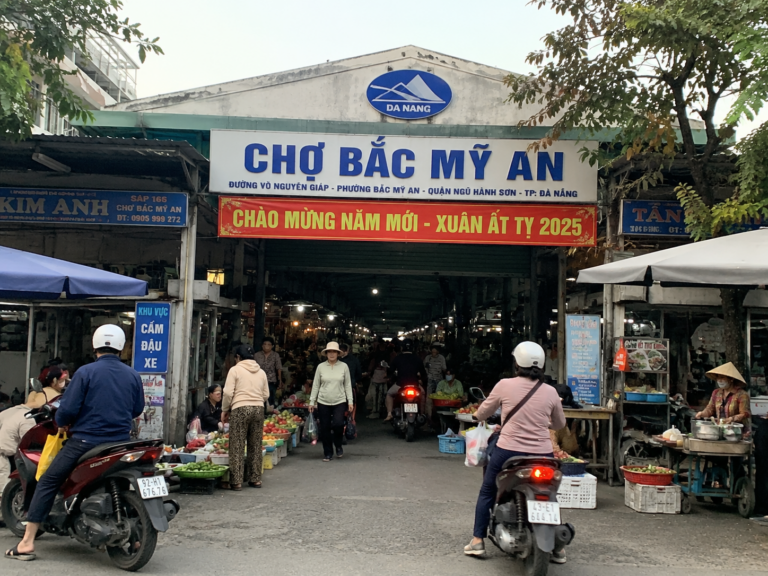
And if you visit a traditional market on the right day, you can actually see this culture before the ceremony even begins.

What Is Vietnamese Ancestor Worship?
Ancestor worship in Vietnam is commonly called thờ cúng tổ tiên.
It is better understood as a tradition of remembering and honoring deceased family members rather than simply describing it as a religion.
For many Vietnamese families, the relationship between generations does not completely end when someone passes away.
Parents, grandparents and earlier ancestors continue to be remembered as members of the family.
This idea is closely connected to hiếu, or filial respect.
The basic feeling behind the tradition is surprisingly easy to understand:
Remember where you came from, respect your parents and grandparents, and don’t forget the people who came before you.
This is one reason ancestor veneration is practiced across different religious backgrounds in Vietnam rather than belonging exclusively to one religion.
The Vietnamese Family Altar – Bàn Thờ
The family altar is called a bàn thờ, or more specifically bàn thờ gia tiên when referring to an ancestral altar.
Many Vietnamese homes have one placed in an important part of the house.
Some are large wooden altars with elaborate decoration.
Others are relatively simple shelves.
Common things you may see include:
- An incense burner
- Photographs or memorial tablets
- Fresh flowers
- Fresh fruit
- Cups of water or tea
- Candles or altar lamps
- Food on important occasions
The altar normally looks much simpler during everyday life.
But when an important lunar-calendar date or family anniversary arrives, additional offerings may be prepared.
Traditional Vietnamese sources describe fruit, food, wine, incense and candles as common elements of offerings made during significant ceremonies.

When Do Vietnamese Families Prepare Offerings?
One thing that confused me at first was that there isn’t just one Vietnamese equivalent of a Korean ancestral ceremony day.
There are several important occasions.
1. The First Day of the Lunar Month – Mùng 1
The first day of each lunar month is called mùng 1.
Some families clean the altar, light incense and prepare simple offerings such as flowers, fruit, tea or water.
Not every household prepares a large meal.
Sometimes the ritual is very simple.
After living in Vietnam for a while, I started noticing that lunar-calendar dates can even change what you see around local markets.
More people seem to be buying flowers, fruit, incense and ceremonial items.
2. The Full Moon – Rằm
The 15th day of the lunar month is called rằm and corresponds to the full moon.
Along with mùng 1, it is another common time for Vietnamese families to burn incense and make offerings.
The first and 15th days of lunar months are repeatedly cited as common dates for ancestor-related rituals in Vietnamese cultural sources.

3. Death Anniversaries – Ngày Giỗ
Probably the most important family-specific occasion is ngày giỗ, usually shortened to giỗ.
Giỗ is the anniversary of a family member’s death.
Traditionally, the date is remembered according to the lunar calendar.
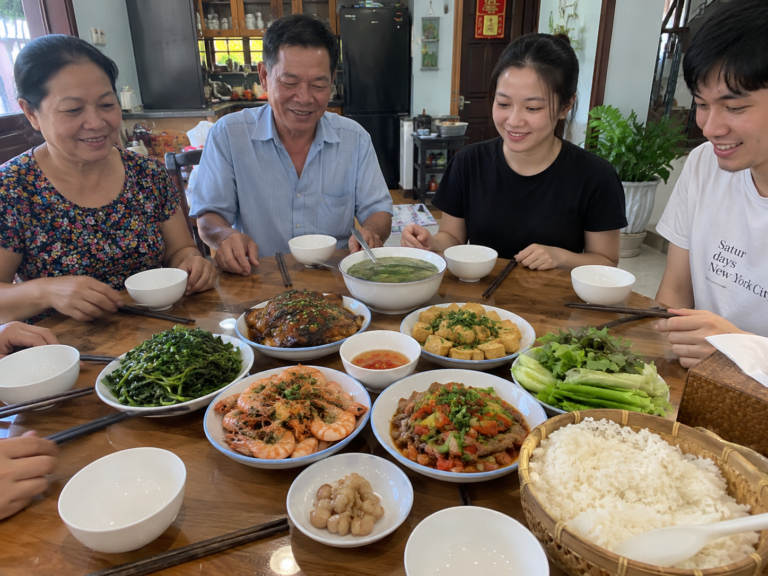
Relatives may gather at one family home, prepare food, burn incense and place dishes on the ancestral altar.
After the ceremony, everyone eats together.
This is something I find particularly interesting.
Although the occasion is connected to someone who has passed away, it is not necessarily a sad gathering in the way foreigners might imagine.
Depending on the family, it can also feel like a reunion.
Children, grandchildren, cousins and relatives come together, eat and remember the person.
In that sense, giỗ helps preserve both memory and family relationships. Vietnamese cultural sources describe the annual death anniversary as one of the central occasions when relatives reunite and make offerings.
4. Tết – Vietnamese Lunar New Year
Ancestor worship becomes especially visible during Tết Nguyên Đán, the Vietnamese Lunar New Year.
Before Tết, families clean their homes and often carefully clean or decorate the ancestral altar as well.
Fruit, flowers and food may be prepared.
Incense is burned and ancestors are symbolically invited to join the family’s New Year celebration.
This is one of the things I find beautiful about Tết.
It is a holiday about starting a new year, but at the same time, families look backward and remember the generations that came before them.

5. Visiting and Cleaning Family Graves
Ancestor remembrance does not only happen inside the home.
Families may also visit ancestral graves, clean the area and make offerings.
Grave maintenance or “tomb sweeping” is part of ancestor-veneration practices found in Vietnam, particularly around important family and seasonal occasions.
For a visitor, this is another reminder that the tradition is not only about praying.
Taking care of a family grave can itself be an expression of respect.
What Do Vietnamese People Buy for Ancestor Worship?
This is the part I recommend paying attention to if you visit a traditional Vietnamese market.
Once you know what you’re looking at, completely ordinary market stalls become much more interesting.
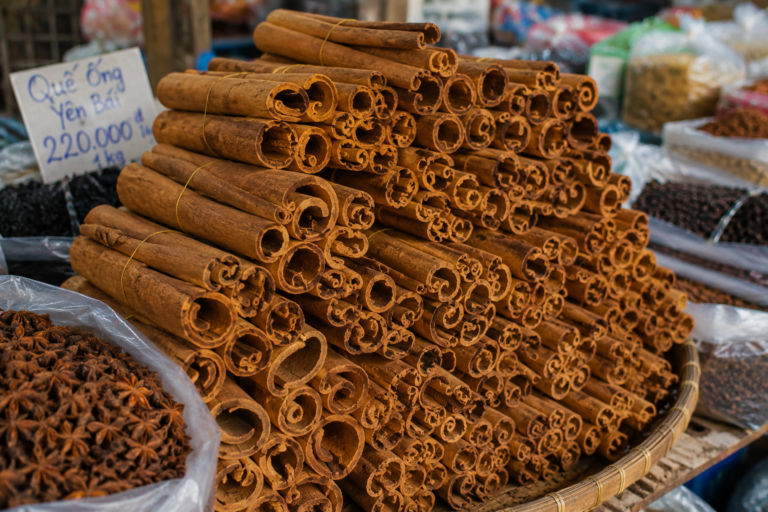
Incense – Nhang / Hương
Incense is one of the most recognizable parts of Vietnamese worship.
You will see it inside homes, temples and businesses.
Burning incense marks the moment when family members remember, pray or communicate symbolically with their ancestors.
The smell of incense is something you become very familiar with after living in Vietnam.
On some lunar dates, I can notice it just walking around a residential neighborhood.

Fresh Flowers
Flowers are another common offering.
Chrysanthemums and other fresh flowers are frequently seen around altars, although choices vary between families and regions.
The important point is not that every Vietnamese family must buy one specific flower.
Different households have different traditions.
Freshness and a respectful presentation are generally more important than following one universal shopping list.
Fruit
Fruit is probably one of the easiest offerings to notice.
Bananas, pomelos, oranges and many other fruits may be arranged on the altar.
During important holidays such as Tết, families can prepare a more elaborate fruit display.
However, fruit symbolism and preferred combinations differ between northern, central and southern Vietnam.
So when you see an article claiming that every Vietnamese family must use exactly the same five fruits, be careful.
Vietnamese traditions are much more regional than that.

Cooked Food
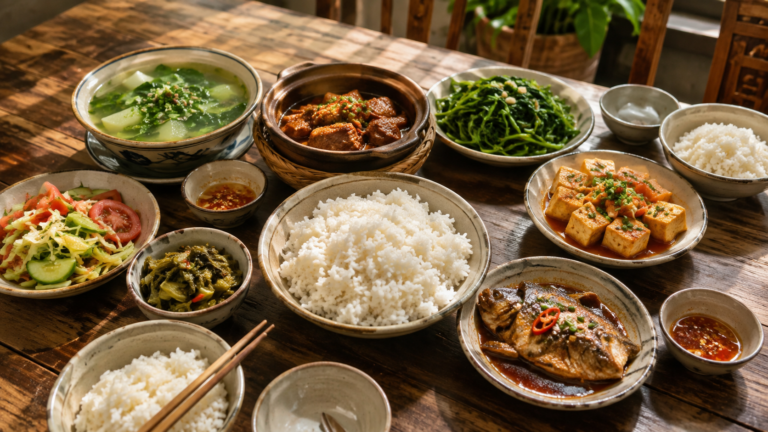
For important ceremonies, cooked food can become the main offering.
Depending on the family and region, this may include:
- Rice
- Sticky rice
- Chicken
- Pork
- Soup
- Vegetables
- Traditional cakes
- Other family dishes
There is no single menu that represents every Vietnamese ancestral ceremony.
One interesting aspect is that families sometimes prepare food that was familiar to, or enjoyed by, the deceased person.
That makes the ceremony feel more personal.
The food is presented to the ancestors first.
After the ritual is finished, the living family members normally share the meal.
So the food is not simply prepared and thrown away.

Water, Tea and Alcohol
Small cups of water or tea are commonly placed on altars.
Some households may also offer alcohol.
Again, the exact arrangement varies between families.
What matters is the idea of hospitality.
In a symbolic sense, the ancestors are being welcomed back to the family table.
Vàng Mã – Paper Offerings
One of the most fascinating sections of a Vietnamese traditional market is a store selling vàng mã.
These are ceremonial paper items that may be burned as offerings.
You may see paper money and various symbolic paper goods.
Some shops sell remarkably elaborate versions.
For a foreign visitor, they can initially look like colorful decorations or toys.
But they have a ceremonial purpose.
The practice is based on the idea of symbolically sending useful items to the spiritual world through burning.
Not every Vietnamese family practices this in exactly the same way, and attitudes toward burning large amounts of ceremonial paper also vary.
So it is better not to describe vàng mã as something that “all Vietnamese people believe in.”
It is one part of a much broader set of Vietnamese traditions.

Why Do Families Offer Real Food?
This was one of the first questions I had.
Why prepare good food and put it in front of an altar?
It makes more sense when you stop thinking of the offering as food that someone physically needs to eat.
The preparation itself is the expression of respect.
Imagine that your parents or grandparents are coming to your home.
You would clean the house, choose good ingredients and prepare food before they arrive.
The emotional logic of an ancestral offering is not completely different.
The family prepares something with care.
The ancestors are remembered first.
Then the living family shares the meal.
That is why food and family gathering are so closely connected to the tradition.
Ancestor Altars Are Not Only Found in Homes
One of the most noticeable things about living in Vietnam is that spiritual spaces are not hidden from everyday commercial life.
You may see altars in:
- Restaurants
- Small shops
- Offices
- Hotels
- Local businesses
But there is an important distinction.
Not every altar you see inside a Vietnamese business is an ancestor altar.
Businesses may have altars connected to other traditions, including Thần Tài, the God of Wealth, or Ông Địa, commonly associated with land and the household or business premises.
So it would be inaccurate to label every Vietnamese altar as ancestor worship.
Still, seeing incense burning quietly beside a modern cash register or QR payment sign shows how naturally tradition and modern life exist together here.

Vietnamese Ancestor Worship and Korean Jesa
As a Korean living in Vietnam, I naturally compared this culture with jesa (제사) in Korea.
There are some obvious similarities.
Both traditions involve remembering ancestors, preparing food and gathering family members.
Both are also strongly connected to ideas of filial respect.
But they are not the same ceremony.
The food is different.
The arrangement of the altar is different.
The rituals are different.
And in Vietnam, ancestor-related rituals can sometimes feel more visible during everyday life because of the continued importance of lunar-calendar dates such as mùng 1 and rằm.
Still, understanding the basic emotion behind it wasn’t difficult for me.
Remember your parents.
Respect your grandparents.
Don’t forget where your family came from.
That part feels surprisingly familiar.
Etiquette for Foreign Visitors
If you encounter an altar or ancestral ceremony while traveling in Vietnam, there is no need to worry about knowing every rule.
Basic respect goes a long way.
Avoid touching altar objects without permission.
Do not move offerings just to get a better photograph.
If food or ceremonial items have been placed on the ground, be careful not to step over them.
And if you are inside someone’s home, don’t treat a private family altar as a tourist attraction.
Ask before taking photographs.
This is especially important during death anniversaries, funerals or private ceremonies.
Vietnamese families usually understand that foreigners may not know every custom.
Being respectful matters much more than knowing every ritual perfectly.
What I Learned Living in Da Nang
After spending years in Da Nang, these scenes no longer feel unusual to me.
Sometimes I notice flowers being carried home.
Sometimes I smell incense outside a house or shop.
Around particular lunar-calendar dates, certain products become more noticeable in traditional markets.
Once you understand why people are buying them, the market itself starts telling you something about Vietnamese culture.
That is one reason I think traditional markets are worth visiting even if you don’t need to buy anything.
Don’t just look at what vendors are selling.
Look at what local people are buying.
Incense.
Flowers.
Fruit.
Cooked ingredients.
Paper offerings.
Each one is part of a much larger story about family, memory and tradition.

A Different Way to Understand Vietnam
Vietnam is usually introduced through phở, bánh mì, coffee, beaches and motorbikes.
But everyday traditions often tell you more about a country than famous attractions do.
A grandmother choosing flowers at a morning market.
A shop owner lighting incense.
A family gathering on the anniversary of a grandparent’s death.
A plate of fruit sitting beneath an old family photograph.
These are small scenes.
But together, they show how important family and remembrance remain in Vietnamese culture.
Vietnam is modernizing extremely quickly.
The cities change.
New buildings appear.
Cash becomes QR payments.
Small shops become cafés and modern restaurants.
But somewhere inside many of those homes and businesses, incense is still burning.
For me, understanding why made Vietnam feel a little less like a country I was simply living in and a little more like a culture I could understand.
Author: Junseo
I live in Da Nang, Vietnam, and write about Vietnamese food, local culture and the small details of everyday life that visitors often miss.