Vietnamese Markets Explained: What You’ll See at a Local Food Market
A Vietnamese food market is a practical introduction to everyday cooking. Vegetables, herbs, fish, fruit, noodles and condiments sit alongside stalls preparing meals for shoppers and workers. This guide explains what to see at a local food market in Vietnam, how to ask prices and how to visit respectfully.
There is no single type of Vietnamese market. A covered city chợ, a neighborhood morning market and a tourist retail market can have different opening hours, products and payment options. The following are examples, not rules that apply to every market.
Vietnamese Markets at a Glance
| Question | What to know |
|---|---|
| What is a market called? | Chợ; chợ truyền thống means traditional market |
| When should I visit? | Morning is often useful for fresh-food stalls; verify local hours |
| What might I see? | Produce, herbs, seafood, meat, fruit, noodles, dried goods and food stalls |
| How do I pay? | Small VND notes are helpful; transfer acceptance varies |
| Should I bargain? | Ask the price and unit first; negotiate gently when appropriate |
| What should I bring? | Comfortable shoes, a bag, hand hygiene and curiosity |
On This Page
- 1. Vegetables and Greens
- 2. Fresh Herbs
- 3. Fish and Shellfish
- 4. Meat Counters
- 5. Seasonal Tropical Fruit
- 6. Noodles, Tofu and Rice Products
- 7. Dried Foods and Condiments
- 8. Eating Inside the Market
- 9. Aisles, Carts and Motorbikes
- 10. Prices, Bargaining and Payment
- 11. When to Visit
- Useful Shopping Phrases
- Hygiene and Safety
- Frequently Asked Questions
1. Vegetables and Greens
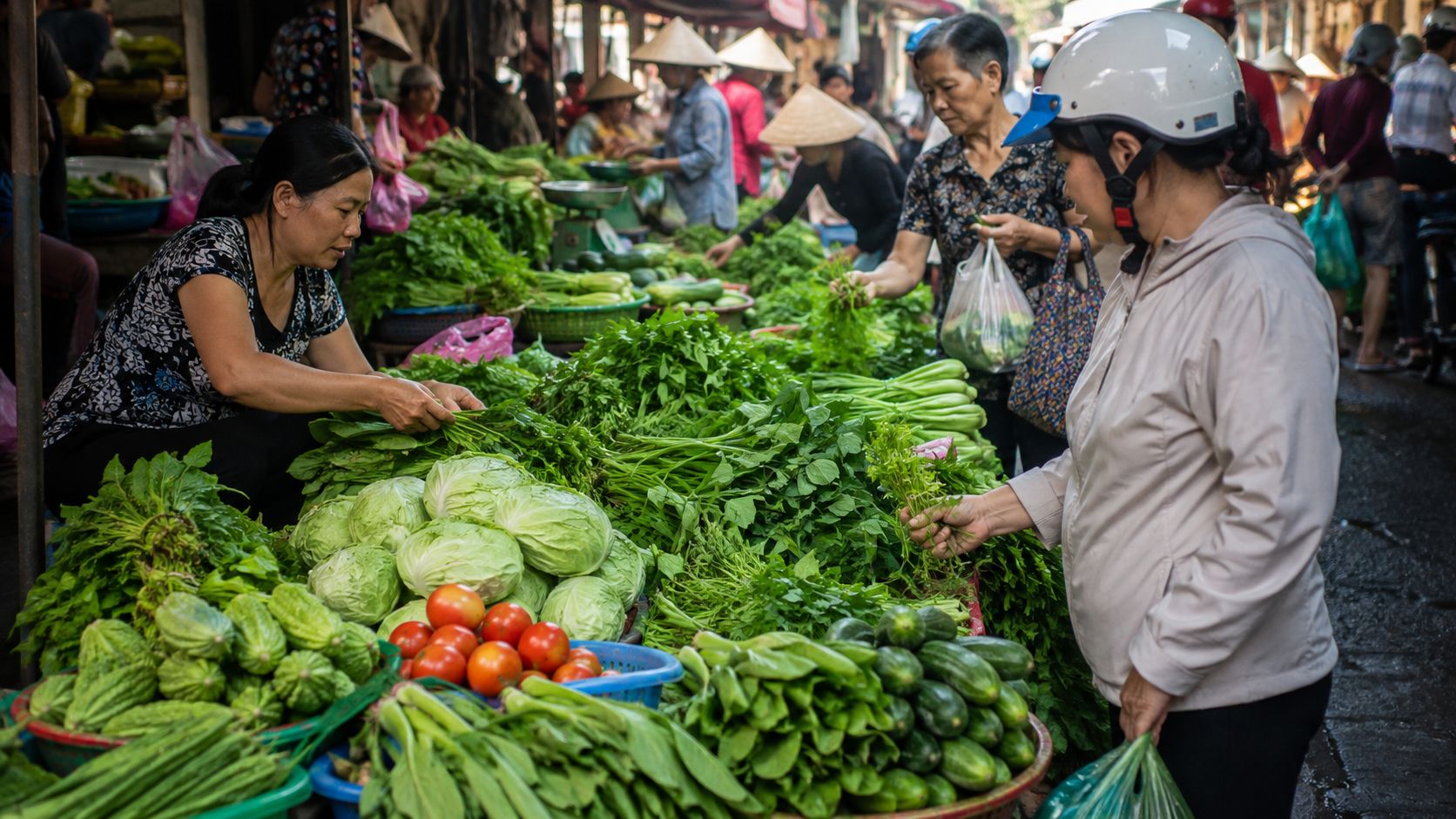
You may see water spinach (rau muống), cabbage, cucumbers, bitter melon, mushrooms and seasonal greens. Produce is often sold by the bunch, piece or kilogram. Ask the unit price before buying, rather than assuming a basket is priced as one item.
2. Fresh Herbs
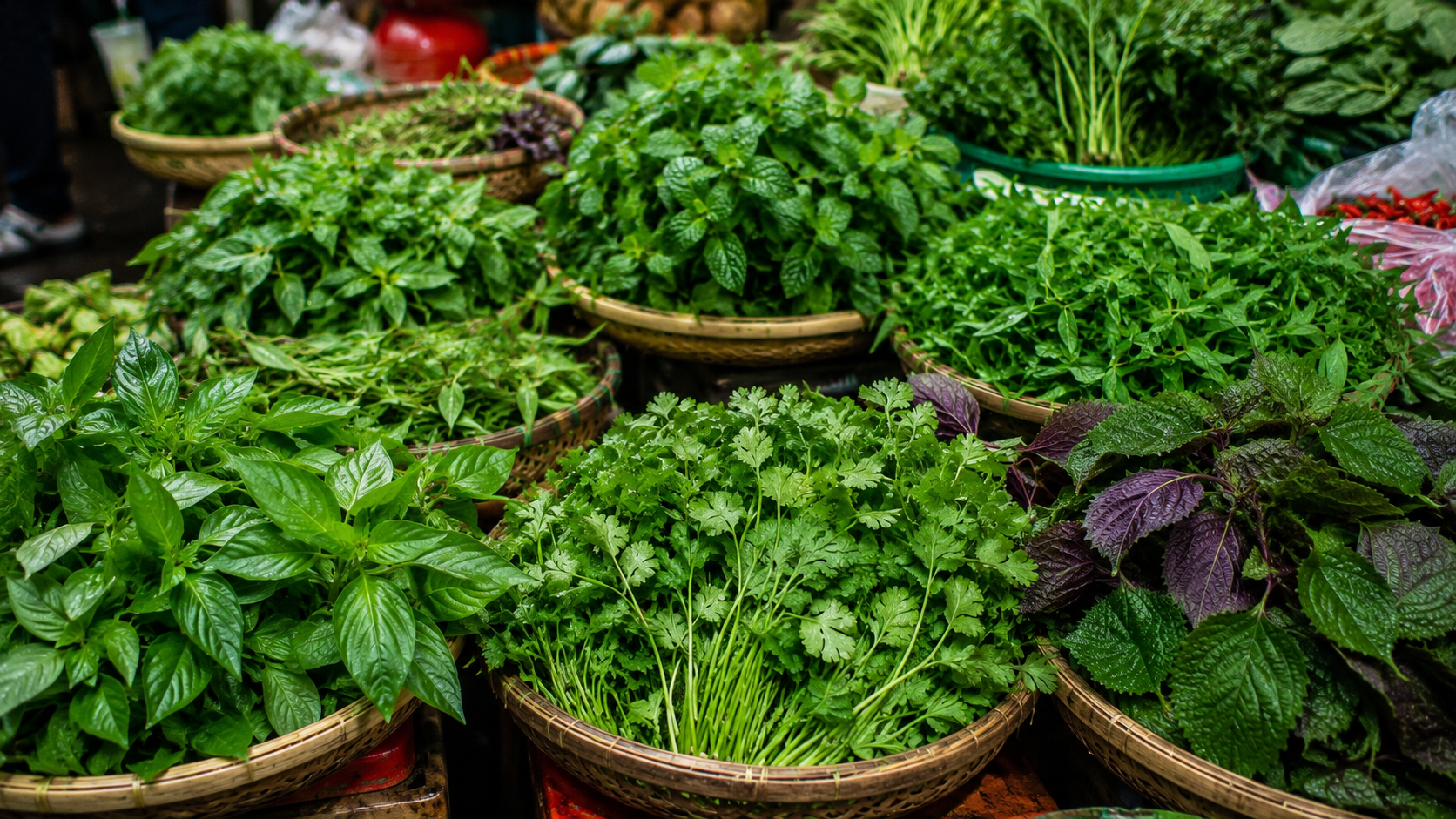
Basil, cilantro, mint, perilla (tía tô) and Vietnamese coriander (rau răm) are familiar ingredients in noodles, rolls and grilled dishes. Ask a seller about an unfamiliar leaf instead of guessing from its appearance.
3. Fish and Shellfish
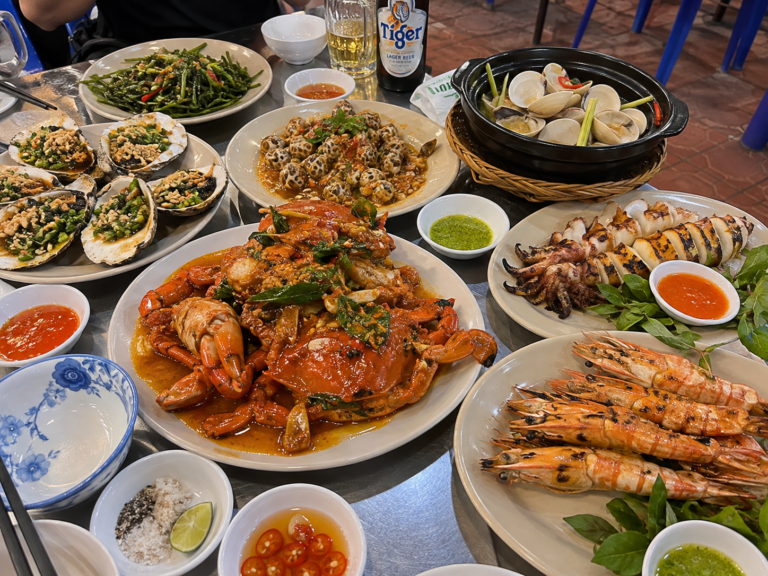
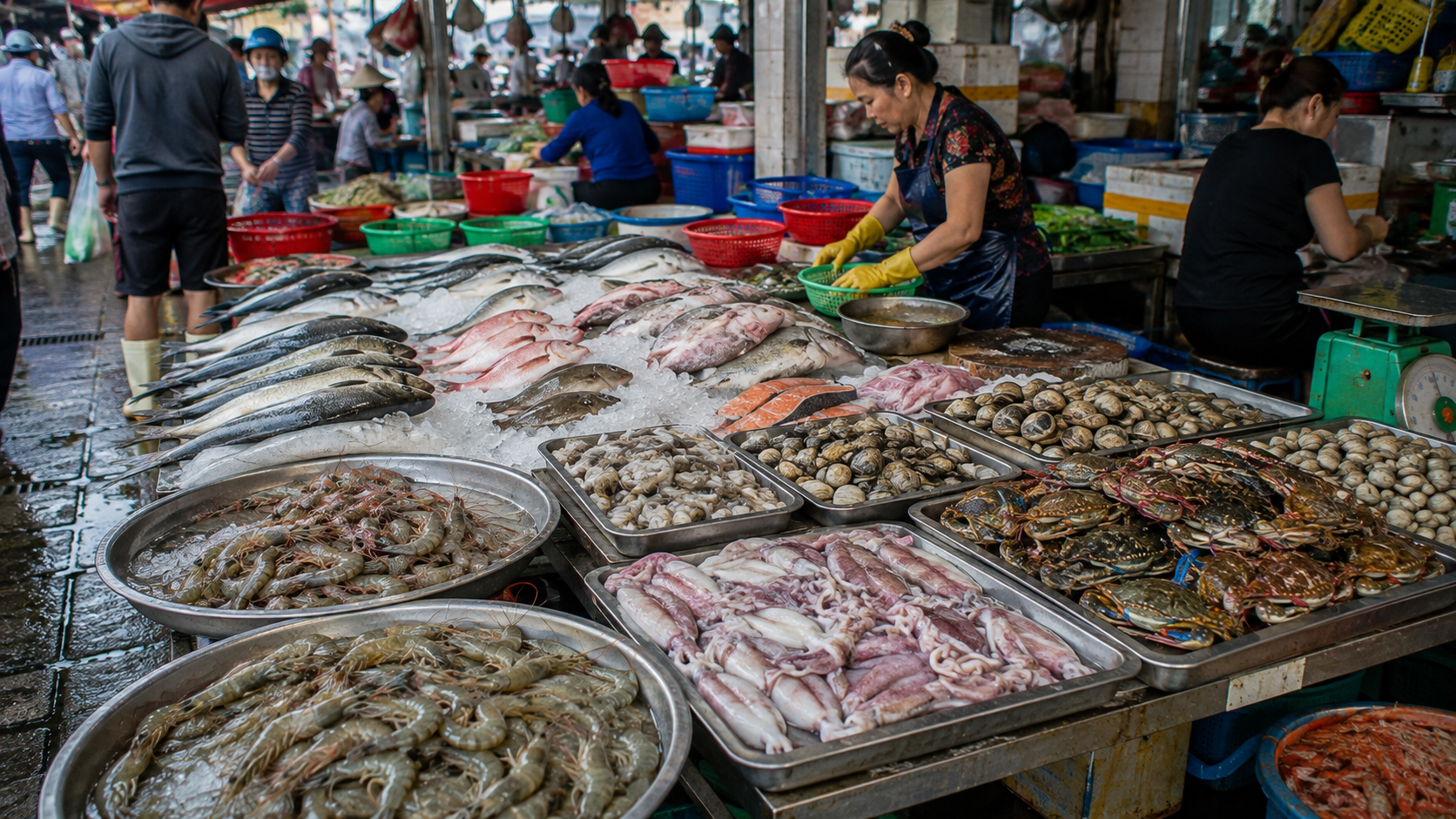
In coastal areas including Da Nang, stalls may sell shrimp, squid, crabs, clams and whole fish. Products can be kept live, on ice or under refrigeration. Ask whether the quoted price is per kilogram and whether cleaning costs extra. Visual freshness is not a guarantee that seafood is safe to eat raw.
4. Meat Counters
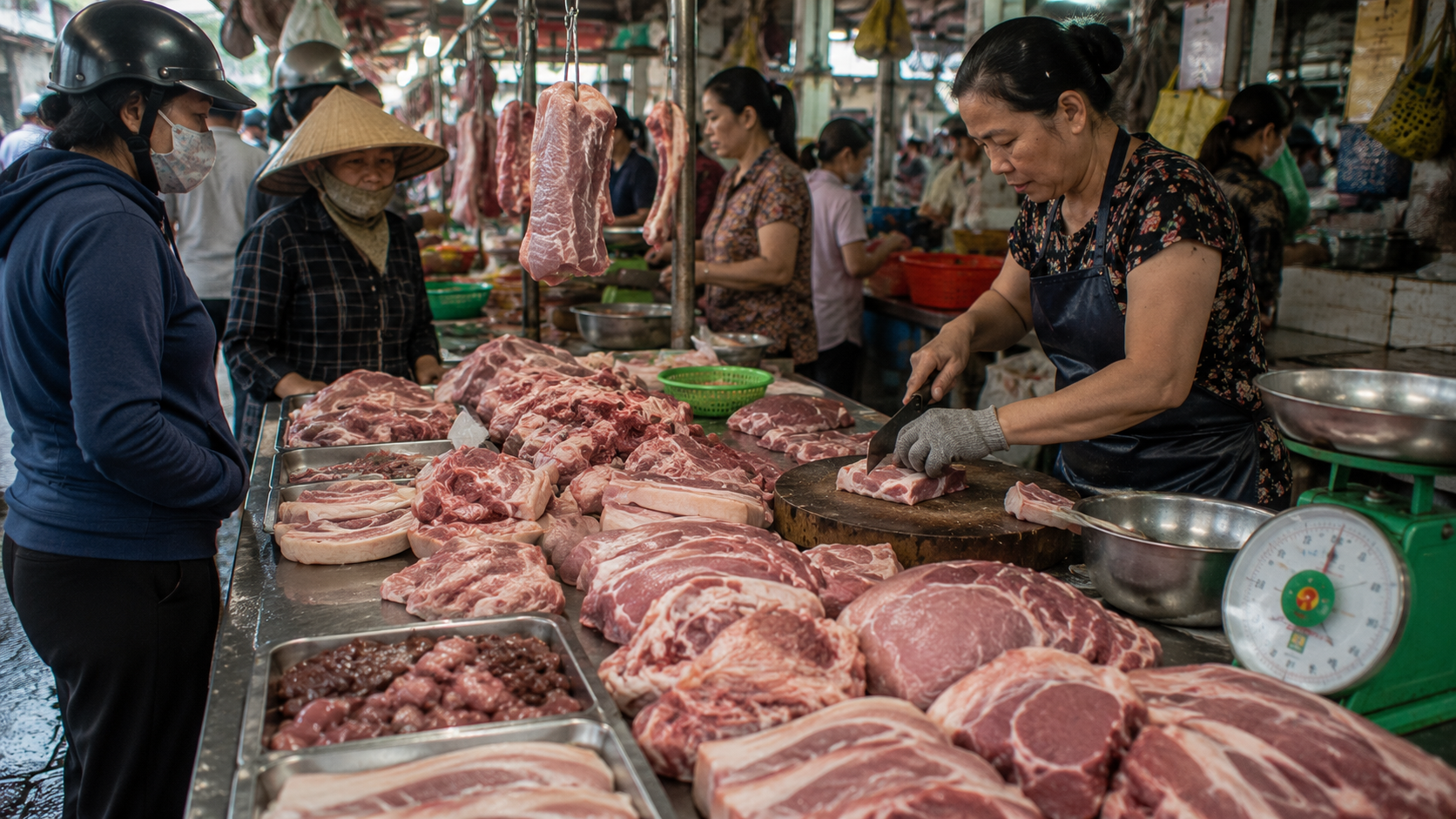
Some vendors display larger cuts of pork, beef or poultry and prepare the requested amount. Other markets have chilled displays. Sanitation and refrigeration differ between vendors; do not place raw meat next to ready-to-eat food, and wash hands after handling it.
5. Seasonal Tropical Fruit
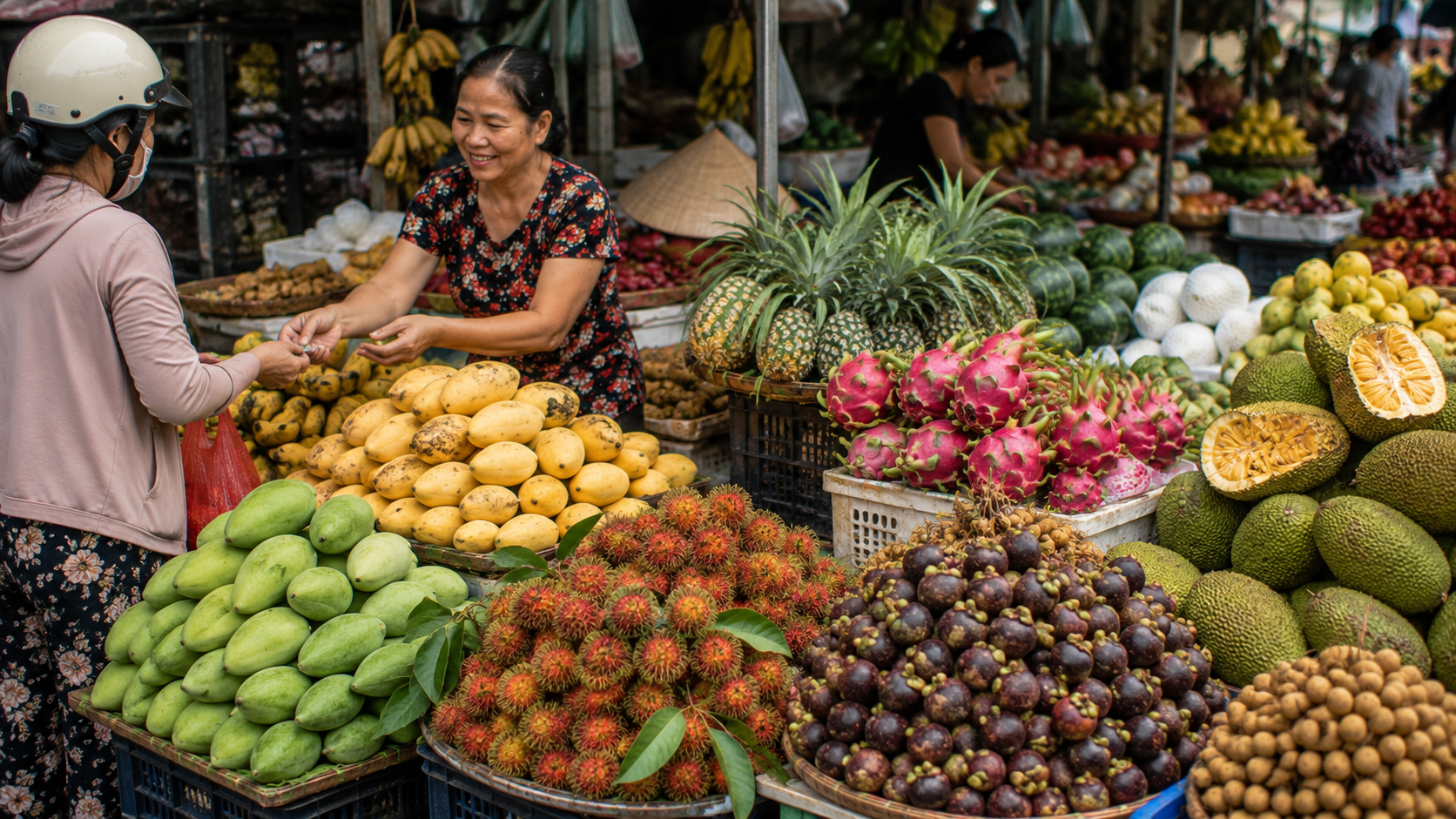
Mangoes, dragon fruit, rambutan, lychee, longan, papaya, pineapple and durian are examples rather than a year-round inventory. Confirm ripeness and whether the fruit is priced per piece or kilogram. For travel snacks, peeling whole fruit yourself can help reduce food-handling risks.
6. Noodles, Tofu and Rice Products
Markets may sell fresh bún, flat phở noodles, tofu, rice paper and dried rice products. The noodles are not all interchangeable: shapes, ingredients and cooking uses vary. Fresh tofu and noodles can spoil; ask about storage and refrigerate promptly. Read our Vietnamese noodle guide for examples.
7. Dried Foods and Condiments
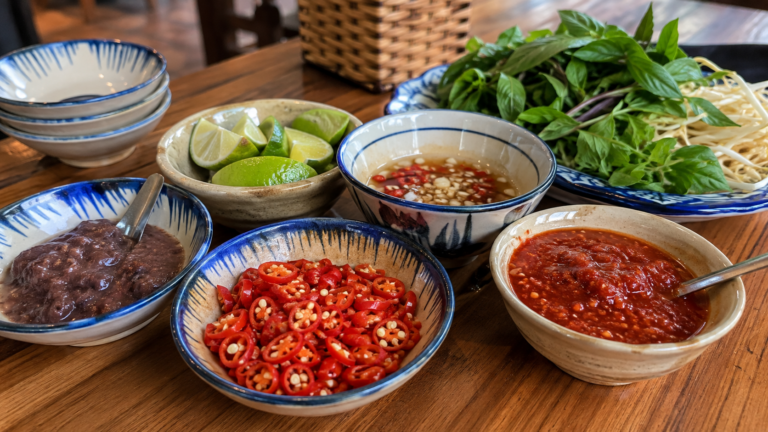
Look for rice, beans, dried shrimp, dried squid, fermented fish products, pepper, garlic, shallots and nước mắm (fish sauce). Each stall has a different selection. Check packaging and the destination’s import rules before taking dried foods overseas.
8. Eating Inside the Market
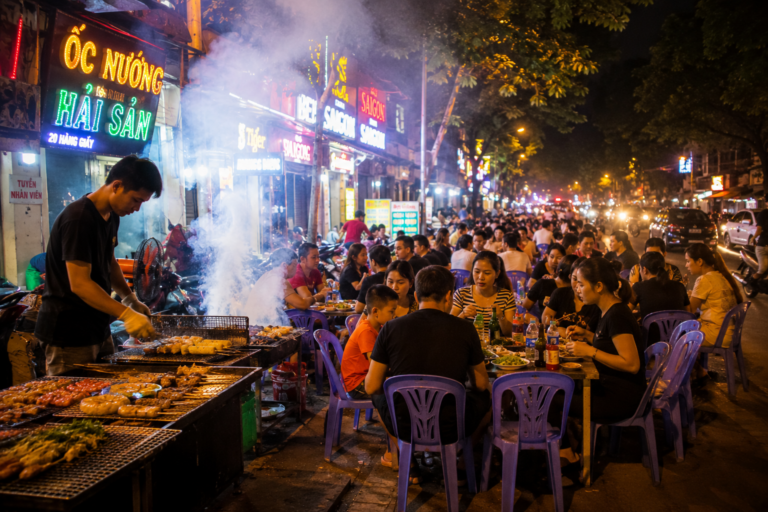
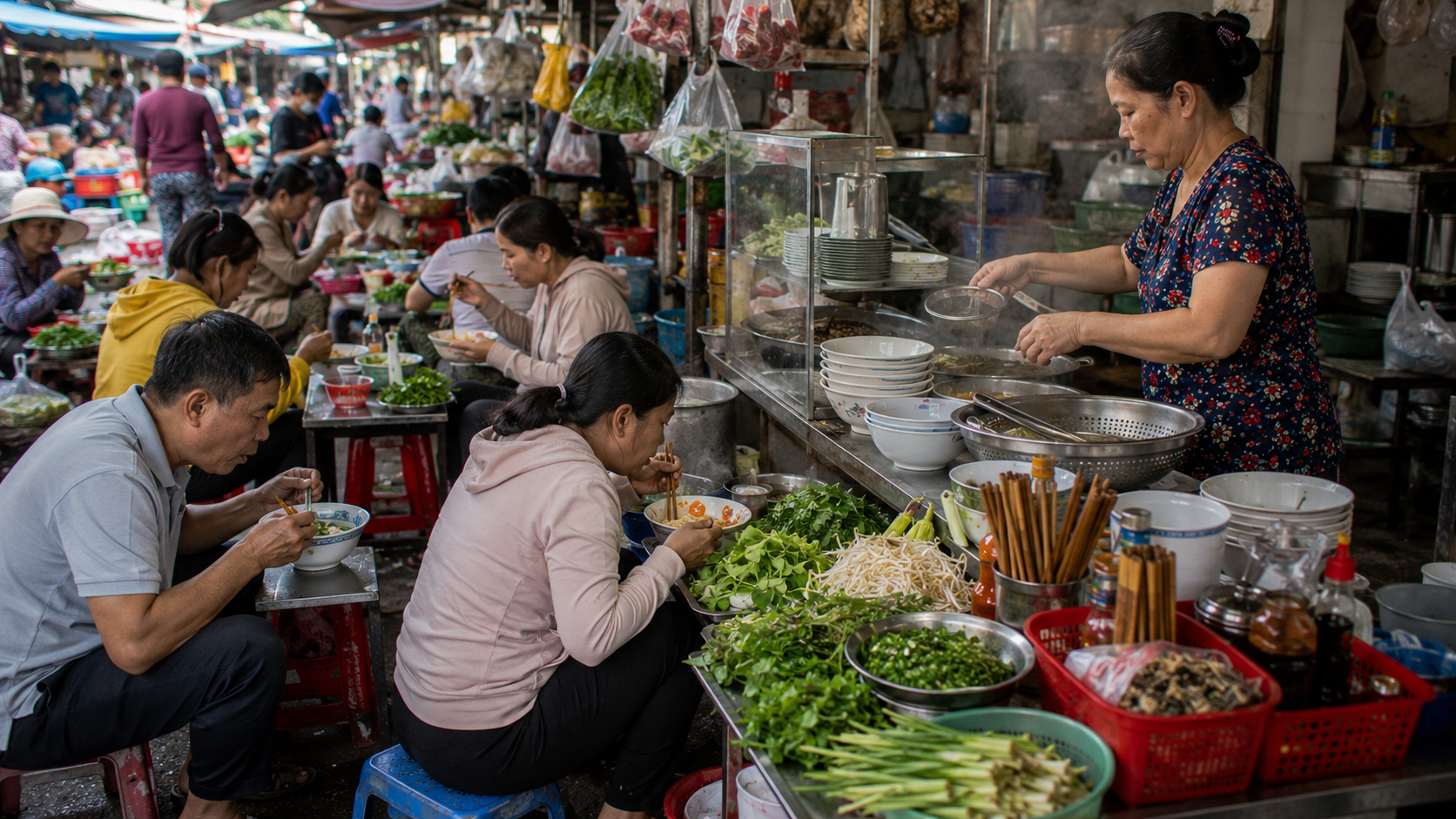
Some markets have breakfast or lunch stalls selling hot noodles, rice dishes, snacks and chè; others have no food court. The official Vietnam Tourism street-food guide highlights the early-morning scene near markets. Choose food that is cooked thoroughly and served hot, and be cautious with ice, raw seafood and unwashed produce.
9. Aisles, Carts and Motorbikes
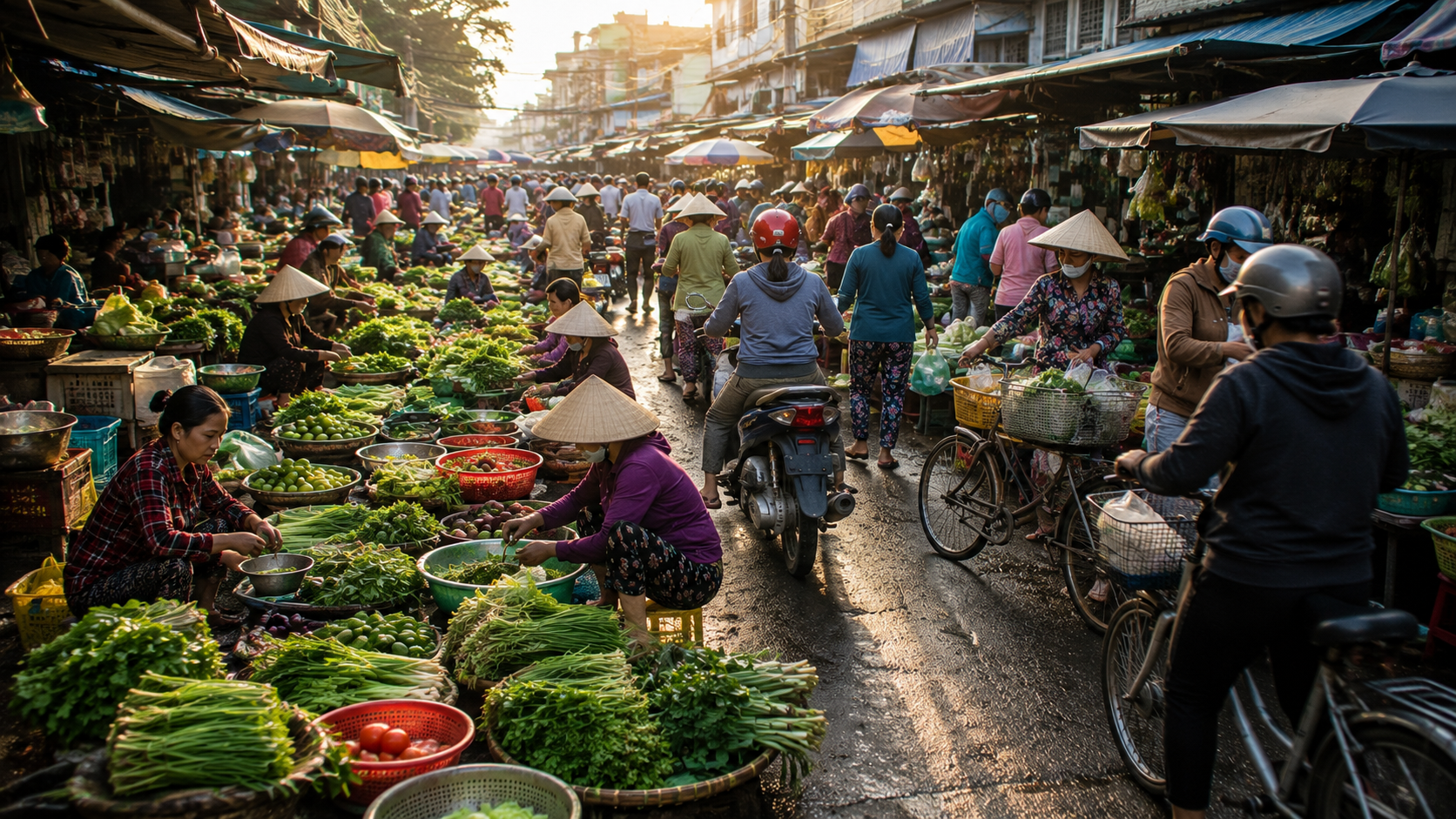
Markets are working places. Some open-air stalls are accessible by motorbike, while indoor spaces may restrict vehicles. Watch for wet floors and moving carts, keep valuables secure, step aside when vendors carry goods, and ask permission before taking close-up photos of people.
10. Prices, Bargaining and Payment
Ask the unit price before purchasing. Vietnam Tourism says gentle bargaining is familiar in some markets, particularly tourist shopping areas, but aggressive negotiation over small food purchases is unnecessary. Small cash notes are practical; some vendors take digital payments, but you should check first. Official payments guide.
11. When to Visit
A visit around 6–9 a.m. may be useful for many fresh-food markets, but it is not a verified nationwide peak period or opening time. Some venues trade earlier, others remain active later or have night-market areas. Check the hours of the actual place you intend to visit.
Vietnamese Phrases for Market Shopping
| Vietnamese | English |
|---|---|
| Chợ ở đâu? | Where is the market? |
| Cái này là gì? | What is this? |
| Cái này bao nhiêu tiền? | How much does this cost? |
| Bao nhiêu tiền một ký? | How much per kilogram? |
| Cho tôi nửa ký. | Half a kilogram, please. |
| Cho tôi một ký. | One kilogram, please. |
| Có giảm giá không? | Is there a discount? |
| Tôi chỉ xem thôi, cảm ơn. | I’m just looking, thank you. |
| Có thể trả bằng chuyển khoản không? | Can I pay by bank transfer? |
| Cảm ơn nhé. | Thank you. |
A ký is a kilogram. Use a calculator or your phone to confirm quantities and prices. If ordering a cooked meal, see our Vietnamese ordering guide.
Food Hygiene and Safety
The WHO describes traditional food markets as important community spaces that also require careful hygiene. Its market-safety guidance covers cleanliness and contamination prevention. Avoid judging a food solely by whether it looks fresh or the stall is busy.
- Keep raw meat and seafood separate from ready-to-eat items.
- Choose thoroughly cooked food served hot, and be careful with raw seafood.
- Use safe drinking water and wash or peel produce appropriately.
- Keep perishable purchases cool and refrigerate them promptly.
- Wash hands after handling raw food and before eating.
- Watch for wet floors, traffic and crowded walkways.
These cautions reflect the WHO Five Keys to Safer Food and the CDC Yellow Book’s Vietnam advice.
Frequently Asked Questions
Are local markets open to tourists? Many are, but specific areas may be restricted. Respect signs and vendors.
When is the best time? Mornings can be convenient for fresh food, but hours differ by market.
Do I need to bargain? Not always. Ask the price and unit first and negotiate respectfully if appropriate.
Can I pay by card? Some vendors accept transfers or cards, but small cash notes are a useful backup.
Can I eat at the market? Some have food stalls. Confirm what’s available and consider food-handling conditions.
Final Thoughts
A local Vietnamese market can reveal how regional dishes begin—with seasonal fruit, greens, herbs, fresh noodles and pantry ingredients. Visit with curiosity, clarify prices, respect the people working there and use sensible food-safety precautions. For related food culture, see our street-snack guide.
Sources and Editorial Note
- Vietnam Tourism — Street-Food Guide
- Vietnam Tourism — Currency and Payments
- WHO — Traditional Market Safety
- WHO — Five Keys to Safer Food
- CDC Yellow Book — Vietnam
Editorial note (October 2026): This is a general visitor guide, not a verification of any specific market’s hours, prices or hygiene. Images illustrate market settings; the original featured image and media library remain unchanged.