What Time Do Vietnamese People Eat? 5 Essential Daily Habits
If you spend a few days in Vietnam, you may notice that people seem to eat surprisingly early.
Breakfast restaurants can be busy before 7 a.m., office workers often head out for lunch around 11:30 a.m., and many families are already sitting down for dinner while some travelers are still thinking about where to eat.
So, what time do Vietnamese people eat?
There is no single schedule followed by everyone, of course. Mealtimes vary between families, cities, occupations, and lifestyles. But daily life in Vietnam tends to start relatively early, and the country’s eating habits often follow the same rhythm.
From an early bowl of phở to an afternoon snack and a family dinner, here are five typical Vietnamese mealtimes that can help you eat a little more like a local.
1. Breakfast: Around 6:00–8:00 AM
Breakfast starts early in Vietnam.
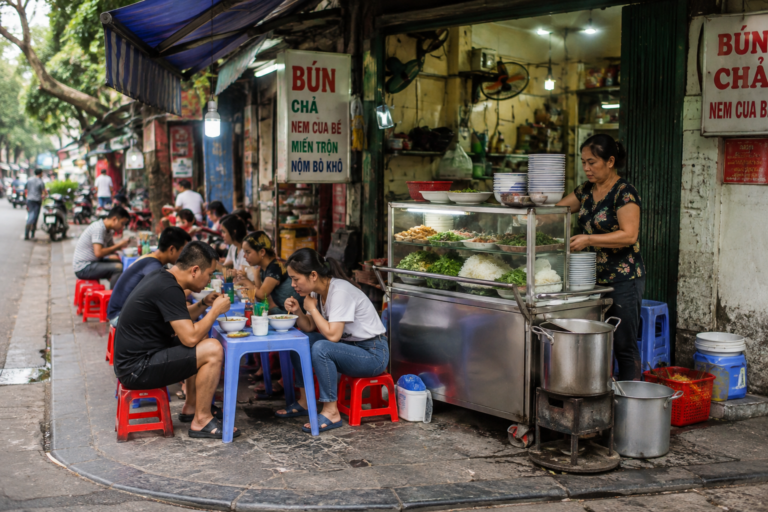
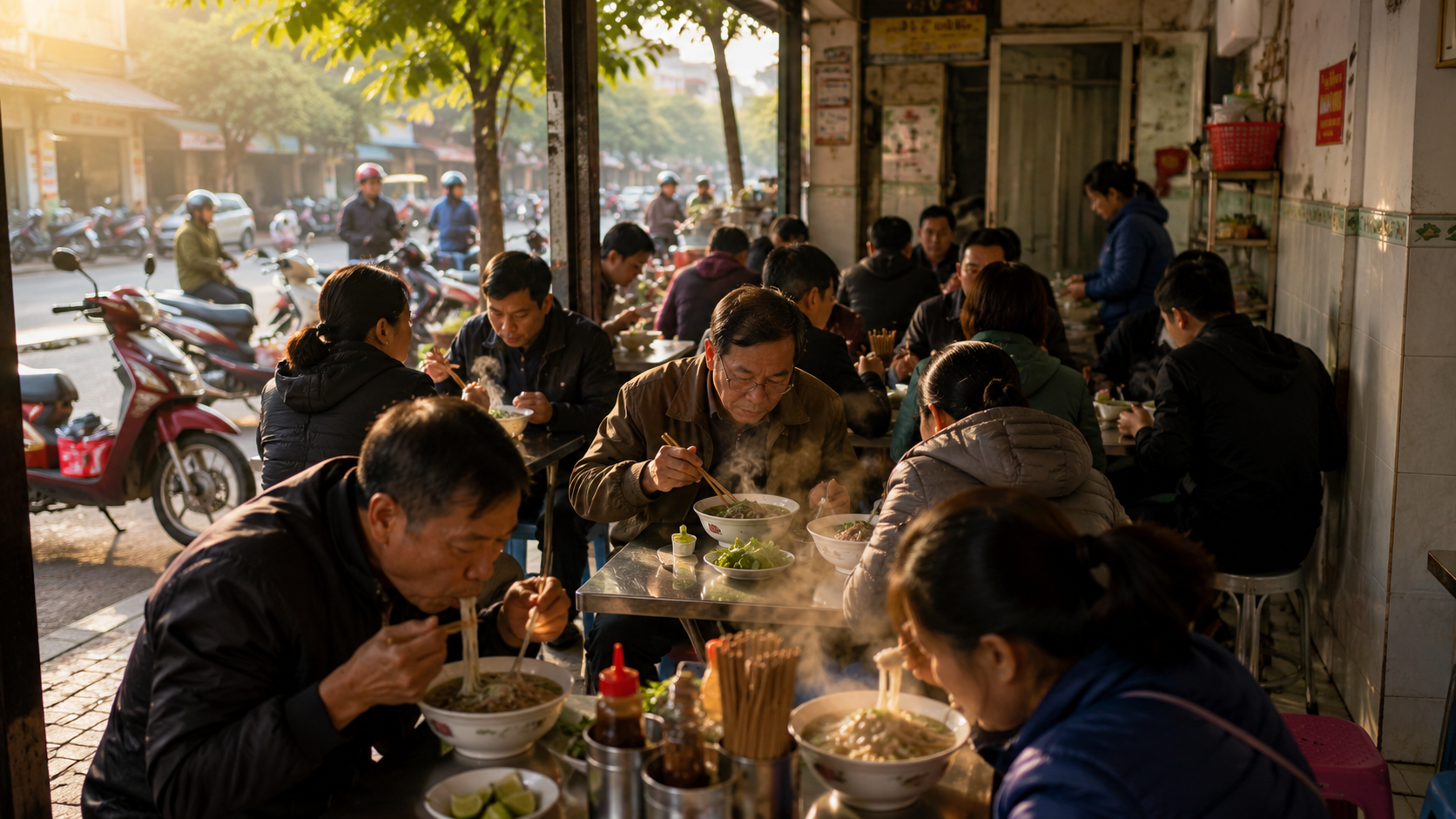
In many neighborhoods, food stalls and small restaurants are already serving customers by 6 a.m. Students eat before school, office workers stop for breakfast on their commute, and older residents may eat after an early morning walk or exercise.
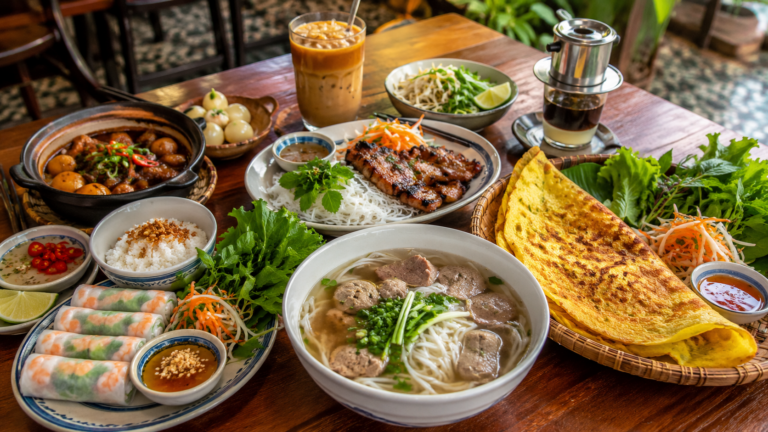
Unlike in countries where breakfast often means cereal, toast, or something small, Vietnamese breakfast can easily be a complete hot meal.
Popular choices include:
- Phở
- Bánh mì
- Bún bò Huế
- Mì Quảng
- Bánh cuốn
- Xôi
- Bò né
The exact dishes vary considerably by region. In Central Vietnam, for example, noodles such as mì Quảng are easy to find in the morning, while different local specialties dominate breakfast elsewhere.
One useful thing for travelers to know is that some breakfast-focused restaurants don’t stay open all day. A popular local stall may prepare a limited amount of food and close once everything is sold.
If there is a famous breakfast spot you want to try, going early is usually a good idea.
2. Mid-Morning: Around 9:00–10:30 AM
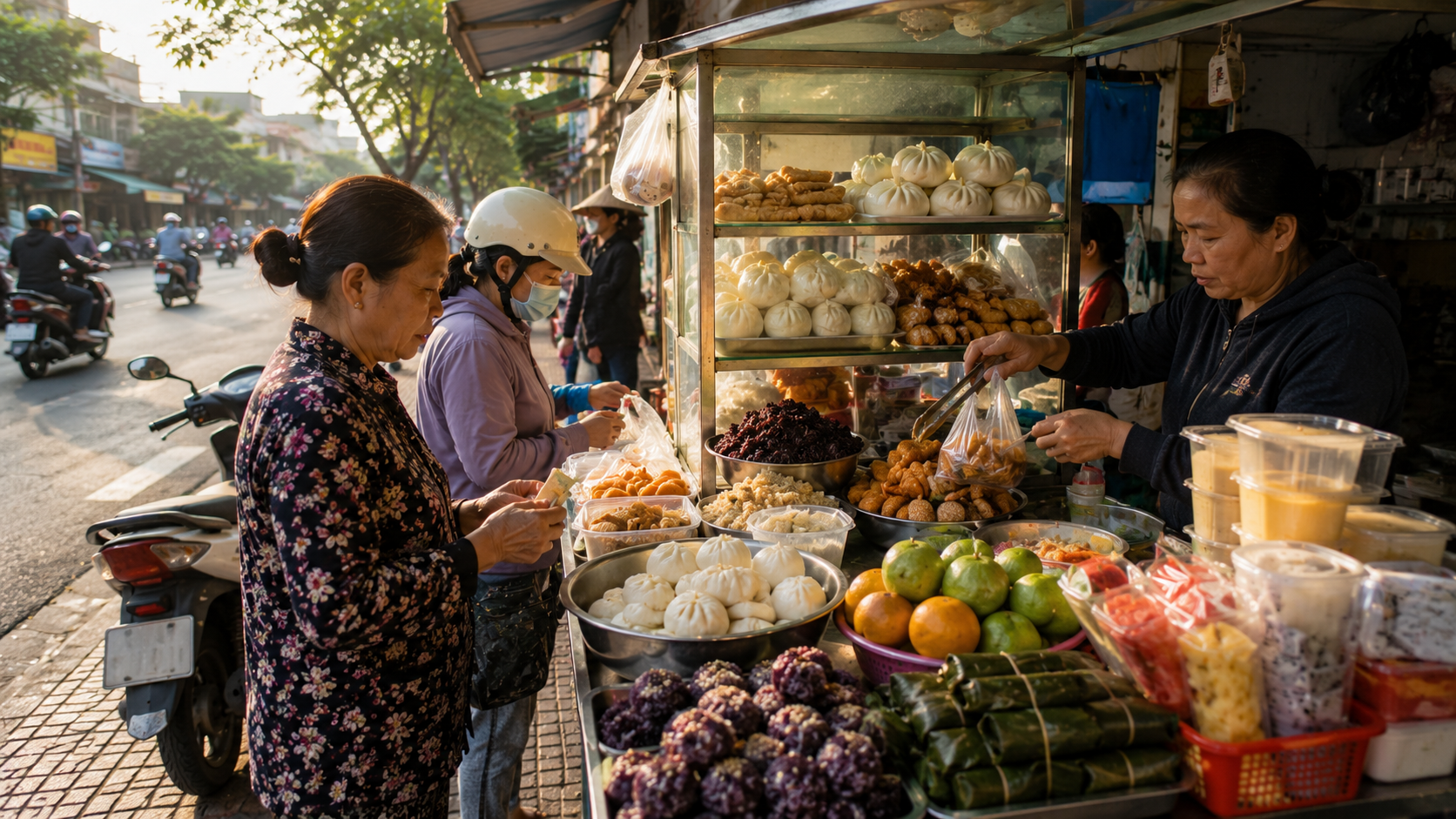
Not everyone eats again after breakfast, but Vietnam has a strong snacking culture.
A small mid-morning bite is especially common when breakfast was light or when someone started the day particularly early.
This doesn’t necessarily mean sitting down for another full meal.
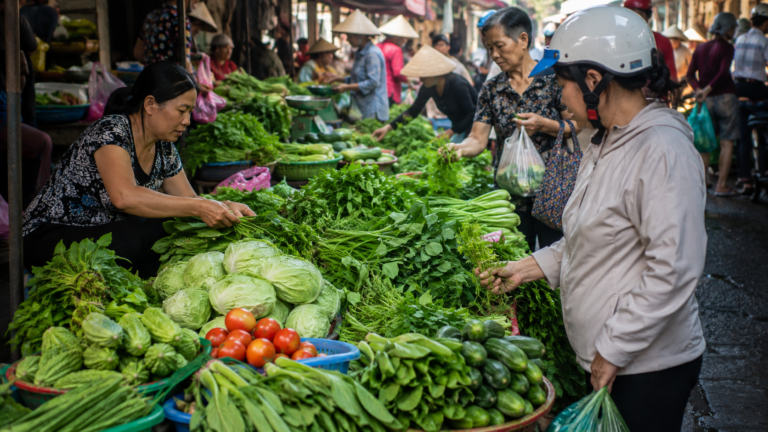
Street vendors, bakeries, markets, convenience stores, and small food stalls make it easy to grab something quickly.
Depending on where you are, you might see people having fruit, bánh bao, sticky rice, a small bánh mì, yogurt, sweet snacks, or a drink.
Coffee also plays a major role in the morning routine.
Vietnamese coffee shops can remain busy long after breakfast as friends meet, workers take a break, or people simply sit outside with a cà phê sữa đá.
For visitors, this is an important part of understanding food culture in Vietnam: eating isn’t always divided neatly into only breakfast, lunch, and dinner.
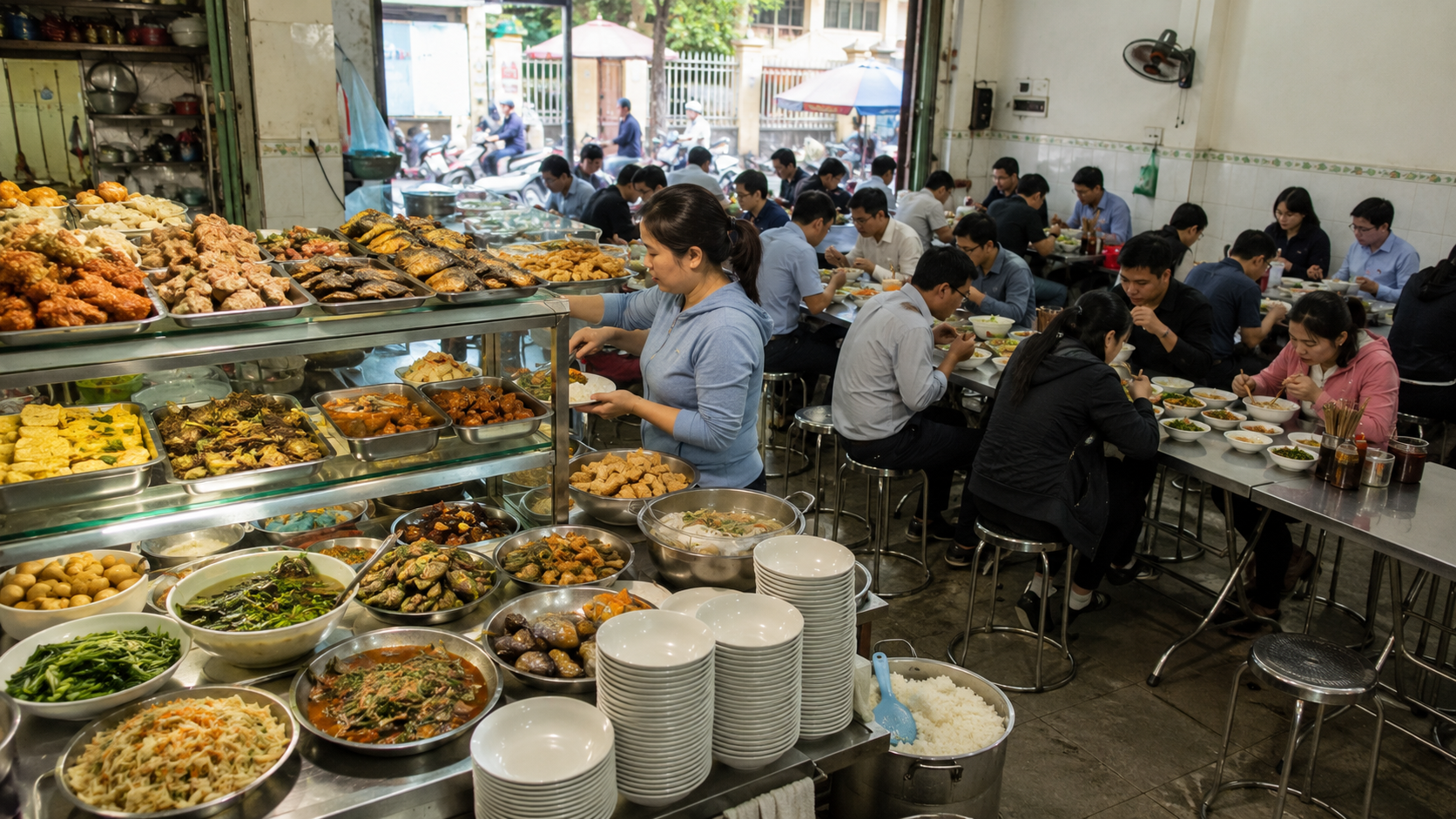
3. Lunch: Around 11:30 AM–1:00 PM
Lunch in Vietnam can feel early to travelers from countries where eating at 1 or 2 p.m. is normal.
Around 11:30 a.m., restaurants near offices and commercial areas can suddenly become crowded.
A typical weekday lunch may be quick and practical.
One of the most familiar sights is cơm bình dân, a casual rice meal where customers choose from a selection of prepared meat, fish, eggs, tofu, and vegetables.
Another popular format is cơm phần, essentially an individual rice meal served with a main dish and accompaniments.
Noodle soups and other one-bowl meals are also common.
Traditionally, the midday period can include time to rest, particularly in smaller businesses or workplaces with longer lunch breaks. Modern working patterns vary greatly, especially in larger cities, but the association between lunch and a short midday break remains familiar.
For travelers, the main thing to remember is simple:
If a popular local restaurant specializes in lunch, don’t arrive too late.
The best dishes at small establishments can sometimes run out after the main lunch rush.
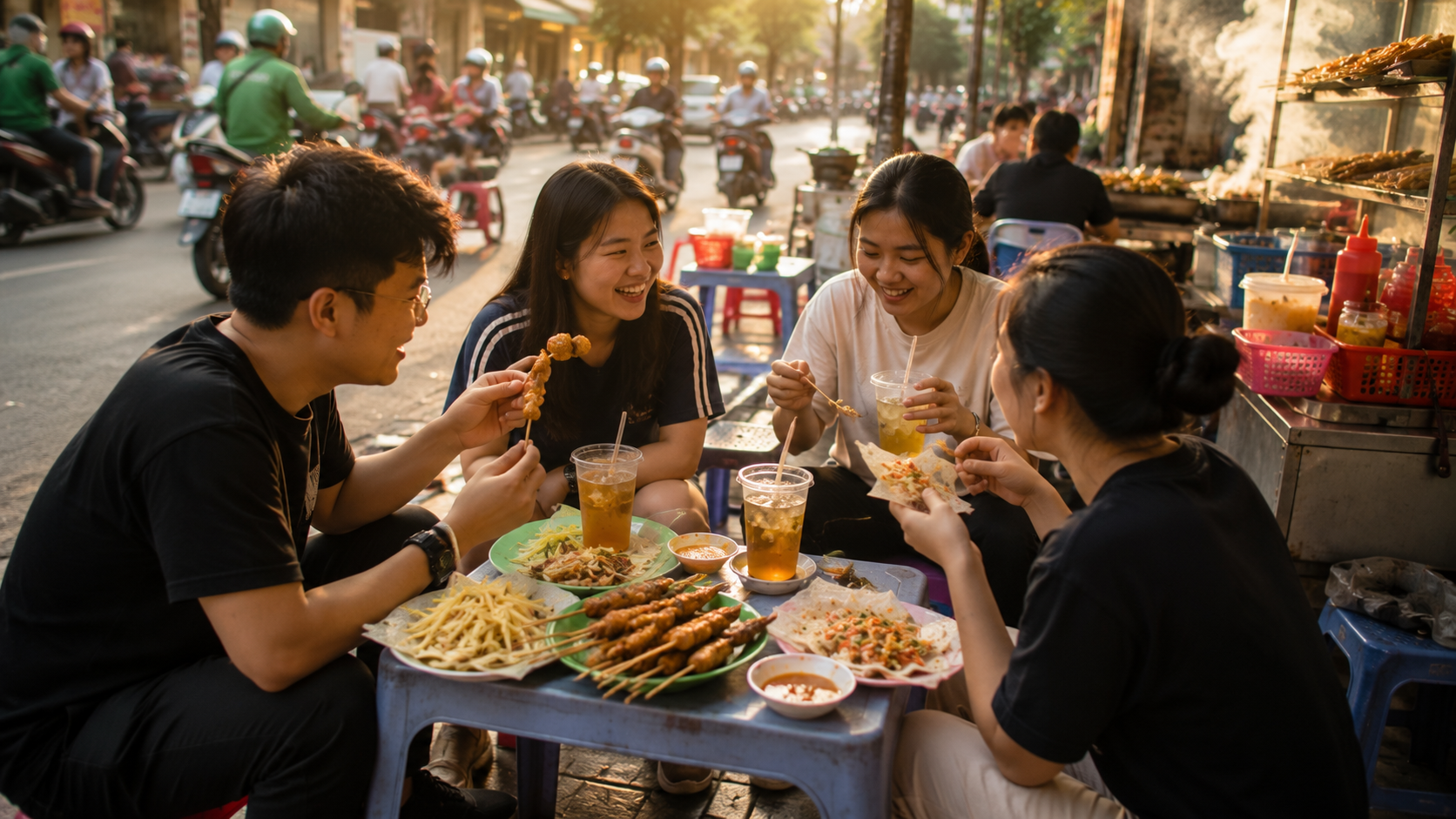
4. Afternoon Snacks: Around 3:00–5:00 PM
Late afternoon is one of the best times to discover Vietnam’s snack culture.
As schools finish and the workday moves toward evening, street-food vendors become busier.
This is when you may see groups sharing small plates rather than eating a full meal.
Popular afternoon foods can include bánh tráng trộn, grilled skewers, fried snacks, chè, fresh fruit, yogurt, snails, and countless regional specialties.
In larger cities, cafés are also an important part of the afternoon routine.
Students meet friends, coworkers take breaks, and families stop somewhere for a drink or something sweet.
For travelers, afternoon snacking is a great opportunity to try foods that may never appear on a typical restaurant menu.
5. Dinner: Around 6:00–8:00 PM
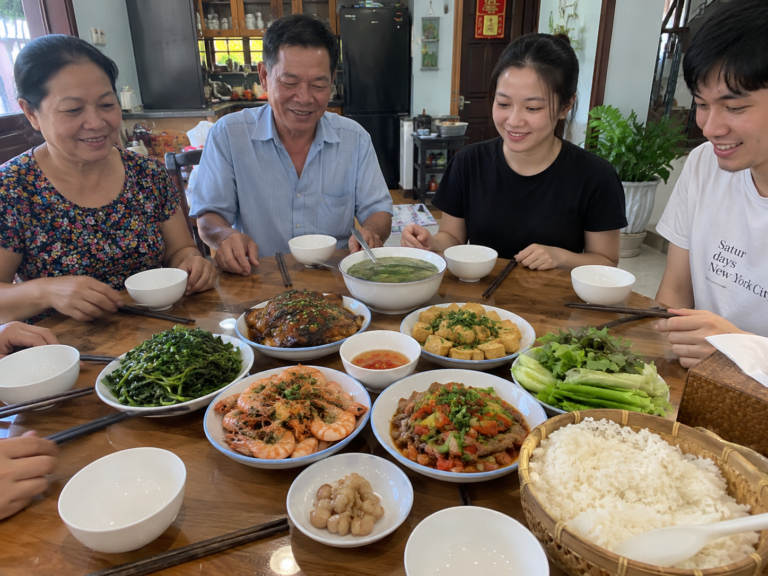
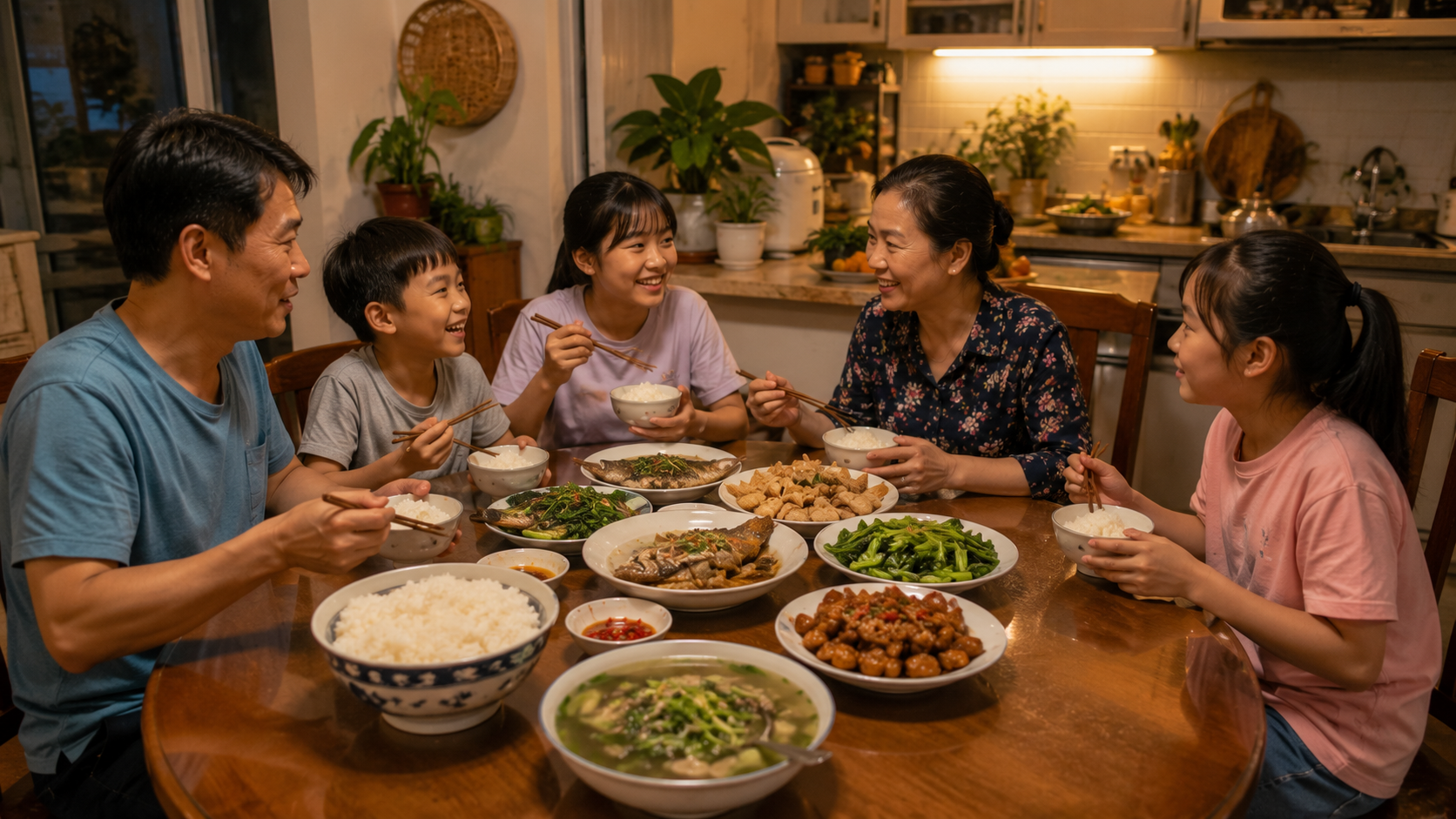
For many Vietnamese families, dinner is the most important shared meal of the day.
A typical home dinner may include a bowl of rice for each person with several dishes placed in the center of the table.
There might be vegetables, fish or meat, soup, tofu, pickled vegetables, and dipping sauce.
Rather than everyone ordering or receiving a separate main course, the dishes are shared.
Dinner often begins around 6 or 7 p.m., although schedules vary considerably.
Restaurants can become particularly busy between approximately 6:30 and 8 p.m.
Vietnamese cities certainly don’t shut down after dinner, though.
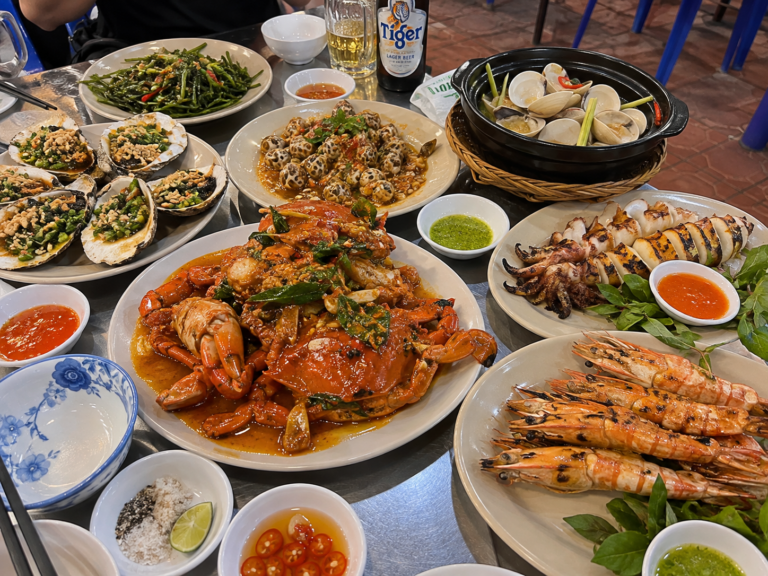
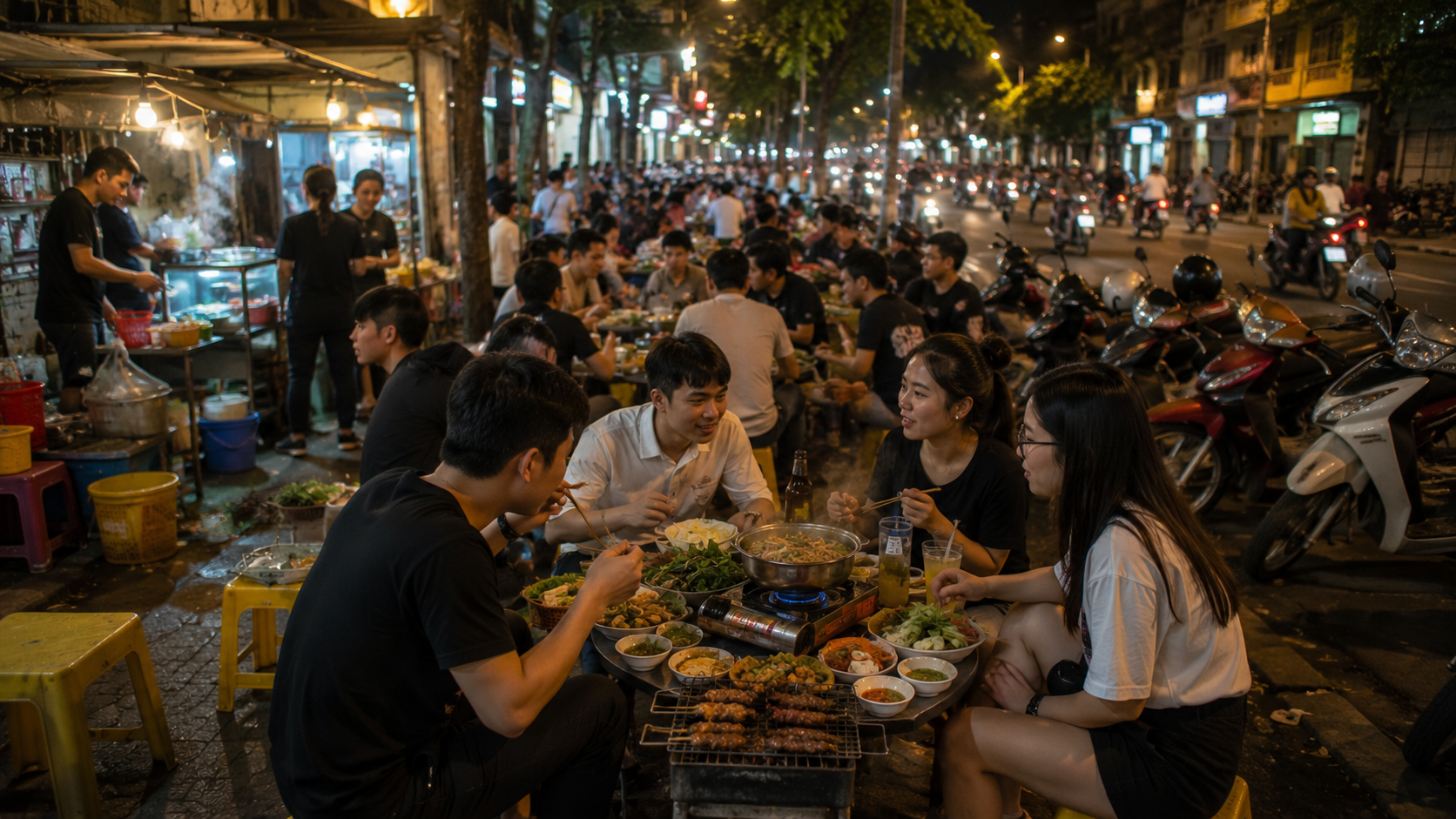
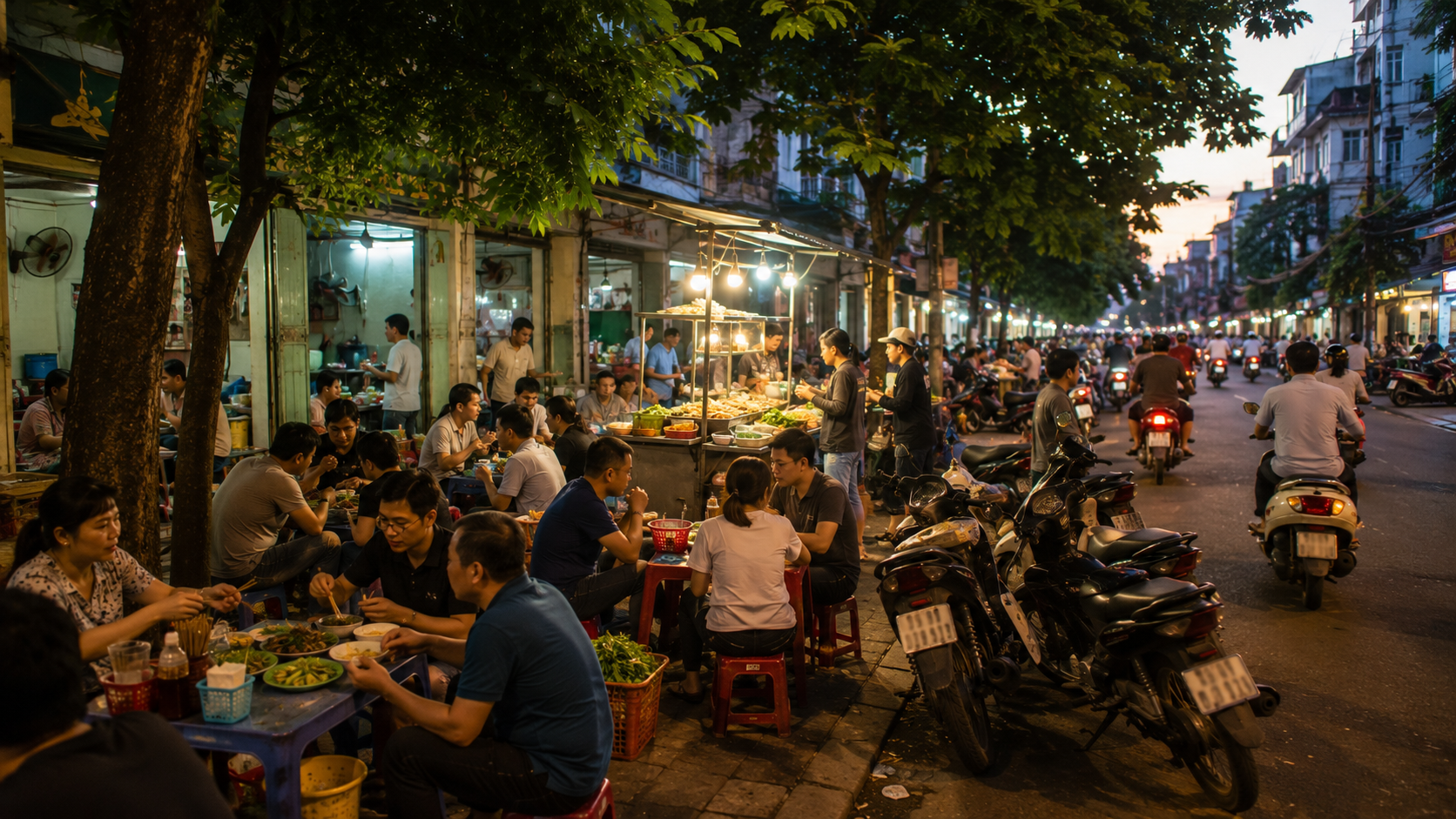
In places such as Hanoi, Ho Chi Minh City, and Da Nang, restaurants, cafés, seafood restaurants, drinking spots, and street-food stalls can remain active much later into the evening.
Do Vietnamese People Eat Late at Night?
Absolutely.
Early family dinners don’t mean Vietnam has no late-night food culture.
In busy cities, eating can continue well into the night.
After-work gatherings may involve grilled meat, seafood, hot pot, snails, or beer. Younger people may meet friends for street food, while late-night noodle and rice restaurants serve workers and anyone looking for another meal.
In major nightlife and tourism areas, finding food at 10 or 11 p.m. is usually not difficult.
The experience is simply different from a traditional family dinner.
Are Mealtimes the Same Everywhere in Vietnam?
Not exactly.
Vietnam stretches more than 1,600 kilometers from north to south, and lifestyles vary between regions.
People living in major cities may eat differently from families in smaller towns or rural areas. Work schedules, school hours, weather, age, and family routines also influence when people eat.
Tourism changes things further.
Restaurants in destinations such as Da Nang, Nha Trang, Hoi An, and central areas of Ho Chi Minh City may serve customers continuously because international visitors often eat at different times.
So the times in this guide should be understood as common patterns rather than strict rules.
Quick Guide to Vietnamese Mealtimes
If you’re planning your day around local eating habits, this is a useful general guide:
6:00–8:00 AM — Breakfast
Hot noodles, bánh mì, sticky rice, and other substantial dishes.
9:00–10:30 AM — Morning Snack & Coffee
Small snacks, fruit, or Vietnamese coffee.
11:30 AM–1:00 PM — Lunch
Rice meals, noodles, and quick local dishes.
3:00–5:00 PM — Afternoon Snacks
Street food, desserts, fruit, and café drinks.
6:00–8:00 PM — Dinner
Shared family meals, restaurants, seafood, hot pot, and other social dining.
Late-night food can continue well beyond these hours, especially in larger cities.
Frequently Asked Questions About Vietnamese Mealtimes
What time do Vietnamese people usually eat breakfast?
Many Vietnamese people eat breakfast between approximately 6 and 8 a.m. Breakfast stalls and restaurants often open very early to serve students and workers.
What time is lunch in Vietnam?
Lunch commonly takes place between 11:30 a.m. and 1 p.m. Restaurants near offices can become particularly busy around noon.
What time do Vietnamese people eat dinner?
Many families eat dinner between 6 and 8 p.m., with around 6:30–7:30 p.m. being a common period for evening meals.
Do Vietnamese people eat three meals a day?
Three main meals are common, but snacks, coffee, fruit, desserts, and small street-food dishes can also be eaten throughout the day.
Is it easy to find late-night food in Vietnam?
In major cities and tourist destinations, yes. Street-food stalls, noodle restaurants, seafood restaurants, hot-pot restaurants, and other casual establishments may remain open late.
Final Thoughts
Vietnamese mealtimes reflect the rhythm of everyday life in the country.
The day often starts early with a hot breakfast, lunch arrives before many foreign visitors expect it, the afternoon brings countless opportunities for snacks and coffee, and dinner is often a chance for families to share food together.
You don’t need to change your entire schedule when visiting Vietnam.
But waking up early for breakfast, visiting a local restaurant during the lunch rush, or stopping for an afternoon snack can show you a side of Vietnamese food culture that is easy to miss if you only eat at tourist-oriented restaurants.
Sometimes, when you eat can be just as interesting as what you eat.