How to Order Food Like a Local in Vietnam: A Beginner’s Guide

How to Order Food Like a Local in Vietnam: A Beginner’s Guide
Ordering food in Vietnam can feel intimidating if it’s your first visit.
Many local restaurants don’t have English menus, some don’t display prices clearly, and it’s common to see dozens of unfamiliar dishes listed on a single wall. For first-time visitors, this can make ordering feel stressful.
The good news is that eating like a local is much easier than most people think.
You don’t need to speak fluent Vietnamese, memorize every dish, or understand every menu. A few simple words, some basic restaurant etiquette, and a little confidence will help you enjoy authentic Vietnamese food almost anywhere in the country.
Whether you’re eating at a busy street food stall in Hanoi, a family-run restaurant in Da Nang, or a small café in Ho Chi Minh City, this guide will help you order like a local and enjoy a much more authentic experience.
Why Ordering Like a Local Matters
One of the biggest mistakes many tourists make is searching only for restaurants with English menus or international reviews.
While there’s nothing wrong with those places, they often represent only a small part of Vietnam’s incredible food culture.
Some of the country’s best meals are served in tiny neighborhood restaurants that have been run by the same family for decades.
These restaurants usually focus on just a handful of dishes.
Instead of offering fifty different menu items, they perfect one recipe and prepare it every single day.
That’s why you’ll often hear local people say that the smaller the menu, the better the food.
By learning how to order confidently, you’ll discover restaurants that many tourists never experience.
Not only will the food often taste more authentic, but you’ll usually spend less money as well.
Learn a Few Vietnamese Food Words
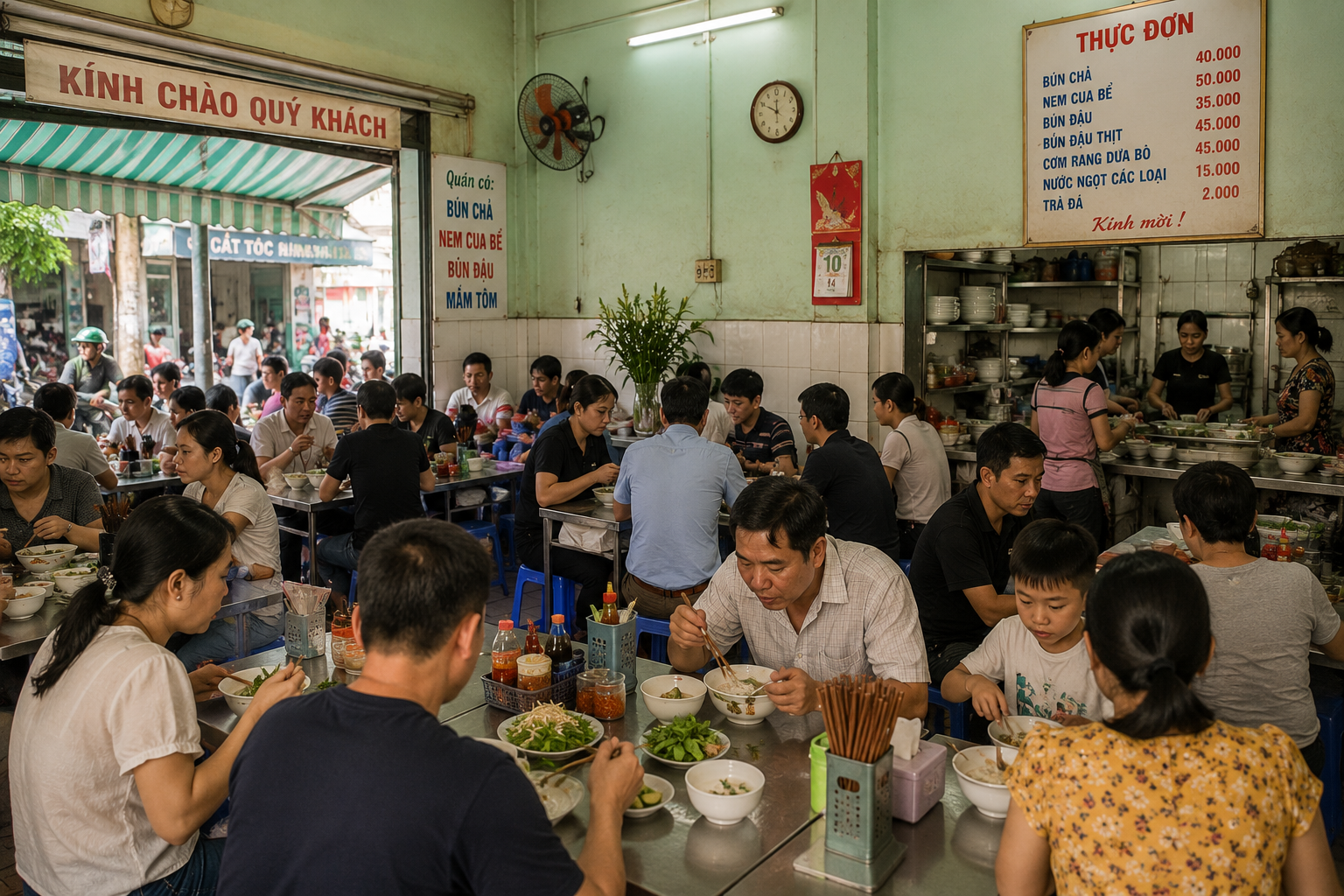
The easiest way to order confidently is to recognize a few common Vietnamese food names.
You don’t need perfect pronunciation.
Simply pointing at the menu while saying the dish is usually enough.
Some of the most useful words include:
- Phở – Vietnamese noodle soup
- Bún – Rice vermicelli noodles
- Cơm – Rice
- Bánh Mì – Vietnamese sandwich
- Bánh Xèo – Crispy savory pancake
- Gỏi Cuốn – Fresh spring rolls
- Chả Giò – Fried spring rolls
- Bò – Beef
- Gà – Chicken
- Heo – Pork
- Hải Sản – Seafood
- Chay – Vegetarian
Even knowing these simple words makes reading local menus much easier.
You’ll also notice that many restaurants specialize in only one type of dish.
For example, if a sign simply says “Phở”, there’s a good chance that’s exactly what the restaurant is famous for.
Rather than seeing limited choices as a disadvantage, consider it a sign that the restaurant focuses on quality instead of variety.
Useful Ordering Phrases
You don’t need to memorize long conversations.
These simple phrases are enough for most situations.
| Vietnamese | English |
|---|---|
| Xin chào | Hello |
| Cho tôi một… | I’d like one… |
| Cảm ơn | Thank you |
| Bao nhiêu tiền? | How much is it? |
| Không cay | Not spicy |
| Ít đá | Less ice |
| Mang đi | Take away |
| Ăn tại chỗ | Eat here |
Restaurant staff are generally patient and friendly, especially if they see you’re making an effort to speak a few words in Vietnamese.
Even a simple “Cảm ơn” after your meal often brings a smile.
Choose Restaurants That Locals Actually Visit
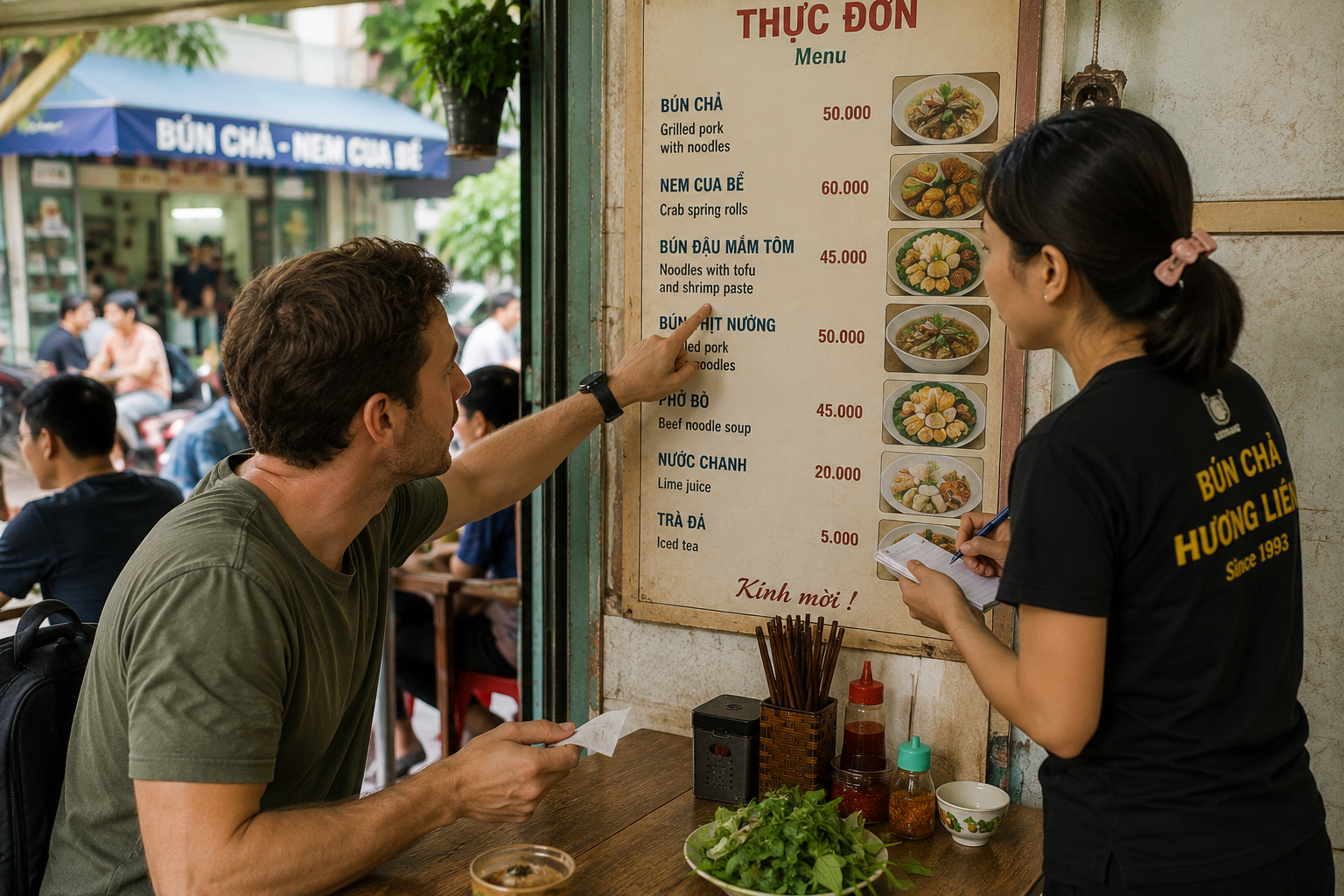
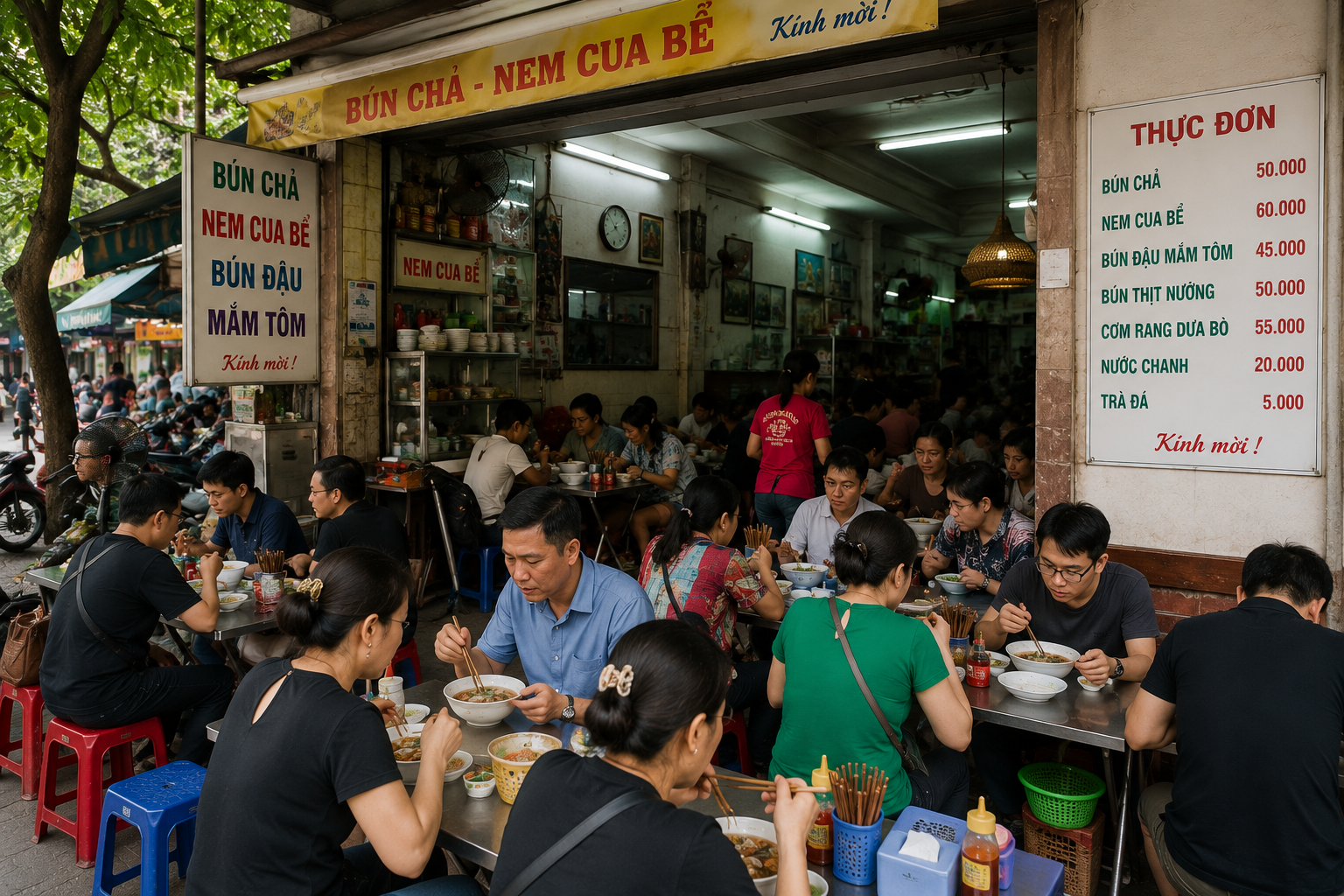
One of the easiest ways to find great food in Vietnam is to simply observe where local people are eating.
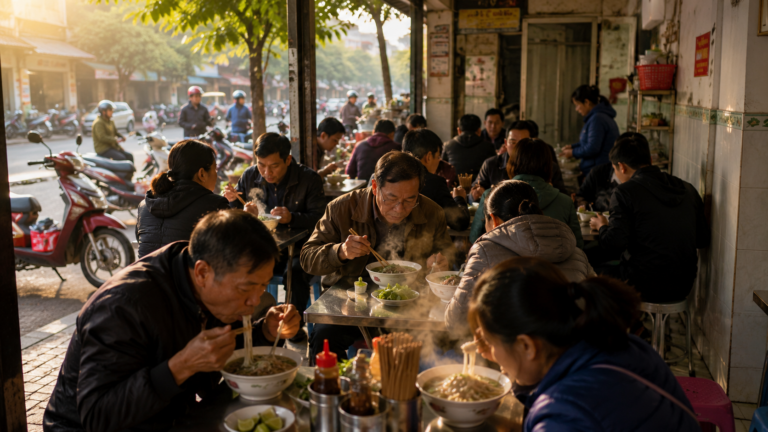
A restaurant filled with Vietnamese families, office workers, or students is usually a good sign that the food is fresh, affordable, and consistent.
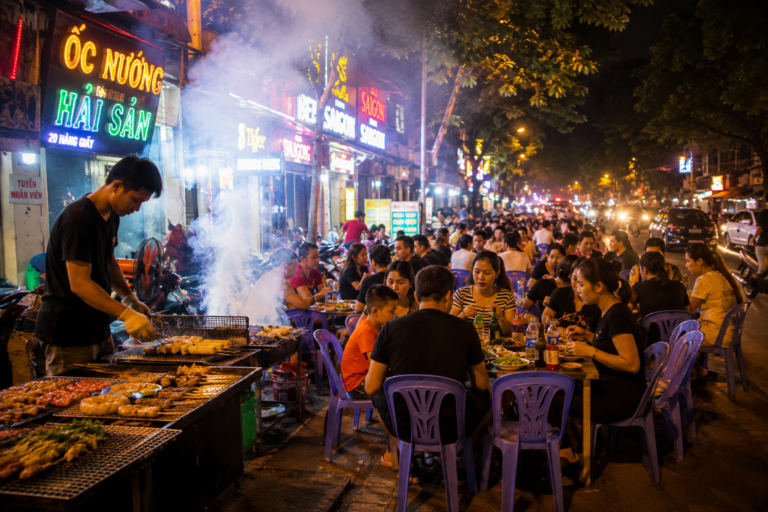
Don’t be surprised if the restaurant looks very simple.
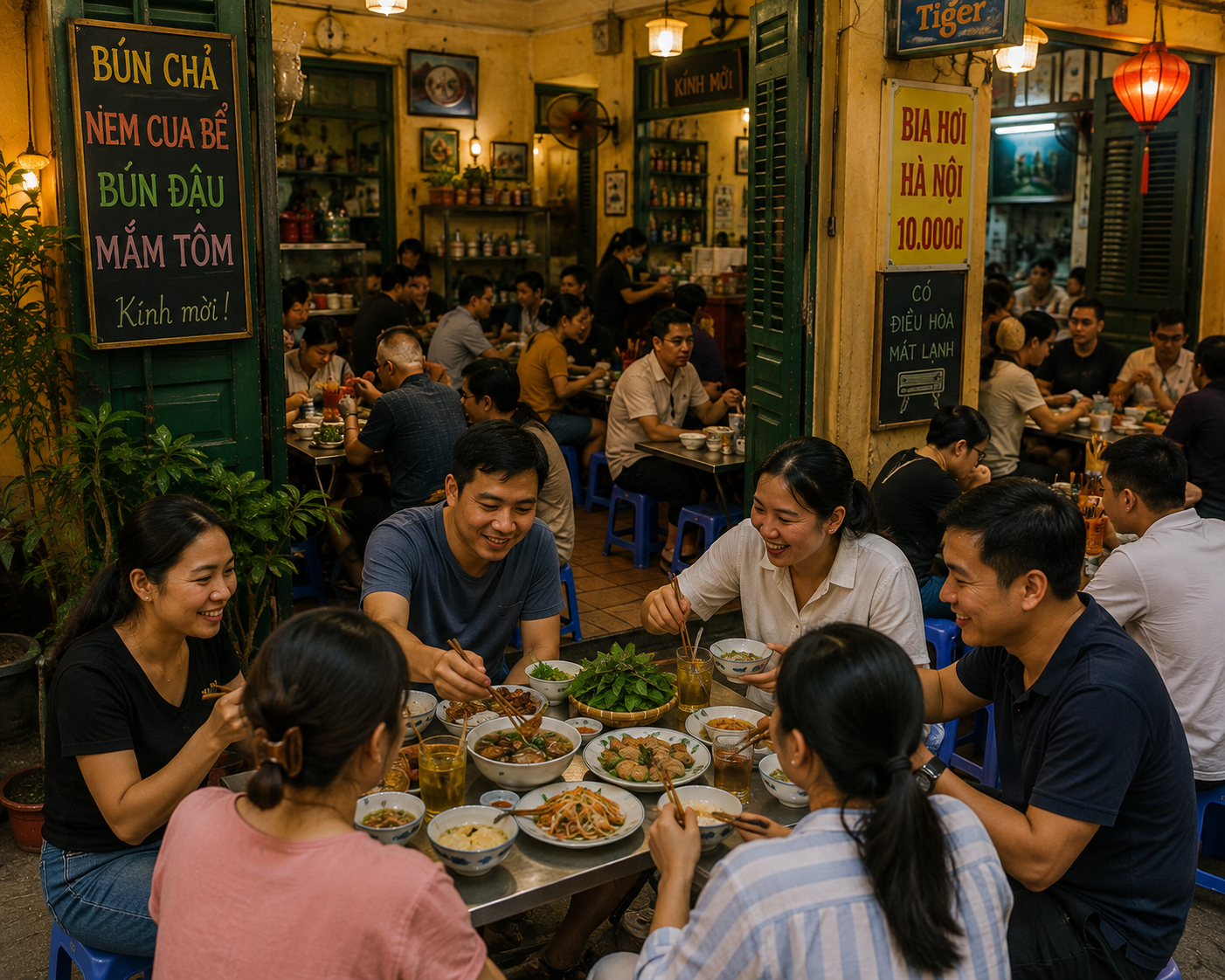
Plastic stools, stainless steel tables, handwritten menus, and open kitchens are completely normal in Vietnam. In fact, many of the country’s most famous restaurants have changed very little over the years.
Rather than judging a restaurant by its appearance, pay attention to these signs:
- A steady flow of local customers.
- Fresh ingredients being prepared in the open.
- A menu with only a few specialties.
- Food arriving quickly to almost every table.
These are often better indicators of quality than modern décor or expensive interiors.
Understanding Vietnamese Menus
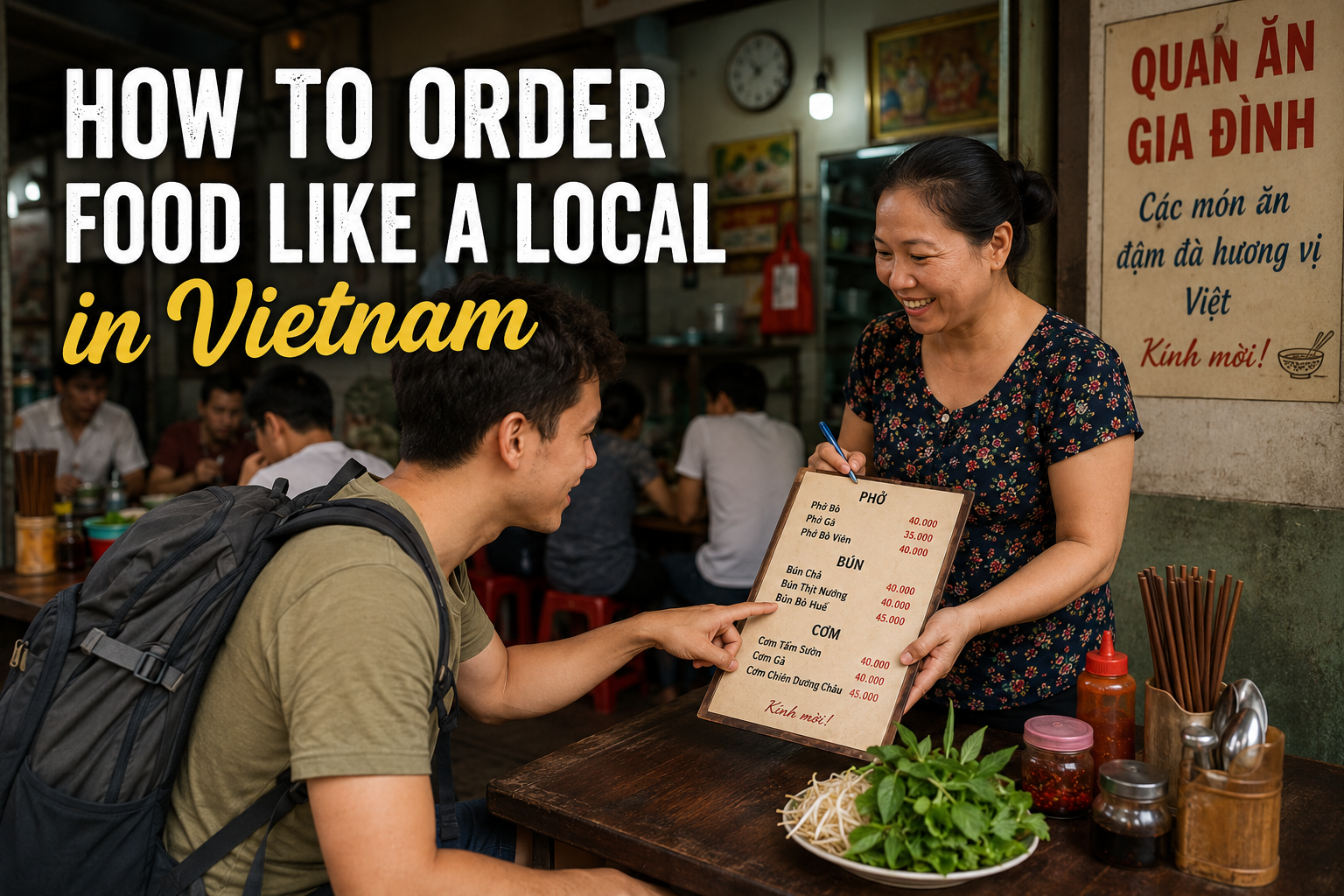
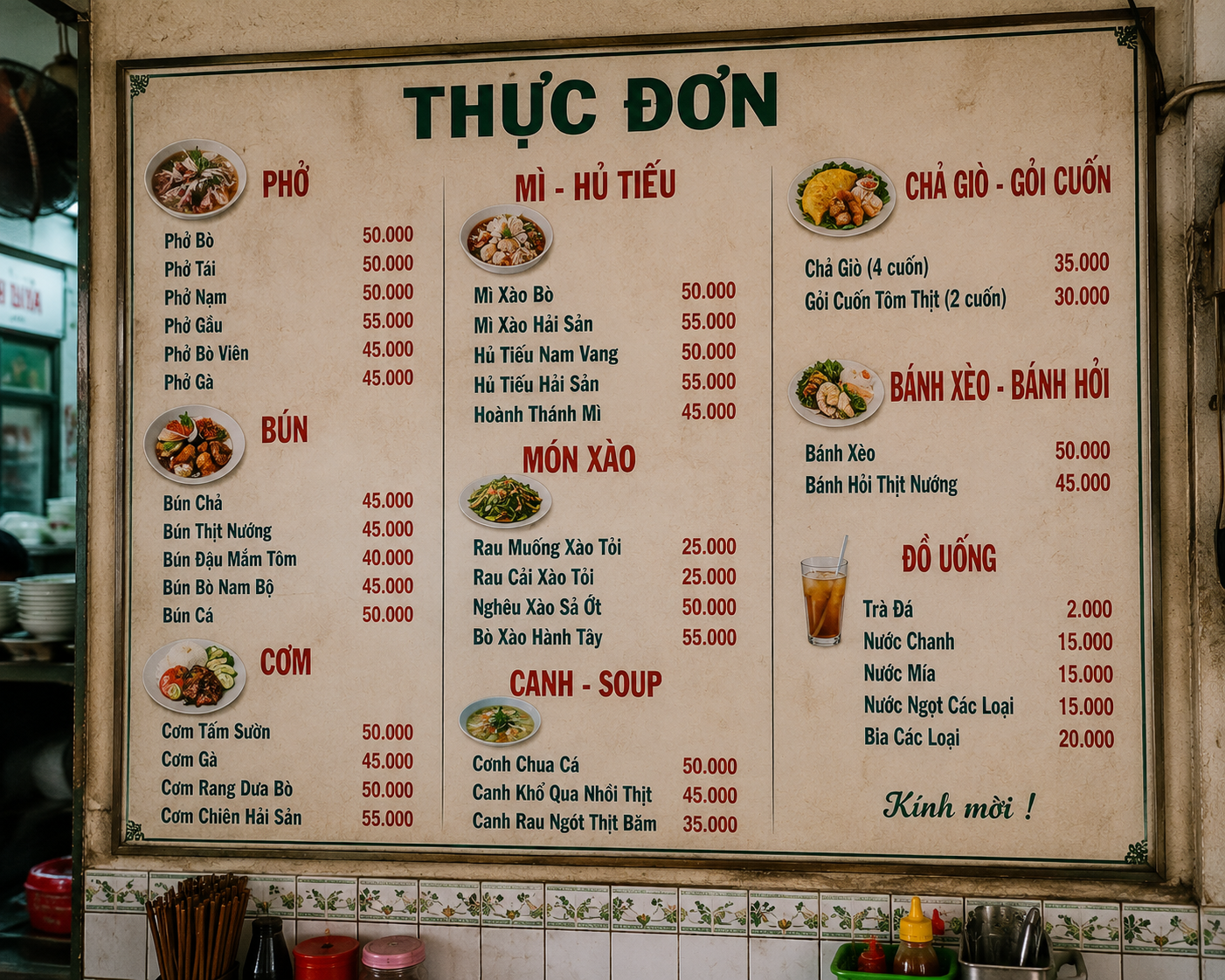
Vietnamese menus can look confusing at first, especially when everything is written in Vietnamese.
Fortunately, they’re often easier to understand than they appear.
Most restaurants organize dishes by their main ingredient or cooking style.
For example:
Rice Dishes
Look for the word Cơm.
Examples include:
- Cơm Gà (Chicken Rice)
- Cơm Tấm (Broken Rice)
- Cơm Chiên (Fried Rice)
Noodle Dishes
Look for words such as:
- Phở
- Bún
- Hủ Tiếu
- Mì
- Bánh Canh
Each uses a different type of noodle and has its own unique flavor.
Protein Words
Learning a few ingredients makes ordering much easier.
- Bò = Beef
- Gà = Chicken
- Heo = Pork
- Hải Sản = Seafood
- Tôm = Shrimp
- Cá = Fish
- Trứng = Egg
Once you recognize these words, you’ll be able to understand most Vietnamese menus without using a translation app.
Ordering Drinks Like a Local
Many visitors immediately order bottled water or soft drinks.
Locals often choose something different.
Some of the most common drinks include:
- Trà Đá – Free iced tea served at many restaurants.
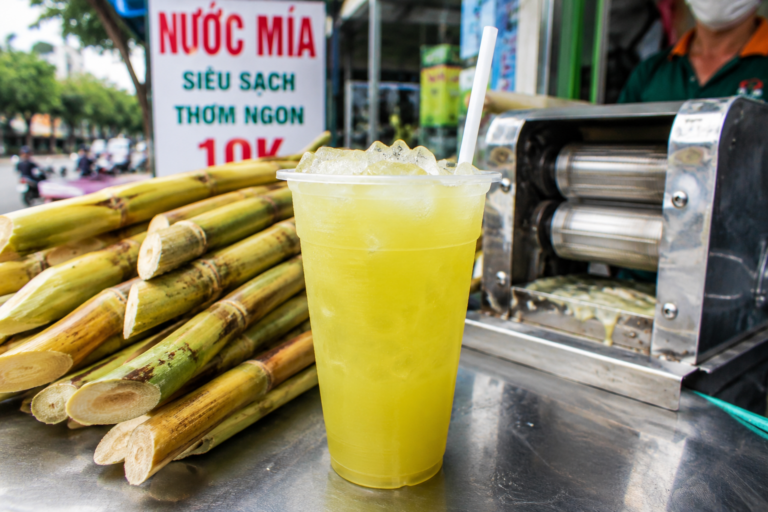
- Nước Mía – Fresh sugarcane juice.
- Cà Phê Sữa Đá – Vietnamese iced coffee with condensed milk.
- Sinh Tố – Fruit smoothie.
- Nước Dừa – Fresh coconut water.
- Nước Chanh – Lime juice.
If you simply ask for “Trà Đá”, many restaurants will know exactly what you mean.
It’s one of the easiest ways to blend in with local customers.
How to Pay the Bill
Paying in Vietnam is usually very straightforward.
Unlike many Western countries, the bill is rarely brought to your table automatically.
Instead, when you’re ready to leave, simply make eye contact with a staff member and say:
“Tính tiền.”
This means:
“I’d like the bill, please.”
In smaller restaurants, you may also pay directly at the front counter before leaving.
Cash is still widely accepted throughout Vietnam, although many restaurants now also support QR payments and credit cards.
For smaller neighborhood restaurants and street food vendors, carrying some cash is always a good idea.
Restaurant Etiquette
Vietnamese dining culture is relaxed, but following a few simple customs will help you fit in.
Wait Until Everyone Is Served
When eating with friends or family, it’s common to wait until everyone’s food arrives before starting.
Share Food
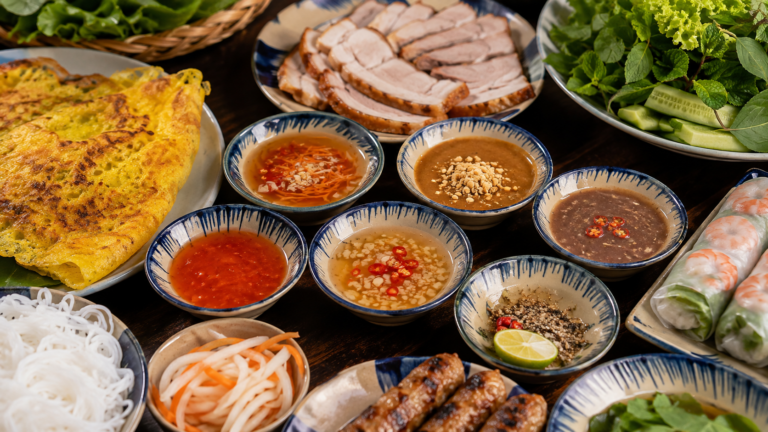
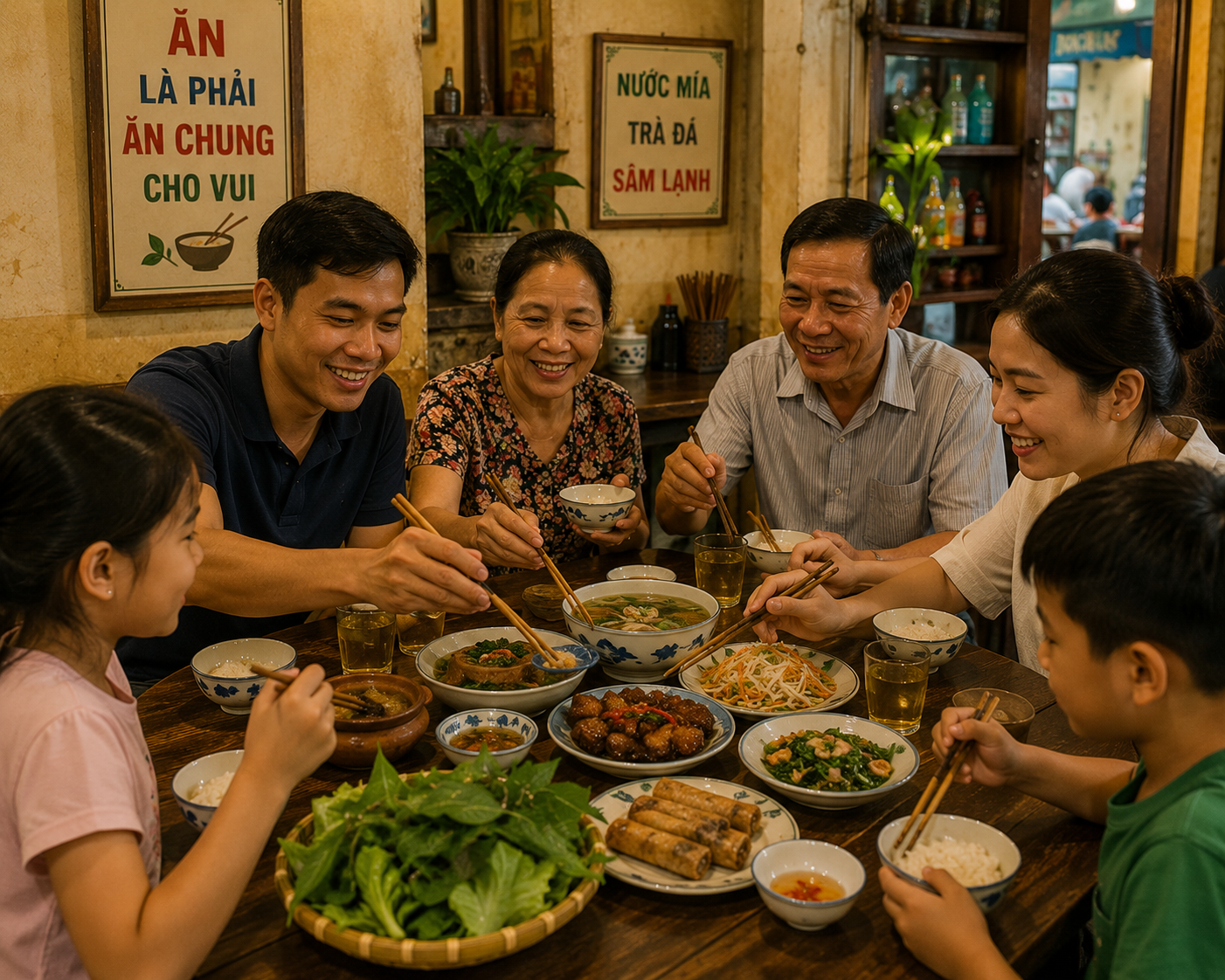
Many Vietnamese meals are designed to be shared.
Rather than ordering one large individual dish, several plates are placed in the middle of the table for everyone to enjoy together.
Use Serving Chopsticks
If a shared dish includes separate serving utensils, use them instead of your personal chopsticks whenever possible.
Don’t Rush
Meals are often social occasions.
People stay to chat long after finishing their food, especially over coffee.
Relax and enjoy the atmosphere.
Quick Tips Before You Order
Before ordering at any local restaurant, remember these simple rules:
- Choose busy restaurants with local customers.
- Don’t worry if the menu is only in Vietnamese.
- Learn a few common food names.
- Ask the staff for recommendations.
- Carry some cash for smaller restaurants.
- Try at least one dish you’ve never heard of before.
Following these tips will make your dining experience much smoother—and much more memorable.
Common Mistakes Tourists Make
Even though ordering food in Vietnam is simple, many first-time visitors make a few common mistakes that can prevent them from having the best experience.
Fortunately, they’re all easy to avoid.
Only Eating at Tourist Restaurants
It’s natural to feel more comfortable with English menus and familiar surroundings.
However, many tourist-oriented restaurants adjust recipes to suit international tastes. While the food can still be enjoyable, it may not reflect how local people actually eat.
If you’re willing to walk just a few streets away from the main tourist areas, you’ll often find restaurants serving more authentic flavors at lower prices.
Ordering the Same Dish Every Day
Many travelers fall in love with phở and end up ordering it every morning.
While that’s certainly not a bad choice, Vietnamese cuisine is incredibly diverse.
Try something different each day.
One morning, have Bún Bò Huế.
The next, try Mì Quảng or Cơm Tấm.
Exploring different dishes is one of the most rewarding parts of traveling in Vietnam.
Being Afraid of Fresh Herbs
One of the defining features of Vietnamese cuisine is its generous use of fresh herbs.
Some visitors remove all the herbs before eating because they’re unfamiliar with them.
Instead, try adding a small amount first.
Mint, Thai basil, Vietnamese coriander, and perilla leaves each add a completely different flavor and aroma.
Many dishes simply don’t taste complete without them.
Ignoring Daily Specials
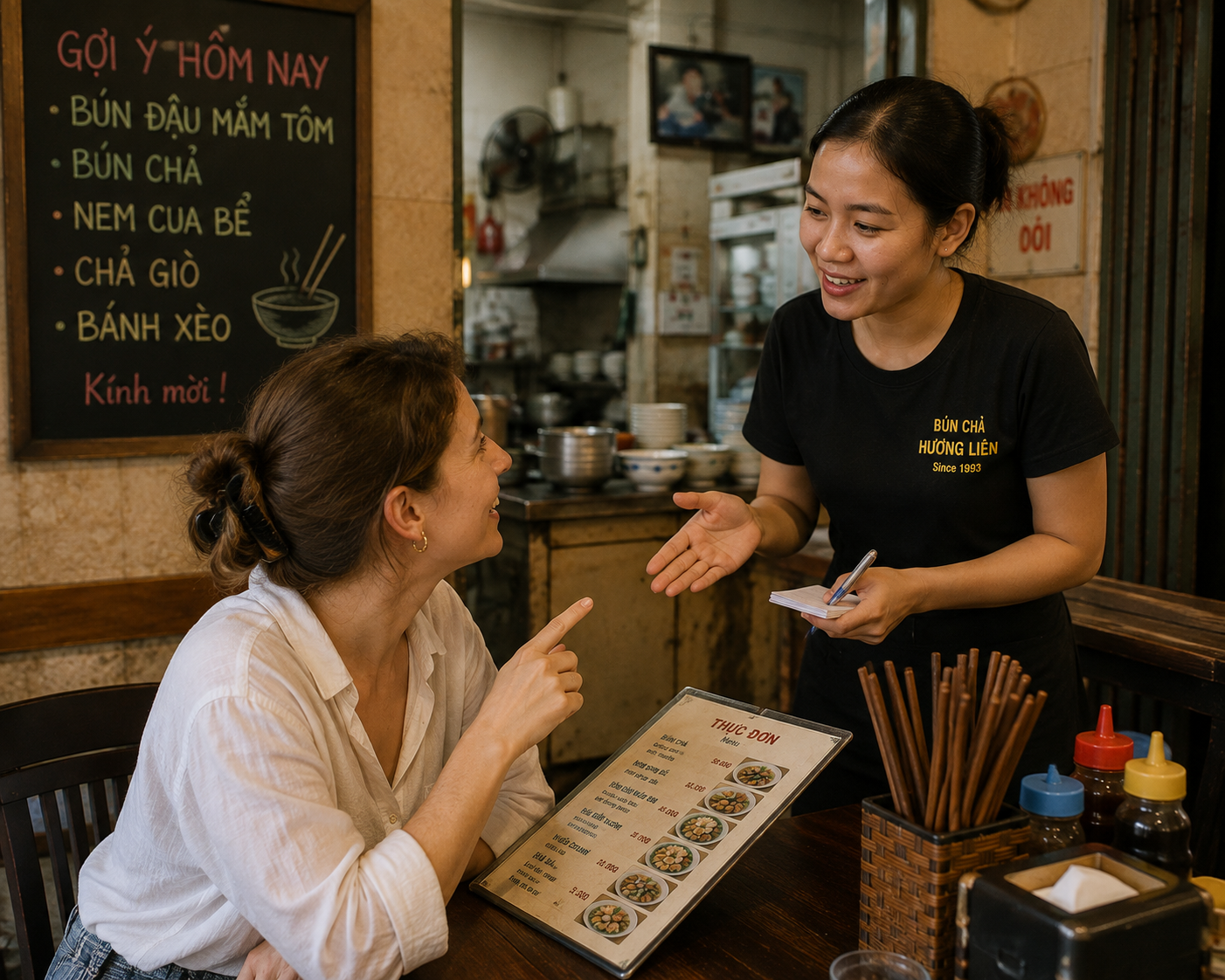
Many neighborhood restaurants don’t have large printed menus.
Instead, today’s specialties might simply be written on a whiteboard or displayed near the entrance.
Don’t hesitate to ask:
“Món nào ngon hôm nay?”
(“What’s good today?”)
You’ll often end up trying dishes that aren’t listed in guidebooks.
Final Tips for Ordering Like a Local
By now, you’ve probably realized that eating like a local isn’t about speaking perfect Vietnamese.
It’s about being curious.
Smile when you enter.
Observe what other customers are eating.
Don’t be afraid to point at dishes that look delicious.
Trust local recommendations.
Most importantly, stay open to trying something you’ve never heard of before.
Some of the best meals you’ll have in Vietnam won’t appear on any “Top 10” list.
They’ll be found in small family restaurants, busy morning markets, and quiet neighborhood cafés where people gather every day.
Those are the places where Vietnamese food truly comes alive.
Final Thoughts
Learning how to order food like a local is one of the easiest ways to make your trip to Vietnam more rewarding.
Instead of relying on tourist recommendations, you’ll gain the confidence to walk into neighborhood restaurants, communicate with local staff, and discover dishes that many visitors never experience.
You don’t need to know every Vietnamese word.
You don’t need perfect pronunciation.
A smile, a few basic phrases, and a willingness to try something new are more than enough.
Once you begin eating like a local, you’ll discover that Vietnamese cuisine is about much more than famous dishes like phở or bánh mì.
It’s a reflection of family traditions, regional culture, and everyday life.
And that’s exactly what makes every meal memorable.
Frequently Asked Questions
Do I need to speak Vietnamese to order food?
Not at all. Most restaurants are happy to help, and pointing to menu items or photos usually works perfectly.
Is street food safe in Vietnam?
Yes, especially if you choose busy vendors with a high turnover of customers and freshly prepared food.
Should I tip at Vietnamese restaurants?
Tipping is appreciated but not expected. Many locals simply pay the bill, although leaving a small tip for excellent service is always welcomed.
What’s the easiest Vietnamese dish for beginners?
Phở, Bánh Mì, Cơm Tấm, and Bún Chả are excellent starting points because they’re widely available and easy to enjoy.
Can I ask for less spicy food?
Absolutely.
Simply say:
It means “Not spicy.”