Vietnamese Dining Etiquette Every Visitor Should Know
Vietnamese food is often one of the highlights of a trip to Vietnam. From a steaming bowl of phở in the morning to a table filled with shared dishes at dinner, eating in Vietnam is about much more than simply enjoying good food.
Meals are often social occasions where family members, friends, and colleagues gather around the same table and share several dishes together. Because of this, Vietnamese dining etiquette can feel slightly different from what visitors are used to at home.
Fortunately, Vietnamese dining culture is generally relaxed and welcoming. Nobody expects a visitor to understand every local custom. Still, knowing a few basic rules can help you feel more comfortable and show respect to the people you are eating with.
Here are some of the most useful Vietnamese dining etiquette tips every visitor should know.
1. Wait for the Elders to Start Eating
Respect for older family members is an important part of Vietnamese culture, and this can also be seen at the dining table.
During family meals, younger people will often wait until parents, grandparents, or older guests begin eating before they start.
You may also hear family members inviting one another to eat before the meal begins. This is especially common during traditional family gatherings.
As a foreign visitor, nobody is likely to be offended if you do not know this custom. However, when eating with a Vietnamese family, waiting a moment and following your host is always a polite choice.
2. Vietnamese Meals Are Usually Shared
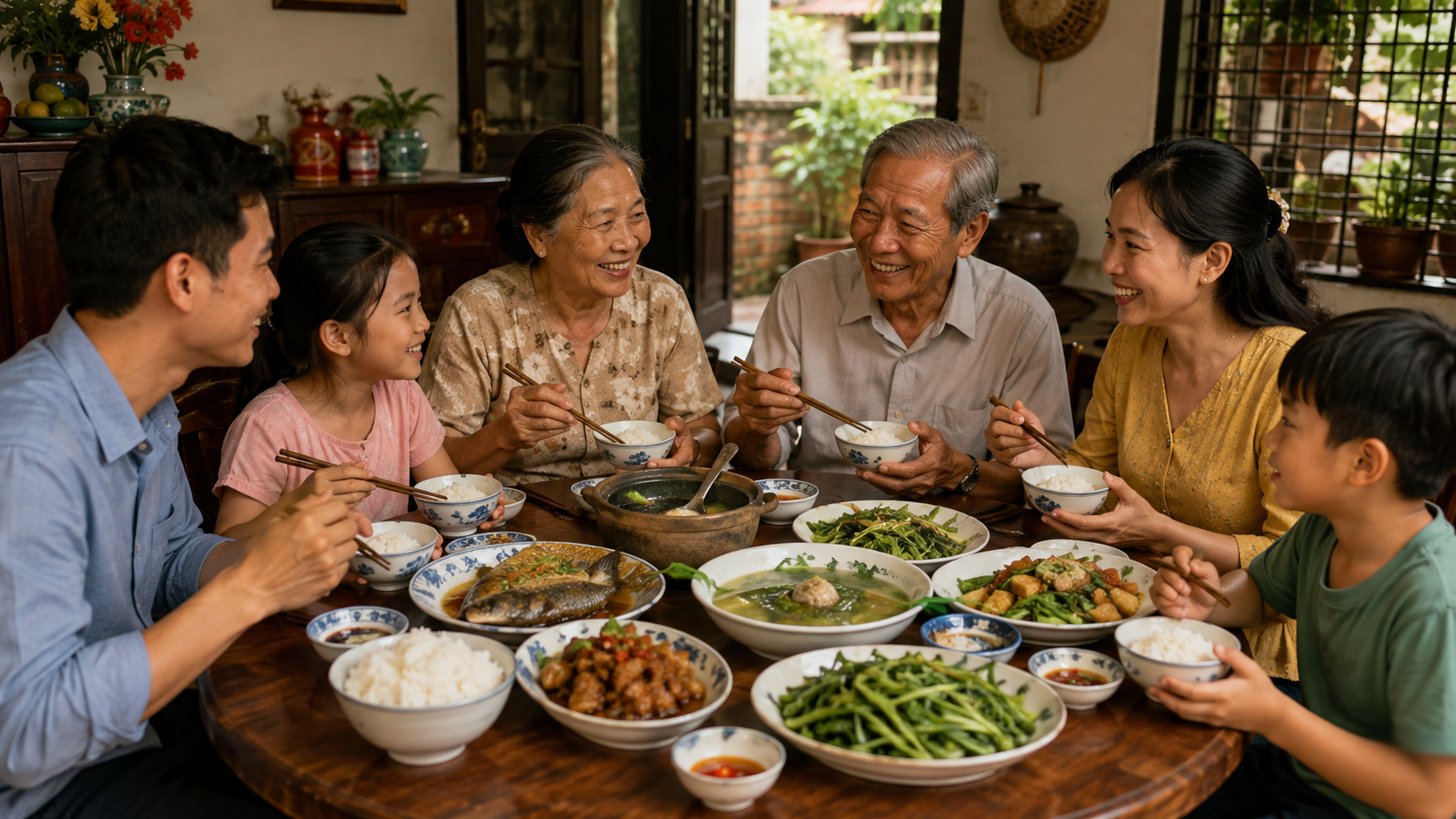
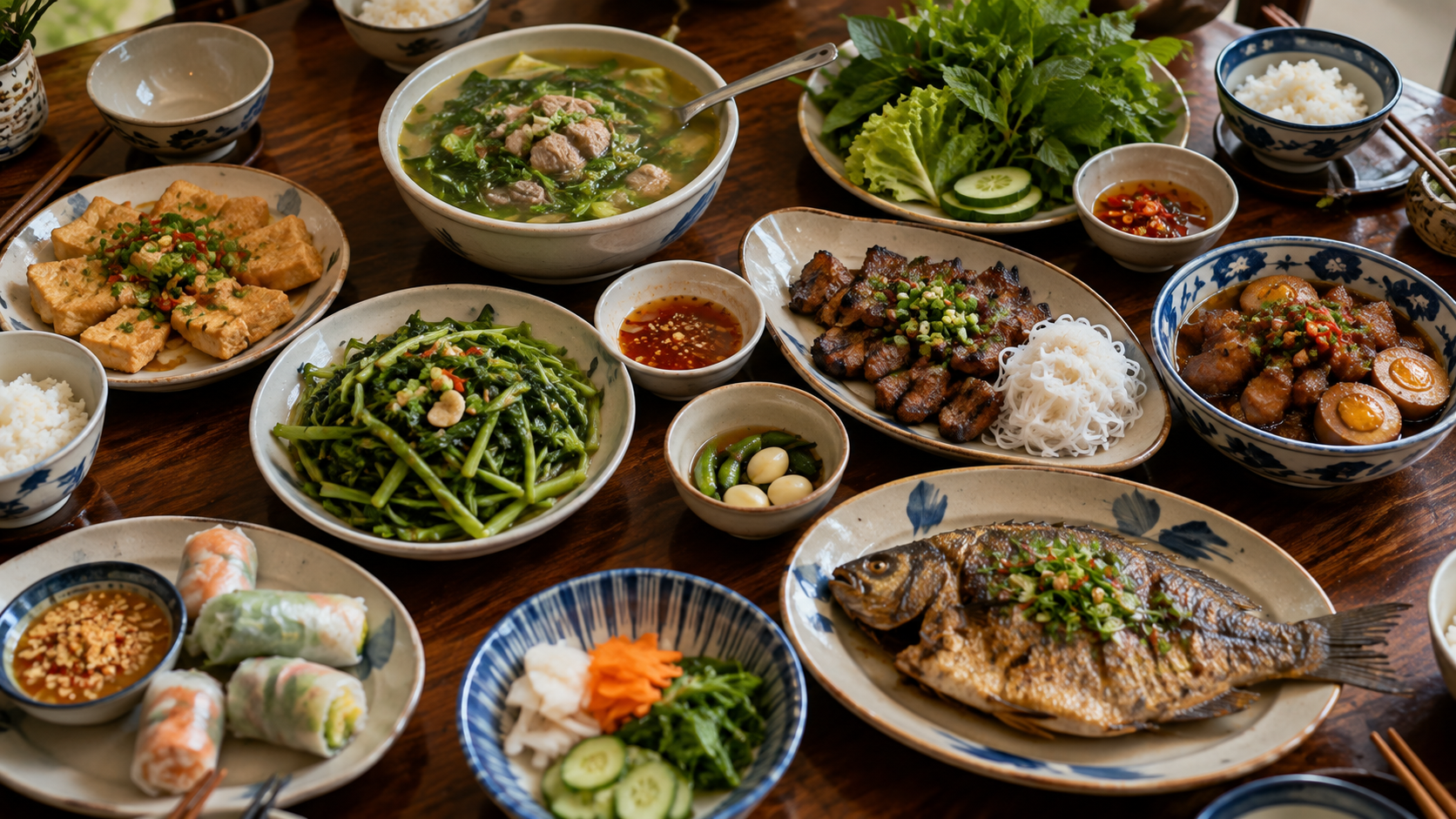
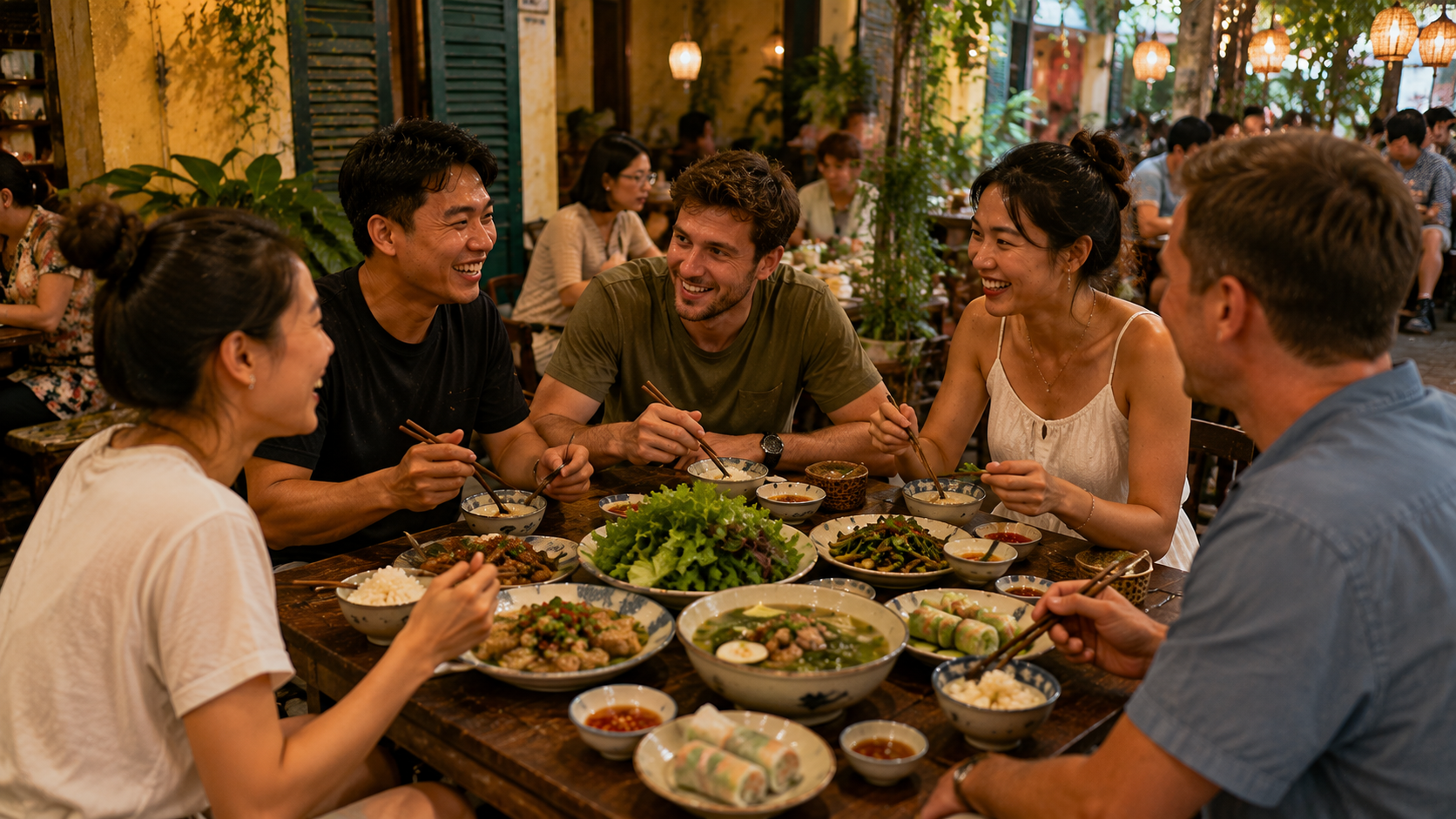
One of the biggest differences visitors may notice is that Vietnamese meals are often served family-style.
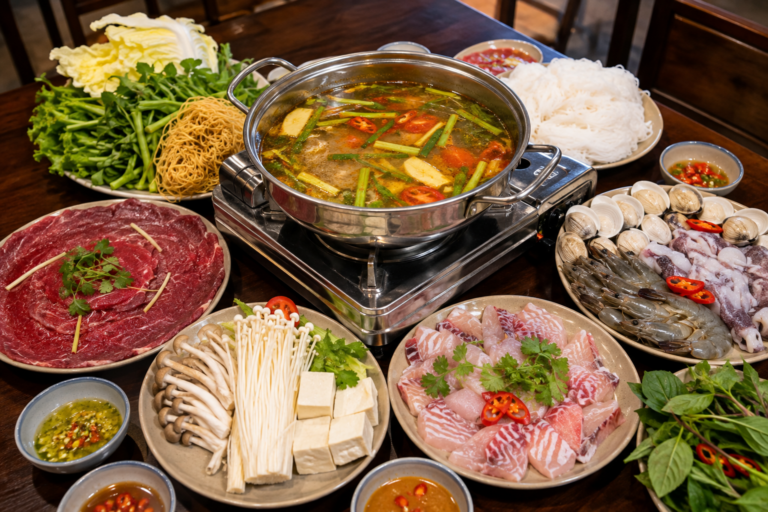
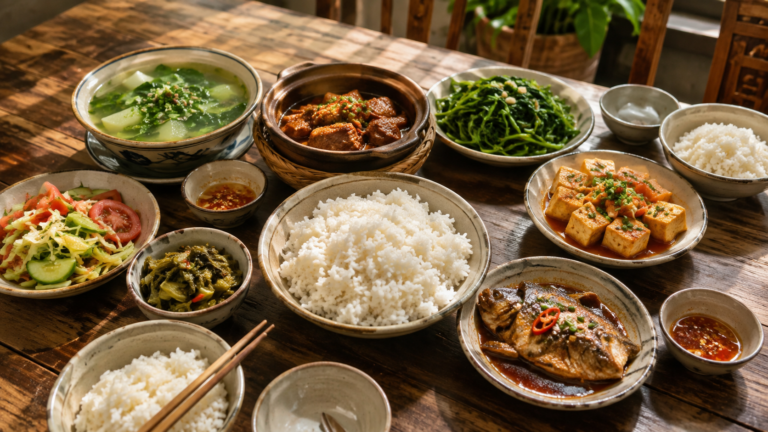
Instead of everyone ordering a completely separate main course, several dishes may be placed in the center of the table.
A typical meal might include rice, vegetables, meat or seafood, soup, and one or more dipping sauces. Everyone takes small portions from the shared dishes throughout the meal.
This makes eating together an important social experience rather than simply an individual meal.
If you are invited to eat with Vietnamese people, take reasonable portions and remember that the dishes in the center are for everyone.
3. Learn a Few Basic Chopstick Rules
Chopsticks are used for many Vietnamese meals, and visitors do not need perfect technique to use them politely.
There is one rule worth remembering in particular:
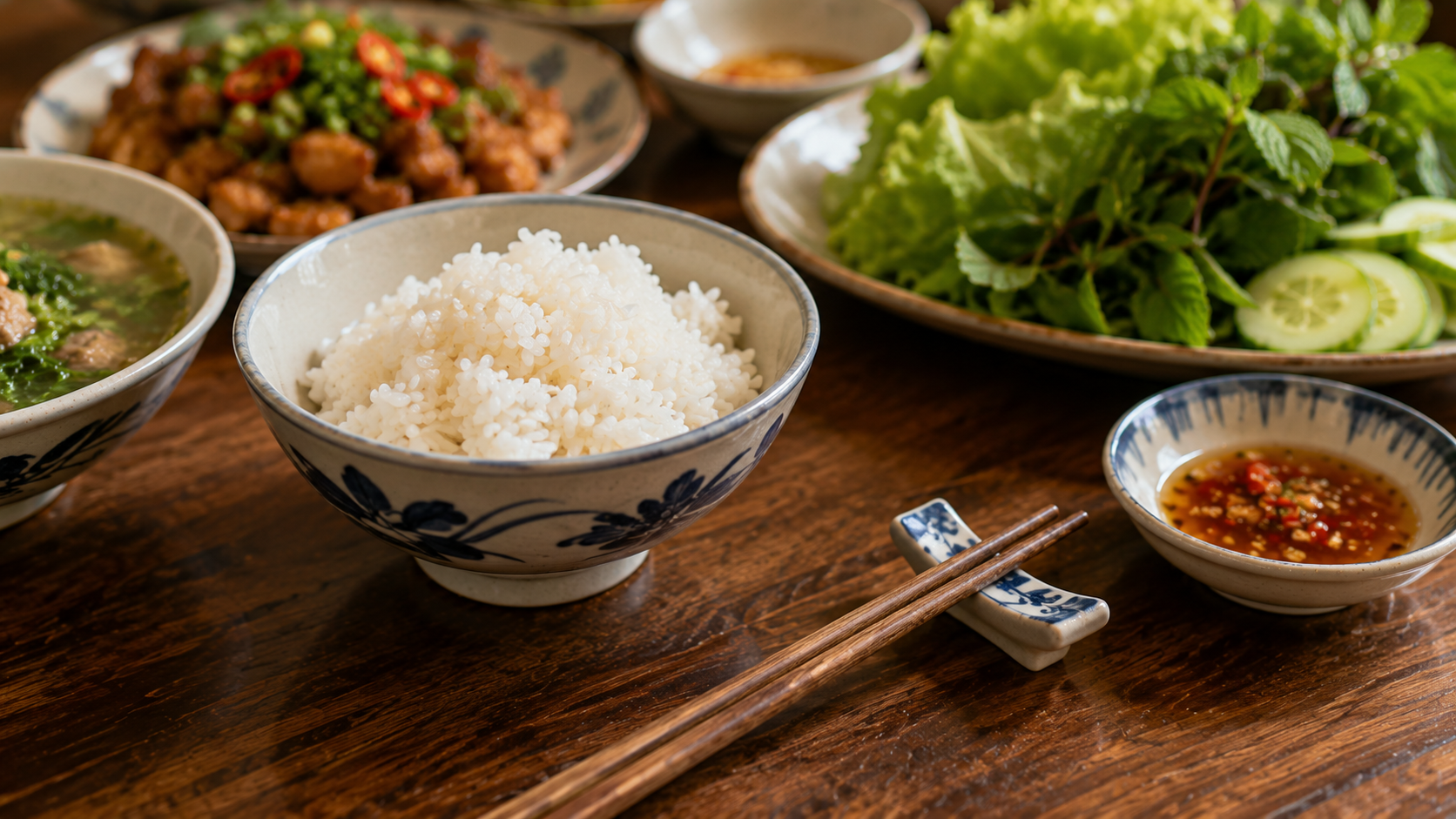
Never leave your chopsticks standing vertically in a bowl of rice.
This arrangement resembles incense sticks traditionally used during ceremonies for the deceased, so it is generally avoided at the dining table.
When you are not using your chopsticks, place them neatly across your bowl or on the chopstick rest if one is provided.
It is also better not to point at people with chopsticks or play with them while talking.
A traditional Vietnamese rice bowl showing a polite way to place chopsticks during a meal.
4. Use the Serving Utensils When Available
Because many dishes are shared, restaurants and households may provide separate serving spoons, chopsticks, or ladles.
When these utensils are available, use them rather than your personal chopsticks.
In more casual settings, however, everyone may simply use their own chopsticks to take food from shared dishes. If you are unsure what to do, watch the people around you and follow their lead.
Vietnamese dining etiquette can vary between families, generations, and situations, so observing your host is often more useful than trying to memorize strict rules.
5. Dipping Sauces Are an Important Part of the Meal
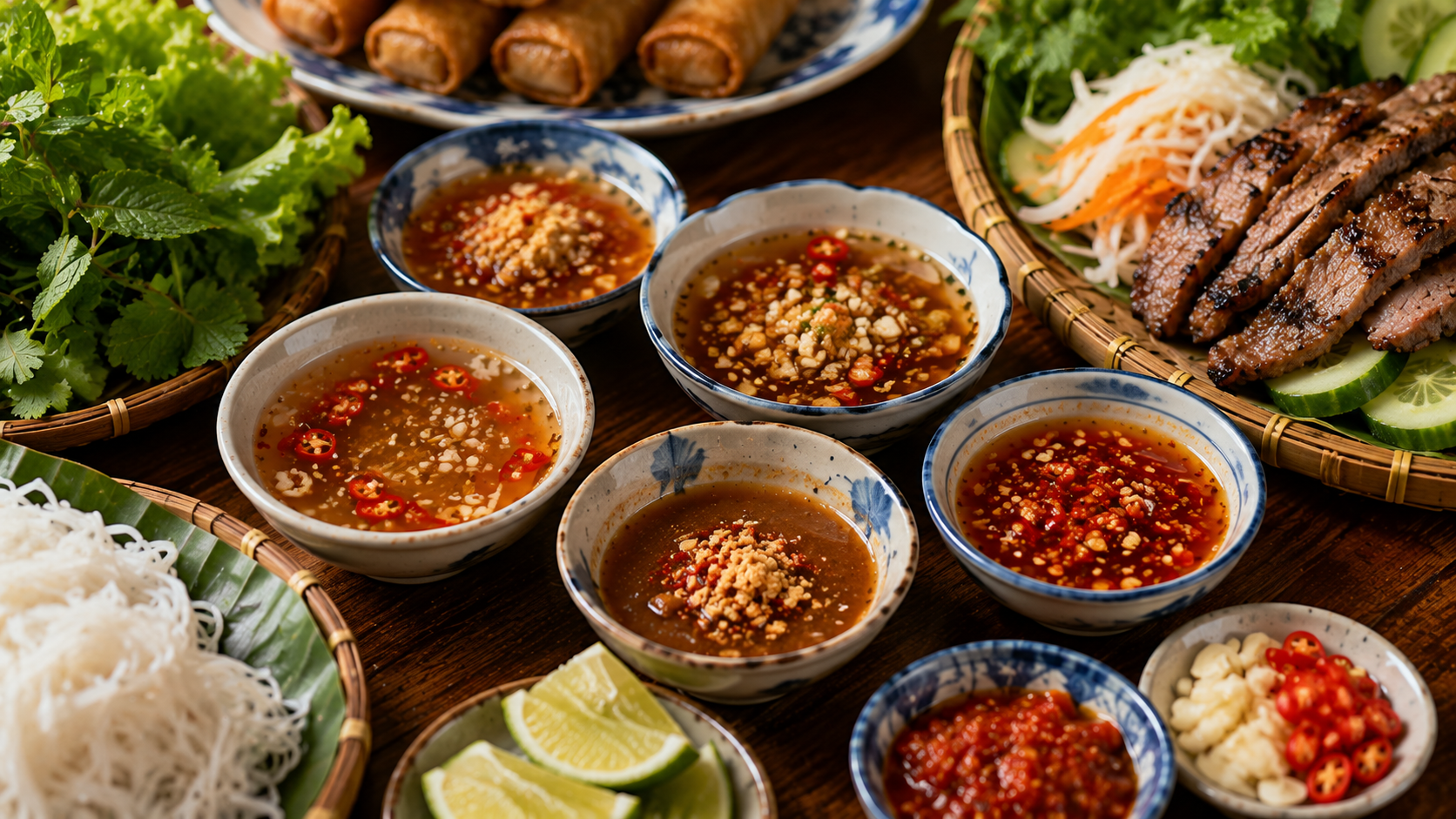
Vietnamese cuisine is famous for its dipping sauces.
Nước chấm, fish sauce, chili sauce, fermented sauces, and regional dipping sauces can completely change the flavor of a dish.
Sometimes everyone receives an individual dipping bowl. In other situations, a sauce may be shared.
If a sauce is clearly communal, avoid putting food that you have already bitten directly back into the bowl.
And before adding a large amount of chili or sauce to your food, try the dish first. Vietnamese cooks often balance salty, sweet, sour, spicy, and savory flavors carefully.
6. Holding Your Rice Bowl Is Completely Normal
Visitors from some countries may be accustomed to leaving their plate or bowl on the table while eating.
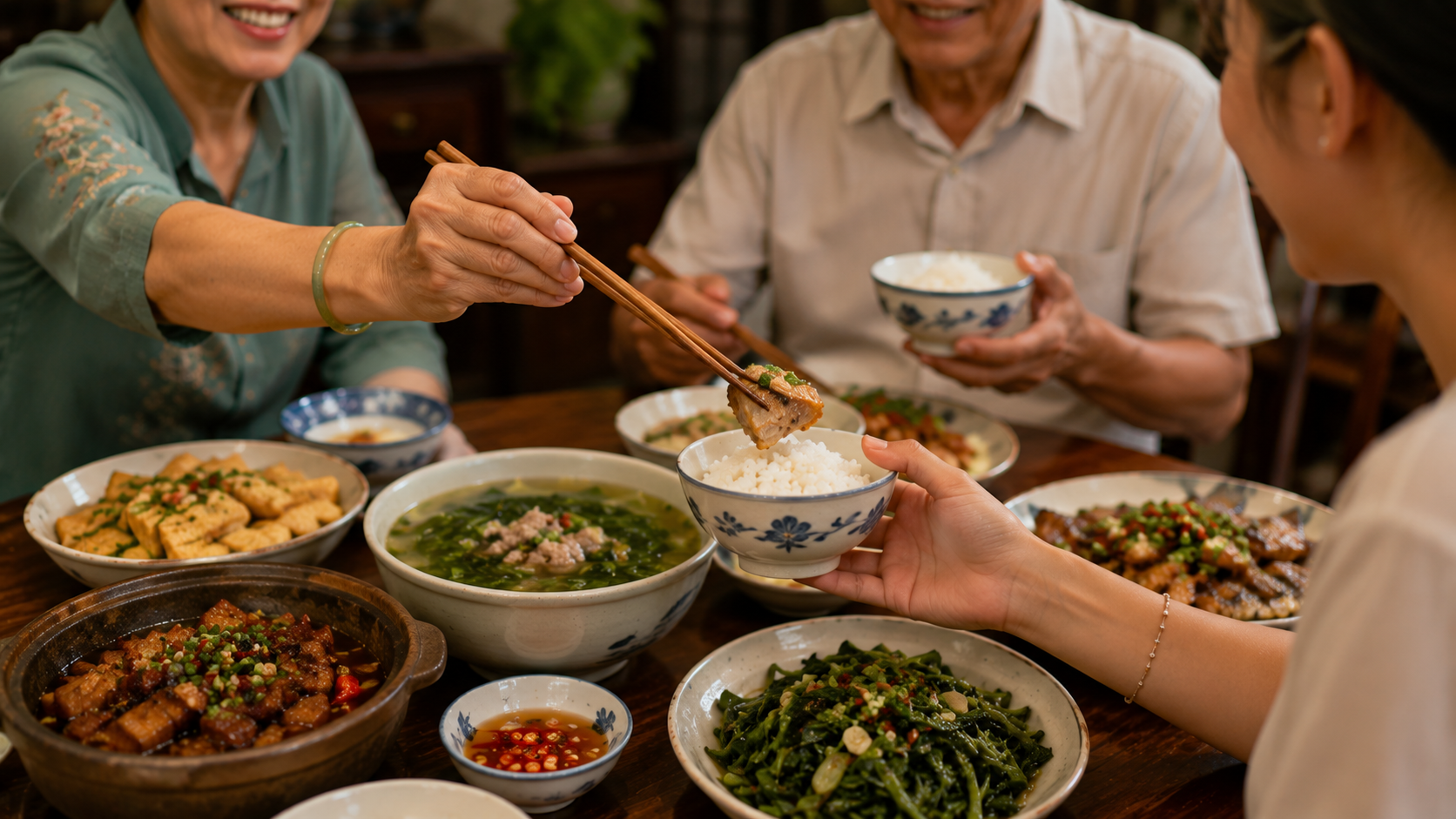
In Vietnam, it is perfectly normal to pick up a small rice bowl and hold it closer to your mouth while eating with chopsticks.
You will frequently see this during family meals and at casual local restaurants.
Rather than worrying about whether you are doing everything correctly, simply observe how the people around you eat.
7. Don’t Be Surprised If Someone Puts Food in Your Bowl
When eating with Vietnamese family members or close friends, someone may use their chopsticks to place a piece of meat, fish, or another special bite directly into your bowl.
For visitors, this can initially feel unusual.
In Vietnam, however, it is often a friendly gesture showing hospitality or care.
Parents frequently do this for children, while hosts may offer particularly good pieces of food to guests.
You do not need to return the gesture. A smile and a simple “cảm ơn” (thank you) is enough.
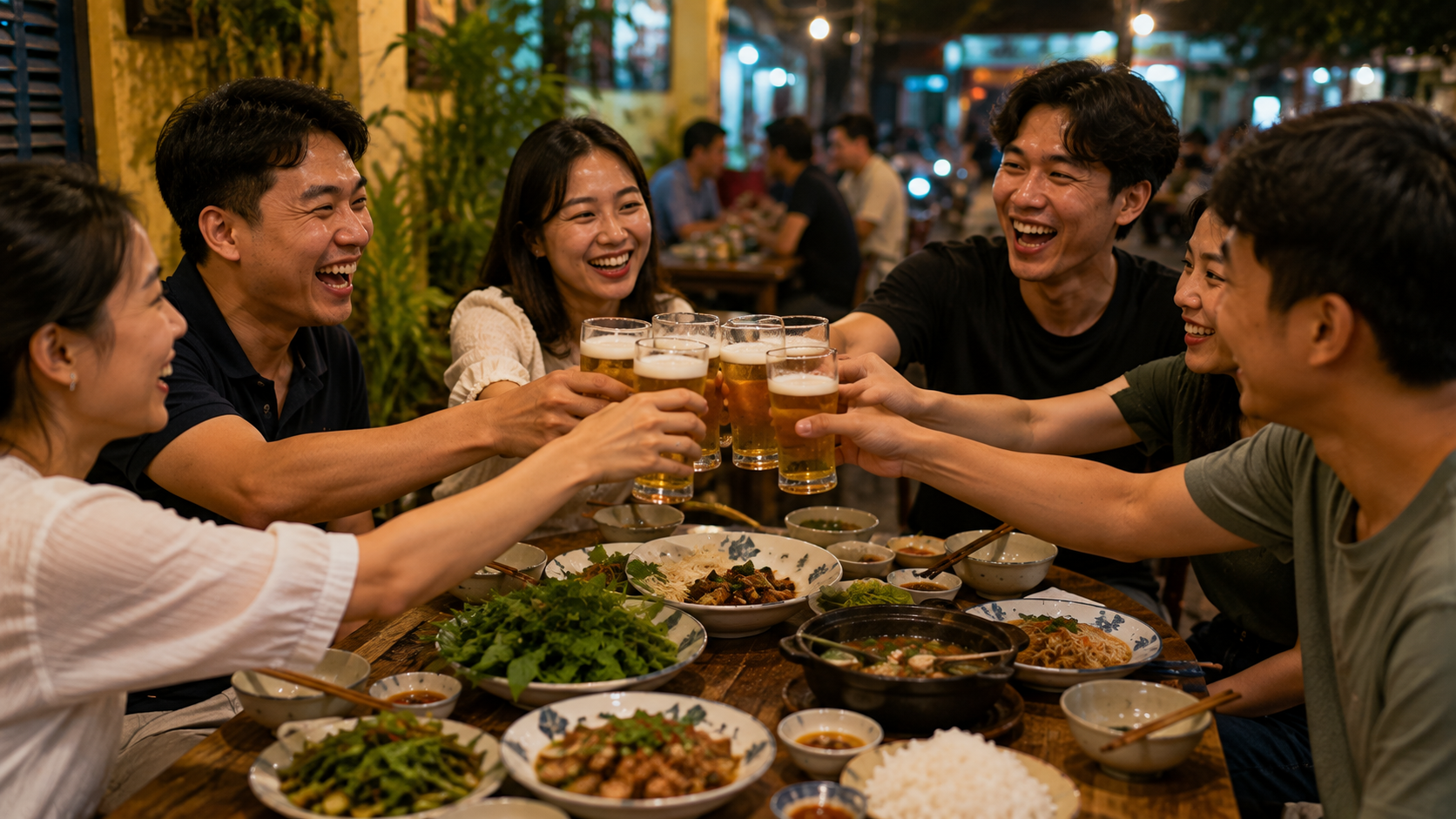
8. Toasting Can Be a Big Part of Group Meals
At social dinners, especially when beer is involved, Vietnamese meals can become lively.
You may hear people call:
“Một, hai, ba, dô!”
It roughly means “One, two, three, cheers!” and is commonly shouted before everyone drinks together.
You might hear it many times during the same meal.
You do not have to drink alcohol simply because someone proposes a toast. Holding your glass and joining the celebration is usually enough if you prefer not to drink.
9. Calling Restaurant Staff Can Be More Direct Than You Expect
In some countries, diners quietly wait until a server approaches the table.
At casual restaurants in Vietnam, customers may call a staff member when they need something.
You might hear:
“Em ơi!”
This is a common way to get the attention of a younger server and is not necessarily considered rude when said in a normal, friendly tone.
In modern restaurants, staff may approach your table regularly, while smaller local restaurants often expect customers to call when they want to order something else or ask for the bill.
A polite tone matters much more than speaking quietly.
10. Don’t Expect Every Dish to Arrive at the Same Time
Visitors sometimes expect every person’s order to arrive simultaneously.
That is not always how meals work in Vietnam.
At restaurants where dishes are designed for sharing, food may arrive as soon as each dish is ready. One plate might reach the table several minutes before another.
This is especially common at busy local restaurants.
Rather than waiting for every single dish, people may begin sharing whatever has already arrived.
Of course, restaurants serving individual Western-style courses may operate differently.
11. Tipping Is Appreciated but Usually Not Mandatory
Tipping customs in Vietnam are relatively relaxed.
At many casual local restaurants, customers are not expected to leave a percentage-based tip. At tourist-oriented restaurants, hotels, bars, and higher-end establishments, however, tipping has become more common.
If you receive particularly good service, leaving a small tip is usually appreciated.
Some restaurants may already include a service charge, so checking your bill before adding a tip is a good idea.
12. The Most Important Rule: Follow Your Host
Vietnam is diverse, and dining customs are not identical everywhere.
A family meal in Hanoi can feel different from dinner with friends in Da Nang or a business meal in Ho Chi Minh City. Customs can also differ depending on age, family background, and how formal the occasion is.
That means you do not need to memorize dozens of rules before eating with Vietnamese people.
The easiest approach is simple:
Watch what your host does and follow along.
Vietnamese people are generally understanding when foreign visitors are unfamiliar with local customs. Showing curiosity and respect matters far more than knowing every detail of dining etiquette.
Frequently Asked Questions About Vietnamese Dining Etiquette
Is it rude to leave food in Vietnam?
Leaving a small amount of food is not automatically considered rude, but wasting large amounts of food is generally best avoided. When sharing dishes, start with smaller portions and take more if you are still hungry.
Is it rude to stick chopsticks in rice in Vietnam?
Yes, this should generally be avoided. Chopsticks standing vertically in rice can resemble incense used in traditional ceremonies for the deceased. Place your chopsticks beside or across your bowl instead.
Do Vietnamese people share food?
Very often. Traditional Vietnamese meals commonly consist of rice accompanied by several dishes placed in the center of the table for everyone to share.
Do you tip at restaurants in Vietnam?
Tipping is generally optional rather than mandatory, particularly at casual local restaurants. Small tips are increasingly common in tourist areas, hotels, bars, and higher-end restaurants.
What do Vietnamese people say before drinking?
A common group toast is “Một, hai, ba, dô!”, meaning roughly “One, two, three, cheers!”
Is Vietnamese dining etiquette strict for tourists?
Generally, no. Most Vietnamese people understand that international visitors may not know local customs. Being polite, observing your host, and showing respect are usually more important than following every custom perfectly.
Final Thoughts
Learning a little Vietnamese dining etiquette can make eating in Vietnam even more enjoyable.
Remember the basics: respect older diners, share dishes considerately, avoid leaving chopsticks standing in rice, pay attention to communal sauces, and don’t be surprised when your host enthusiastically offers you more food.
Most importantly, don’t become so worried about etiquette that you forget to enjoy the meal.
Vietnamese dining culture is built around sharing food and spending time together. If you approach the table with curiosity, respect, and a willingness to try something new, you are already doing most things right.
https://ourviet.com/a-beginners-guide-to-vietnamese-dipping-sauces