10 Vegetarian Foods in Vietnam You Should Try: A Complete Guide
Looking for vegetarian food in Vietnam? Beyond the familiar meat-filled bánh mì and beef phở, you can find mushroom noodle soups, tofu rice plates, fresh rolls, Central Vietnamese specialties and vegetable hot pot. The useful trick is learning which dishes can be ordered chay—and confirming the stock and sauces as well as the visible toppings.
Here are 10 Vietnamese vegetarian dishes to look for, with realistic descriptions, local food terms, and questions that make ordering easier. Vegetarian is not automatically vegan; ingredients and preparation vary by restaurant. Vietnam’s official tourism board offers a helpful vegetarian guide to Vietnam, including the Vietnamese words you can use.
Ten Vegetarian Dishes at a Glance
| Dish | What it is | What to double-check |
|---|---|---|
| Phở chay | Rice noodles in a vegetable-based broth | Meat stock or fish sauce |
| Bánh mì chay | Vietnamese baguette with tofu, vegetables or vegetarian pâté | Mayonnaise, dairy, pâté and sauces |
| Gỏi cuốn chay | Fresh rice-paper rolls with herbs, noodles and vegetables | Peanut/soy ingredients and dipping sauce |
| Chả giò chay | Crispy fried vegetarian spring rolls | Egg in wrapper and fish-sauce dip |
| Cơm chay | Rice with tofu, mushrooms and vegetable dishes | How shared dishes and sauces are cooked |
| Mì Quảng chay | Central Vietnamese wide rice noodles with little broth | Broth, toppings and peanuts |
| Bún Huế chay | Lemongrass-forward Huế-style vegetarian noodle soup | Meat or fish-based seasonings |
| Đậu hũ sốt cà chua | Tofu in tomato sauce | Fish sauce or meat-based seasoning |
| Rau muống xào tỏi | Garlic-stir-fried water spinach | Oyster or fish sauce |
| Lẩu chay | Vegetable hot pot with tofu, mushrooms and noodles | Broth base, dipping sauces and egg noodles |
The names describe commonly encountered versions, not guaranteed ingredient lists. On mixed menus, confirm a dish really is prepared without meat, fish and other animal products as needed. Use the navigation links below to jump straight to each food.
On This Page
- 1. Phở chay
- 2. Bánh mì chay
- 3. Gỏi cuốn chay
- 4. Chả giò chay
- 5. Cơm chay
- 6. Mì Quảng chay
- 7. Bún Huế chay
- 8. Đậu hũ sốt cà chua
- 9. Rau muống xào tỏi
- 10. Lẩu chay
- Does chay mean vegan?
- Useful Vietnamese phrases
- FAQ
- Sources
1. Phở Chay — Vegetarian Phở
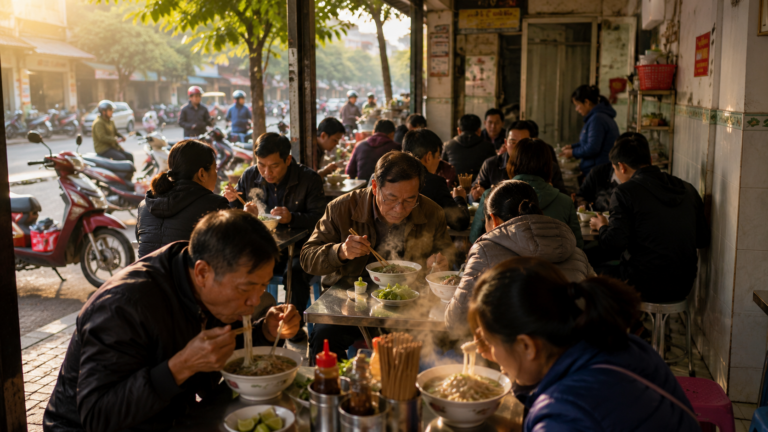
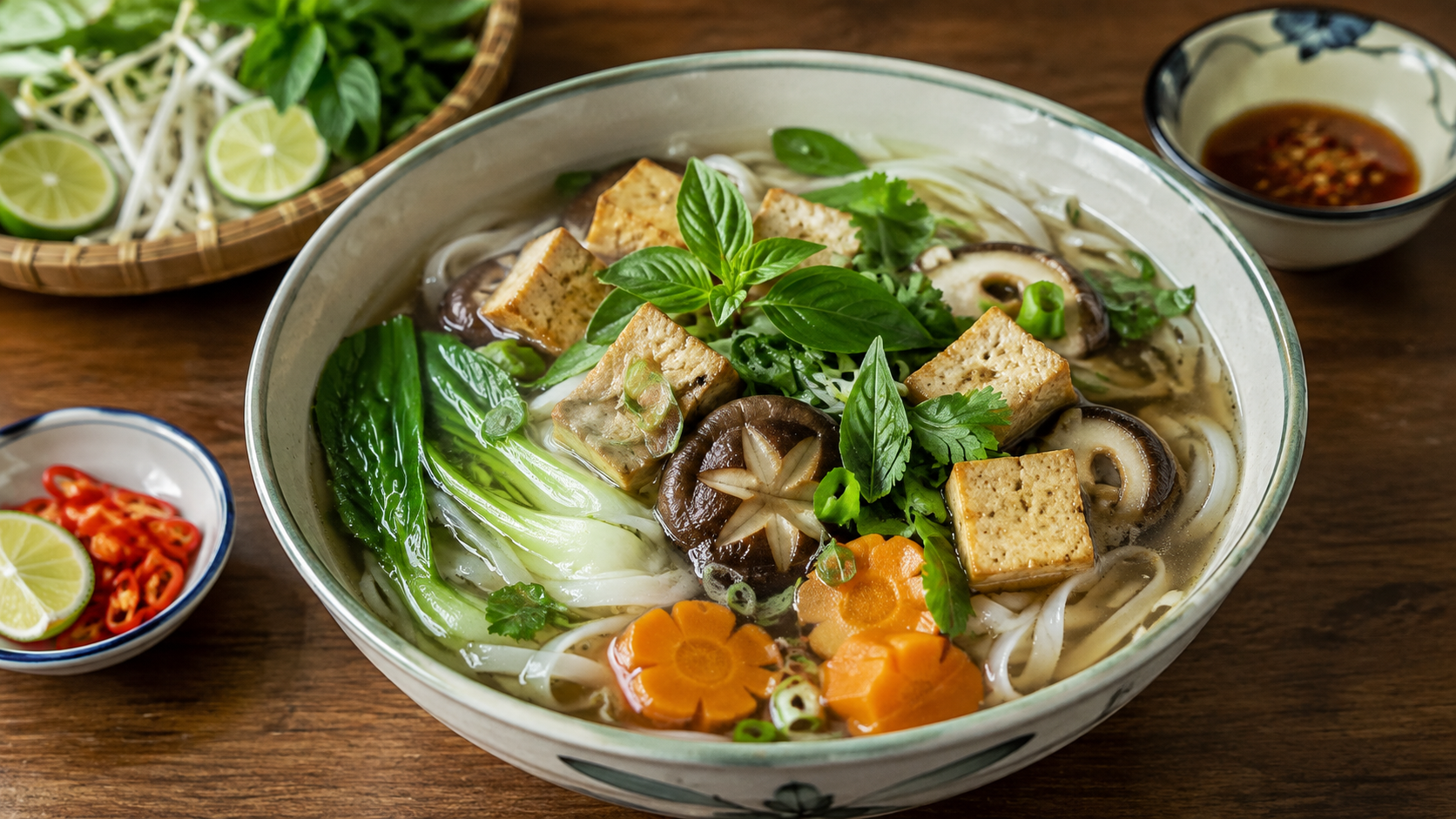
A bowl of phở chay uses the familiar flat rice noodles of phở, usually with mushrooms, tofu, greens and fragrant spices. A genuinely vegetarian version should use vegetable or mushroom stock rather than beef or chicken broth. Some shops make a rich stock from vegetables and roasted aromatics, but the ingredients are not identical everywhere.
Try it when: you want a warm, filling breakfast or a gentle introduction to Vietnamese flavors. Ask “Nước dùng có thịt hay xương không?” (“Does the broth contain meat or bones?”) if your dietary restriction is strict. The original phở image remains the featured image rather than appearing twice in the article.
2. Bánh Mì Chay — Vegetarian Vietnamese Baguette
A vegetarian bánh mì can be filled with tofu, mushrooms, vegetable pâté, cucumber, pickled carrot and daikon, cilantro and chili. The balance of crispy bread, herbs and savory filling makes it useful for a quick breakfast or lunch.
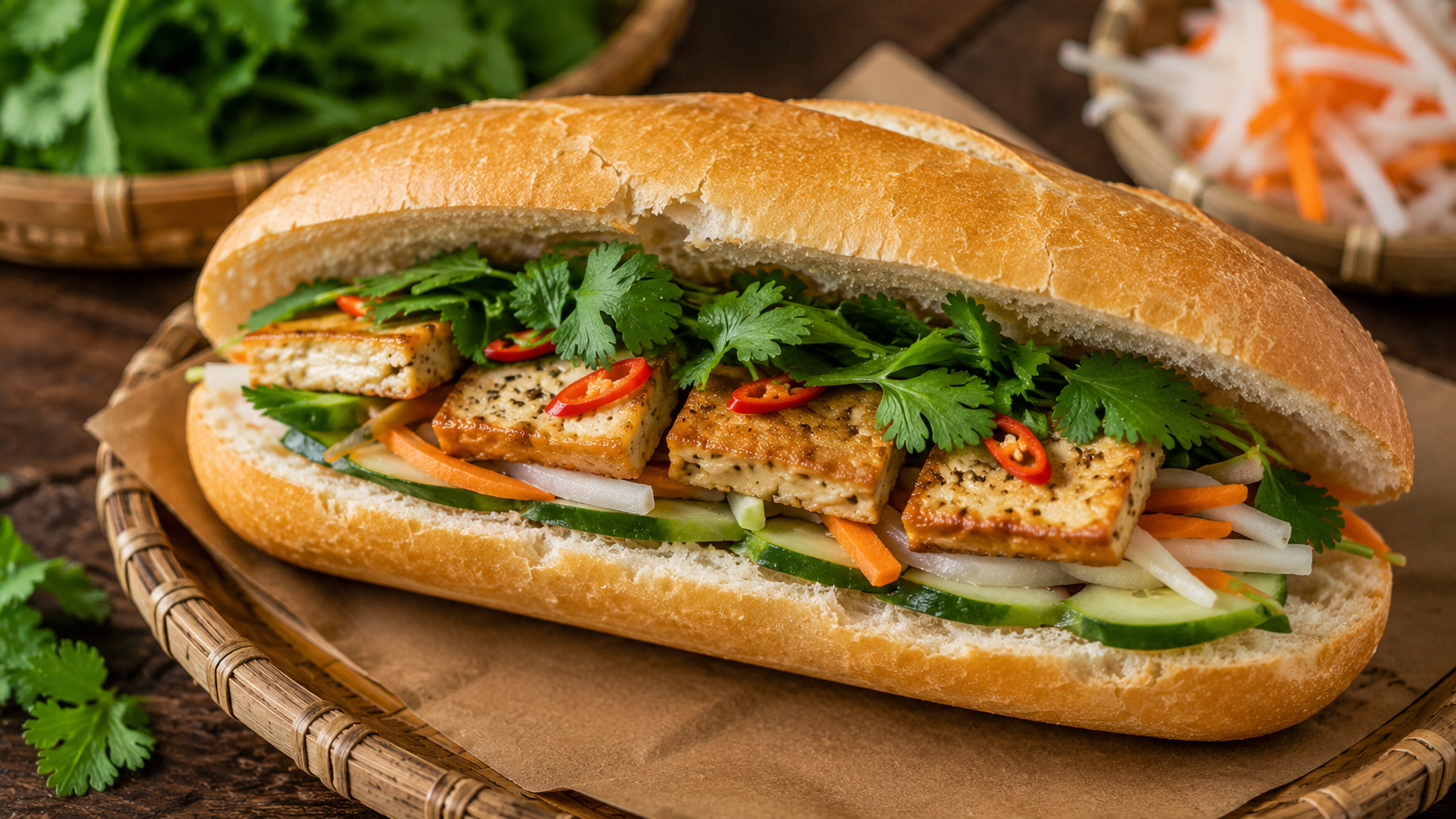
A sandwich labeled “chay” is not automatically free of egg, milk or other animal-derived ingredients, especially at an ordinary sandwich shop. For a vegan order, confirm the bread, spread and fillings; ask whether the pâté is vegetarian or made from liver.
3. Gỏi Cuốn Chay — Fresh Rice-Paper Rolls
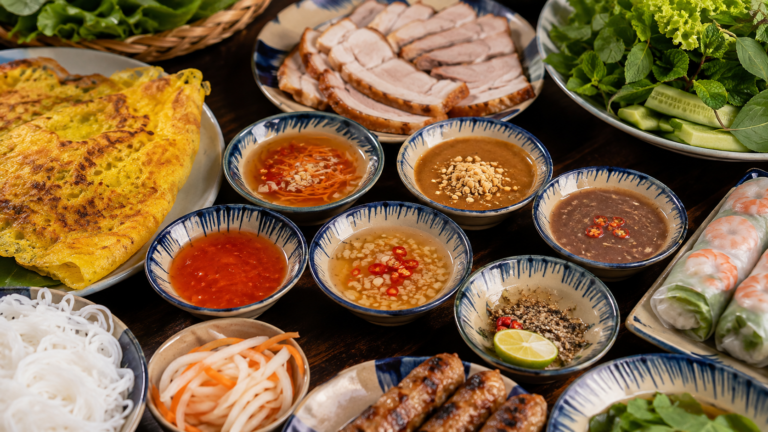
Gỏi cuốn chay typically combines rice paper, rice noodles, lettuce, herbs, cucumber and a tofu or vegetable filling. Unlike fried spring rolls, they are served fresh. The filling is often mild, with most of the richness coming from the dipping sauce.
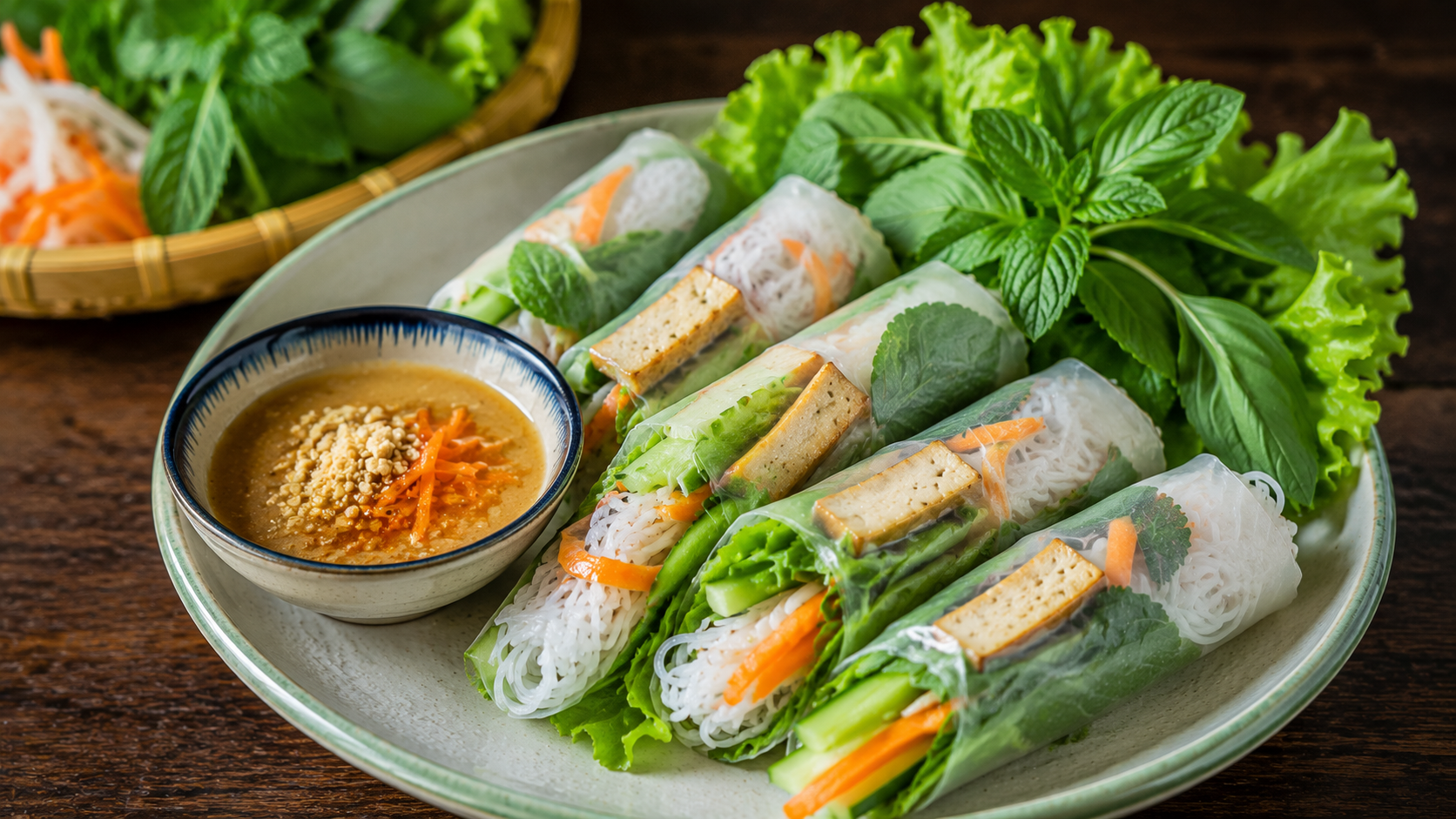
A peanut- or soybean-based sauce is one common choice, but other dips may contain fish sauce. If avoiding animal products or dealing with a peanut or soy allergy, ask about both the roll and its sauce. Our Vietnamese dipping-sauce guide explains these differences.
4. Chả Giò Chay — Crispy Fried Vegetarian Spring Rolls
Chả giò chay is the meat-free version of a fried spring roll; fillings vary, often including mushrooms, taro, carrots, mung beans or glass noodles. A crispy roll served with lettuce and fresh herbs makes a good shared starter.
In northern Vietnam, a related fried spring-roll style may be called nem rán chay. Check the type of wrapper if you avoid egg, and ask for a vegetarian dipping sauce—some fish-sauce dips look similar to vegetarian versions. Restaurants may fry vegetarian and meat rolls in the same equipment; strict diets or allergies require extra discussion with staff.
5. Cơm Chay — Vietnamese Vegetarian Rice Meal
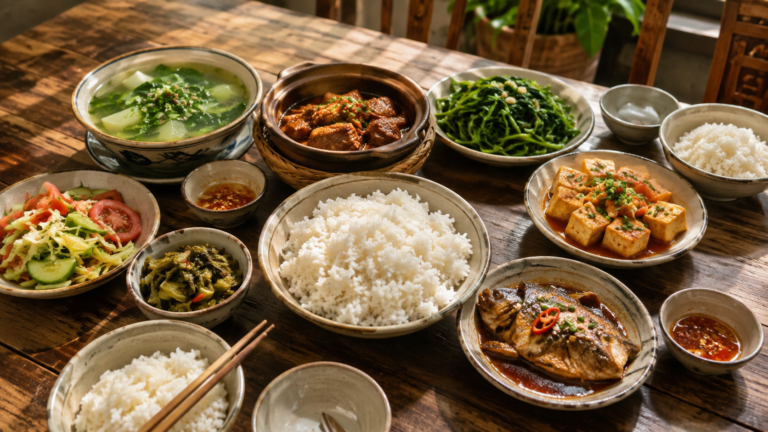
Cơm chay may refer to rice with several meat-free dishes rather than one fixed recipe. At a small quán chay, you might find braised tofu, mushrooms, cooked greens, vegetable soup, pickles and other seasonal sides. This is a good way to experience everyday Vietnamese eating beyond noodles and sandwiches.
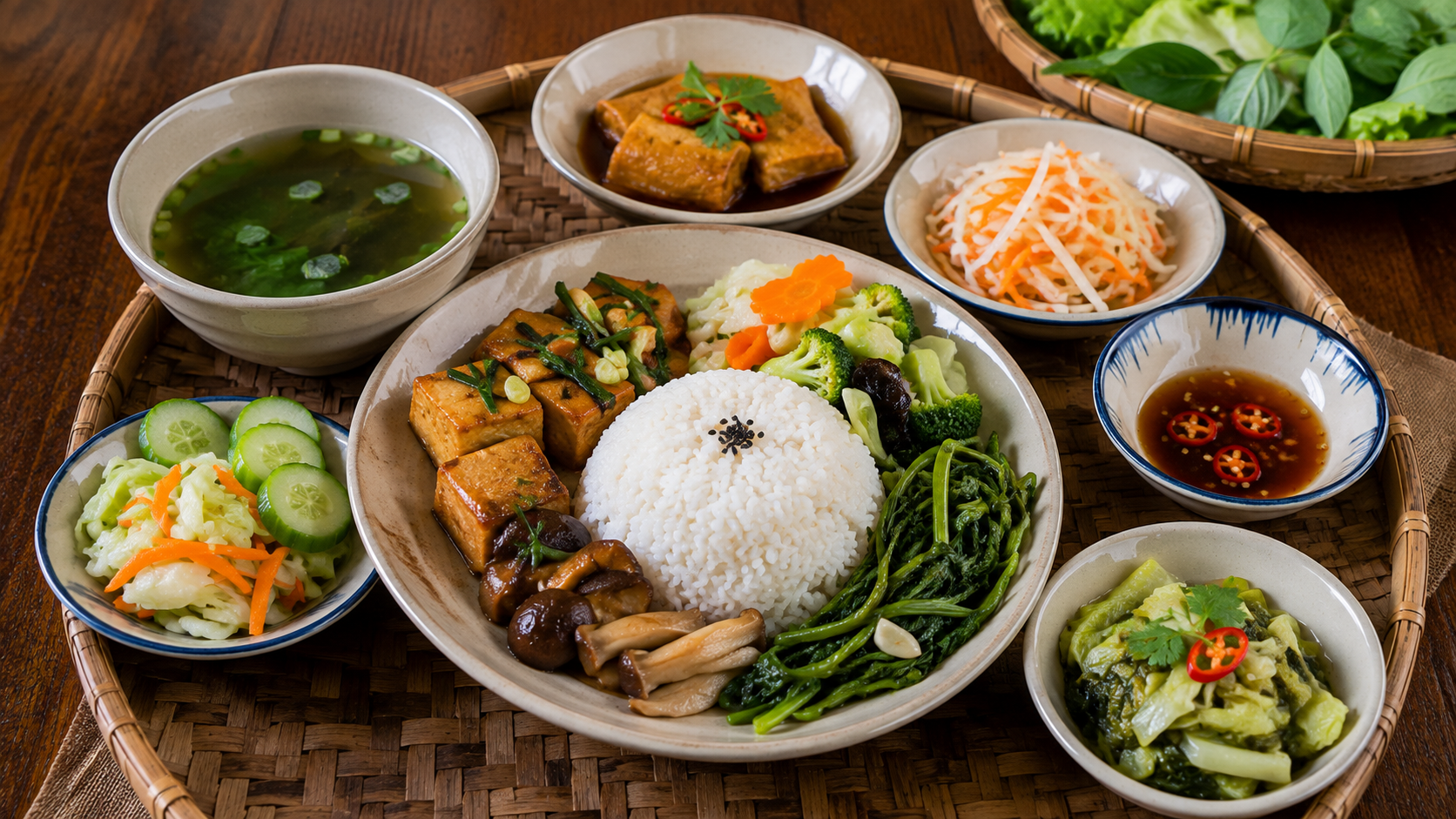
If there is a counter of prepared dishes, ask how many items a portion includes before ordering. Shared vegetable plates and sauces should also be checked individually, especially at restaurants that serve meat. For other rice-meal formats, see our guide to Vietnamese rice dishes.
6. Mì Quảng Chay — Central Vietnamese Noodles
In Da Nang and the surrounding historic Quảng Nam food region, mì Quảng is known for broad rice noodles, herbs, peanuts, rice crackers and only a small amount of concentrated broth. Vegetarian versions can use mushrooms, tofu and vegetables. There is no single compulsory combination of toppings.
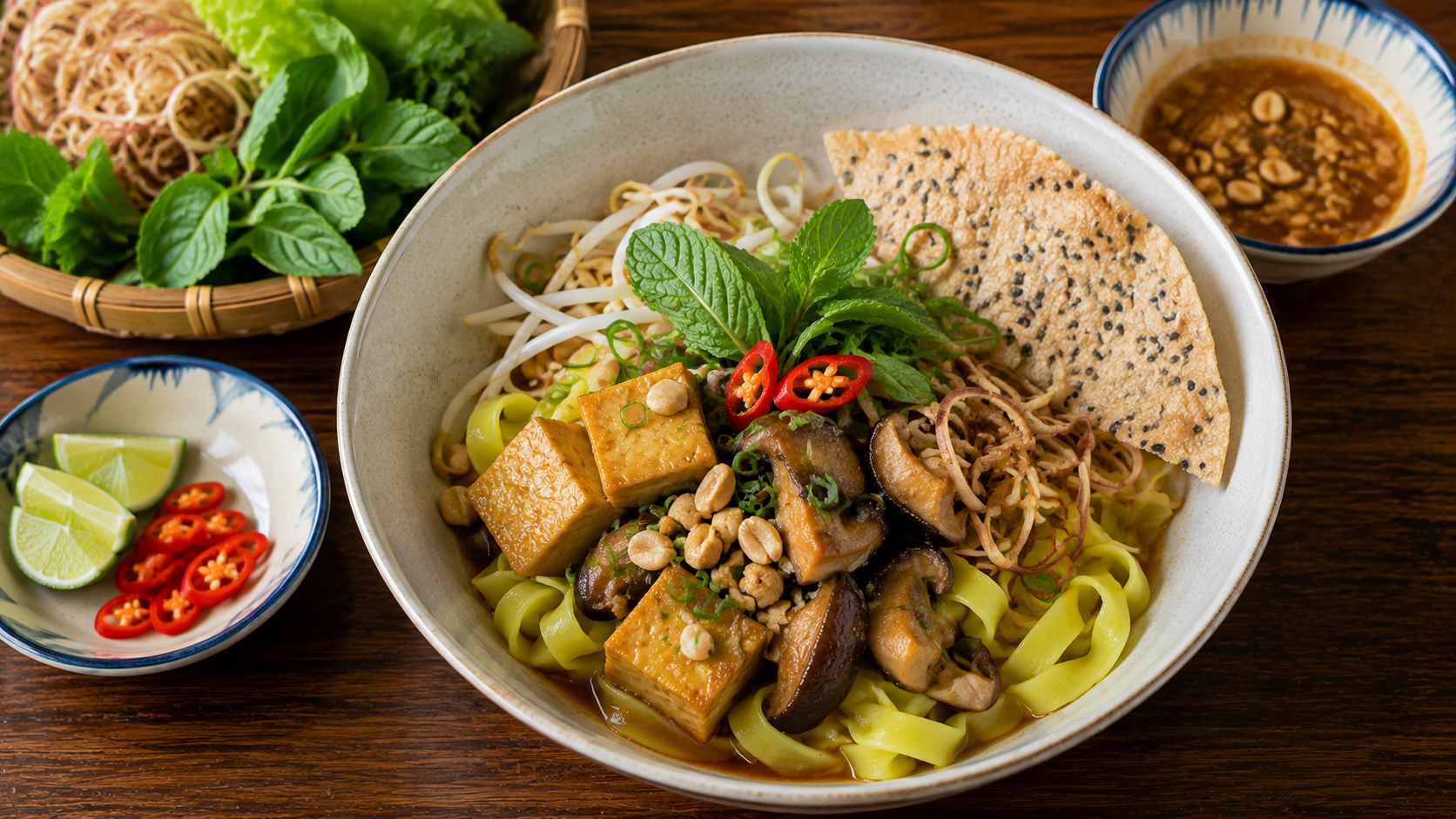
Despite the word mì, the familiar mì Quảng noodle is usually rice-based; this is an important exception to the tendency to associate mì with wheat noodles. Ask about the actual ingredients if gluten avoidance is medically necessary. Best place to look: vegetarian restaurants in Central Vietnam; availability depends on the kitchen.
7. Bún Huế Chay — Vegetarian Huế-Style Noodle Soup
Bún Huế chay (also sometimes advertised as bún bò Huế chay) is a vegetarian interpretation of Huế’s noodle-soup tradition. It may contain thick round rice noodles, lemongrass, mushrooms, tofu, vegetables and chili oil. The heat can range from mild to strong.
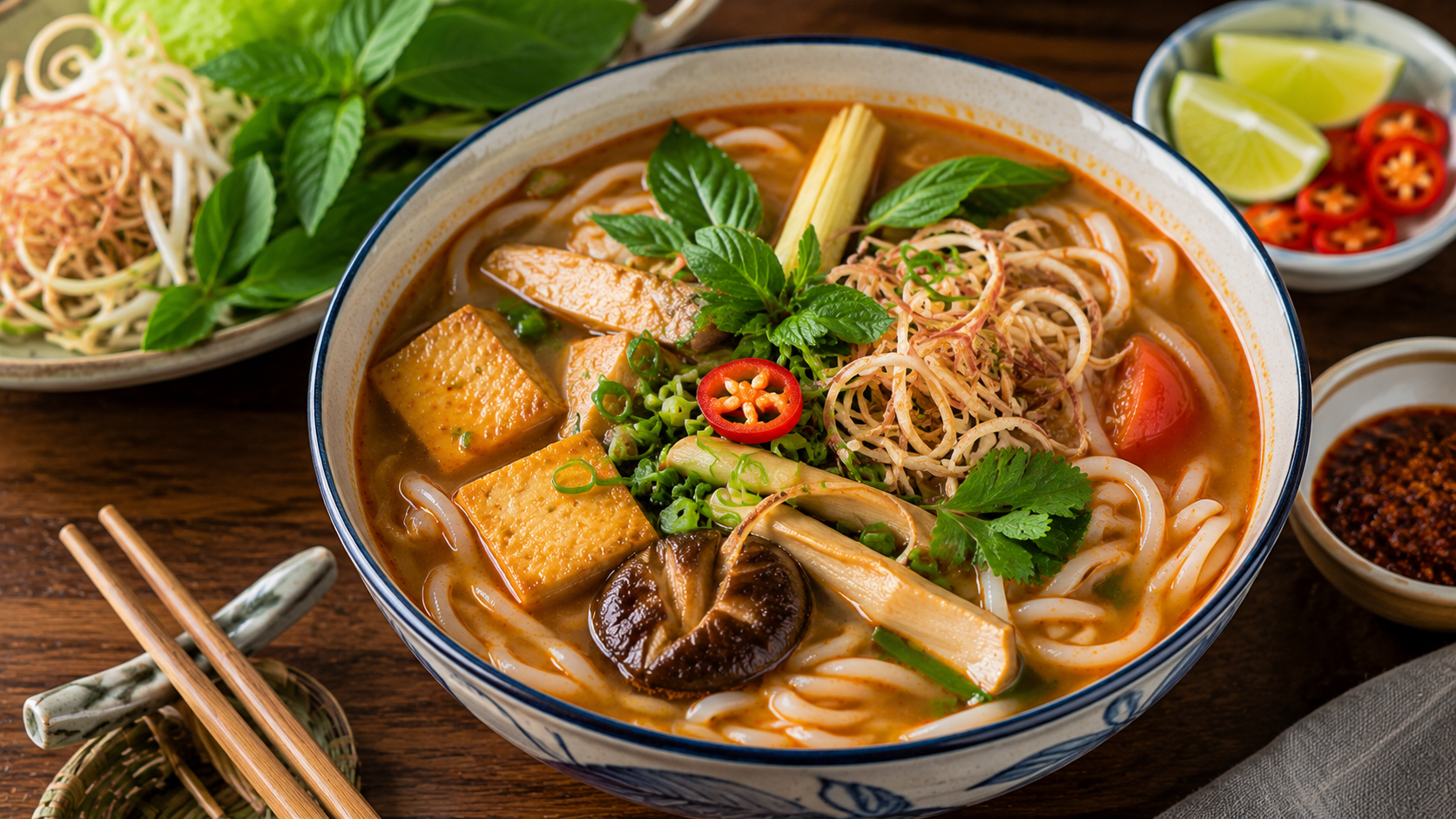
The term is a menu style, not a guarantee that every version is made identically. Confirm the stock and seasonings, particularly if the stall also prepares regular beef noodle soup. If you prefer gentle heat, ask for less chili separately.
8. Đậu Hũ Sốt Cà Chua — Tofu in Tomato Sauce
This comforting home-style dish pairs tofu with a savory tomato sauce. Some cooks fry the tofu first; others simmer it gently. It is usually served with rice and perhaps a bowl of vegetable soup.
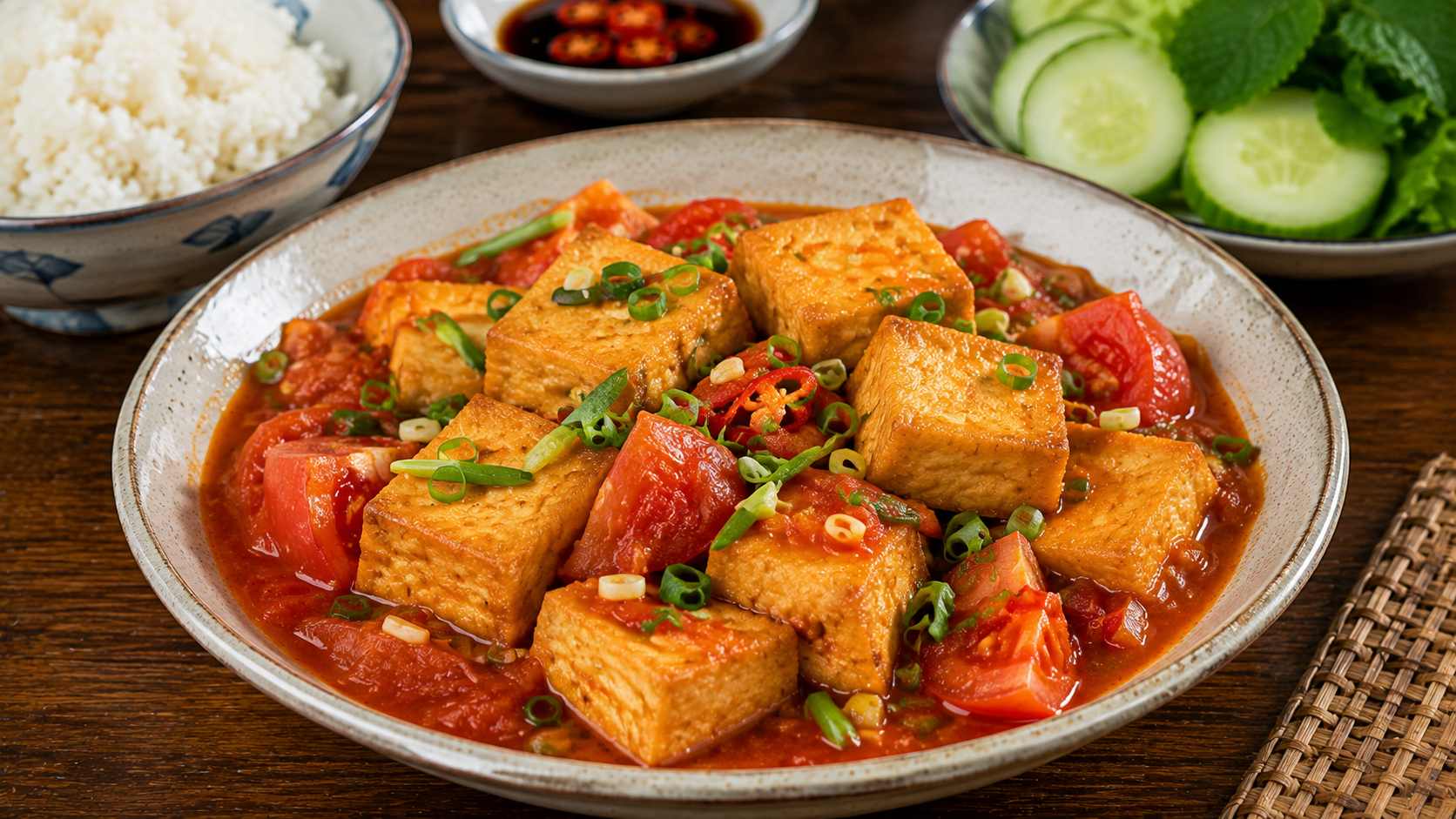
Vietnam Tourism includes tofu in tomato sauce in its recommended vegetarian dishes. At a general restaurant, check whether the sauce uses fish sauce or other meat-derived seasoning. At dedicated vegetarian eateries, plant-based versions are a natural choice.
9. Rau Muống Xào Tỏi — Water Spinach With Garlic
Rau muống xào tỏi (stir-fried water spinach with garlic) is an easy vegetable side dish to pair with rice. It is cooked quickly, leaving the stems slightly crisp, and commonly appears at both casual and full-service restaurants.
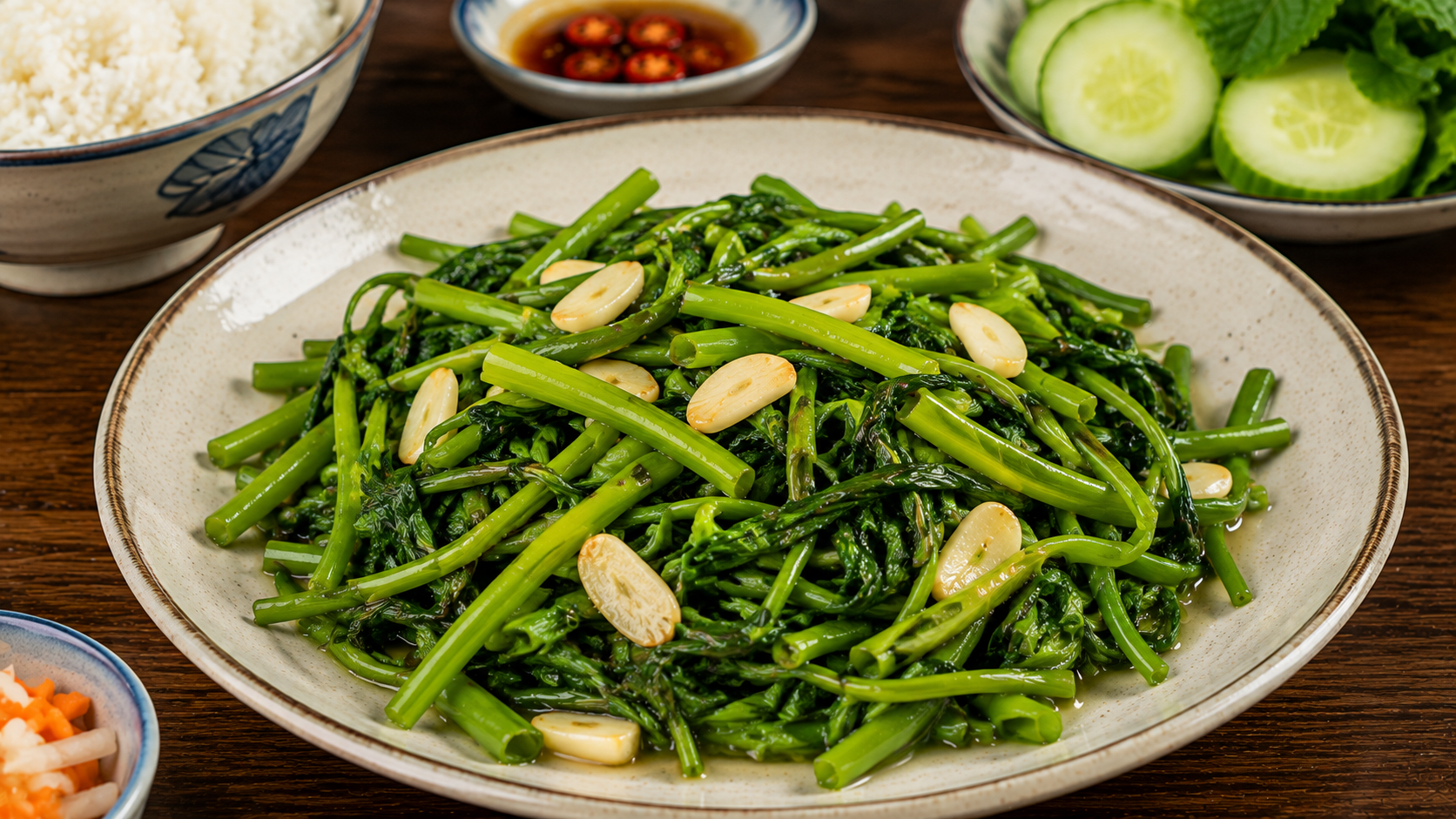
Important: a vegetable dish is not necessarily vegetarian. Some kitchens use fish sauce, oyster sauce or a meat-flavored seasoning. Ask if they can cook it with vegetable oil, garlic, salt and a plant-based sauce. The tourism board also lists this dish among its vegetarian suggestions.
10. Lẩu Chay — Vegetarian Hot Pot
For a group meal, lẩu chay offers a pot of simmering broth and plates of tofu, mushrooms, greens, vegetables and noodles for everyone to cook together. The broth can be clear, tangy, spicy or mushroom-forward depending on the restaurant. It is a flexible shared meal rather than one standard set of ingredients.
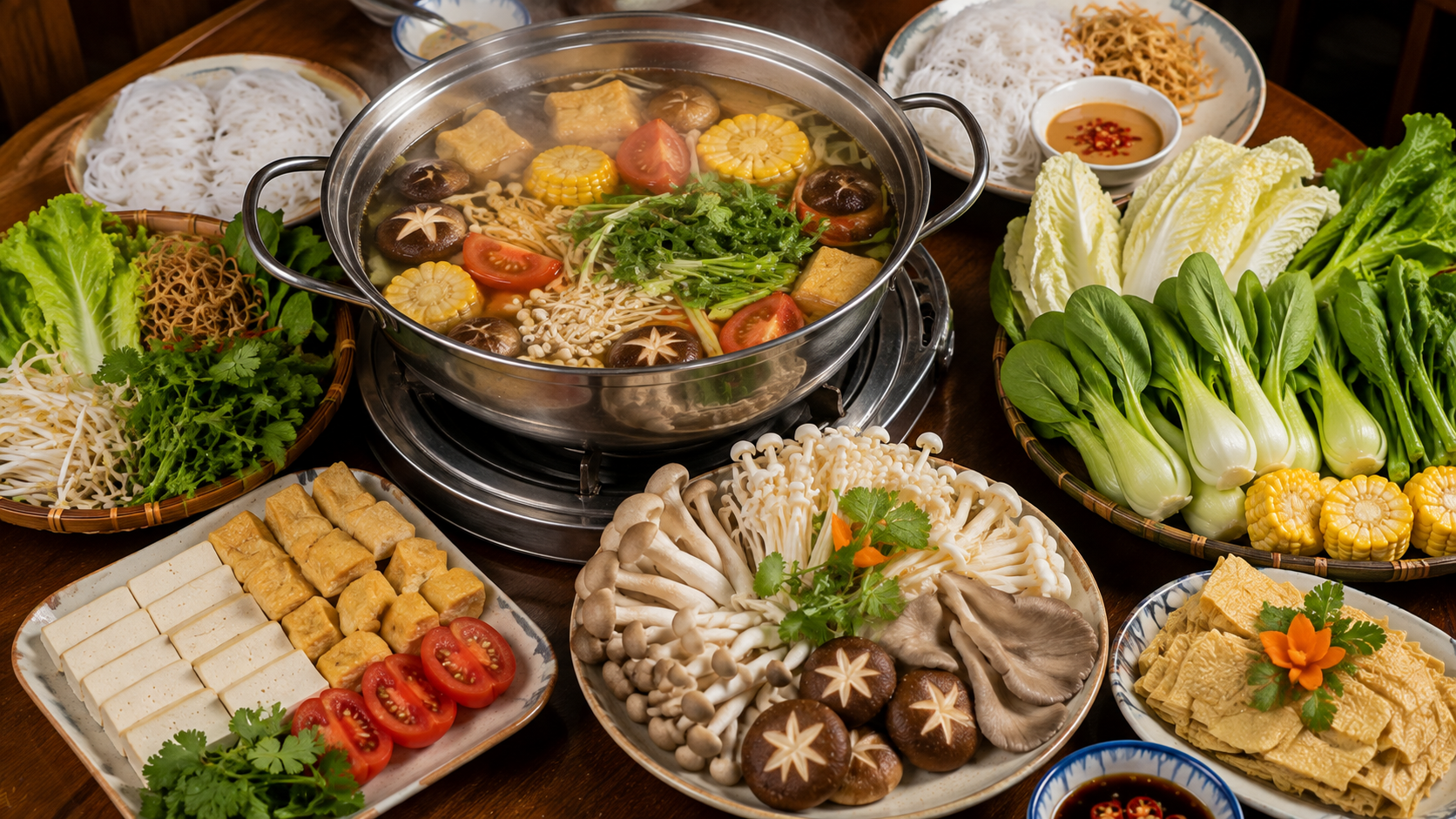
Before ordering, ask about the broth, noodle type, dipping sauces and whether egg or animal-based stock is included. Diners should cook ingredients thoroughly. If you are unfamiliar with hot pot, see our Vietnamese hot-pot guide.
Does ‘Chay’ Mean Vegetarian or Vegan?
Chay is the most useful word when looking for meat-free meals. A quán chay or nhà hàng chay is a vegetarian eatery. Some traditional chay kitchens avoid all animal ingredients, but do not assume every menu item marked chay is vegan—definitions and kitchen practices vary. Eggs, milk, honey, butter and certain sauces may be important depending on your preferences.
Vietnam’s official tourism guidance notes that vegetarian dining has roots in Buddhist customs. Some people observe meat-free meals on the 1st and 15th days of the lunar month, when vegetarian options may be more prominent. This is a cultural practice followed by some, not a requirement for every Buddhist or Vietnamese person. Source: Vietnam Tourism’s vegetarian guide.
What to check, even when a dish looks meat-free
- Broth: ask whether bones, meat or seafood were used to make it.
- Sauces: fish sauce (nước mắm), oyster sauce (dầu hào) and fermented seafood seasonings may be present.
- Spreads and baked goods: mayonnaise, pâté, butter, egg and milk can appear in sandwiches.
- Fried food: confirm the wrapper, filling and whether a shared fryer matters for your diet.
- Allergies: tofu and some sauces contain soy; peanuts and wheat can also appear. Ingredient labels and cross-contact precautions matter.
A dedicated vegetarian restaurant is often the easiest place to start, but the kitchen must still confirm your individual requirements. For severe food allergies, the CDC advises travelers to carry a translated allergy card and prepare a medical emergency plan.
Useful Vietnamese Phrases for Vegetarian Travelers
| Vietnamese | English |
|---|---|
| Tôi ăn chay. | I am vegetarian. |
| Tôi ăn thuần chay. | I am vegan. |
| Món này có hoàn toàn thuần chay không? | Is this dish completely vegan? |
| Món này có thịt không? | Does this dish contain meat? |
| Nước dùng có thịt hay xương không? | Does the broth contain meat or bones? |
| Không dùng nước mắm nhé. | Please don’t use fish sauce. |
| Không dùng dầu hào nhé. | Please don’t use oyster sauce. |
| Món này có trứng hoặc sữa không? | Does this dish contain egg or milk? |
| Món này có đậu phộng không? | Does this dish contain peanuts? |
| Quán có món chay nào? | Which vegetarian dishes do you have? |
These phrases help start the conversation; they cannot guarantee correct food preparation. If your diet or allergy is strict, ask staff to confirm each sauce, stock and ingredient. For general restaurant conversation, see How to Order Food Like a Local in Vietnam.
Practical Tips for Finding Vegetarian Food
- Search for “quán chay” or “cơm chay” rather than looking only for English signs.
- Check the latest menu, kitchen hours and recent customer photos before traveling to a particular eatery.
- Temples and pagodas can be surrounded by vegetarian eateries, but not every one is open daily.
- For group dining, choose a place with a separate vegetarian menu or call to discuss meat-free broths and sauces.
- If you are vegan, focus on ingredient confirmation rather than relying on a dish name or the absence of visible meat.
Frequently Asked Questions
Is it easy to find vegetarian food in Vietnam?
Vietnam has dedicated vegetarian restaurants in many destinations and meat-free versions of familiar dishes. Availability is better in some cities and neighborhoods than in others; check menus and opening hours.
Can phở be vegetarian?
Yes. Phở chay can use vegetable or mushroom broth with tofu and vegetables. Confirm the broth is not made with meat or bones at any mixed-menu restaurant.
What is the difference between gỏi cuốn chay and chả giò chay?
Gỏi cuốn chay are fresh, unfried rice-paper rolls; chả giò chay are fried and crispy. Both may come with sauces that need separate checking.
Is every food labeled chay vegan?
Not necessarily. Many chay foods are plant-based, but egg, milk and other animal products may be present depending on the establishment. Explain your requirements clearly.
Does vegetarian Vietnamese food always contain soy?
No, but tofu, fermented soybean products and soy-based sauces are common. For soy allergy, ask about the entire dish and cooking process rather than judging by the main ingredient alone.
Final Thoughts
Vegetarian Vietnamese cooking is more than removing meat from a familiar dish. From mushroom phở to mì Quảng chay and lẩu chay, there are flavors and regional traditions worth exploring. The most reliable approach is simple: look for chay, choose a dish that appeals to you and confirm the broth, sauces and other ingredients before ordering.
Sources and Editorial Note
- Vietnam Tourism — A Vegetarian Guide to Vietnam: vegetarian terminology, cultural context and dishes including tofu in tomato sauce and garlic water spinach.
- Vietnam Tourism — A Beginner’s Guide to Vietnamese Street Food: ordering vocabulary and the common use of fish sauce.
- Vietnam Tourism — Frequently Asked Questions: vegetarian and vegan food options.
- CDC — Allergies and Travel: translated allergy cards and travel planning.
- CDC Yellow Book — Severely Allergic Travelers: ingredient communication and emergency preparation.
Editorial note (October 2026): This guide describes common dishes and possible vegetarian adaptations; it does not certify any particular restaurant’s recipe, vegan status or allergy safety. Images are illustrative and the original featured media is retained. No prices, medical promises or personal dining visits are claimed.