7 Vietnamese Dipping Sauces You Need to Try: A Beginner’s Guide
Vietnamese cuisine is famous for dishes such as phở, bánh xèo, bún chả, and fresh spring rolls.
But there is another important part of Vietnamese food that first-time visitors often overlook: Vietnamese dipping sauces.
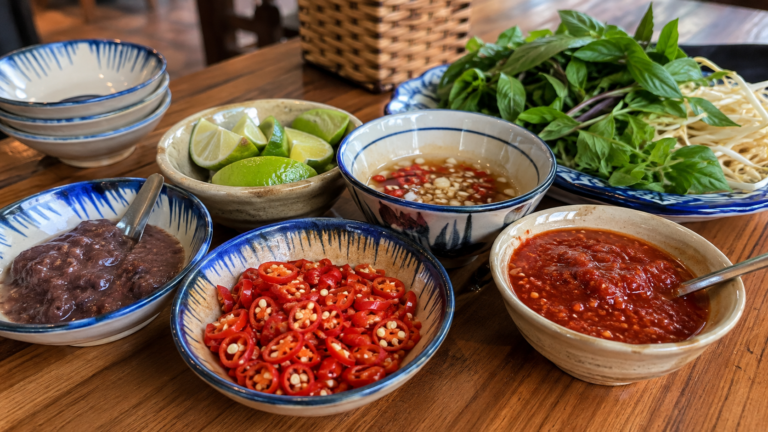
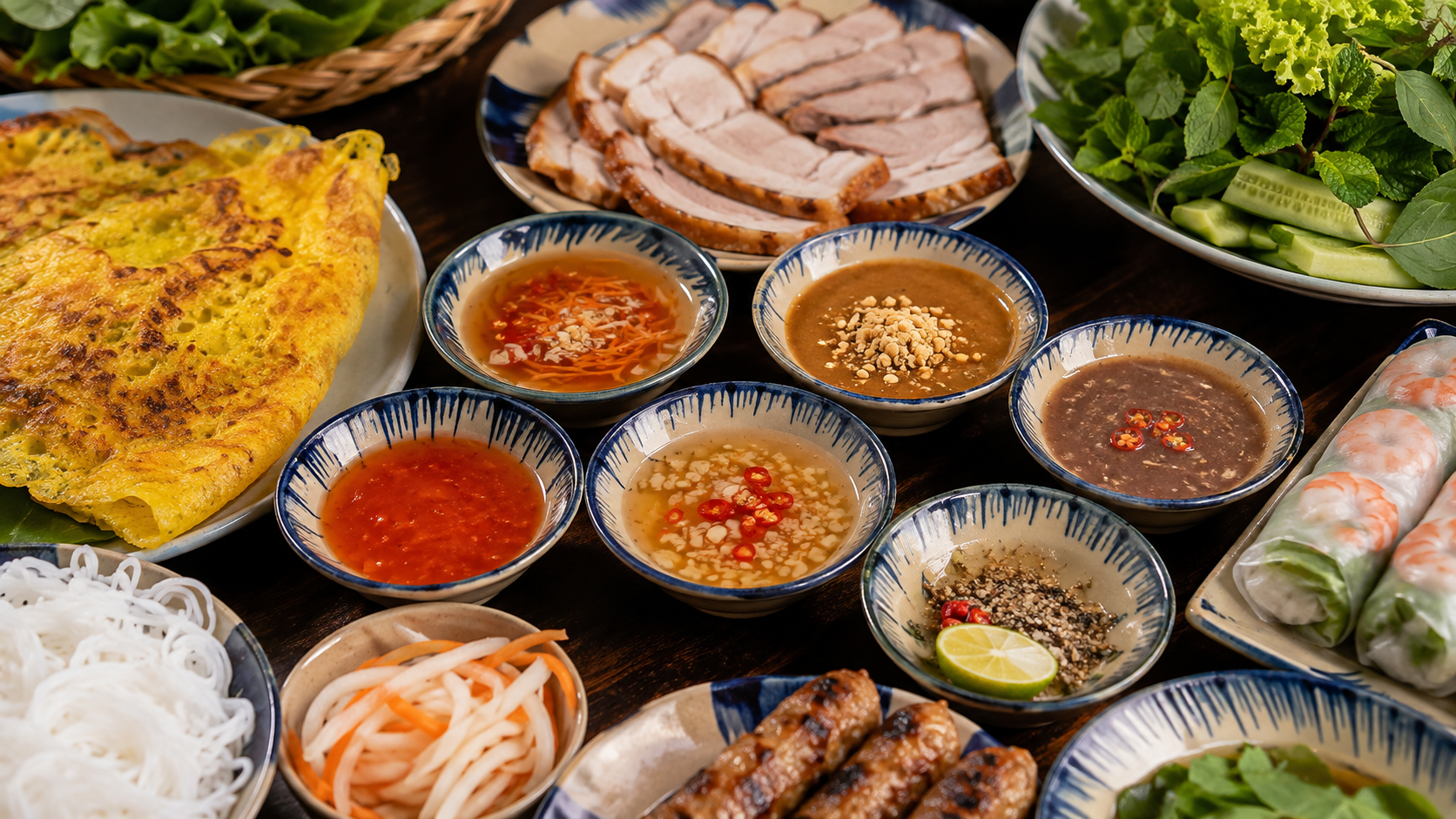
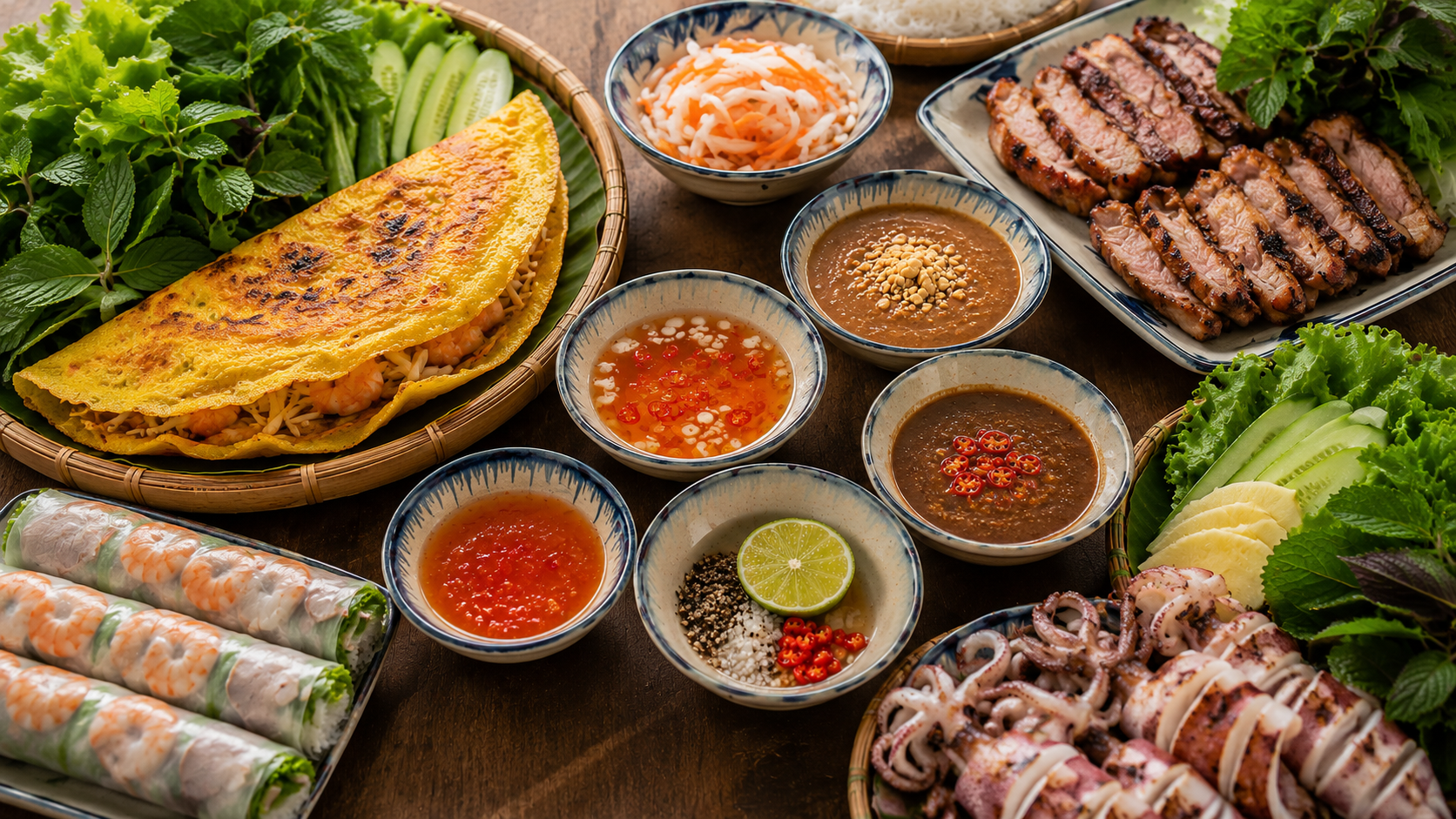
When you eat at a local restaurant in Vietnam, it is common to see one or more small bowls of sauce served alongside your meal. They are not simply optional condiments. In many dishes, the dipping sauce is an essential part of the flavor.
Some Vietnamese dipping sauces are sweet and tangy. Others are salty, spicy, creamy, or intensely fermented.
Knowing which sauce goes with which dish can make exploring Vietnamese food much easier, especially if this is your first trip to Vietnam.
Here are 7 Vietnamese dipping sauces you should know, what they taste like, and which foods you should try them with.
Why Are Dipping Sauces So Important in Vietnamese Food?
Vietnamese food often brings several different flavors together in a single meal.
Fresh herbs provide fragrance. Pickled vegetables add acidity. Grilled meats bring smoky and savory flavors, while rice noodles and rice paper provide a relatively neutral base.
The dipping sauce connects these elements.
This is especially noticeable in Central Vietnam.
In places such as Da Nang, Hoi An, and Hue, you may encounter sauces that are considerably stronger than the mild dipping sauces many international visitors first associate with Vietnamese food.
One dish may come with sweet fish sauce, while another uses fermented fish sauce or a thick peanut-based sauce.
Instead of thinking of the sauce as something extra, think of it as another ingredient in the dish.
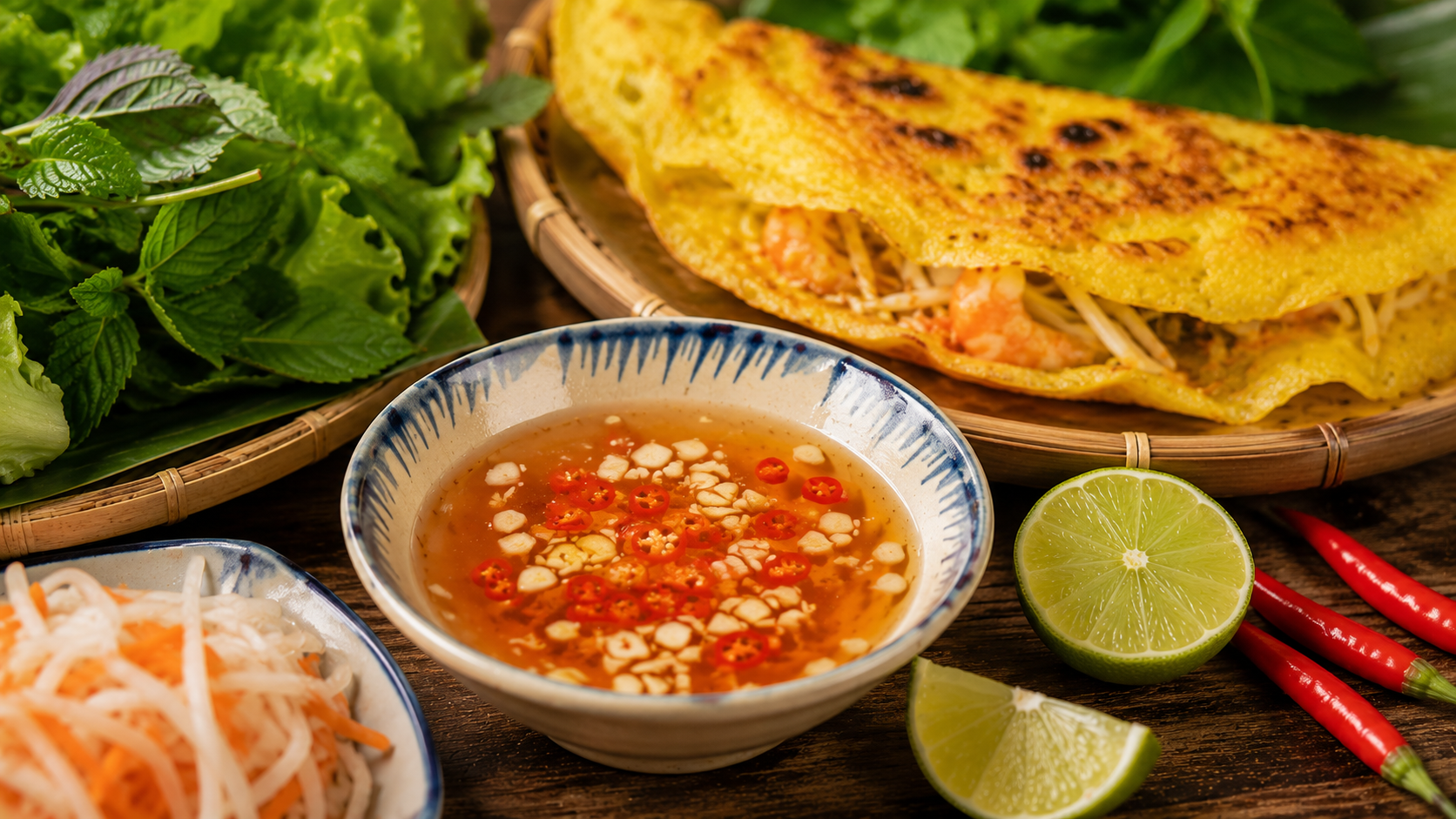
1. Nước Chấm – The Classic Vietnamese Dipping Sauce
If you try only one Vietnamese dipping sauce, start with nước chấm.
Nước chấm is commonly made using fish sauce, water, sugar, lime juice or vinegar, garlic, and chili.
The exact recipe varies between restaurants, families, dishes, and regions.
A good nước chấm balances four important flavors:
salty, sweet, sour, and spicy.
It is also one of the most approachable sauces for travelers who are trying Vietnamese food for the first time.
What Do You Eat With Nước Chấm?
You may find it served with:
- Bánh xèo
- Fried spring rolls
- Bún chả
- Grilled pork
- Rice dishes
- Fresh vegetables
- Vietnamese rice paper rolls
Rather than completely covering your food in the sauce, try dipping a small portion first.
2. Nước Mắm – Vietnamese Fish Sauce
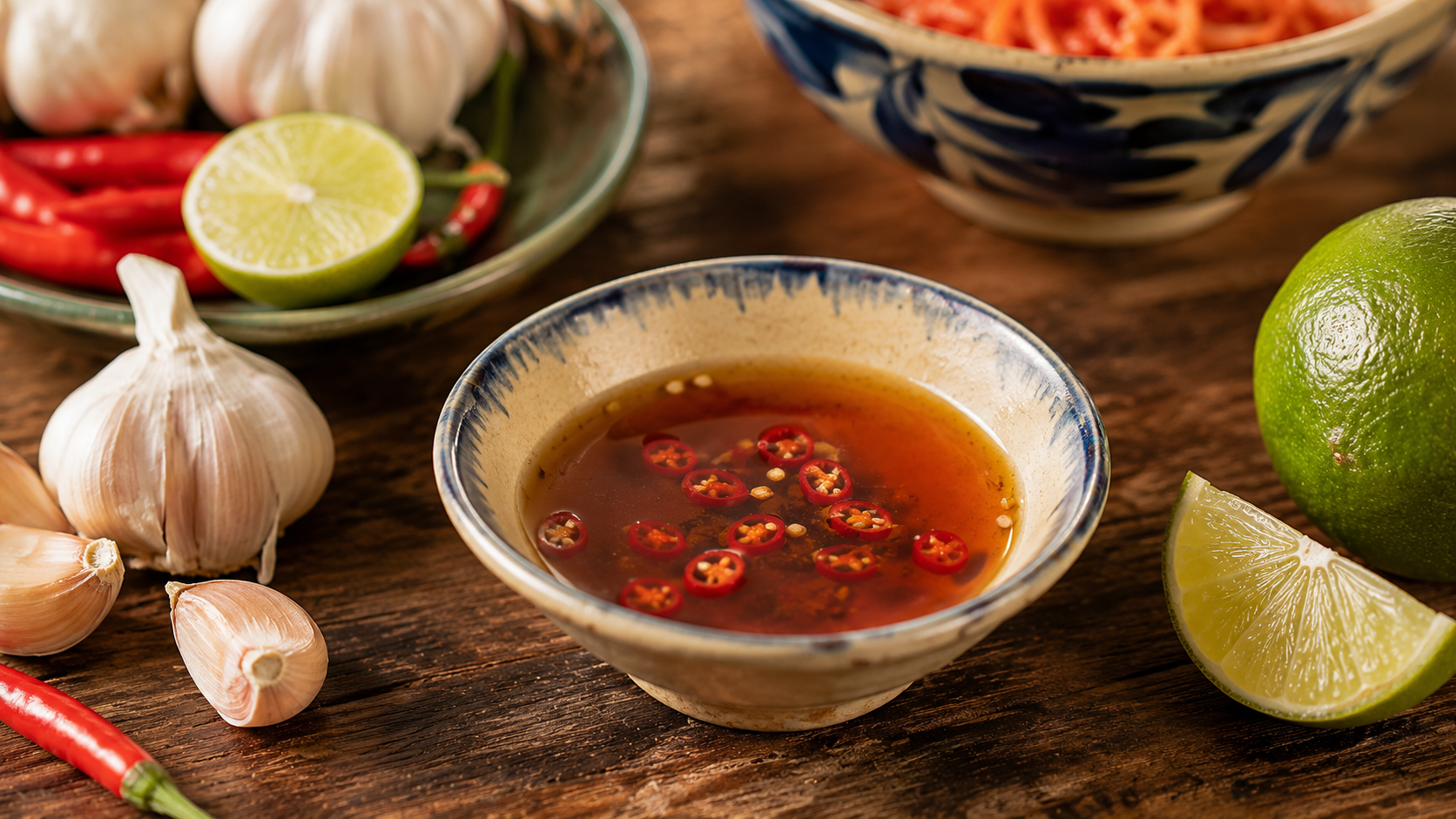
Nước mắm, or Vietnamese fish sauce, is one of the foundations of Vietnamese cuisine.
It is traditionally produced by fermenting fish with salt.
However, there is an important distinction for beginners.
Pure nước mắm and the lighter dipping sauces made from nước mắm are not necessarily the same thing.
Pure fish sauce can be intensely salty and aromatic. Restaurants often combine it with water, sugar, lime, vinegar, garlic, or chili to create dipping sauces suited to specific dishes.
Fish sauce is also widely used during cooking.
It can season soups, marinades, braised dishes, stir-fries, and countless other Vietnamese foods.
If the aroma seems strong the first time you encounter it, try it with the food rather than tasting a spoonful of fish sauce by itself.
The combination makes much more sense.
3. Mắm Nêm – Fermented Anchovy Dipping Sauce
Now things become more adventurous.
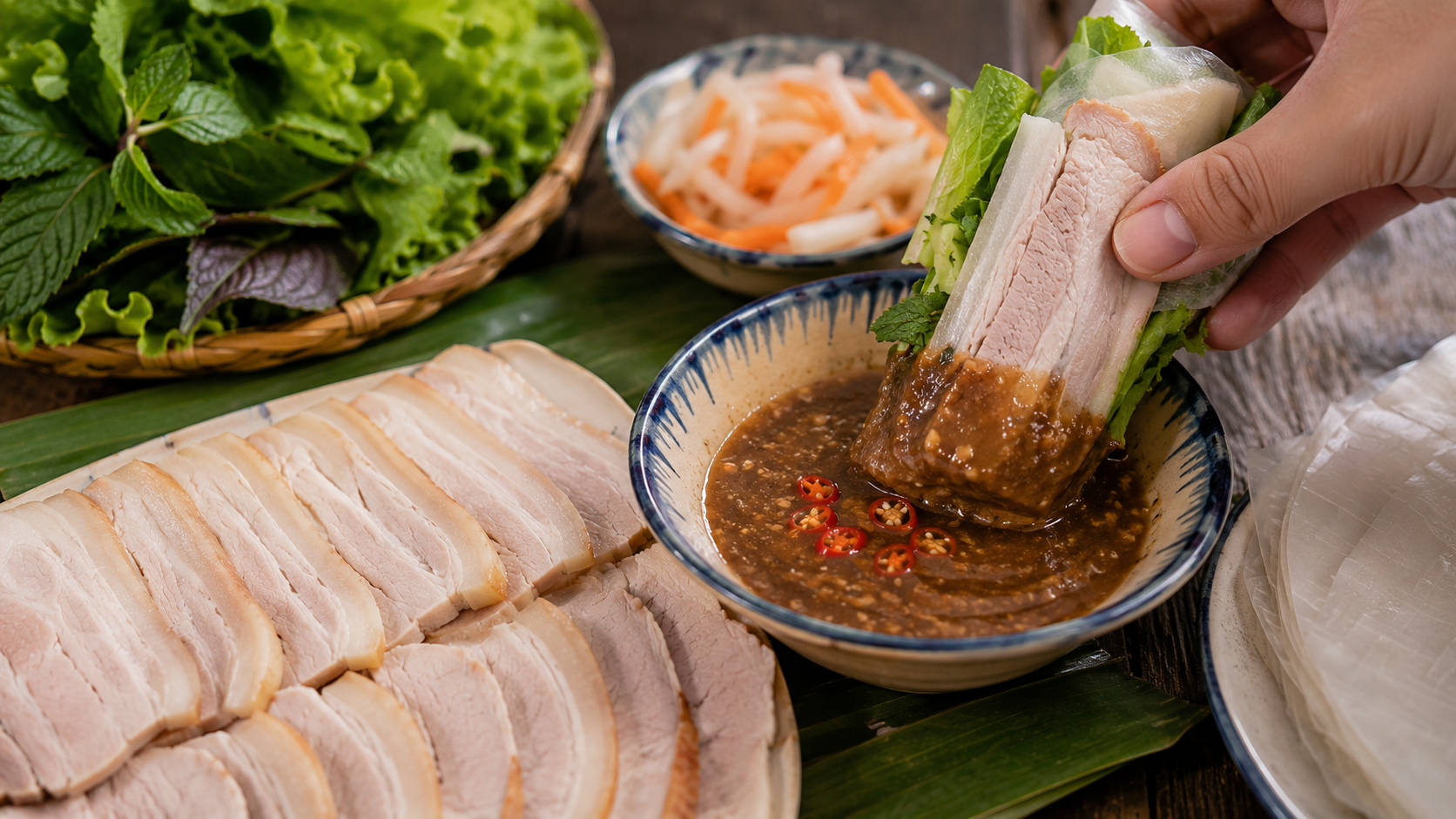
Mắm nêm is a fermented fish sauce with a much stronger aroma and flavor than the diluted fish sauces many tourists encounter first.
It is particularly important in Central Vietnamese cuisine.
Mắm nêm may be combined with ingredients such as pineapple, garlic, chili, sugar, and lime to balance its intense fermented flavor.
What Should You Eat With Mắm Nêm?
One of the best combinations is:
Bánh tráng cuốn thịt heo.
This Central Vietnamese dish combines thin slices of pork, rice paper, noodles, vegetables, and fresh herbs.
You wrap everything together and dip the roll into mắm nêm.
It is an especially good dish to try when visiting Da Nang.
Beginner Tip
Do not judge mắm nêm by smelling the bowl first.
Its aroma can be powerful.
Instead, make a complete rice paper roll with pork and herbs, then add a small amount of sauce.
The fresh vegetables and rice paper help balance the fermented flavor.
4. Tương Đậu Phộng – Vietnamese Peanut Sauce
Not every Vietnamese sauce has a strong fermented flavor.
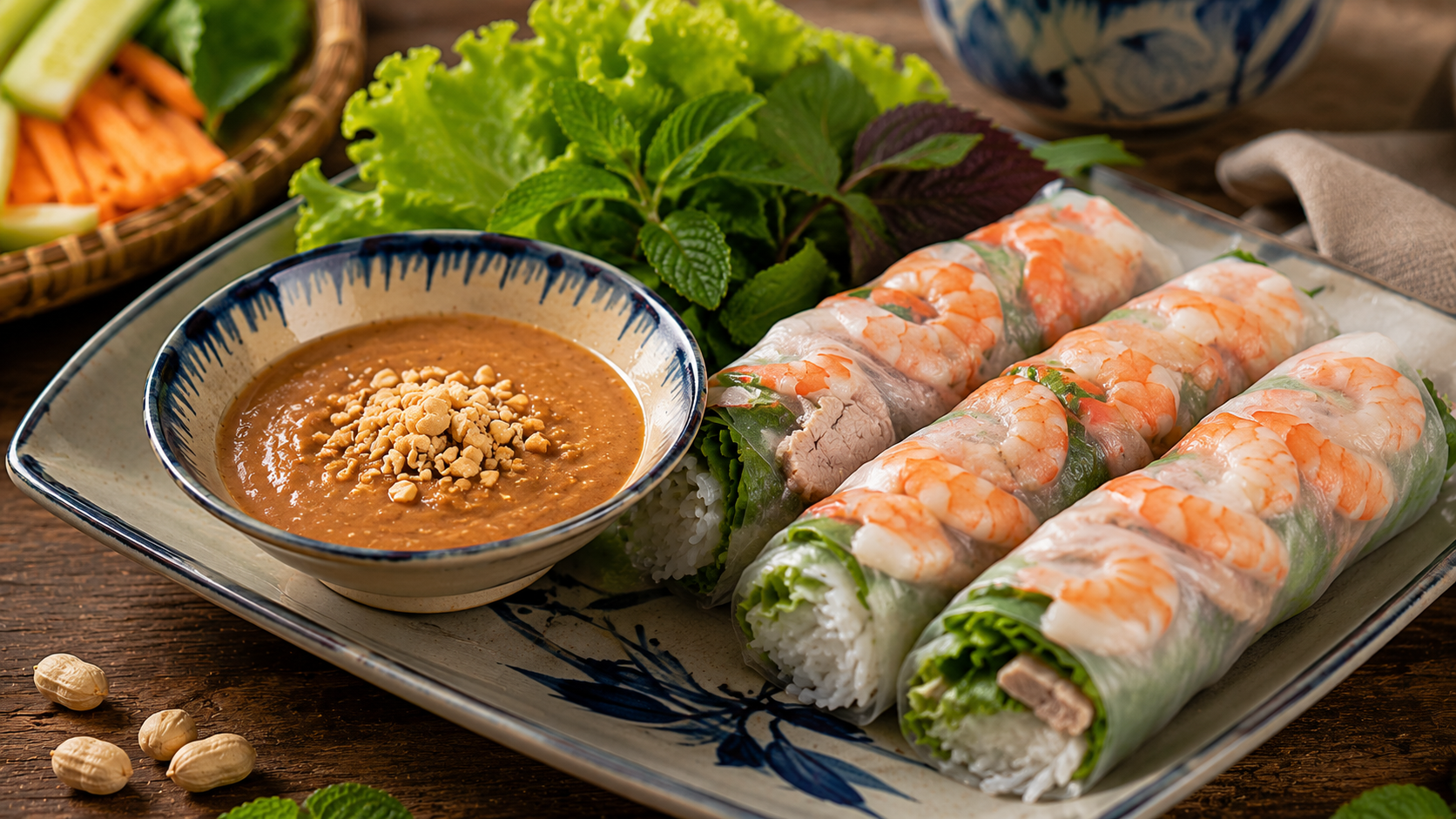
Tương đậu phộng, or peanut sauce, is creamy, savory, nutty, and often slightly sweet.
Recipes vary, but Vietnamese peanut sauces may include peanuts or peanut butter combined with ingredients such as hoisin sauce, garlic, and other seasonings.
It is commonly paired with fresh rice paper rolls.
Try It With Gỏi Cuốn
Gỏi cuốn are fresh Vietnamese spring rolls typically made with rice paper, noodles, vegetables, herbs, shrimp, pork, or tofu.
Dip a fresh roll into the creamy peanut sauce and you get an excellent contrast between the fresh vegetables and rich sauce.
If you are nervous about fermented fish sauces, peanut sauce is one of the easiest places to begin.
5. Nước Mắm Gừng – Ginger Fish Sauce
Nước mắm gừng combines the savory character of fish sauce with the fresh, spicy aroma of ginger.
Typical versions may include fish sauce, ginger, sugar, chili, lime, and garlic.
Compared with ordinary nước chấm, the ginger gives the sauce a warmer and sharper flavor.
It pairs particularly well with richer meats.
Depending on the region and restaurant, you may encounter ginger fish sauce alongside chicken, duck, seafood, or snails.
The ginger helps cut through richer flavors while adding a distinctive fragrance.
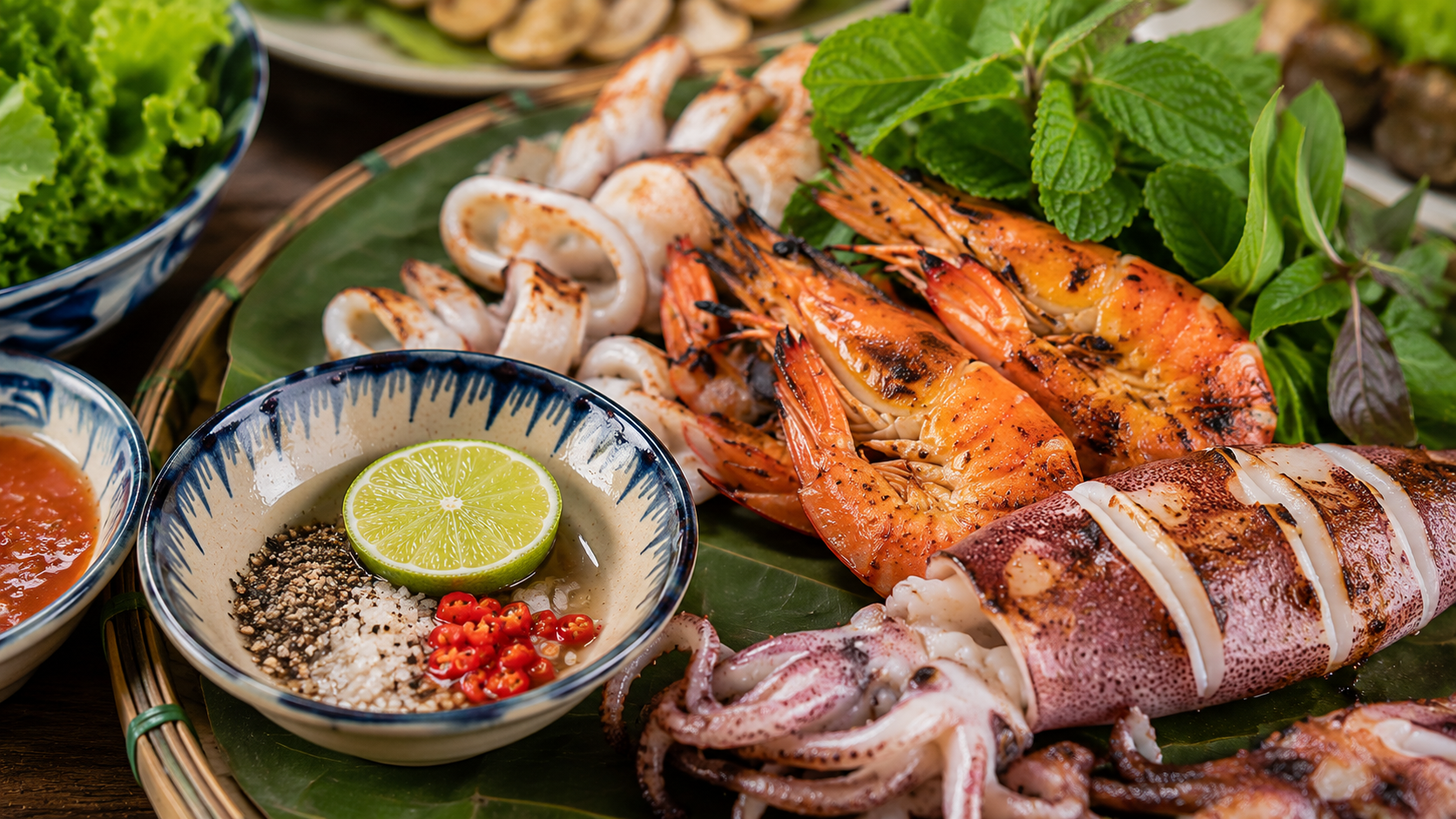
6. Muối Tiêu Chanh – Lime, Salt and Pepper
One of the simplest Vietnamese dipping mixtures is also one of the most useful.
Muối tiêu chanh essentially combines:
- Salt
- Pepper
- Fresh lime juice
Chili may also be added.
Unlike nước chấm, this is not based around fish sauce.
The acidity from fresh lime and the saltiness of the seasoning make it particularly good with seafood and grilled meats.
If you visit a seafood restaurant in a Vietnamese coastal city, you may see a small dish of salt, pepper, and lime served alongside your meal.
It may look simple, but it works.
7. Tương Ớt – Vietnamese Chili Sauce
Finally, there is tương ớt.
Vietnamese chili sauce is found on restaurant tables throughout the country.
Depending on the recipe or brand, it can range from mildly sweet to considerably spicy.
You may see diners use tương ớt with:
- Phở
- Noodle soups
- Fried foods
- Grilled meat
- Seafood
- Rice dishes
When eating phở, for example, some people add chili sauce directly to their bowl.
Others place a little chili sauce in a small dipping dish and use it for pieces of beef.
There is no need to make your entire meal spicy.
Start with a small amount and adjust it to your taste.
Which Vietnamese Dipping Sauce Should Beginners Try First?
If this is your first time eating Vietnamese food, you do not need to start with the strongest sauce.
Try them gradually.
A good order for beginners is:
1. Nước chấm
Balanced and easy to enjoy.
2. Tương đậu phộng
Creamy, nutty, and familiar.
3. Muối tiêu chanh
Simple, fresh, and excellent with seafood.
4. Nước mắm gừng
More aromatic but still approachable.
5. Nước mắm
The essential flavor behind countless Vietnamese dishes.
6. Tương ớt
Easy to control depending on how much spice you like.
7. Mắm nêm
The most adventurous option on this list.
Of course, there are no rules.
If you enjoy strong fermented flavors, you may fall in love with mắm nêm immediately.
Vietnamese Dipping Sauces in Central Vietnam
Travelers visiting Central Vietnam should pay particular attention to dipping sauces.
The food cultures of Da Nang, Hoi An, and Hue are especially interesting for travelers who enjoy bold sauces, fermented flavors, fresh herbs, and rice paper dishes.
In Da Nang, for example, bánh tráng cuốn thịt heo would feel incomplete without its distinctive mắm nêm.
Nem lụi is another dish where the sauce is an important part of the experience.
This is one reason exploring Vietnamese cuisine is about more than simply ordering famous dishes.
Sometimes the small bowl sitting beside your plate tells you just as much about the local food culture as the main dish itself.
Final Thoughts
Vietnamese dipping sauces may look like a small detail, but they can completely change the way a dish tastes.
Nước chấm adds sweetness, acidity, saltiness, and heat.
Peanut sauce gives fresh rice paper rolls a rich and creamy finish.
Muối tiêu chanh makes fresh seafood brighter.
And mắm nêm introduces travelers to the stronger fermented flavors found in Central Vietnamese cooking.
The next time you eat at a Vietnamese restaurant and several small bowls appear on your table, don’t ignore them.
Start with a small dip, taste the food and sauce together, and experiment.
Understanding Vietnamese dipping sauces is one of the easiest ways to experience Vietnamese food beyond phở and bánh mì.
5 Best Places to Visit in Da Nang for Food & Relaxation (2026 Guide)