Vietnamese Fish Sauce: Why Nước Mắm Matters in Vietnamese Cooking
Vietnamese fish sauce, known locally as nước mắm, is one of the foundational ingredients of Vietnamese cooking.
Fish sauce is much more than a dipping condiment. It has a long history in Vietnamese cooking and is widely used for seasoning, marinades, soups, stir-fries, and dipping sauces across the country.
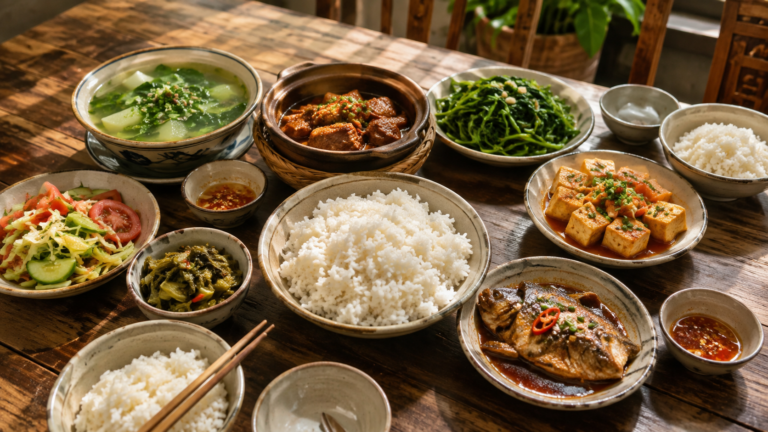
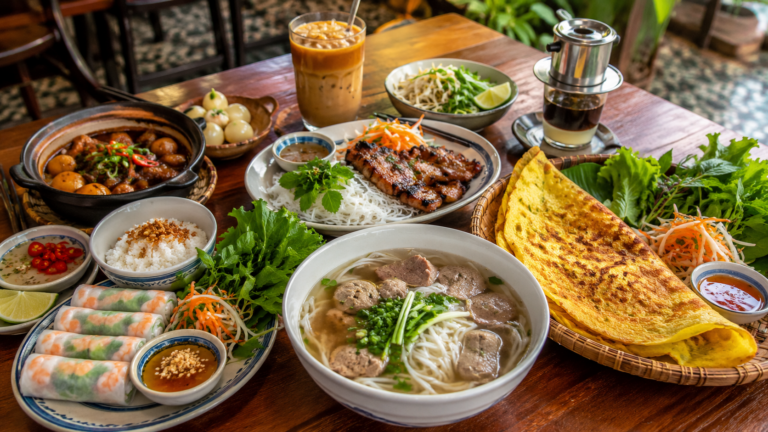
Whether you’re enjoying breakfast at a small street stall in Hanoi, having dinner with a family in Da Nang, or eating fresh seafood along the coast of Phu Quoc, chances are fish sauce is already part of your meal—even if you don’t realize it.
For many Vietnamese people, cooking without fish sauce simply doesn’t feel complete.
More Than Just a Condiment
Many first-time visitors assume fish sauce works the same way as ketchup or soy sauce.
They imagine it sitting on the table, waiting to be added after the food is served.
In reality, that is only a small part of its role.
Fish sauce can be used throughout the cooking process, from seasoning soups and marinades to balancing dipping sauces and adding depth to stir-fried dishes.
Sometimes only a few drops are needed, but removing them completely would noticeably change the dish.
This ability to quietly enhance other ingredients is what makes Vietnamese fish sauce so unique.
Instead of dominating a recipe, it allows every ingredient around it to taste even better.
What Exactly Is Vietnamese Fish Sauce?
One of the biggest surprises for many travelers is how simple authentic fish sauce actually is.
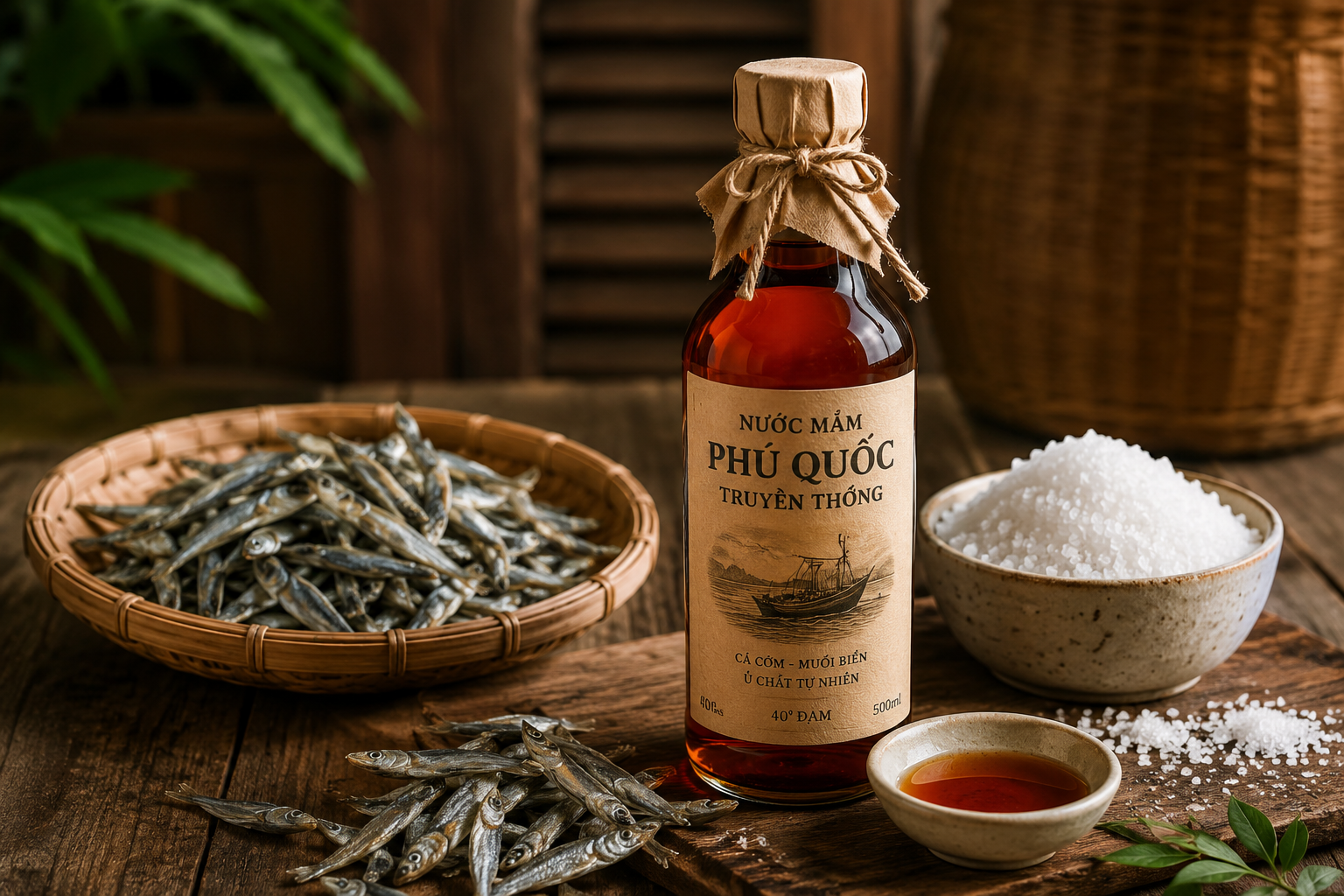
Traditional Vietnamese fish sauce contains only two ingredients.
- Fresh anchovies
- Sea salt
Nothing more.
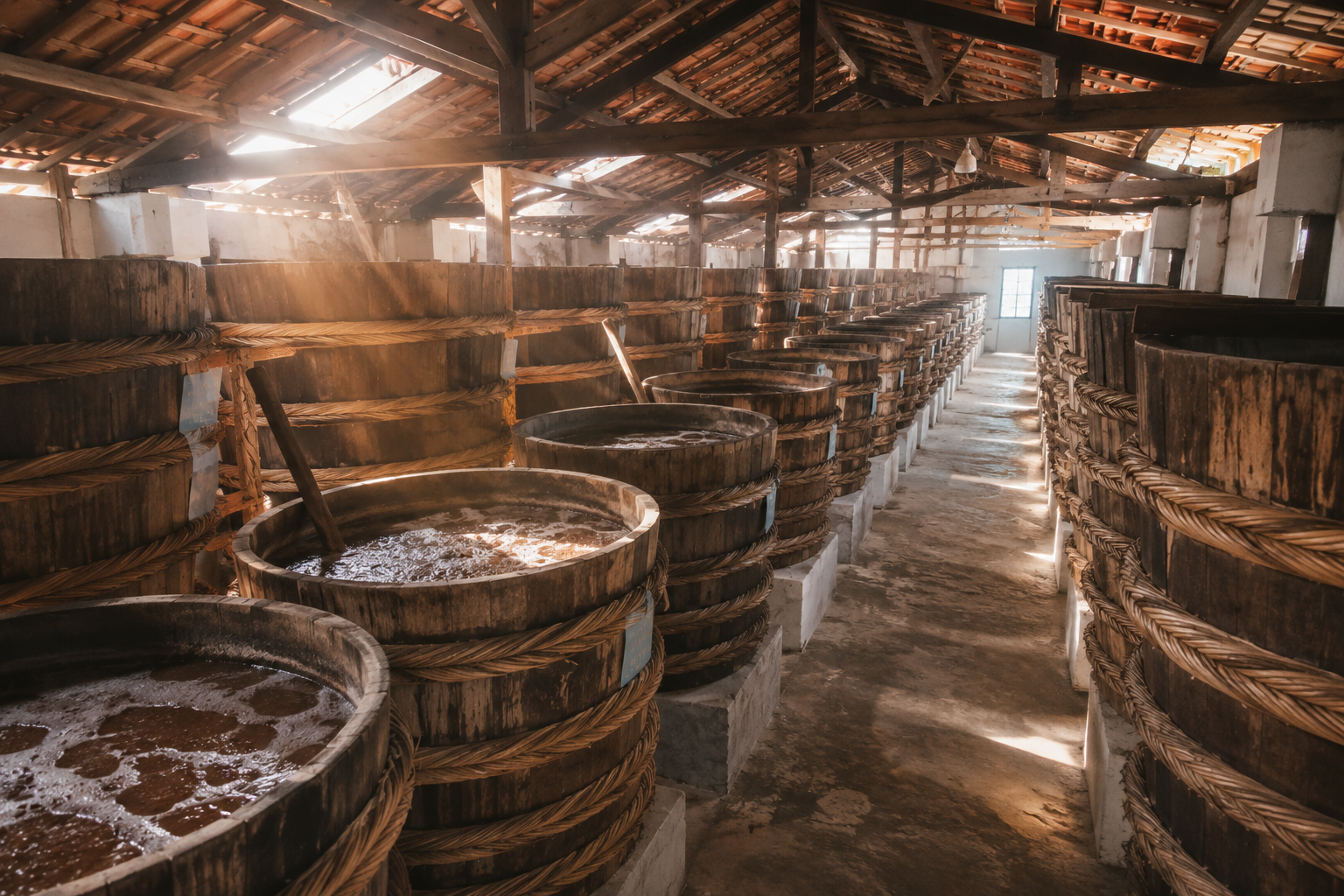
These ingredients are layered inside enormous wooden barrels and naturally fermented for many months.
As time passes, the proteins inside the fish slowly break down into amino acids, creating the rich umami flavor that Vietnamese cuisine is famous for.
Unlike industrial sauces that contain artificial flavoring or preservatives, premium Vietnamese fish sauce often relies on nothing but patience.
Some producers allow the fish to ferment for over a year before collecting the first extraction, which is considered the highest quality.
The result is a beautiful amber-colored liquid with an incredibly complex flavor.
Although the aroma can seem strong when the bottle is first opened, it becomes remarkably smooth once incorporated into food.
Why Fish Sauce Is So Common in Vietnamese Cooking
Fish sauce is a common staple in Vietnamese kitchens and is used in many everyday dishes.
It’s as common as salt, pepper, or cooking oil.
In many Western kitchens, salt provides the foundation of flavor.
In Vietnam, fish sauce plays that role while also contributing layers of natural umami that ordinary salt cannot provide.
Because of this, fish sauce appears in almost every meal throughout the day.
Breakfast noodles.
Lunch with grilled pork.
Family dinners.
Holiday feasts.
Even simple vegetable dishes often contain just enough fish sauce to make the flavors feel richer without anyone noticing.
Many Vietnamese people grow up tasting fish sauce from childhood.
The recipes may vary from family to family, but the ingredient itself remains a constant presence across generations.
That is one reason Vietnamese food feels both diverse and familiar at the same time.
No matter where you travel in Vietnam, you’ll discover regional specialties, yet fish sauce quietly connects them all.
Every Family Has Its Own Recipe
Fish sauce recipes and dipping sauces vary widely from family to family and from region to region
Some prefer their dipping sauce sweeter.
Others enjoy more garlic.
Families in central Vietnam often like stronger, saltier flavors, while southern recipes may include a little more sugar for balance.
There is no single “correct” version.
Instead, recipes are passed from parents to children, adjusted over time, and shaped by local ingredients and personal taste.
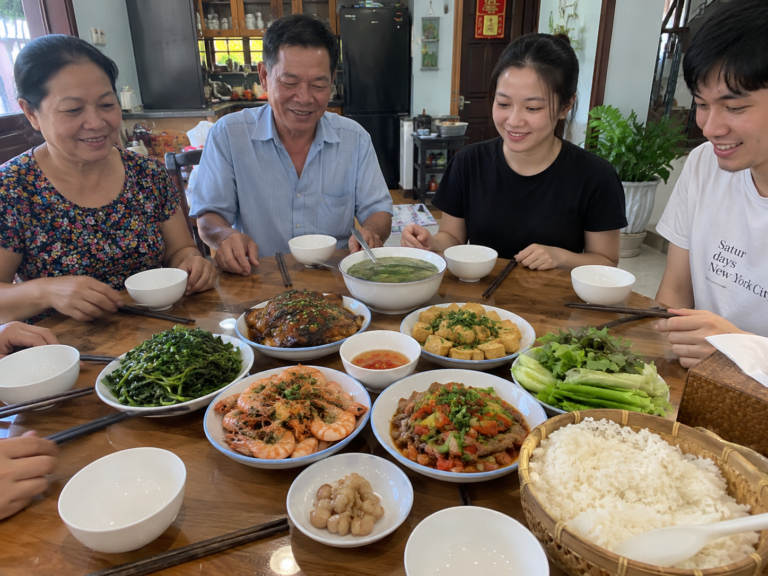
This is why eating in a family home often feels very different from eating in a restaurant.
The dishes may have the same names, but subtle differences in seasoning give each family’s cooking its own identity.
Fish Sauce Isn’t Supposed to Taste Fish
One misunderstanding that many travelers have is believing fish sauce will make every dish taste like fish.
In reality, the opposite is true.
Good-quality Vietnamese fish sauce isn’t meant to overpower your meal.
Instead, it works behind the scenes.
Just as Parmesan cheese adds depth to Italian pasta without making it taste like cheese, fish sauce enhances Vietnamese food without making everything taste like seafood.
This hidden layer of flavor is one of the biggest reasons visitors often fall in love with Vietnamese cuisine without ever realizing what ingredient made the difference.
Fish Sauce vs. Thai Fish Sauce
Many visitors assume that Vietnamese and Thai fish sauce are exactly the same.
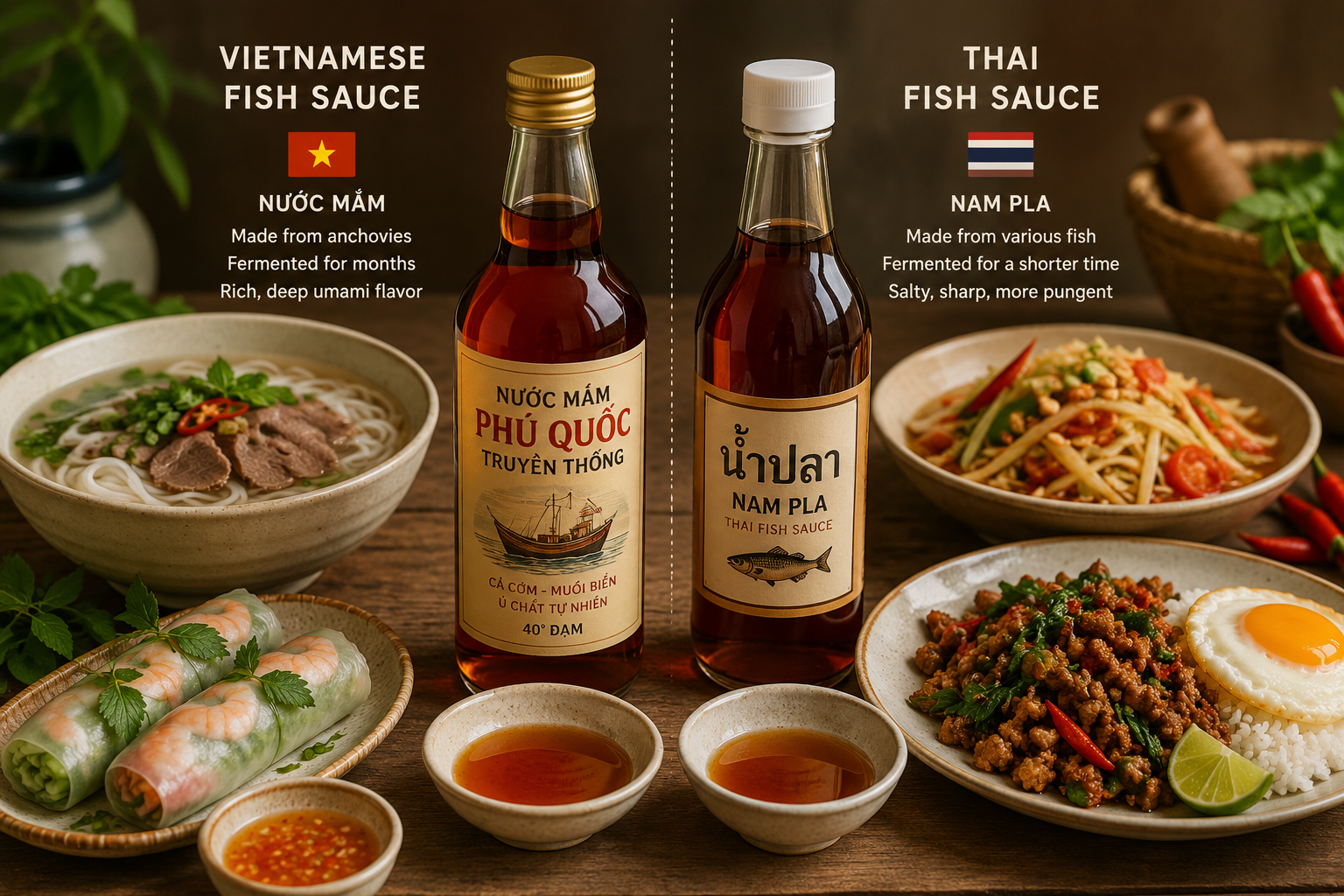
While both are made by fermenting fish with salt, they are quite different in flavor and how they are used.
Vietnamese fish sauce is generally lighter and less pungent than many Thai fish sauces, while Thai fish sauce is often saltier and stronger in flavor. However, the exact taste varies by brand and production method.
Neither is better than the other—they simply reflect the different cooking styles of each country.
If you’ve enjoyed both Vietnamese and Thai food but couldn’t quite explain why they taste so different, fish sauce is one of the biggest reasons.
Why Phú Quốc Fish Sauce Is So Famous
If you ask Vietnamese people where to find the country’s best fish sauce, many will immediately mention Phú Quốc.
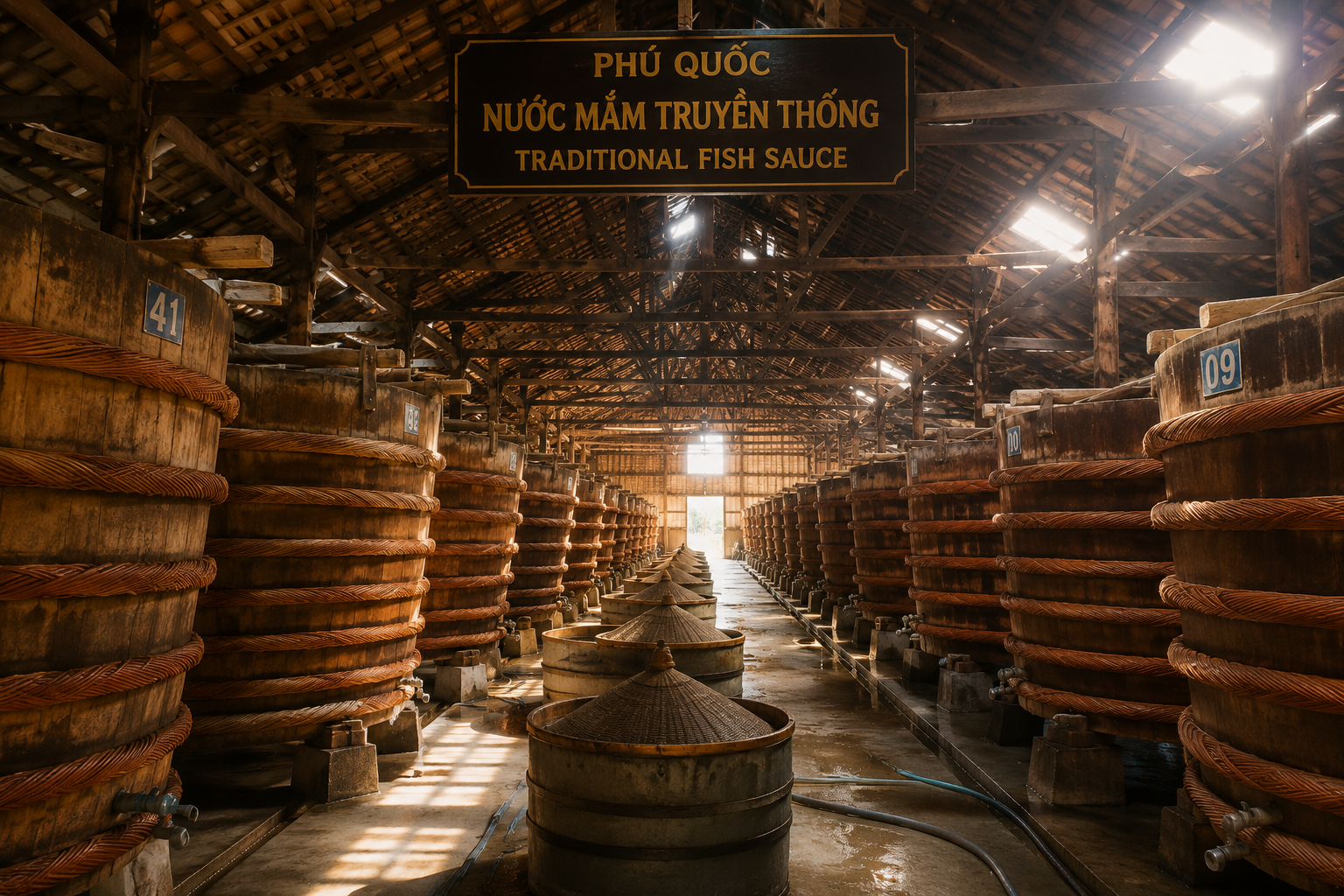
This tropical island in southern Vietnam has been producing fish sauce for generations and is known around the world for its traditional fermentation methods.
Large wooden barrels, some several meters tall, are filled with fresh anchovies and sea salt before being left to mature for months.
The first liquid extracted from these barrels is considered the finest quality.
Its color is beautifully amber, the aroma is refined, and the flavor is rich without being overly salty.
Phú Quốc fish sauce is one of Vietnam’s best-known regional food products, and the name “Phú Quốc” is protected as a Protected Designation of Origin (PDO) in the European Union.
Vietnamese Dishes That Wouldn’t Be the Same Without Fish Sauce
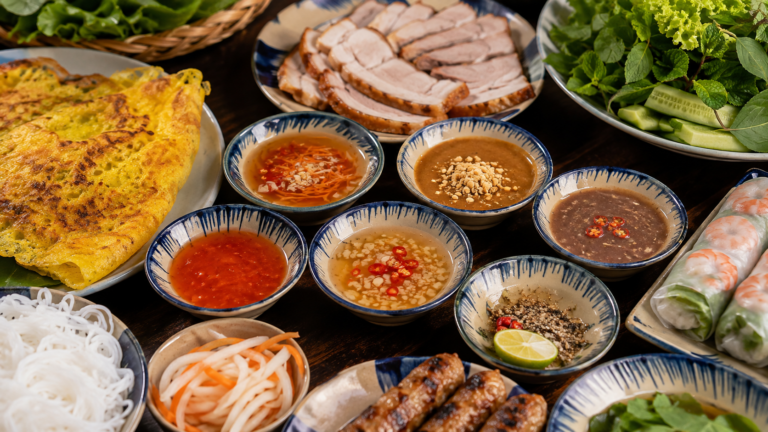
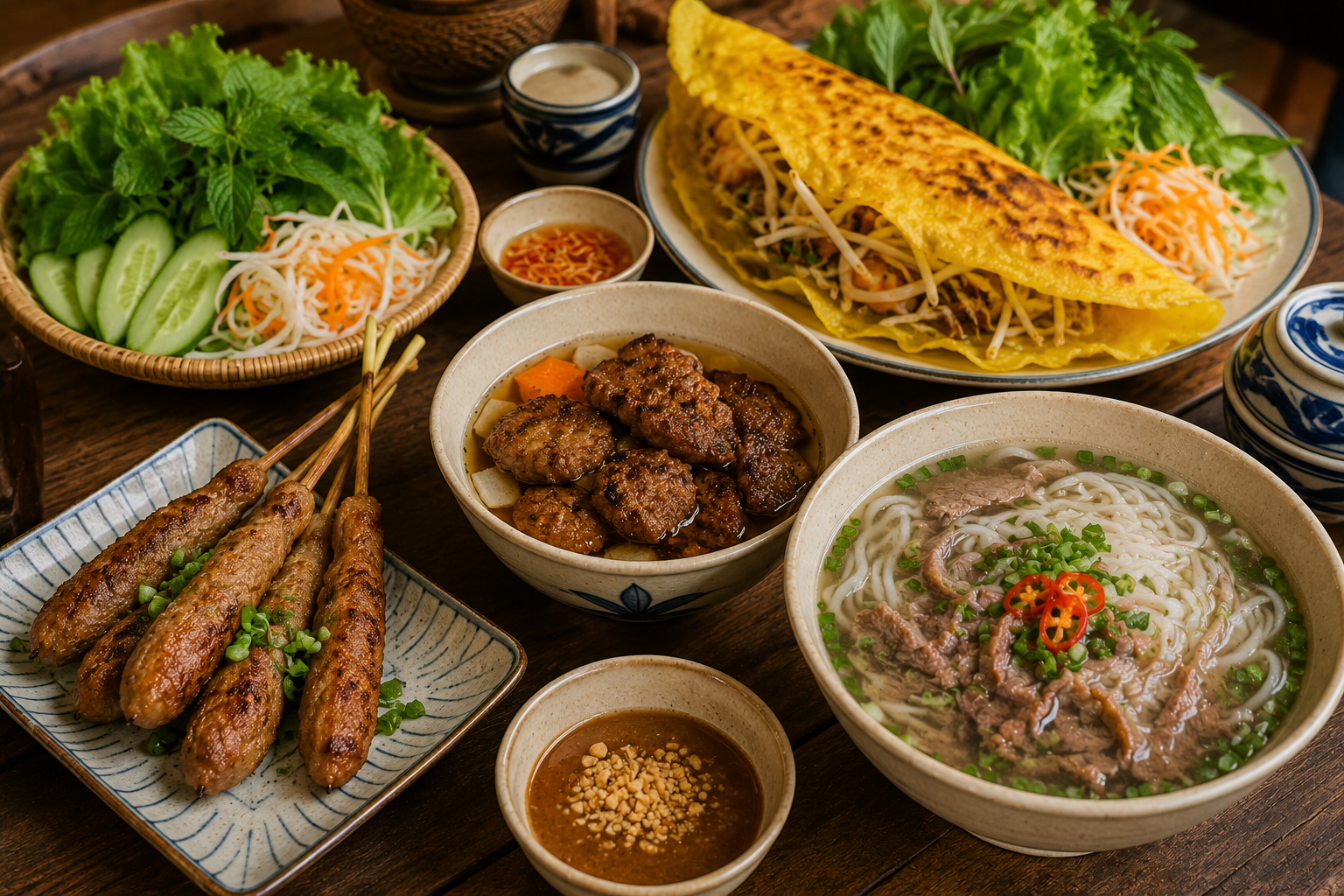
Fish sauce appears in hundreds of Vietnamese recipes, but some famous dishes simply wouldn’t taste authentic without it.
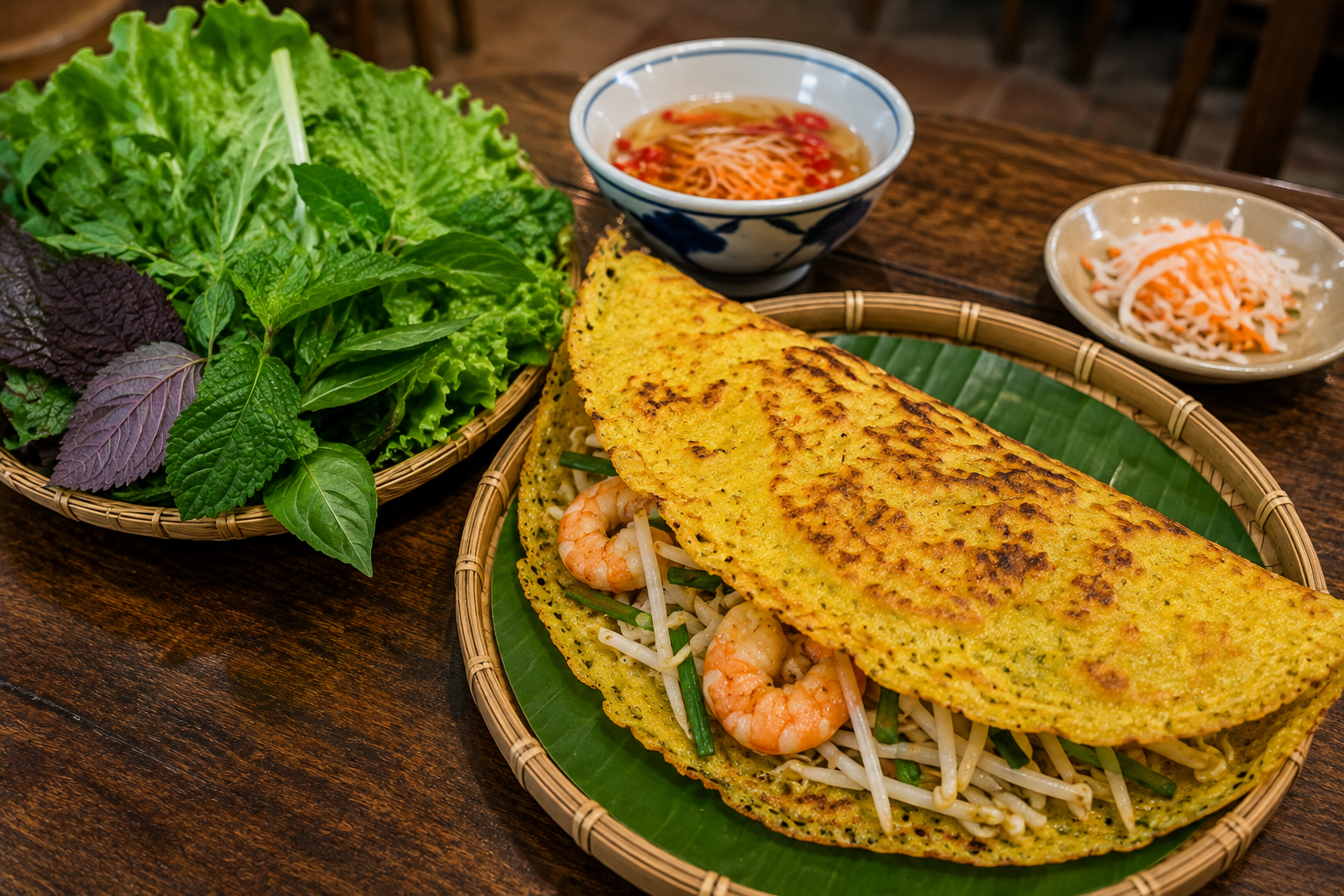
If you want to learn more about this crispy Vietnamese pancake, see my guide to Vietnamese bánh xèo.
Bún Chả
The grilled pork is marinated with fish sauce before cooking, while the dipping broth also relies on fish sauce for its signature flavor.
Bánh Xèo
The crispy pancake is delicious on its own, but dipping each bite into nước mắm chấm creates the balance of sweet, salty, sour, and spicy flavors that makes the dish unforgettable.
Nem Lụi
Grilled pork skewers become even more flavorful when paired with fresh herbs and fish sauce.
Phở
Many visitors don’t realize that a small amount of fish sauce is often added while preparing the broth.
It doesn’t make the soup taste fishy.
Instead, it adds depth and richness that would otherwise be missing.
These examples show that fish sauce isn’t always visible—but it’s almost always there.
How Locals Use Fish Sauce Every Day
For Vietnamese people, fish sauce isn’t reserved for special occasions.
Fish sauce is part of everyday cooking in Vietnam and can appear in soups, marinades, dipping sauces, stir-fries, and simple vegetable dishes. Its role varies by dish and region, but it often works quietly in the background to add saltiness and umami without becoming the dominant flav
Where to Experience Authentic Vietnamese Fish Sauce
If you want to understand why fish sauce is so important, tasting it straight from the bottle isn’t the best approach.
The real experience comes from enjoying dishes where it has been used correctly.
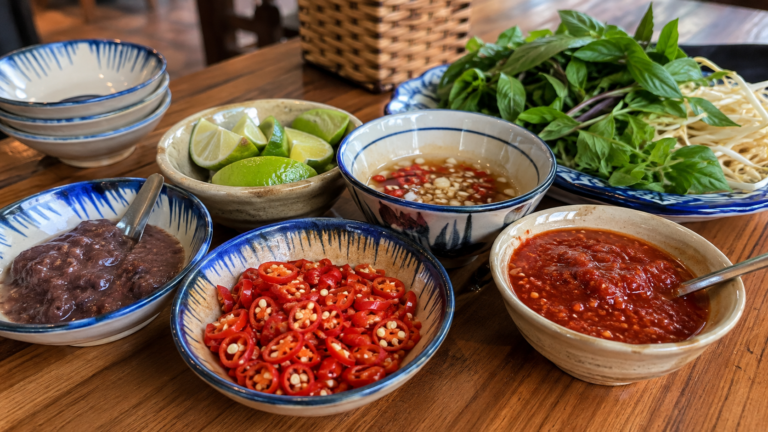
In Da Nang, the best way to understand fish sauce is to taste it as part of a complete Vietnamese dish, where it works together with herbs, garlic, chili, lime, and other seasonings.
Whether you’re enjoying Bún Chả, Bánh Xèo, Nem Lụi, or a bowl of Phở, the fish sauce isn’t there to overpower the meal.
Instead, it quietly brings every ingredient together, creating the balanced flavors that make Vietnamese cuisine so memorable.
Sometimes the most important ingredient is the one you notice the least.
Final Thoughts
Fish sauce is more than just a condiment.
It represents generations of tradition, craftsmanship, and family cooking.
While its aroma may surprise first-time visitors, its flavor is one of the reasons Vietnamese cuisine is loved around the world.
The next time you enjoy a Vietnamese meal, take a moment to appreciate the ingredient working quietly behind the scenes.
There’s a good chance that the unforgettable flavor you’re enjoying began with just a few drops of nước mắm.
❓ Frequently Asked Questions
Is Vietnamese fish sauce the same as soy sauce?
No. Fish sauce is made from fermented anchovies and sea salt, while soy sauce is made from fermented soybeans. They have completely different flavors and are used differently in cooking.
Does fish sauce make food taste fishy?
Usually not. When used in the right amount, fish sauce adds saltiness and umami without making the finished dish taste noticeably fishy.
Can vegetarians eat traditional Vietnamese fish sauce?
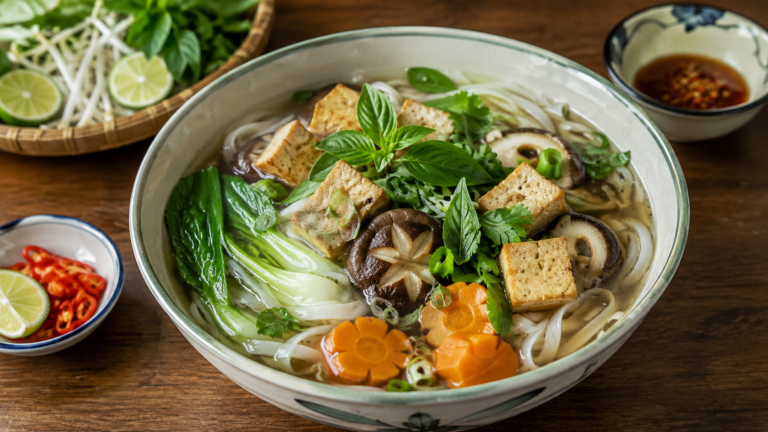
Traditional fish sauce is made from fish and is therefore not vegetarian. However, vegetarian versions, often called nước mắm chay, are available and may use ingredients such as mushrooms, soy, or other plant-based seasonings.
What is the best Vietnamese fish sauce to buy?
There is no single best fish sauce for everyone. Look for a reputable producer with a simple ingredient list, typically anchovies and salt. Phú Quốc fish sauce is one of Vietnam’s best-known regional options, but flavor and saltiness can vary between producers.