Vietnam Street Snacks: 8 Popular Snacks to Try in Vietnam (2026 Guide)
Vietnamese street snacks are an easy way to explore different textures and flavors without committing to a full restaurant meal. You might find rice paper tossed with tart mango, corn grilled over charcoal, sweet desserts in cups, or skewers cooked to order. But not every item is available everywhere, and ingredients, portions, prices, and preparation can change from one stall to the next.
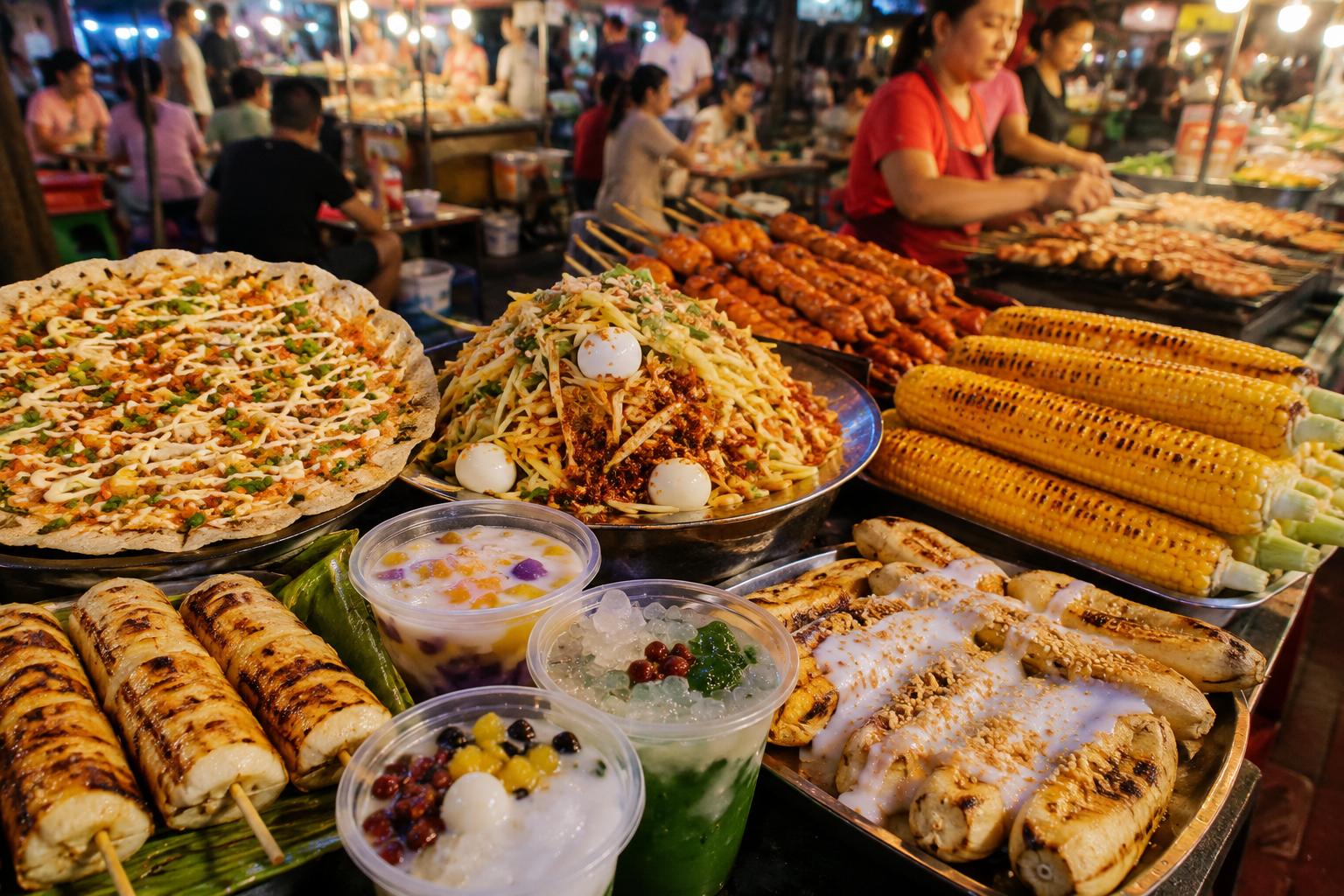
This guide explains eight snacks you may encounter in markets and along busy food streets, including what to ask before ordering. They are eight examples to look for, not a scientifically ranked list of Vietnam’s most popular foods. The photos illustrate the dishes; they are not independent proof of a stall’s current prices or hygiene.
Eight Vietnamese Street Snacks at a Glance
| Snack | What to expect | Check before ordering |
|---|---|---|
| Bánh tráng trộn | Chewy rice-paper salad with tangy, spicy toppings | Peanuts, dried shrimp, raw herbs and egg |
| Bánh tráng nướng | Thin rice paper grilled until crisp | Egg, meat, mayonnaise or other toppings |
| Bắp nướng | Grilled corn, plain or seasoned | Butter, scallion oil and sauce |
| Chuối nướng | Grilled banana; some versions include sticky rice | Coconut sauce, peanuts and sesame |
| Xiên nướng | Grilled skewers; the protein varies | Meat type, marinade and doneness |
| Chè | A broad family of Vietnamese sweet desserts | Beans, coconut, dairy, ice and jelly |
| Kem cuộn | Rolled ice cream made on a chilled plate | Dairy, toppings and food handling |
| Khoai lang nướng | Roasted sweet potato, often served warm | Whether toppings or sauces are added |
1. Bánh Tráng Trộn — Mixed Rice-Paper Salad
Bánh tráng trộn is especially associated with southern Vietnamese street-food culture. Thin strips of rice paper are tossed with a combination that can include shredded green mango, herbs, peanuts, dried shrimp, seasoning, beef jerky, quail eggs, and a tangy dressing. The appeal is the contrast of chewy rice paper, crunchy toppings, salty seasoning and sour fruit.
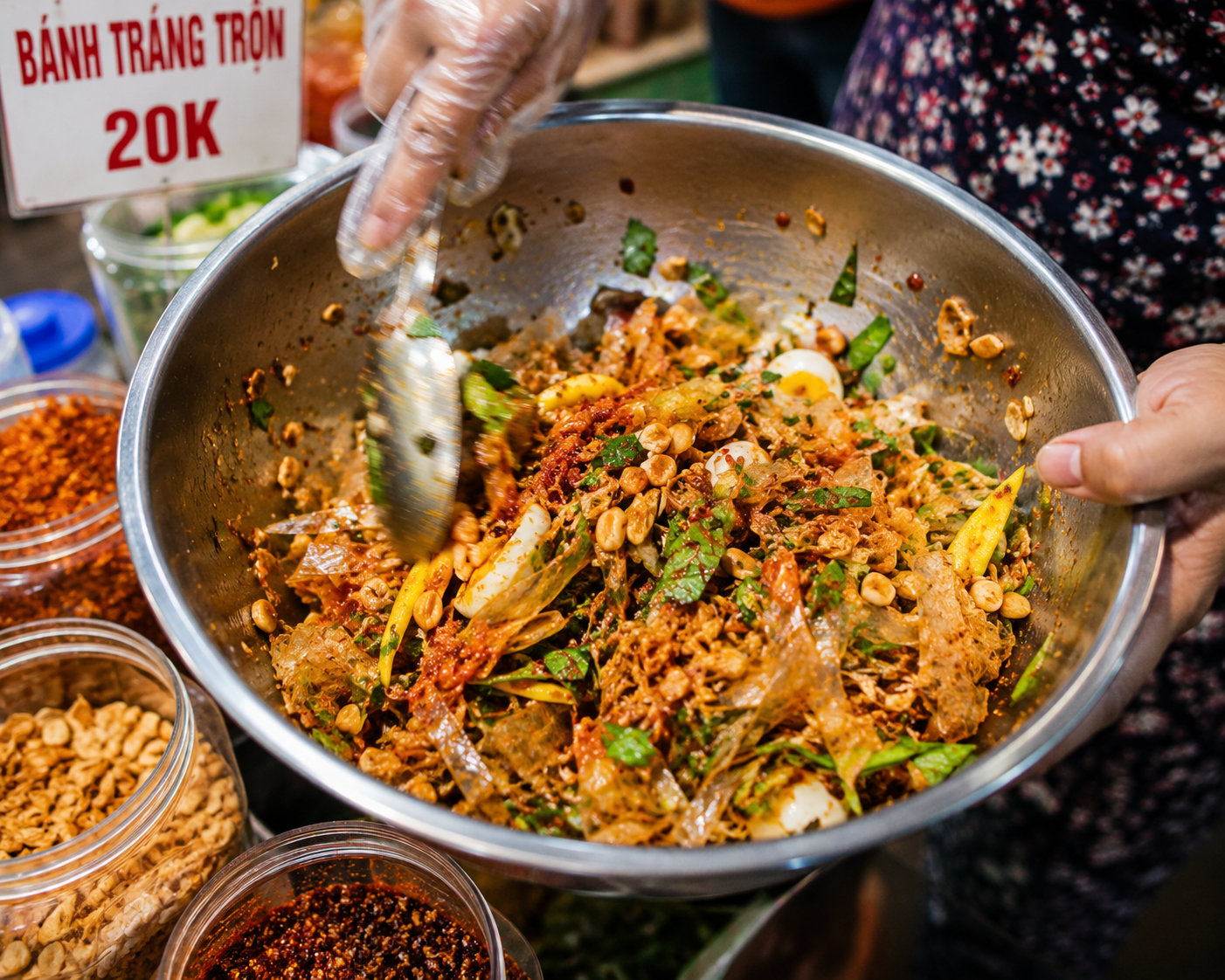
Each vendor uses a different mix, so ask about the ingredients if you avoid shellfish, peanuts or eggs. This is typically assembled rather than thoroughly cooked after mixing; travelers following strict food-safety precautions may prefer a freshly cooked snack instead. Vietnam’s official tourism site also describes this dish among Ho Chi Minh City’s street-food specialties.
2. Bánh Tráng Nướng — Crispy Grilled Rice Paper
Sometimes nicknamed “Vietnamese pizza,” bánh tráng nướng is a sheet of rice paper toasted over heat until it becomes crisp. An egg mixture, scallions, dried shrimp, sausage or sauces may be added depending on the stall. It is not a wheat-crust pizza, and there is no single nationwide recipe.
The texture is best just after grilling. Ask the vendor what toppings are included before ordering, particularly if you have a seafood or egg allergy. In Da Lat and several central Vietnamese markets, grilled rice paper is a familiar snack to look for, though stall menus change.
3. Bắp Nướng — Grilled Corn
Bắp nướng is corn roasted until the kernels become fragrant and lightly charred. Some sellers offer it simply grilled; others brush the corn with scallion oil, butter or seasoning. Corn is a practical choice if you want a warm snack with relatively few ingredients, but the toppings determine whether it suits a particular diet.
Look for corn being cooked and served hot. If you want it without added sauce, point to the cob and ask for it plain. Do not assume that all seasonings are vegetarian or free of fish products.
4. Chuối Nướng — Grilled Banana
Grilled banana has several forms. A simple chuối nướng may be cooked directly over heat and served with coconut sauce or sesame. A distinctive dessert called chuối nếp nướng wraps banana in sticky rice and banana leaf before grilling, often finishing it with coconut sauce and peanuts. The two should not be treated as identical recipes.
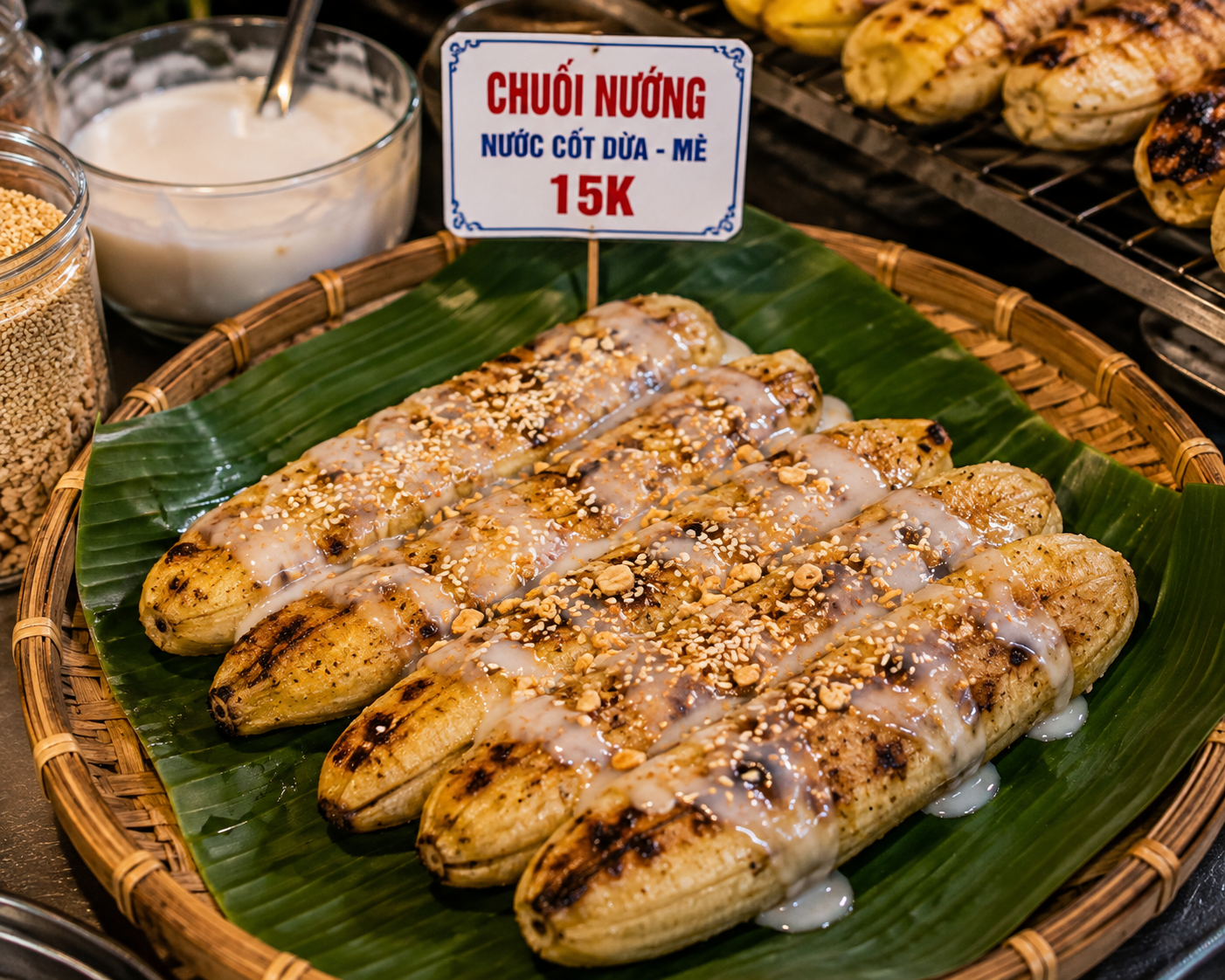
If you see a banana wrapped in sticky rice, try asking for chuối nếp nướng. It tends to be heartier than a plain grilled banana. Check the sauce and nuts when ordering; even fruit-based desserts can contain coconut, peanuts or dairy.
5. Xiên Nướng — Grilled Skewers
Xiên nướng is a broad term for skewered, grilled food rather than a single standardized dish. A street stall might offer pork, chicken, beef, processed fish cakes, vegetables, or other items. The marinade can be sweet, savory, or spicy, and dipping sauces may add another layer of flavor.
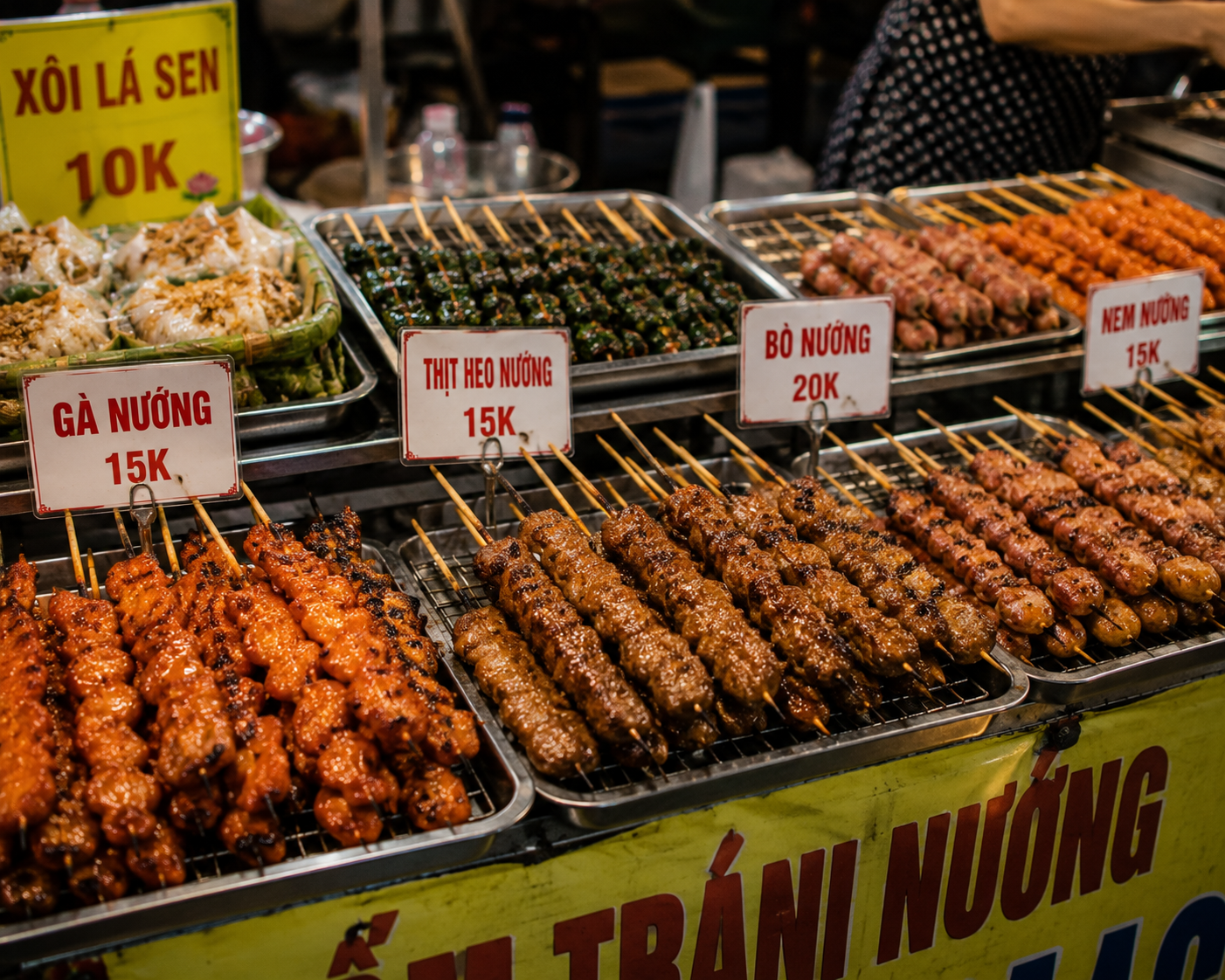
Point to the skewer you want and ask which protein it contains: thịt gì? (“what meat?”). Prefer food cooked thoroughly and served hot; a skewer sitting on a display tray is not necessarily ready to eat. Sauces and marinades can contain soy, seafood or nuts.
6. Chè — Sweet Desserts in Many Forms
Chè does not describe one dessert. The name covers many sweet soups, puddings and layered drinks made with combinations of beans, mung bean paste, tapioca, jelly, fruit, sticky rice or coconut milk. Some are served warm, while others come with crushed ice. That makes chè a fun category to explore, but the exact ingredients matter.
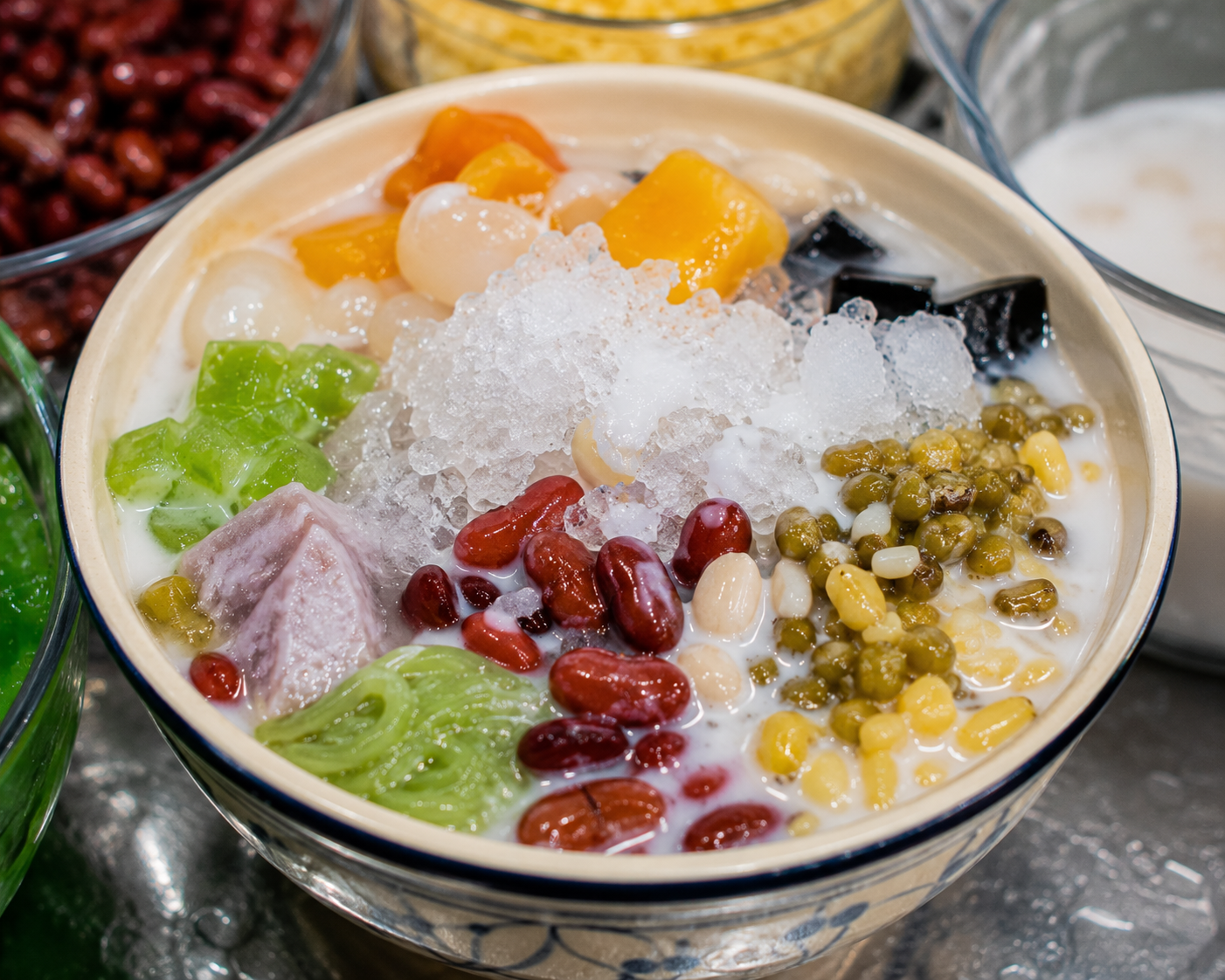
If a bowl looks unfamiliar, ask the vendor what is inside. You can request less sweetness where the recipe allows it, but many components are pre-sweetened. For travelers concerned about water quality, a hot dessert may be easier to assess than one built around ice of uncertain origin.
7. Kem Cuộn — Rolled Ice Cream
Kem cuộn is made by spreading a sweet ice-cream mixture across a chilled metal plate, chopping in flavorings, and scraping it into rolls. Watching the preparation is part of the attraction at some night markets.
It is worth distinguishing this from older Vietnamese snack traditions: rolled ice cream is a modern market dessert found in several countries, not a uniquely Vietnamese heritage food. Check dairy and nut ingredients, and consider how the stall handles its milk mixture and equipment before ordering.
8. Khoai Lang Nướng — Roasted Sweet Potato
Khoai lang nướng is simply sweet potato roasted or baked until soft inside, sometimes with a lightly charred skin. It is different from a dessert cup or a heavily dressed snack: the sweet potato itself supplies most of the flavor. Some versions may include toppings, so it still helps to ask.
Choose a freshly cooked portion that is hot all the way through. It can be a convenient option when you would rather avoid complicated sauces, although cross-contact with other foods remains possible at shared stalls.
What Do Street Snacks Cost in Vietnam?
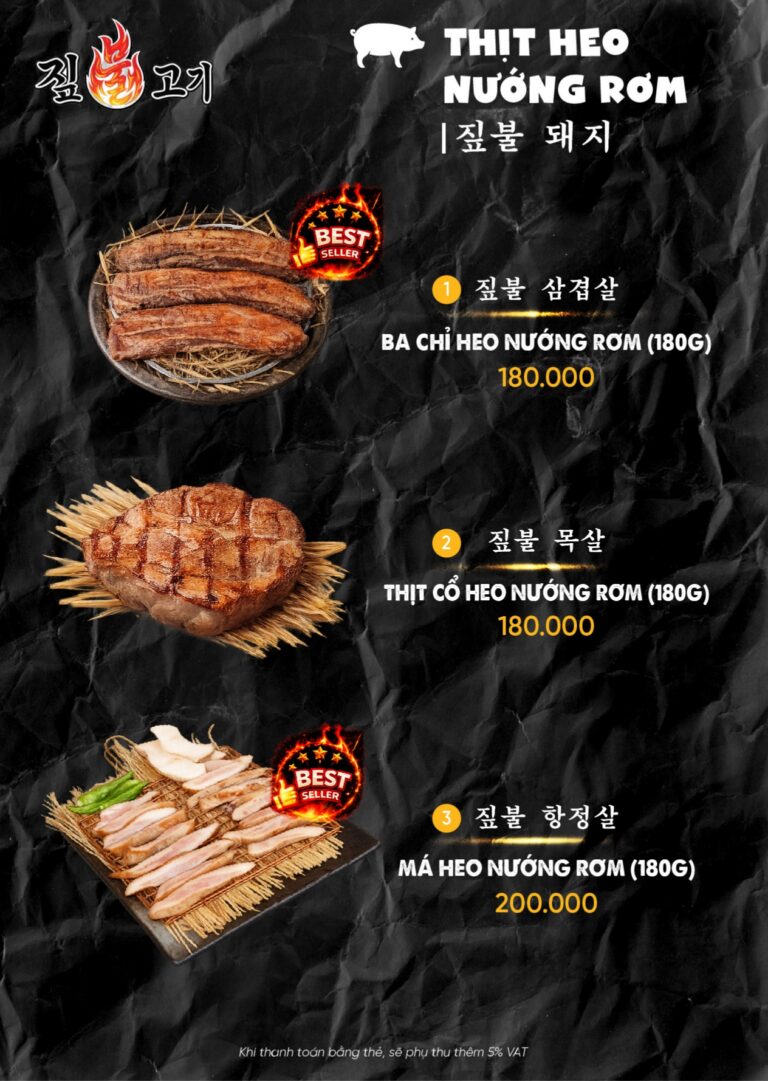
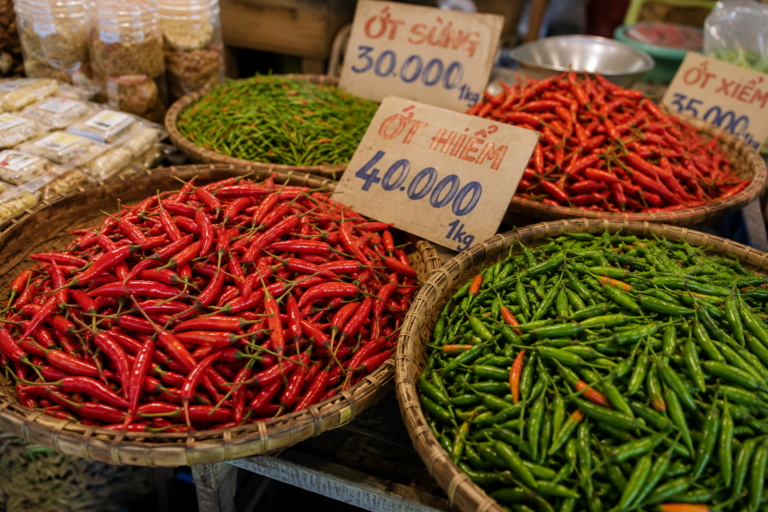
There is no reliable nationwide fixed price for any of these eight foods. A small portion from a neighborhood vendor can cost much less than a large serving in a tourist-oriented night market, and prices differ across cities, ingredients and seasons. Photos of menu boards — including pictures in older articles — are not dependable evidence of today’s prices.
Before committing, look for the posted price or ask “Bao nhiêu tiền?” (“How much?”). Confirm whether the quoted amount is for one skewer, one serving or a whole plate. For larger mixed orders, ask for the total first. Keep small-denomination Vietnamese đồng notes handy, but avoid relying on a fixed daily snack budget from an old online guide.
Where to Look: Da Nang, Ho Chi Minh City and Beyond
In Da Nang, evening food streets and established night-market areas are reasonable places to look for grilled rice paper, skewers, corn and sweets, but individual menus and opening times change. In Ho Chi Minh City, rice-paper salad is particularly recognizable as a local street-food favorite. Da Lat is known for grilled rice paper and cool-weather snacks. You may see different variations in Hanoi and Hoi An.
Rather than chasing a supposed “best stall” without current verification, browse several menus, check ingredients and compare preparation practices. The OurViet Da Nang guide can help you plan other activities around your food stop.
Food Safety: Practical Precautions, Not Guarantees
Street food is not automatically safe because a vendor is popular or crowded. The CDC’s Vietnam travel-health guidance advises caution with food and water, especially raw or undercooked foods. A line of customers tells you the stall is busy; it does not verify its hygiene or water supply.
- Prefer items cooked thoroughly and served piping hot, such as corn, sweet potatoes or freshly grilled skewers.
- Use extra caution with raw herbs, uncooked toppings and mixed salads such as bánh tráng trộn; they are not cooked again after assembly.
- Drink sealed bottled water or other beverages from sources you trust; skip ice when you cannot assess the water used.
- Check ingredient and allergen risks directly. Peanuts, shrimp, fish sauce, egg, dairy and soy can appear in sauces even when not visible.
- If you have a serious food allergy, do not rely on a simple translated phrase alone: cross-contact and ingredient misunderstandings can occur.
For more detail, read the CDC’s food and water safety advice for travelers. These precautions reduce risk but cannot guarantee a food will be safe.
Useful Vietnamese Phrases for Ordering
| Vietnamese phrase | Meaning |
|---|---|
| Cho tôi một phần này. | One serving of this, please. |
| Bao nhiêu tiền? | How much is it? |
| Không cay, làm ơn. | Not spicy, please. |
| Có đậu phộng không? | Does it contain peanuts? |
| Có tôm không? | Does it contain shrimp? |
| Thịt gì? | What meat is it? |
Pronunciation and comprehension vary, especially at noisy markets. Pointing to ingredients, checking a written translation and reconfirming the total price can help. For a fuller food-ordering walkthrough, see how to order food in Vietnam.
Which Snack Should You Try First?
For a crisp savory bite, choose freshly made bánh tráng nướng. If you like sour, spicy flavors and can accept the risks of uncooked toppings, bánh tráng trộn offers a very different experience. For a warm, simple option, try grilled corn or roasted sweet potato. For dessert, compare a grilled banana with a bowl of chè. A traveler looking for a more substantial meal can start with our Vietnamese breakfast guide and return to the snacks later.
Sources and scope: The Vietnam National Authority of Tourism’s HCMC food guide covers bánh tráng trộn; its dessert guide explains grilled banana in sticky rice and other sweets. Food-safety guidance comes from the CDC links above. Recipes, stall availability and prices should always be checked locally. This article is a general food guide, not a first-person review of specific vendors.