7 Vietnamese Noodle Dishes Every Beginner Should Try
Vietnam is one of the best destinations in Asia for noodle lovers.
Most first-time visitors already know pho, but Vietnamese noodle culture goes far beyond one famous bowl of soup. Travel from Hanoi to Hue, Da Nang, Hoi An, and Ho Chi Minh City, and you will discover completely different noodles, broths, toppings, herbs, and ways of eating them.
Some noodles are served in fragrant broth. Others come with grilled meat, fresh vegetables, peanuts, crispy rice crackers, or dipping sauces.
If you are visiting Vietnam for the first time, these 7 Vietnamese noodle dishes are a great introduction to the country’s diverse food culture.
1. Pho – Vietnam’s Most Famous Noodle Soup

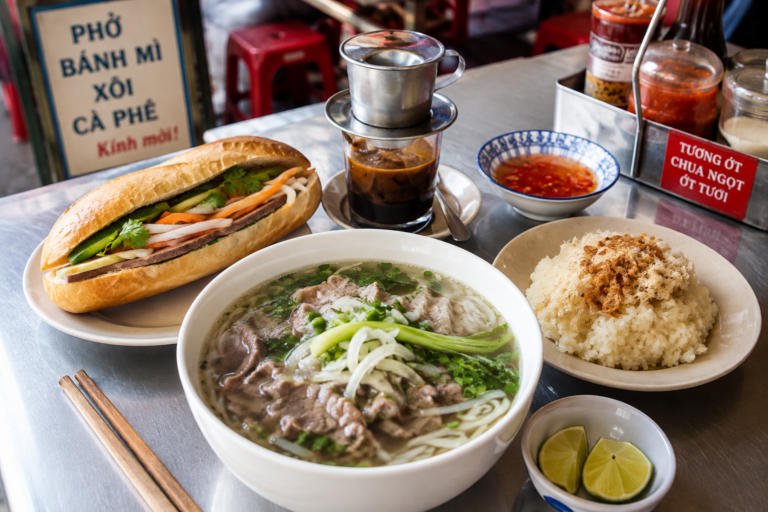
Pho is usually the first Vietnamese noodle dish international travelers encounter.
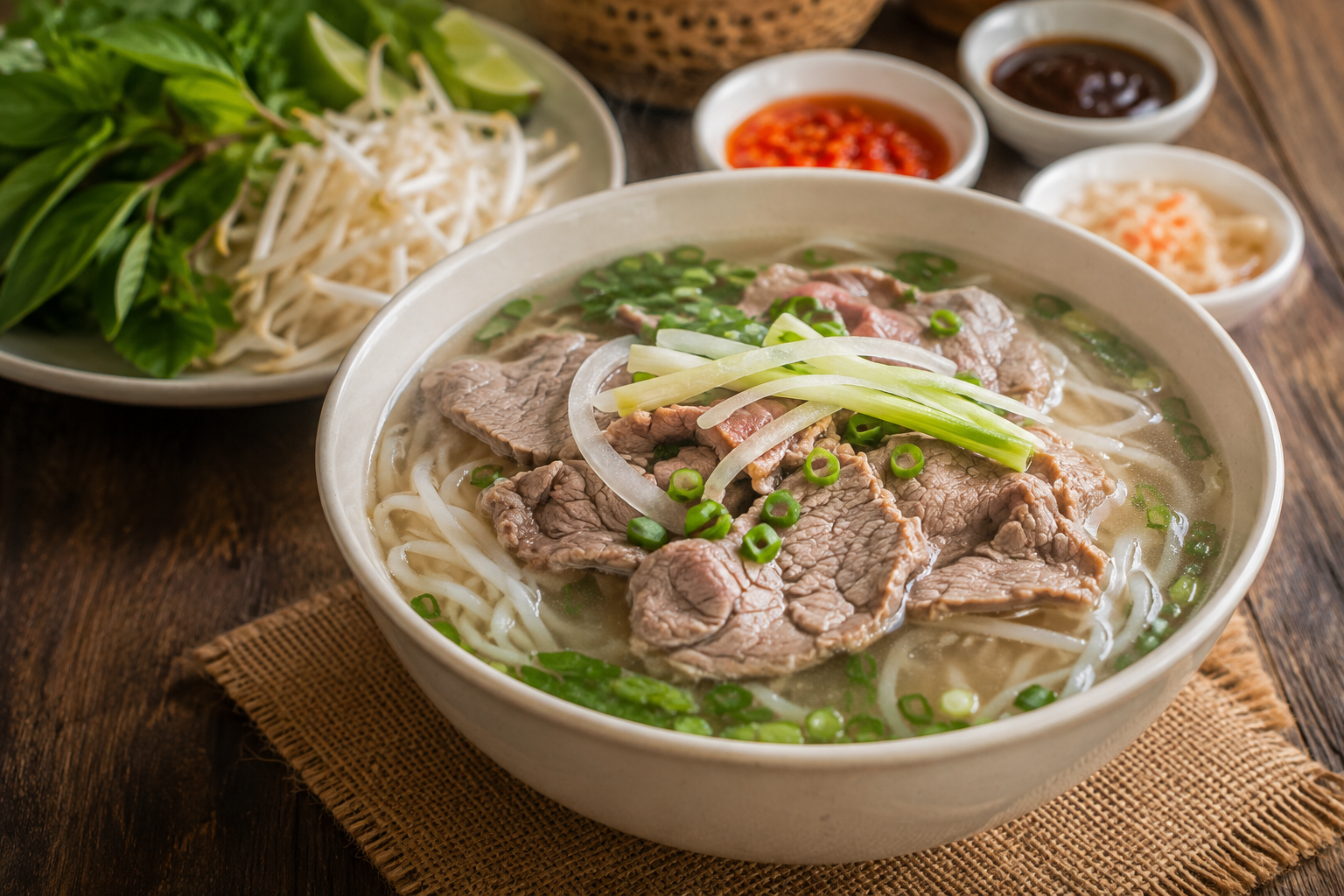
It consists of flat rice noodles served in an aromatic broth, most commonly with beef or chicken.
The two versions you will see most often are pho bo, made with beef, and pho ga, made with chicken.
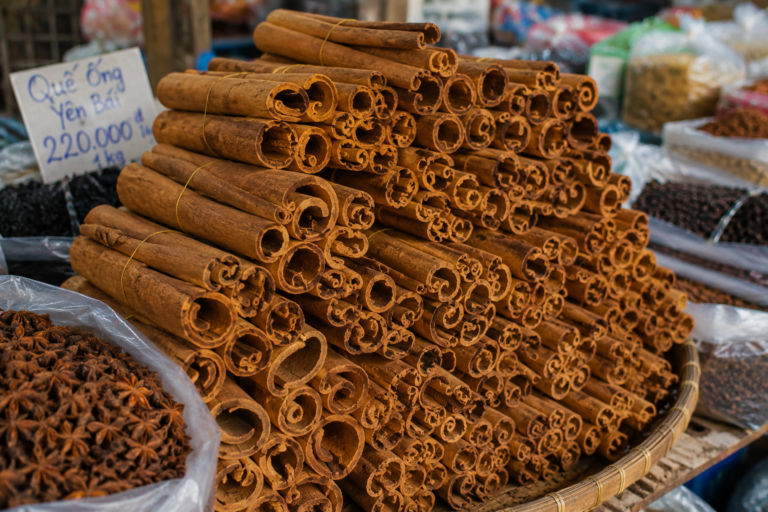
A good pho broth can take hours to prepare. Ingredients such as ginger, star anise, cinnamon, cloves, and other spices create the distinctive aroma associated with the dish.
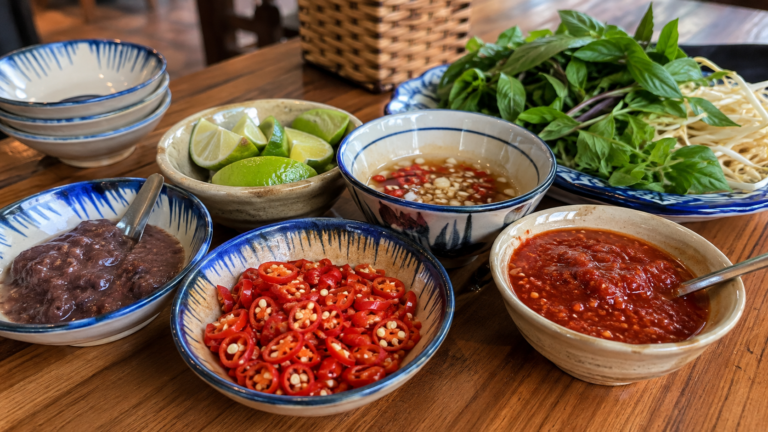
Fresh herbs, lime, chili, bean sprouts, and sauces may be served alongside the bowl depending on the region and restaurant.
Pho is especially popular for breakfast, although restaurants throughout Vietnam serve it at almost any time of day.
For travelers unfamiliar with Vietnamese cuisine, it is one of the easiest places to begin.
2. Bun Cha – Grilled Pork and Rice Vermicelli
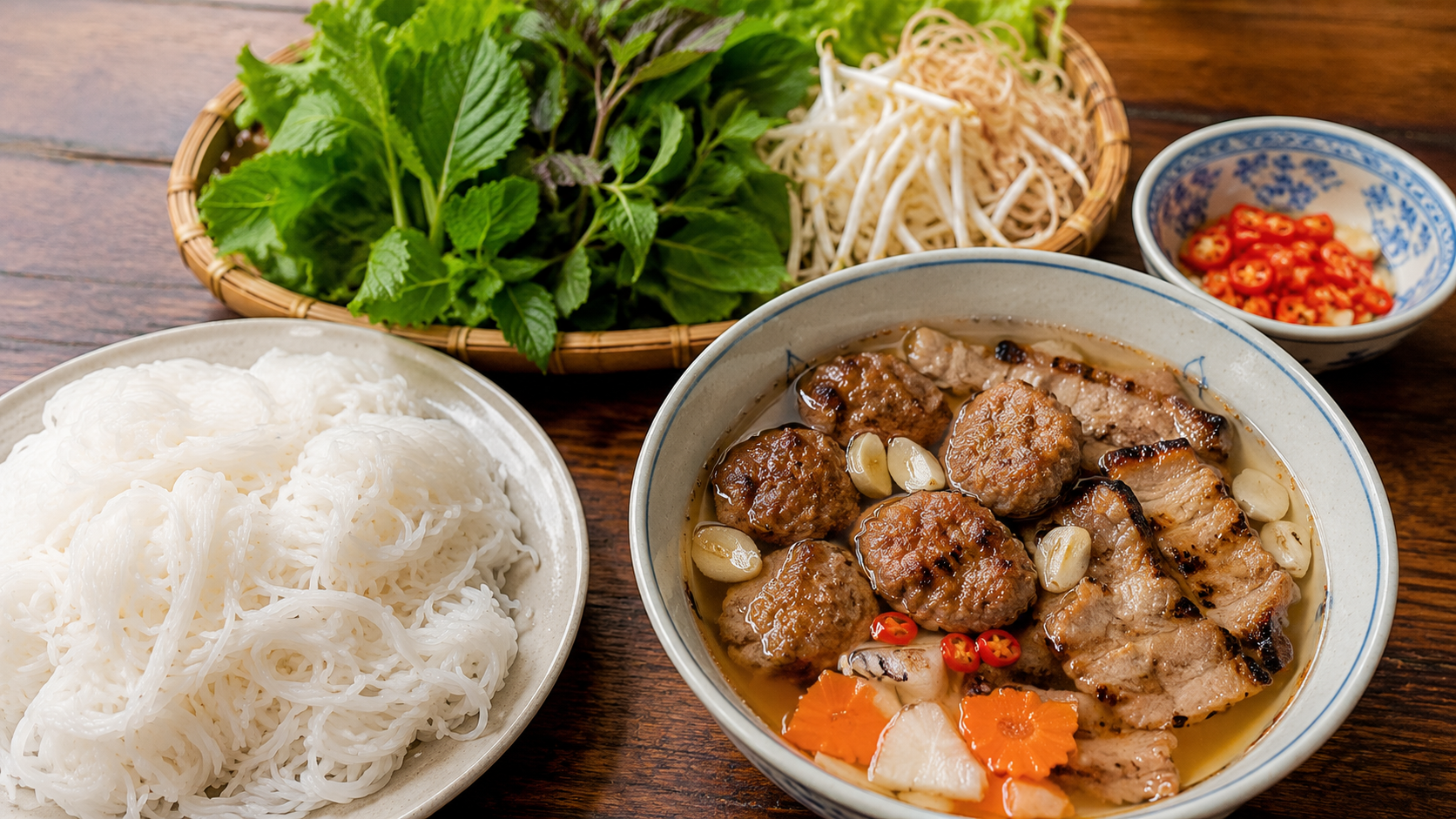
Unlike pho, bun cha usually arrives as several separate components.
You will typically receive rice vermicelli noodles, grilled pork, fresh herbs and vegetables, and a bowl of sweet and savory dipping sauce.
The pork is grilled until smoky and slightly caramelized. The dipping sauce commonly combines fish sauce with sweet and sour flavors, garlic, and sometimes chili.
Take some noodles and herbs and eat them together with the pork and sauce.
Bun cha is particularly associated with Hanoi and Northern Vietnamese cuisine.
The combination of grilled meat, fresh vegetables, soft noodles, and dipping sauce also makes it an approachable choice for travelers who are still getting used to Vietnamese flavors.
3. Bun Bo Hue – A Bold and Spicy Central Vietnamese Soup
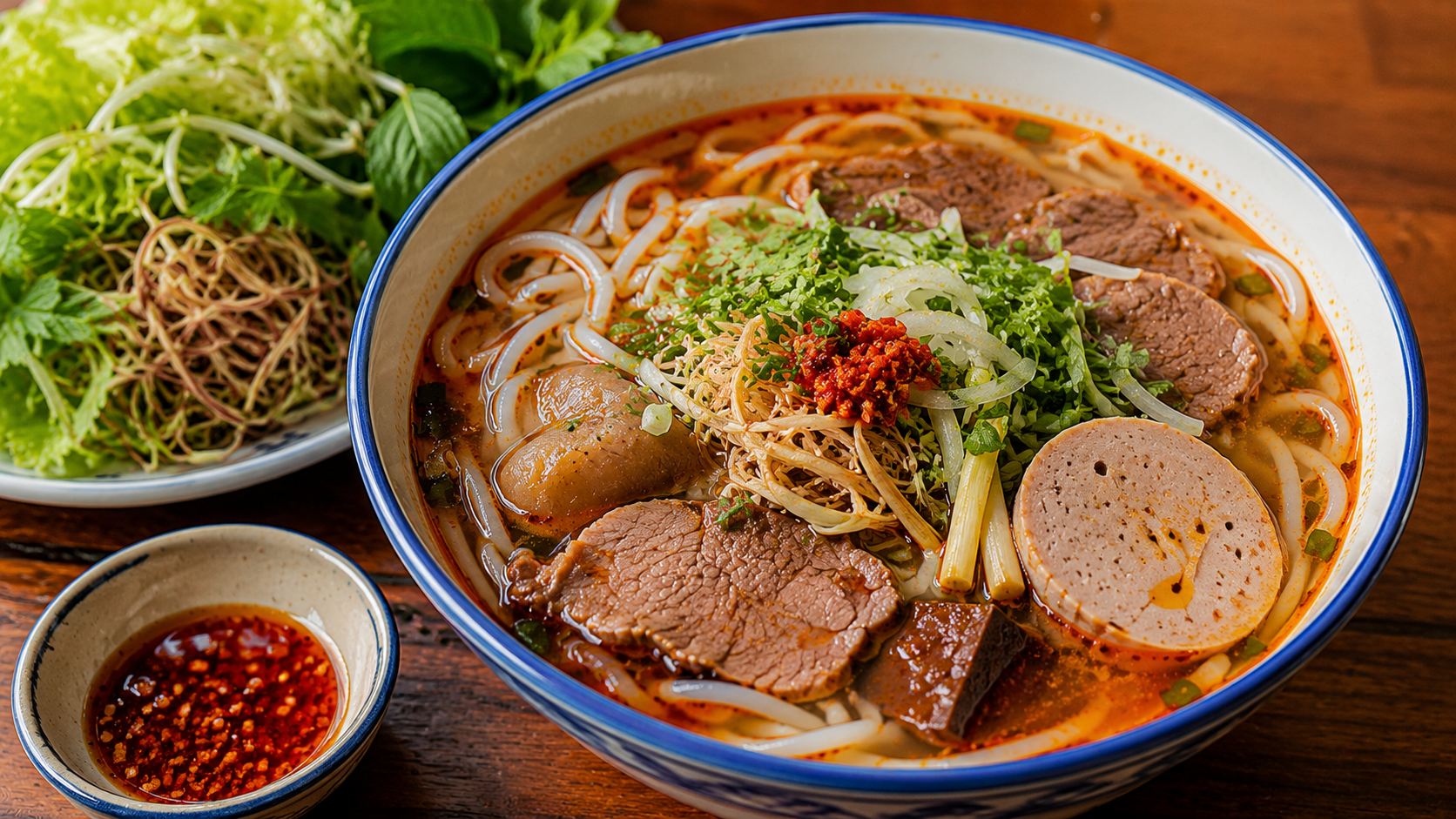
Travelers looking for something stronger than pho should try bun bo Hue.
The dish originated in Hue, the former imperial capital of Vietnam.
Its broth is typically fragrant with lemongrass and has noticeably more heat and intensity than traditional pho.
Bun bo Hue also uses thick, round rice noodles rather than the flat noodles associated with pho.
Toppings vary but may include beef, pork, Vietnamese sausage, onions, herbs, and vegetables.
The result is a rich, aromatic bowl with a distinctive Central Vietnamese character.
4. Mi Quang – One of Da Nang’s Essential Noodle Dishes
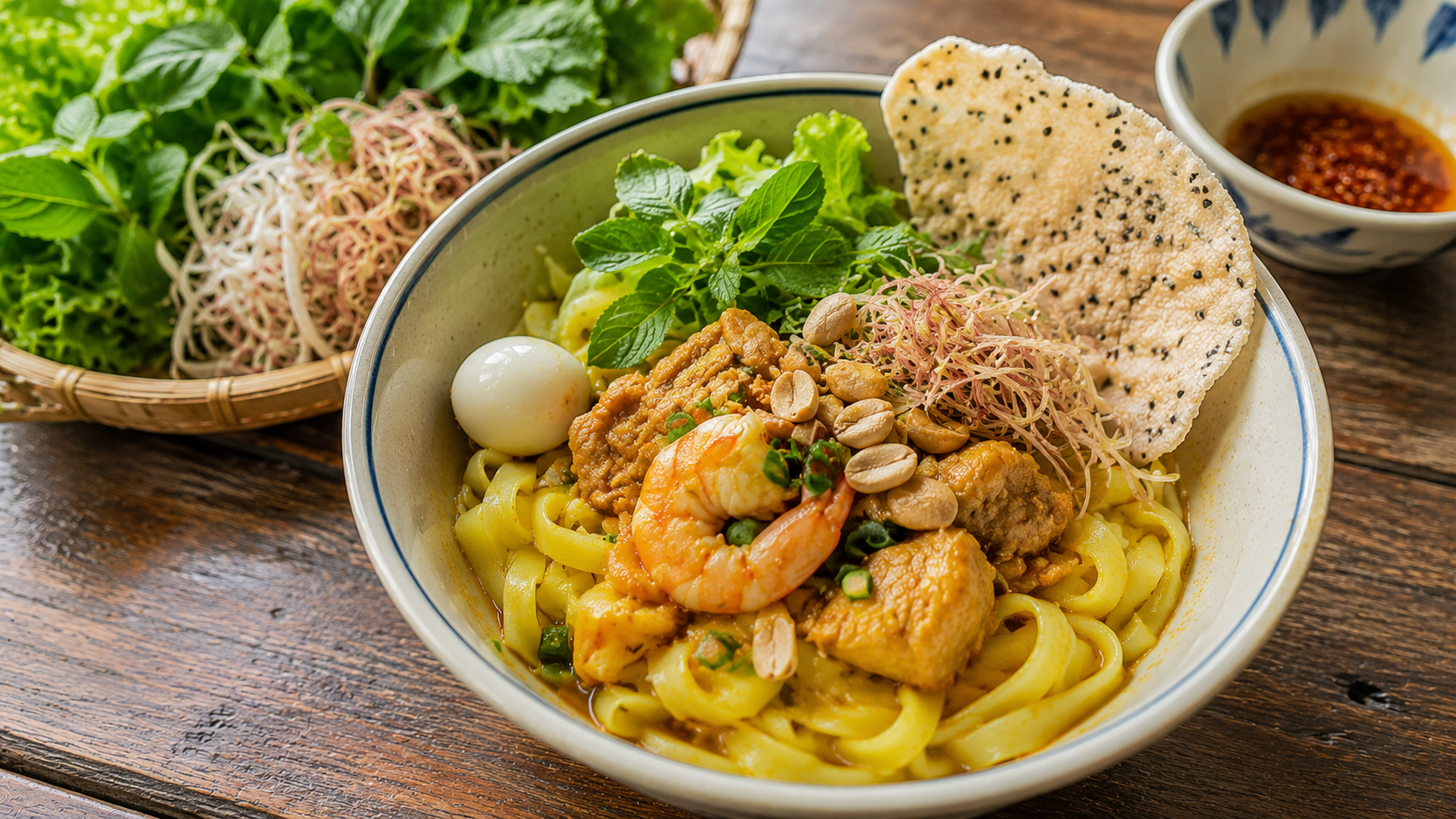
If your Vietnam itinerary includes Da Nang, Mi Quang should be high on your food list.
Mi Quang is strongly associated with Da Nang and neighboring Quang Nam Province.
The dish generally features wide noodles accompanied by herbs, vegetables, peanuts, crispy rice crackers, and a concentrated broth.
Chicken, pork, shrimp, egg, fish, and other seafood can all appear as toppings depending on the restaurant.
One thing often surprises first-time visitors: there is not much broth.
That is intentional.
Unlike pho, Mi Quang is not designed to have the noodles completely submerged. A smaller amount of intensely flavored broth coats the noodles and other ingredients.
It is one of the best dishes to try if you want to experience the distinctive cuisine of Central Vietnam.
5. Cao Lau – Hoi An’s Famous Local Noodles
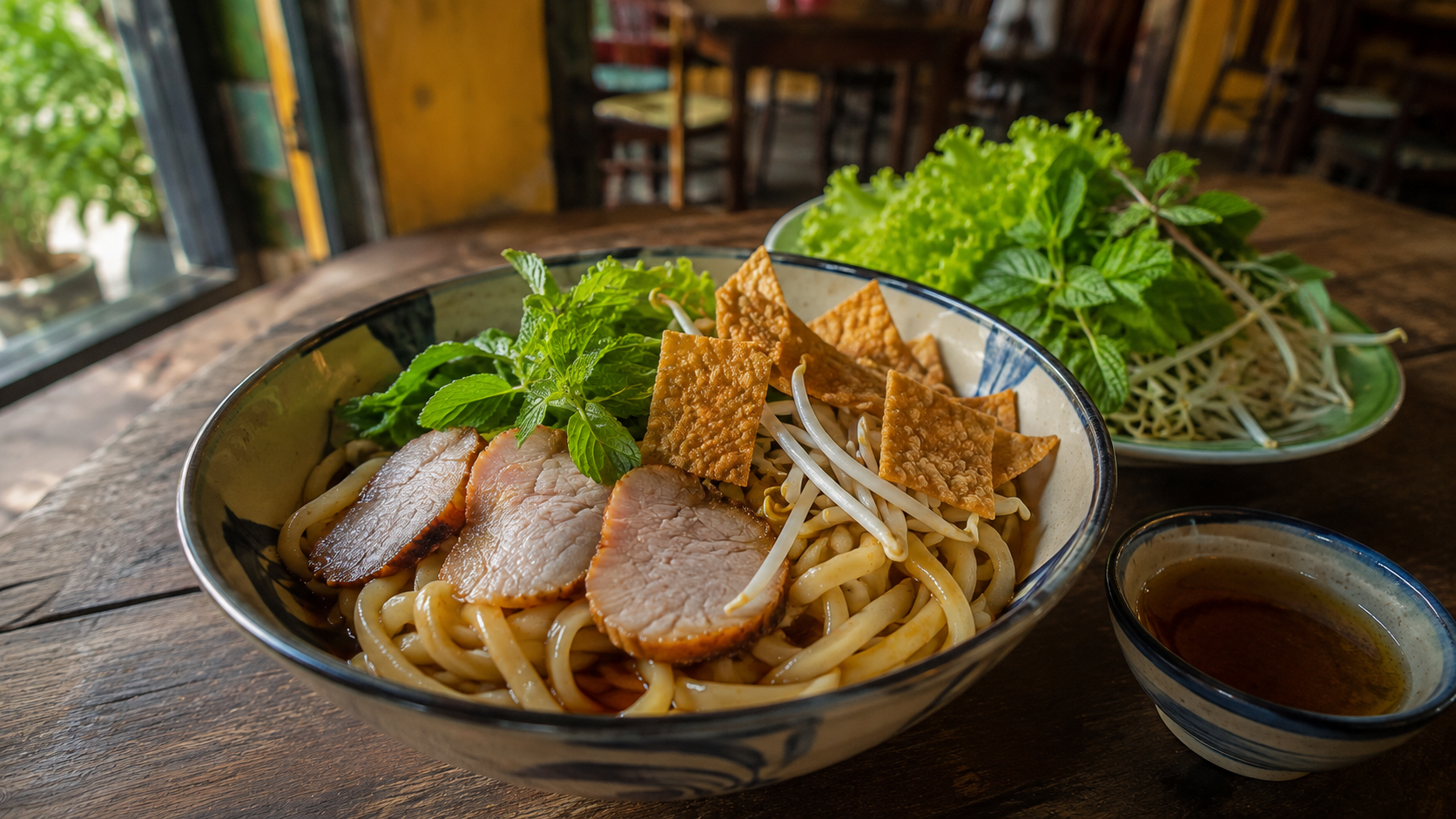
Around 30 kilometers south of Da Nang lies Hoi An, one of Central Vietnam’s most visited destinations.
And one dish is particularly connected with the ancient town: Cao Lau.
Cao Lau combines thick, chewy noodles with sliced pork, greens, herbs, bean sprouts, crispy toppings, and a relatively small amount of sauce or broth.
Its texture makes it immediately different from many other Vietnamese noodle dishes.
Rather than soft noodles floating in soup, Cao Lau is comparatively dry and has a firm, chewy bite.
When exploring Hoi An Ancient Town, stopping for a bowl of Cao Lau is one of the easiest ways to experience the city’s local food culture.
6. Hu Tieu – A Southern Vietnamese Favorite
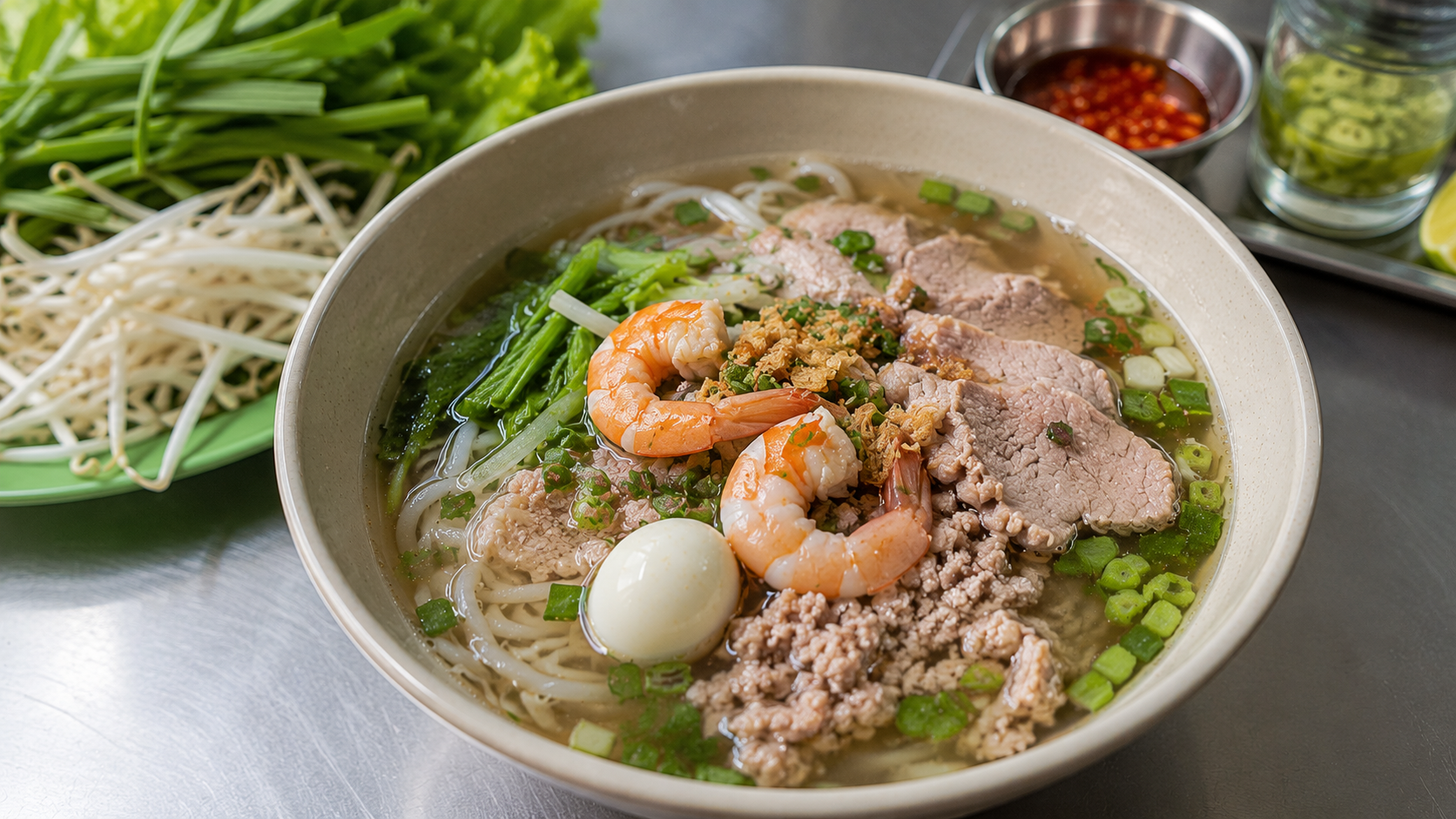
As you travel farther south toward Ho Chi Minh City and the Mekong Delta, you will encounter Hu Tieu.
There are numerous versions of this popular noodle dish.
It can be served as a soup with a relatively light broth or as Hu Tieu Kho, where the noodles and sauce are served separately from a small bowl of soup.
Possible toppings include pork, minced meat, shrimp, seafood, quail eggs, vegetables, and fresh herbs.
Because regional and restaurant variations are so common, two bowls of Hu Tieu can look and taste surprisingly different.
That variety is part of the experience.
7. Bun Thit Nuong – Grilled Pork Noodles Without the Soup
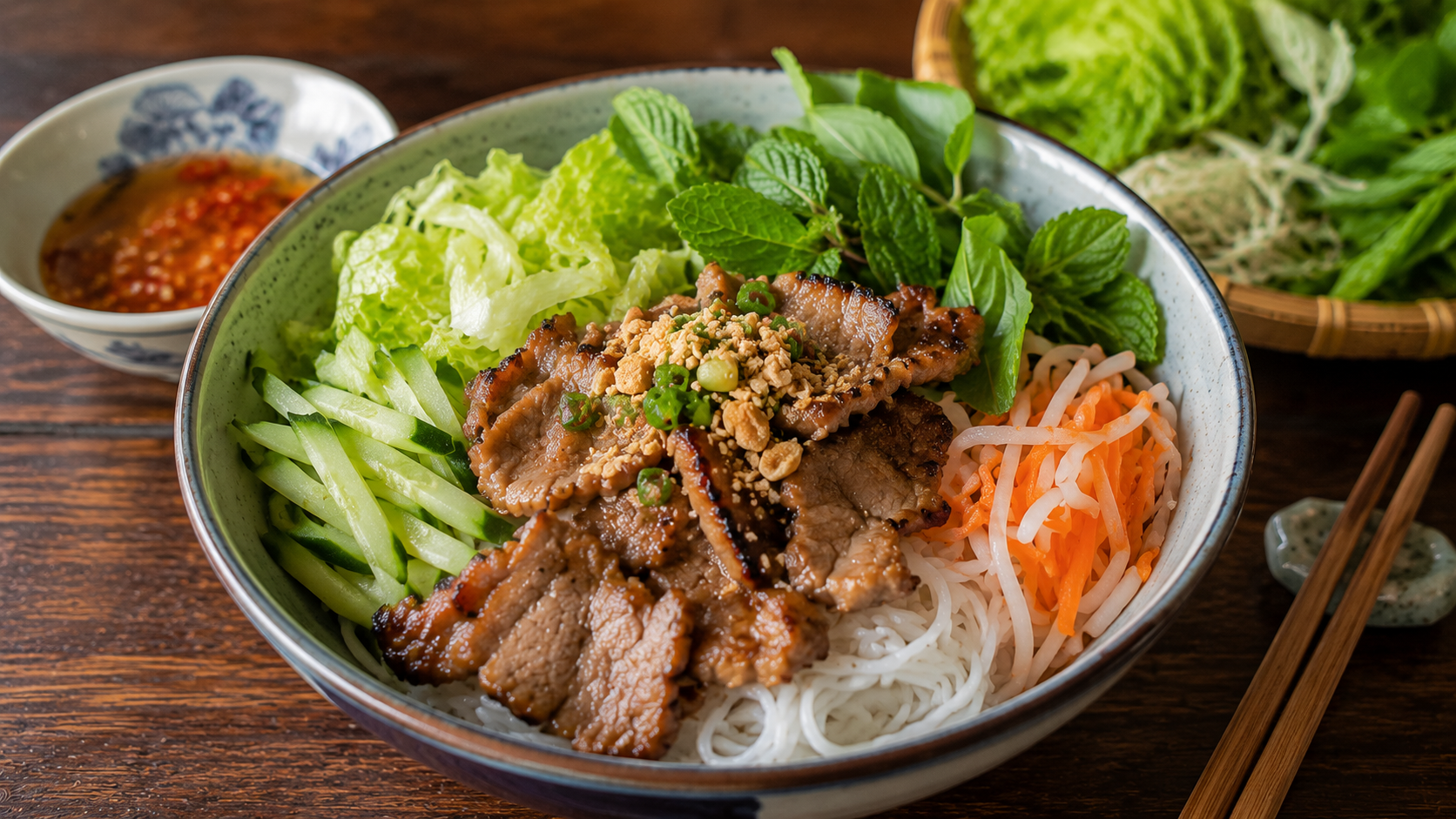
Vietnamese noodles are not always served as soup.
Bun Thit Nuong is one of the best examples.
Rice vermicelli is combined with smoky grilled pork, herbs, fresh vegetables, pickles, peanuts, and sauce.
The ingredients are mixed together before eating.
The contrast between warm grilled meat, cool noodles, crunchy vegetables, fragrant herbs, and savory sauce makes this particularly enjoyable in Vietnam’s warm climate.
It is an excellent lunch option if you want noodles without a hot bowl of broth.
What Is the Difference Between Pho, Bun, and Mi?
Vietnamese menus can initially be confusing because words such as pho, bun, and mi appear everywhere.
The words often give you an idea of the type of noodle used.
Pho
Pho generally refers to the familiar flat rice noodles used in Vietnam’s famous pho soup.
Bun
Bun usually refers to round rice vermicelli.
The thickness varies considerably depending on the dish. Bun cha uses relatively thin noodles, while bun bo Hue uses much thicker round noodles.
Mi
Mi generally refers to wheat or egg noodles, although Vietnamese noodle terminology varies depending on the dish and region.
Vietnam has many additional types of noodles, so these definitions are best treated as a useful beginner’s guide rather than absolute rules.
Which Vietnamese Noodle Dish Should You Try First?
There really is no wrong answer.
For a first introduction to Vietnamese noodles, pho is the obvious choice.
If you enjoy grilled meat, try bun cha or bun thit nuong.
Travelers who enjoy stronger and spicier flavors should look for bun bo Hue.
And if you are traveling through Central Vietnam, make room for Mi Quang in Da Nang and Cao Lau in Hoi An.
One of the pleasures of traveling around Vietnam is noticing how dramatically the food changes between regions.
Vietnamese Noodles Are Much More Than Pho
For many international travelers, pho is their introduction to Vietnamese food.
But it should not be the end of the journey.
Vietnam’s noodle culture reflects the geography and culinary traditions of the country itself. Northern dishes can be very different from those found along the central coast, while Southern Vietnam introduces yet another collection of flavors and ingredients.
Trying local noodle dishes as you travel is therefore more than simply finding something to eat.
It is an easy and delicious way to understand Vietnam’s regional food culture.
So the next time you see an unfamiliar noodle dish on a Vietnamese menu, consider giving it a try.
The noodle dish you have never heard of might become one of your favorite memories from Vietnam.
https://ourviet.com/best-places-to-visit-in-da-nang/
If you are planning your trip around Central Vietnam, check out our guide to the Best Places to Visit in Da Nang before deciding where to eat and explore.